Hancock, Colorado: The Railroad Camp Below the Alpine Tunnel
Hancock was the last town on the Denver, South Park & Pacific Railroad before the Continental Divide, a camp at about 11,000 feet at the head of Chalk Creek. It grew up in 1880 and 1881 while crews bored the Alpine Tunnel through the mountain above it, and for a few months it was the end of the track, where freight came off the cars and went over Hancock Pass by wagon. Once trains began running through the tunnel in 1882, Hancock became a quiet stop with a water tank, and by 1887 its depot had been hauled away and its post office closed. The railroad kept passing through until 1910, then left for good. Today Hancock is a row of cellar holes, scattered foundations and the bottom logs of a saloon, and the trailhead for a 2.8-mile walk to the tunnel’s caved-in east portal.
A camp on the Hancock Placer
The upper Chalk Creek valley filled with prospectors in the late 1870s, and towns sprang up down the canyon at Alpine, St. Elmo and Romley. Hancock began in 1880 on a placer claim called the Hancock Placer, near the top of the valley. Its owners formed the Hancock Town Company, platted the ground into lots and sold them to people who expected the railroad to come through.
They were right. The Denver, South Park & Pacific had chosen Chalk Creek as its road west to the Gunnison Country, and Hancock sat at the foot of the mountain the railroad meant to tunnel under. A post office opened on September 10, 1880.
The railroad war that built Hancock
Two railroads were racing to reach the silver camps of Leadville and the Gunnison Country, the Denver, South Park & Pacific and the Denver & Rio Grande. Under pressure from financier Jay Gould, they signed a joint operating agreement on October 1, 1879. The Rio Grande would build north to Leadville, the South Park line would build west through Chalk Creek toward Gunnison, and each would have rights on the other’s new track.
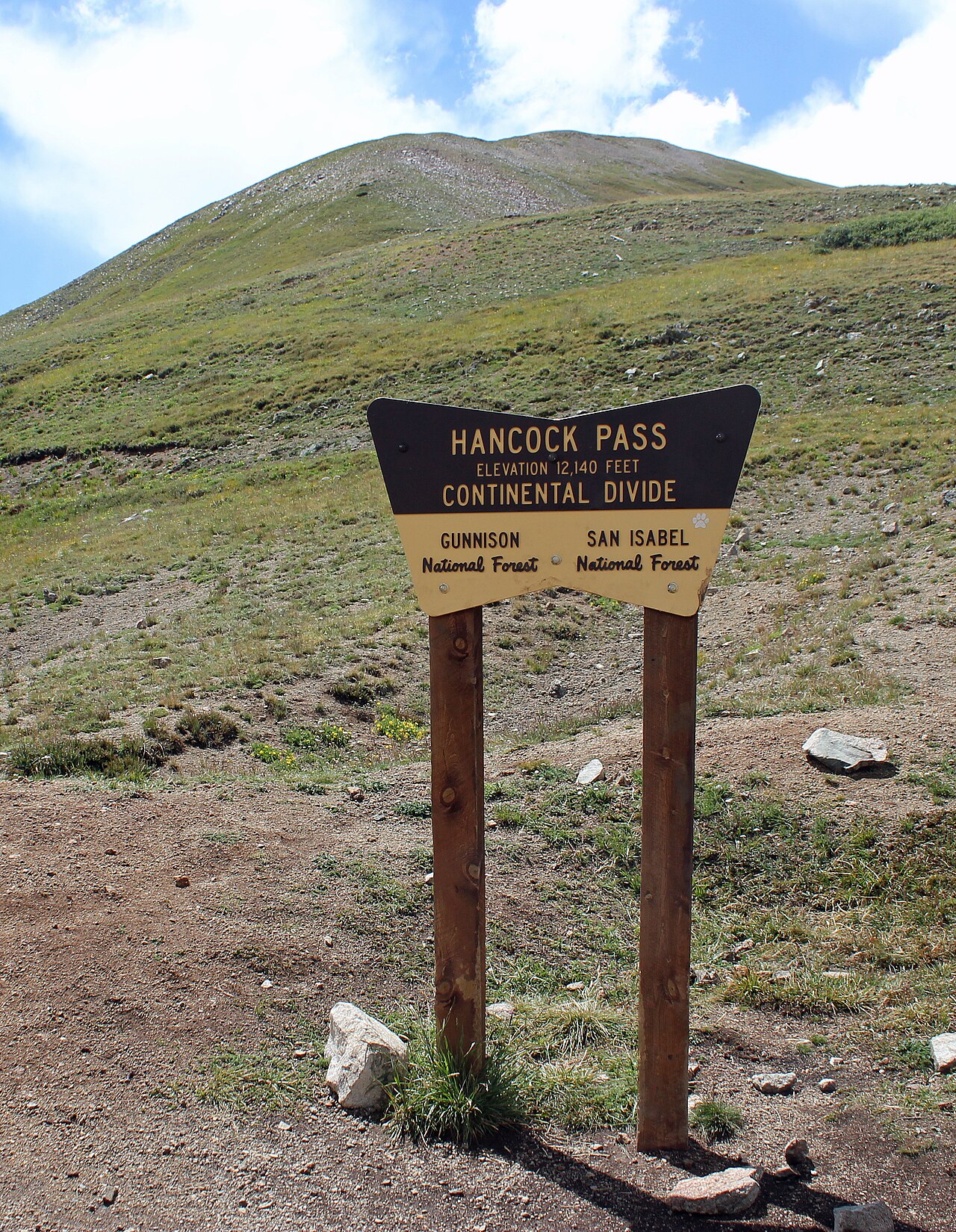
The South Park line pushed up the canyon on a shelf cut above the creek and reached St. Elmo at the end of 1880. In 1881 the rails arrived at Hancock. For a few months it was the railhead for the whole western push: freight, rails, machinery and supplies came off the narrow-gauge cars here and were hauled by wagon over Hancock Pass, at more than 12,000 feet, while crews worked on the tunnel above.
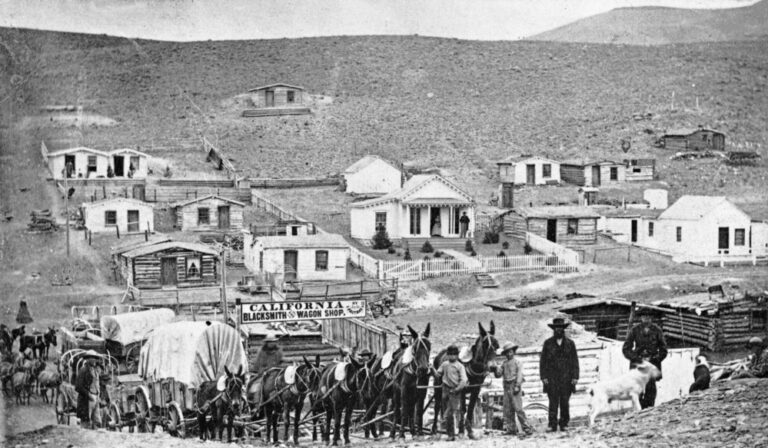
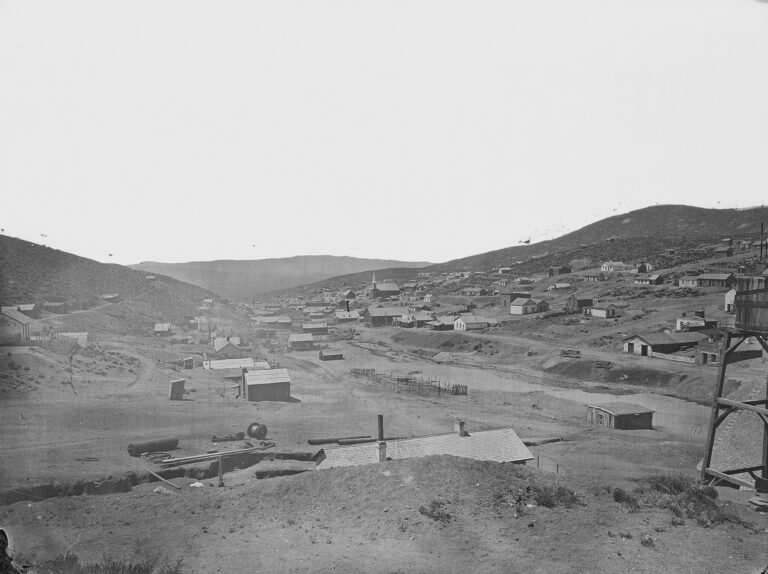
The town filled out quickly. By 1881 about 200 people lived there, with stores, restaurants, at least one hotel, saloons and two sawmills that cut timber for the railroad. The railroad built a depot, a section house, a water tank and a coal platform.
The Alpine Tunnel
The railroad’s chief engineer, James A. Evans, chose to go under the Continental Divide at Altman Pass, later renamed Alpine Pass, rather than over it. Work started in January 1880. The first contractor, Cummings & Co., was replaced that summer by Fitzgerald, Cushing & Osborn, and crews blasted from both ends through broken, crumbling rock that would not hold its shape.
The two headings met on July 26, 1881. The finished bore was about 1,772 feet long, 12 feet wide and 17 feet high, and at about 11,523 feet it was the highest railroad tunnel in North America at the time. The loose rock had to be lined with heavy California redwood timbers, cut 12 inches square and shipped in by the hundreds of thousands of board feet. Track reached the east portal that October, and the first train ran through in July 1882.
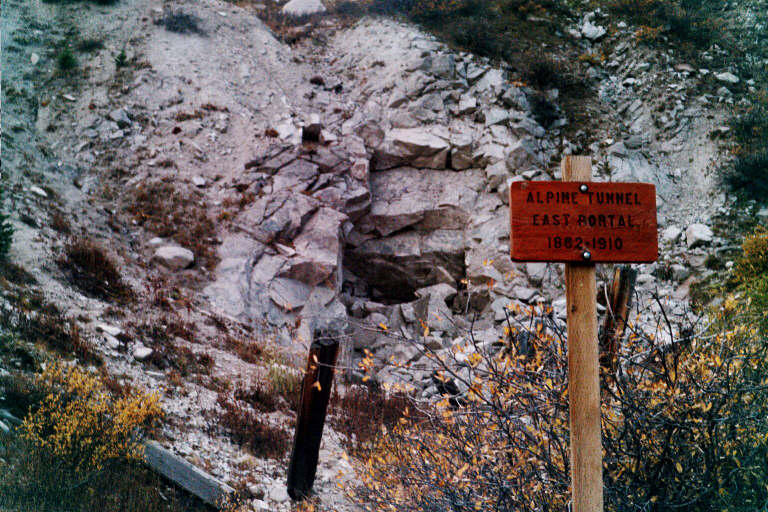
The tunnel was a feat of engineering and a poor investment. The South Park line reached Gunnison in September 1882, more than a year after the Rio Grande had already arrived over Marshall Pass. Snow buried the approaches every winter, and keeping trains moving at 11,000 feet cost far more than the traffic paid.
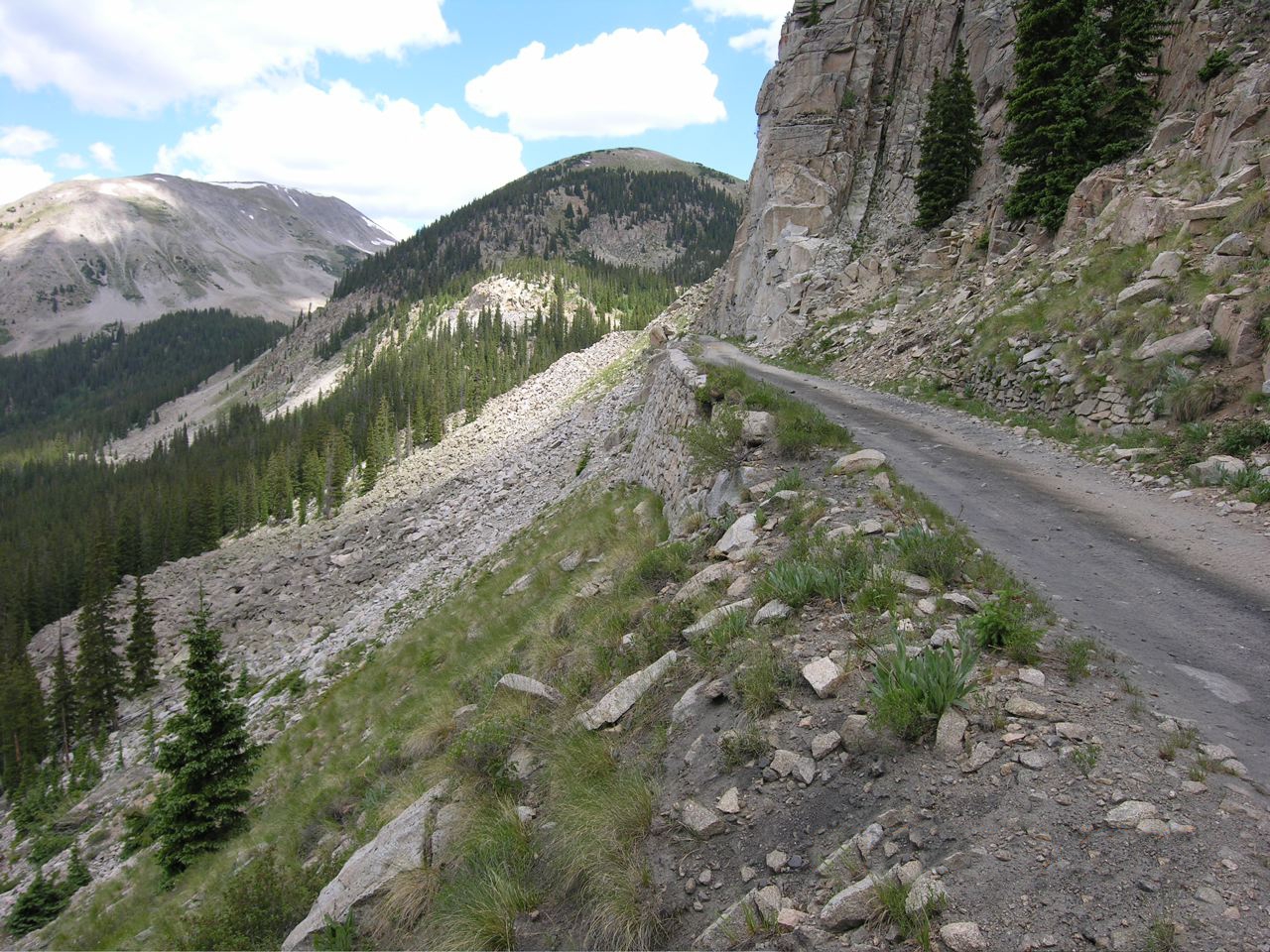
On the west side of the divide the grade clung to a cliff at a spot called the Palisades, held up by a dry-laid stone wall about 450 feet long and 33 feet high, fitted by hand without mortar. Below it, at the section camp of Woodstock, an avalanche on March 10, 1884, killed 13 people, including all six children of boardinghouse keeper Marcella Doyle.
Mines of the upper Chalk Creek
The railroad was Hancock’s reason to exist, but the mines kept trains running up the canyon. The biggest was the Mary Murphy, found in the 1870s above Romley, a couple of miles down the valley. By federal figures it produced about 220,000 ounces of gold, worth about $4.4 million at the time, along with silver, lead and zinc. Aerial trams carried its ore down to the tracks at Romley.
Closer to Hancock, the Allie Belle and the Flora Belle mines built ore chutes right beside the grade, so ore could drop straight into waiting cars. The Stonewall, found in 1879, was another early producer.
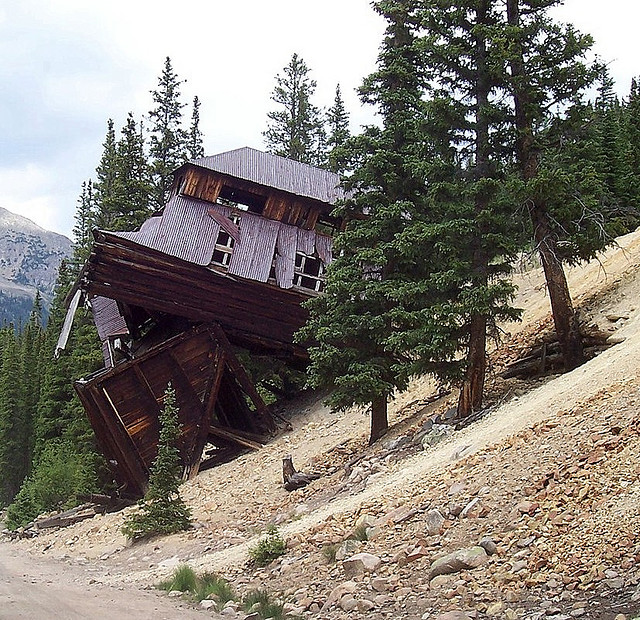
The mining left a long cleanup behind. Water draining from old workings carried zinc and cadmium into Chalk Creek, and in 1986 about 800,000 young trout died at a state fish-rearing unit downstream, a kill blamed on drainage from the Mary Murphy. State and federal agencies have worked on the old mine sites since.
A short boom, a long fade
Hancock’s best year was its first. Once the tunnel opened, freight no longer stopped here, and the town shrank to a water stop and a few families. In 1887 the railroad took the depot apart and moved it down the line to Romley, and the post office closed on June 24 of that year.
In 1888 a cave-in inside the tunnel shut it down, and for seven years trains to Gunnison ran over the Rio Grande instead. The bankrupt South Park line was sold in 1889 and became the Denver, Leadville & Gunnison, and at the end of 1898 it was folded into the Colorado & Southern. The tunnel reopened in 1895, but not without cost: in June of that year four men died of carbon monoxide from a locomotive inside the bore while it was being cleared.
The Silver Panic of 1893 hit the whole district, though the Mary Murphy’s gold kept Chalk Creek working. Hancock even got its post office back from 1903 to 1904. Then in October 1910 the tunnel caved in again, and the Colorado & Southern gave up on it. The last locomotive came through in November 1910.
Trains still ran up the canyon to the mines for a few more years. The rails from the tunnel down through Hancock were pulled up between 1923 and 1926, the last freight passed Hancock in 1924, and by 1926 the whole Chalk Creek branch was gone.
What remains
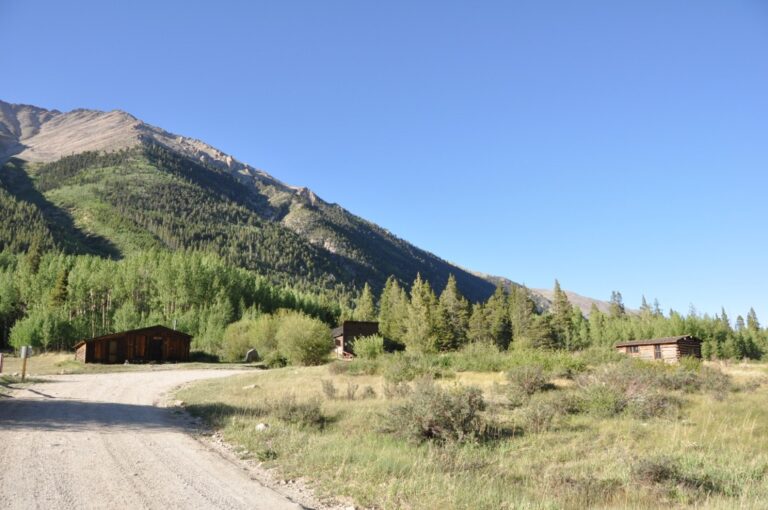
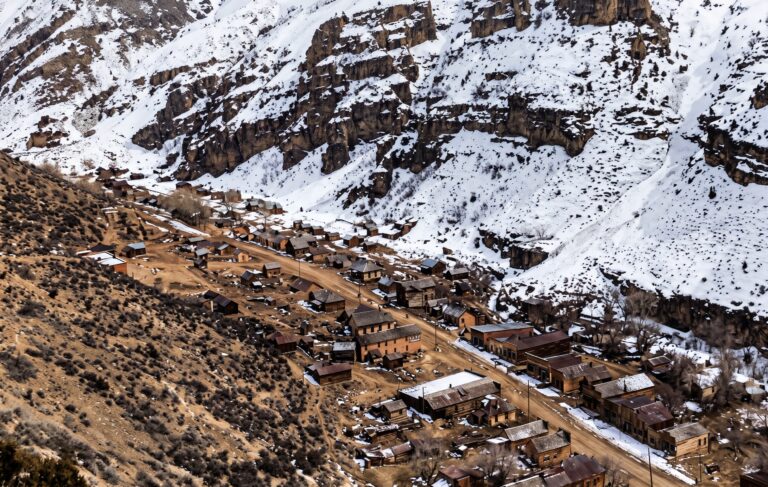
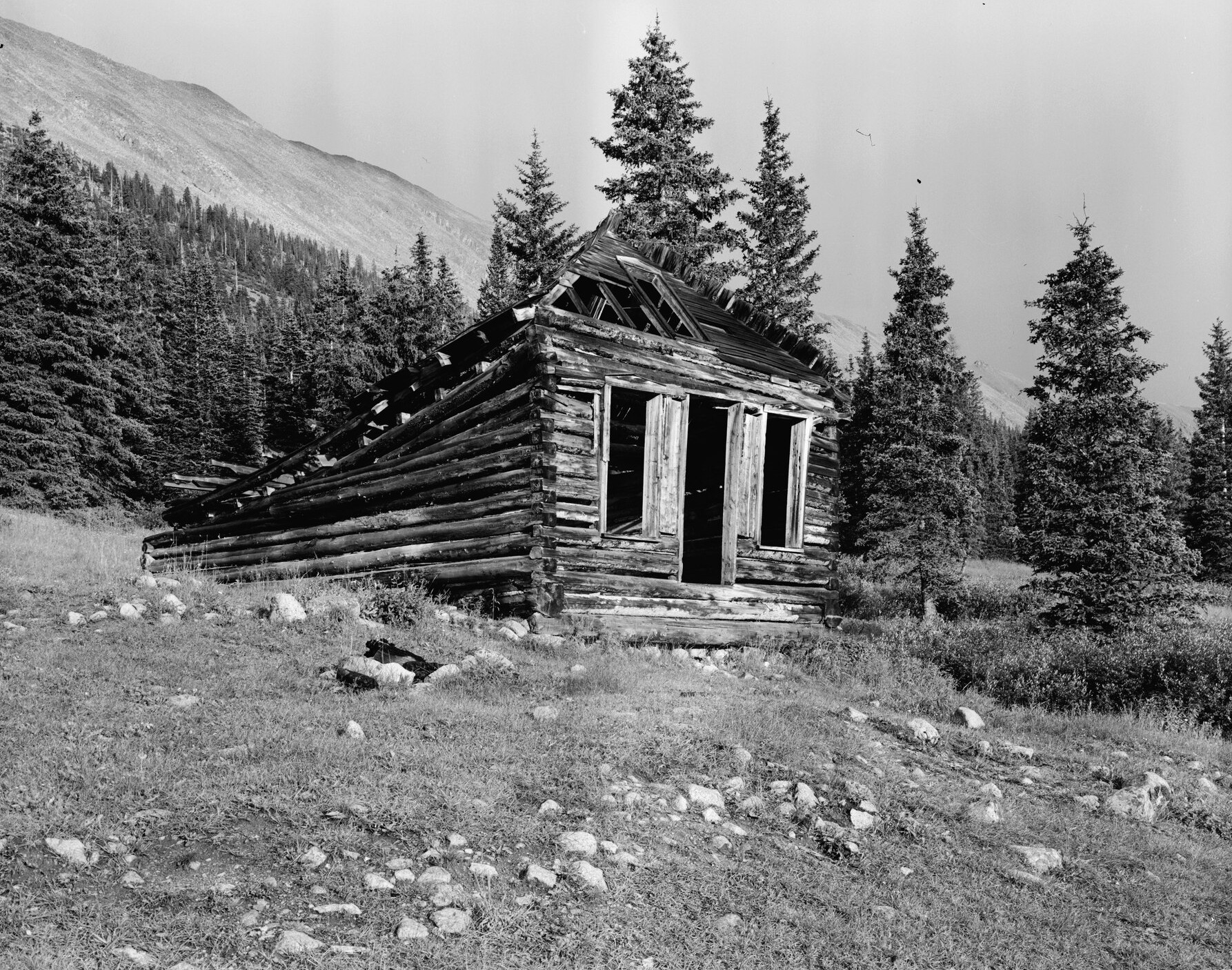
Very little of the town itself survives. Look for a row of cellar depressions, stone foundations, old dumps of cans and glass, and the lowest log courses of a saloon that still stood with its walls up when it was photographed for the Historic American Buildings Survey. Forest Service signs explain the site. Down the road toward St. Elmo you pass the deteriorating ore bin and chute of the Allie Belle beside the grade.
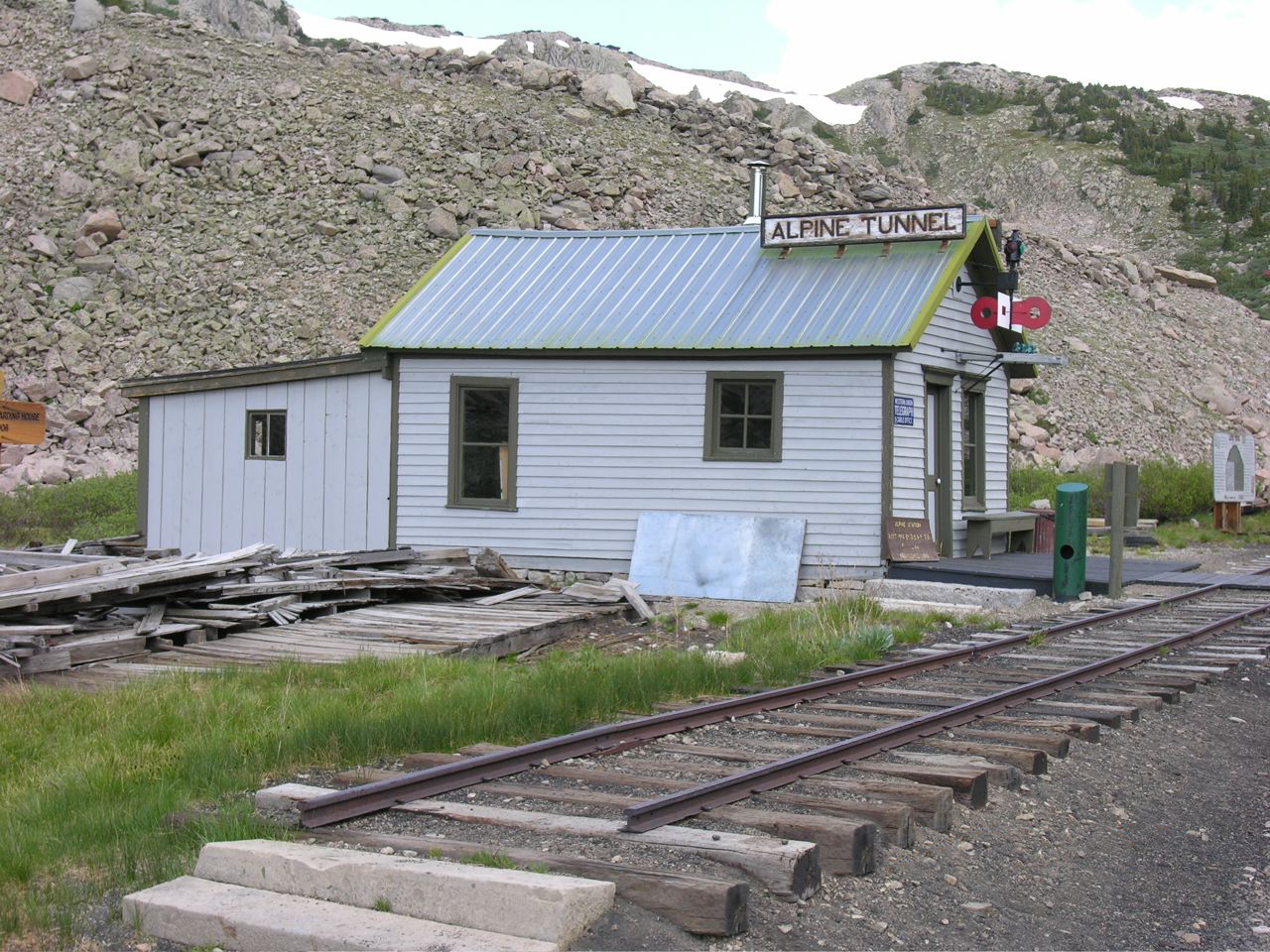
The railroad is easier to see than the town. The old grade runs past Hancock and up the valley, and since 1996 the line from Hancock across the divide to Quartz has been on the National Register of Historic Places as the Alpine Tunnel Historic District, with parts of Hancock counted as contributing features. On the far side of the divide, volunteers have restored the 1883 telegraph office at Alpine Station, along with its platform, a turntable and a short stretch of track.
Timeline
Historic sites nearby
Further reading
Sources
U.S. Forest Service — Alpine Tunnel Trail #1438, Hancock Lakes and Alpine Tunnel Historic District
Wikipedia — Alpine Tunnel, Denver, South Park and Pacific Railroad, Mary Murphy Mine and Hancock Pass
Colorado Geological Survey — Chalk Creek Mining District report
National Park Service — Alpine Tunnel Historic District, National Register record
Uncover Colorado — Hancock; 4x4explore — Hancock and Alpine Tunnel
Colorado Public Radio — Historic Alpine Tunnel road reopens (2024); Denver7 — the Woodstock avalanche
Photos: Historic American Buildings Survey, public domain; Tim Dennehey, CC BY-SA 3.0; A.L. Szalanski, CC BY-SA 3.0 and CC BY-SA 3.0; John Holm, CC BY 2.0; Jeffrey Beall, CC BY 3.0