Austin, Nevada: The “Mother of Mining Camps” on the Loneliest Road
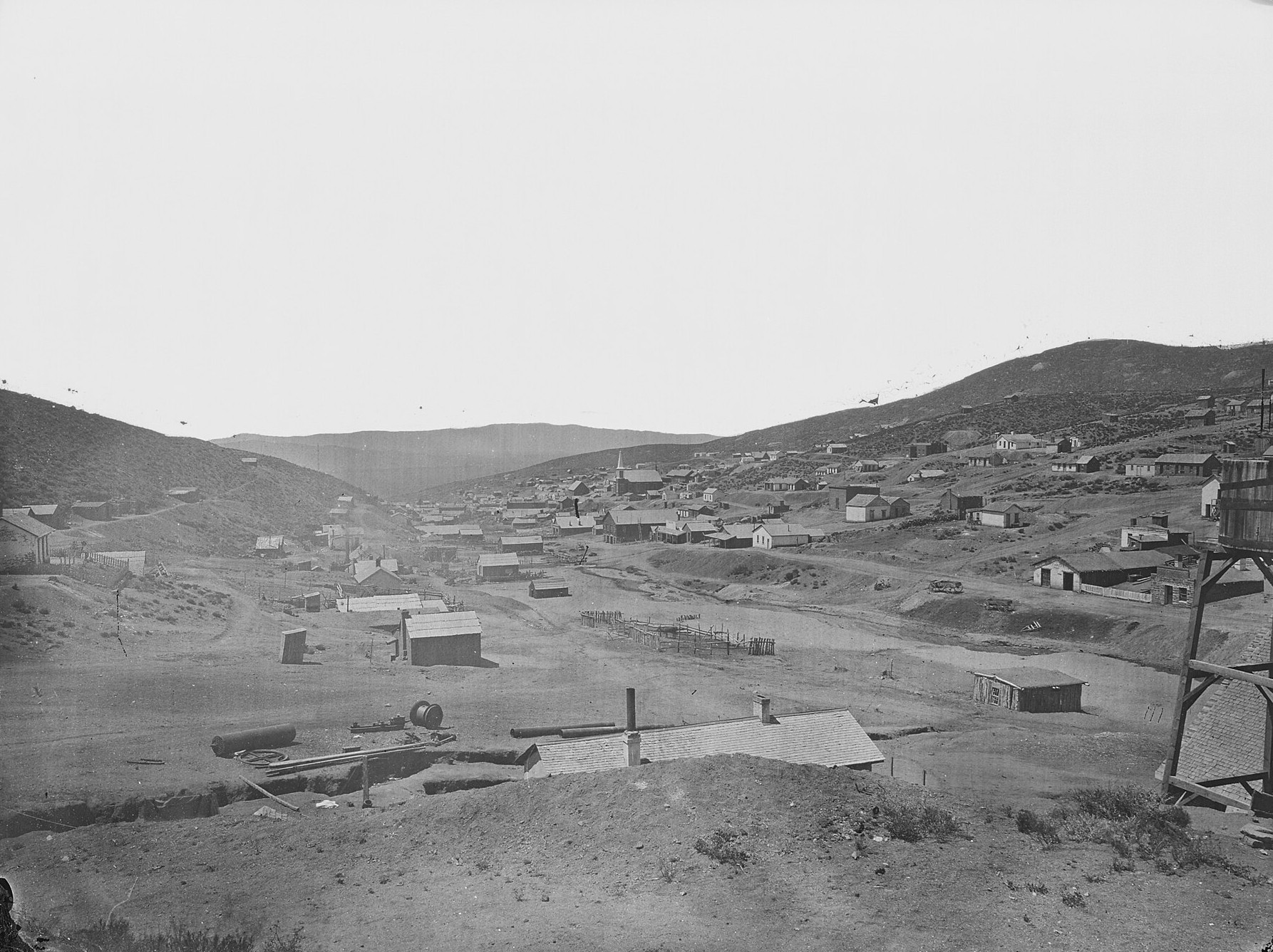
Austin is the rare Nevada mining camp that outlived its boom without dying. It was founded in the spring of 1862 on the steep east side of the Reese River valley, grew into the supply capital of central Nevada, and sent prospectors off to found the camps around it. When its silver gave out in the 1880s the town shrank to a few hundred people, but the stone and brick buildings of its main street stayed in use. Today Austin sits on US-50, the “Loneliest Road in America,” with a gas station, a saloon in a hotel that is more than 160 years old, a stone castle on the hill and about 170 residents.
A Pony Express rider finds silver
Before the rush, this country was a seasonal home of the Western Shoshone, who gathered piñon nuts on the high ridges. Captain James H. Simpson surveyed a wagon route across central Nevada in 1859, and in 1860 the Pony Express, the Overland Mail stage and then the first transcontinental telegraph all followed it. At Jacobsville, a station on the Reese River about six miles west of Pony Canyon, a former Pony Express rider named William Talcott worked as a station keeper.
On May 2, 1862, Talcott was hauling firewood out of Pony Canyon when he noticed dark-stained quartz that looked like the horn silver of the Comstock. Assays in Virginia City confirmed rich ore, and the “Rush to Reese” was on. Miners organized the Reese River Mining District on July 10, 1862 and wrote their own rules for claims.
Clifton loses to Austin
At first there were two towns. Promoters laid out Clifton on the flat where Pony Canyon opens onto the valley floor and expected it to become the district’s commercial center. Its lot prices, though, angered miners. In early 1863 a prospector and promoter named David Buel, refused a free lot, joined with disaffected miners and platted a rival town higher up the gorge, close to the big veins of Lander Hill and Union Hill and next to the springs. Austin had water, fair lot terms and the mines. By late 1863 Clifton was largely a ghost, and many of its frame buildings had been hauled uphill to Austin.
Austin was the Lander County seat by autumn 1863 and was incorporated as a city in 1864. The new city soon had a police force, volunteer fire companies, piped water and four churches.
Mother of mining camps
Austin’s banks, assay offices, machine shops and warehouses supplied prospectors across the Great Basin, and parties that set out from Austin found ore that started Eureka, Belmont, Hamilton, Cortez, Ophir and Ione. That is why the town was nicknamed the “Mother of Mining Camps.” Its own mines were rich, but the ore was stubborn. The surface carried easy horn silver, while below the water table the silver was bound up in complex sulfide minerals that ordinary pan mills lost in their tailings. Local metallurgists developed what became known as the Reese River process: dry-crush the ore, mix it with salt, roast it in a furnace to turn the silver into chloride, then amalgamate it with mercury. The method spread across the West.
The costs of such mills pushed small operators out, and the Manhattan Silver Mining Company eventually combined dozens of claims on Lander Hill into one operation with its own shafts, pumps and reduction works. A rush to White Pine pulled miners east in 1869, and the camp rebounded through the 1870s as the company sank shafts past 1,000 feet. In 1887 falling silver prices, rising pumping costs and narrowing veins at depth ended it. The district had produced somewhere between $19 million and $50 million in silver.
Two little railroads
Freight by wagon to the Central Pacific line cost a fortune, so in 1879–80 investors built the Nevada Central Railroad, a 93-mile narrow-gauge line from Battle Mountain south to the valley flat below Austin. Because it stopped short of town, local investors also built the 2.8-mile Austin City Railway, which climbed the canyon on grades of about 10 percent to the mills and Main Street. At first it ran on mule power, 11 mules hauling a single car. In 1881 a small steam “dummy” engine from the Baldwin Locomotive Works replaced them and was nicknamed the “Mules’ Relief.” The town line closed by the early 1890s after a derailment and the mining slump. The Nevada Central lasted longer, through several receiverships, until it was abandoned and scrapped in 1938.
The sack of flour
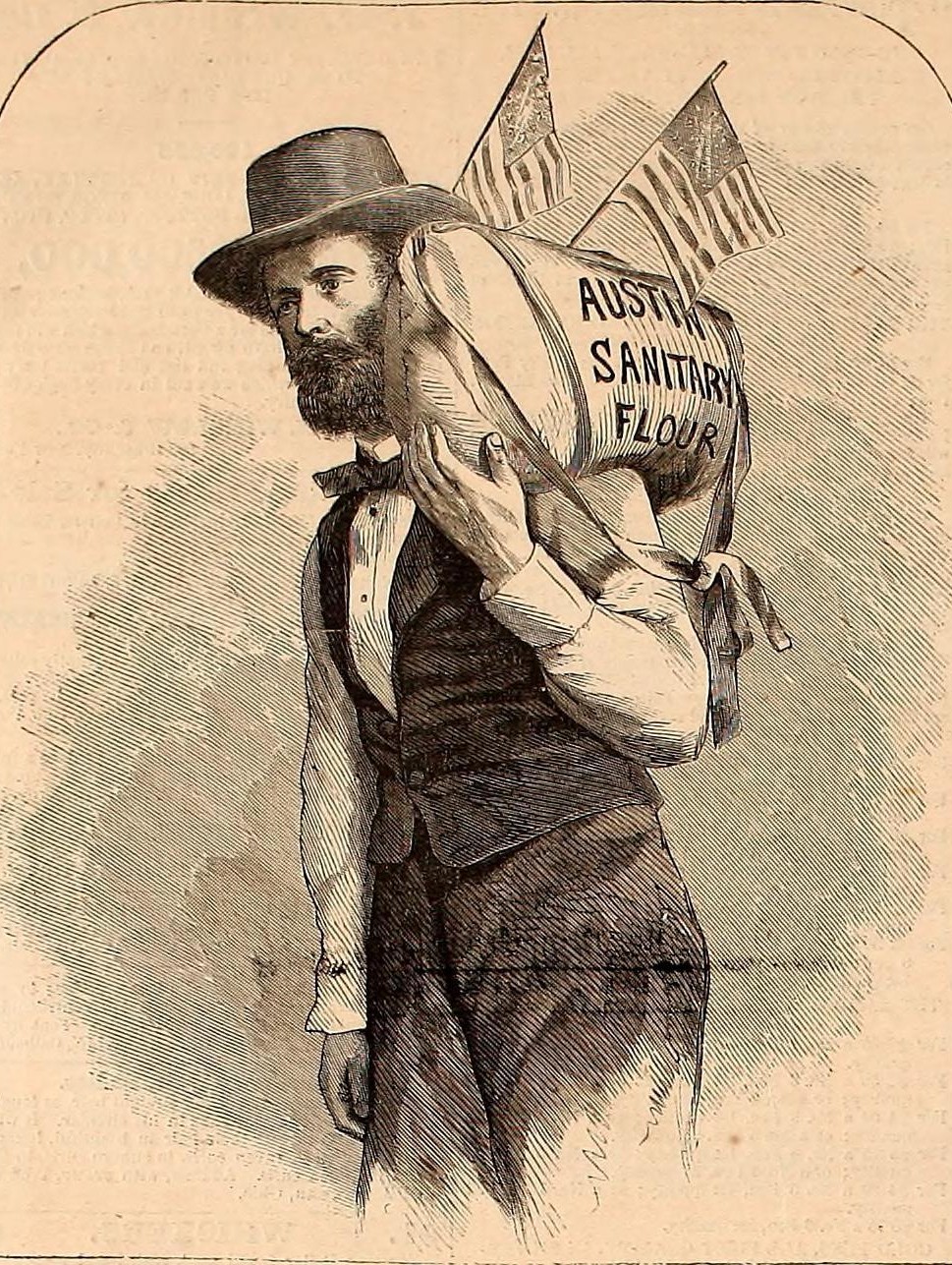
Austin’s best-known story starts in the spring of 1864 with a bet. Reuel Colt Gridley, a Democratic grocer, wagered with Republican candidate Dr. H. S. Herrick on the town’s first municipal election. The loser was to carry a 50-pound sack of flour. The Republicans won on April 20, and Gridley shouldered the sack and walked from Clifton up to Austin behind a brass band, with his young son carrying a Union flag.
At the top of town, instead of keeping it, Gridley auctioned the sack to benefit the United States Sanitary Commission, the Civil War agency that supplied medical care to wounded Union soldiers. The winning bidder gave it back to be sold again, and the bidding became a contest. The sack was auctioned in Nevada mining towns, in Virginia City, in California and eventually at the Sanitary Fair in St. Louis. Mark Twain, then a reporter in Virginia City, described the sack in Roughing It. Gridley’s health and business suffered on the tour. He went bankrupt and died in California in 1870, aged 41.
The Reveille and the Sazerac Lying Club
Austin also had a lively press. William C. Phillips started the Reese River Reveille on May 23, 1863, and the paper traded barbs and stories with the Virginia City Territorial Enterprise and writers such as Mark Twain and Dan De Quille. In the 1870s, under editor Fred H. Hart, it reported on the Sazerac Lying Club, a group of miners and saloon regulars who swapped deadpan tall tales in the back room of the Sazerac Saloon. Hart collected them in an 1878 book, The Sazerac Lying Club, now a classic of Western frontier humor.
Stokes Castle
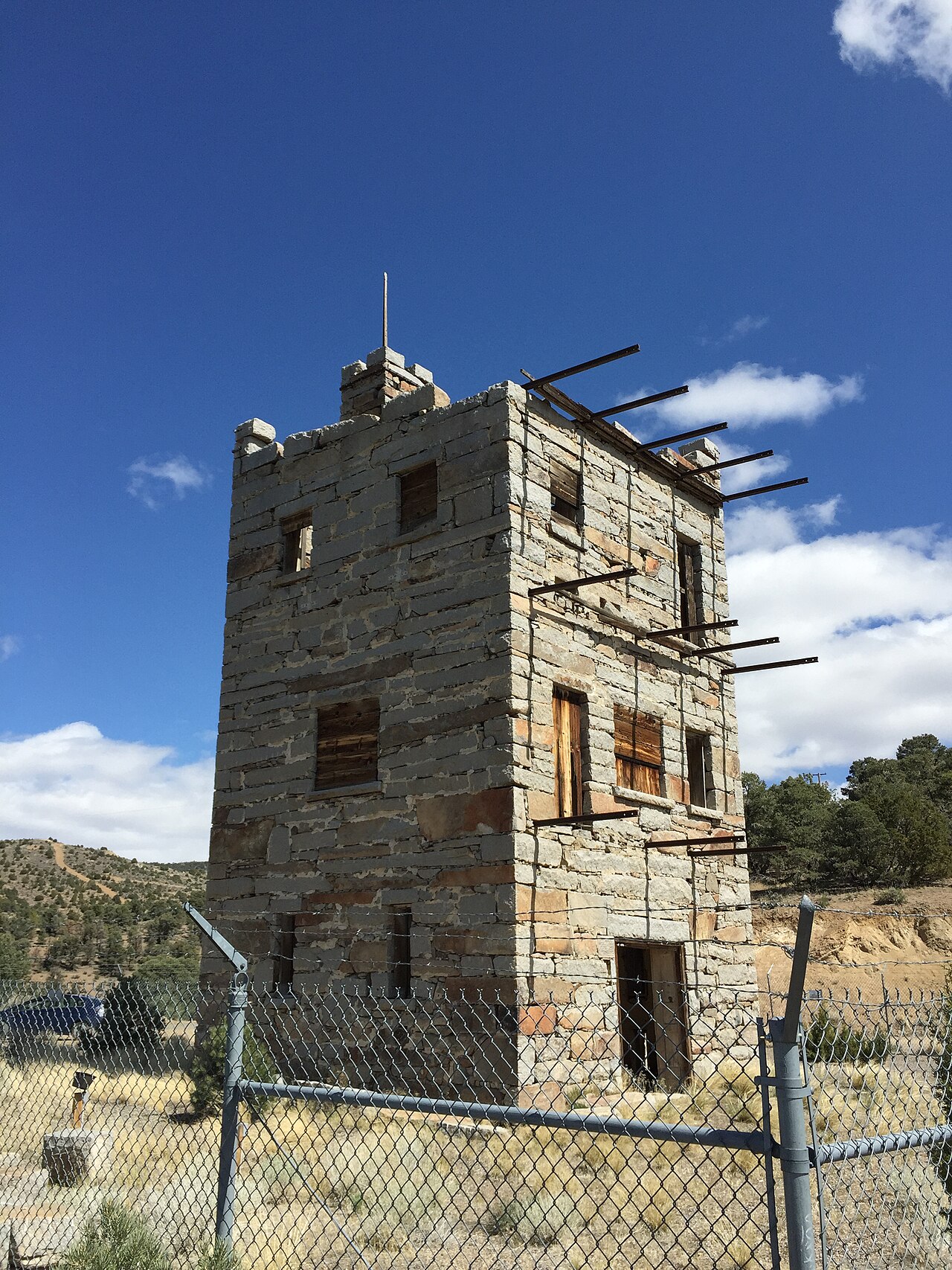
West of town on a ridge above the mouth of Pony Canyon stands the building people photograph most. Stokes Castle is a three-story tower of rough granite built in 1896–97 for Anson Phelps Stokes, a New York banker and mining investor who also led the Nevada Central Railroad. It is said to be modeled on a Romanesque watchtower he saw near Rome. Inside were fireplaces on every level, plate-glass windows and wood balconies and a rooftop viewing deck over the Reese River valley. The family used it only briefly in 1897 and 1898 and sold their local holdings in 1898. After decades of weather the wood interior and balconies collapsed, leaving the stone shell. A Stokes relative, Molly Knudsen, bought it in 1956 to keep it from being torn down, and it was added to the National Register of Historic Places in 2003.
Main Street today
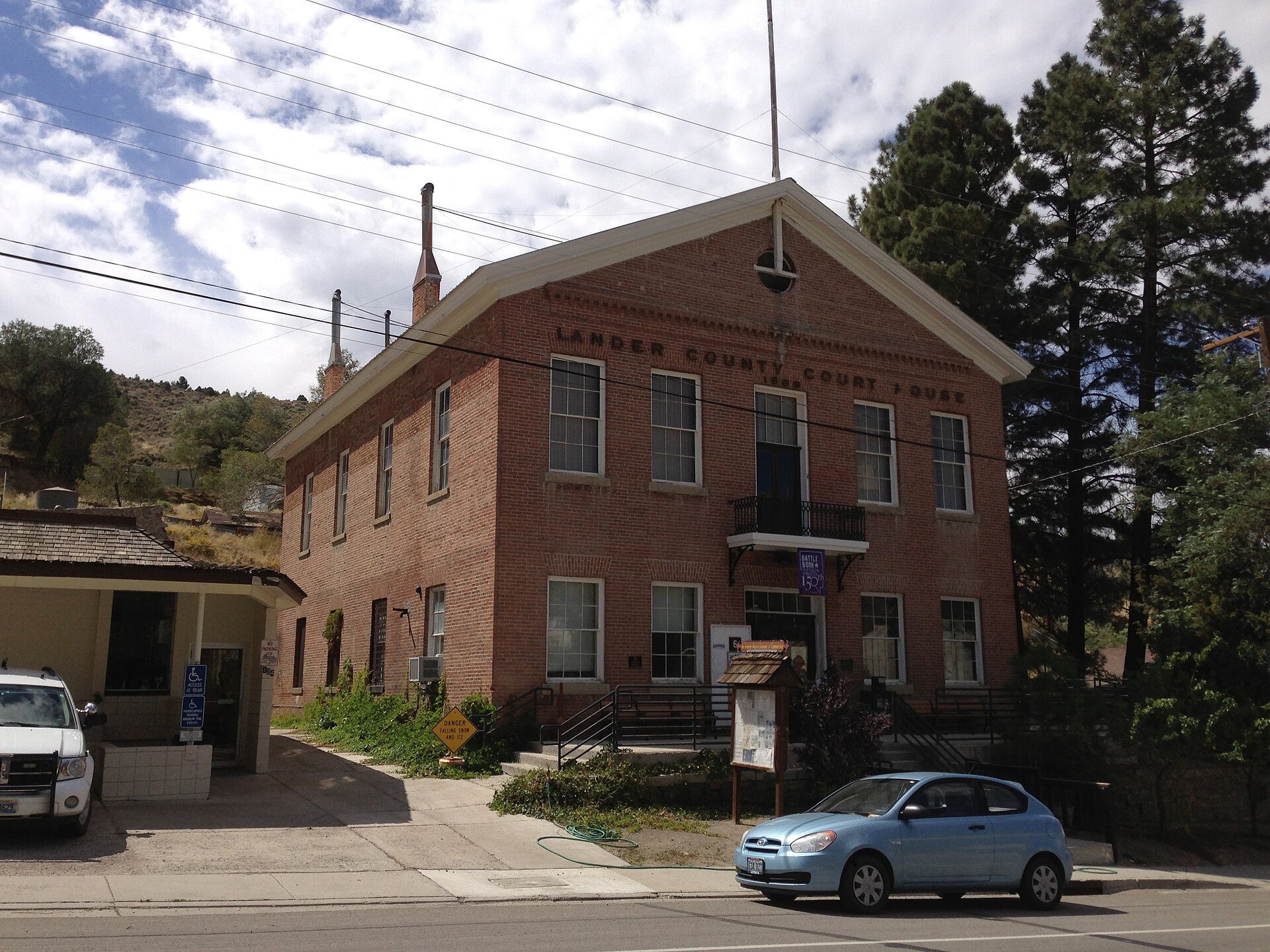
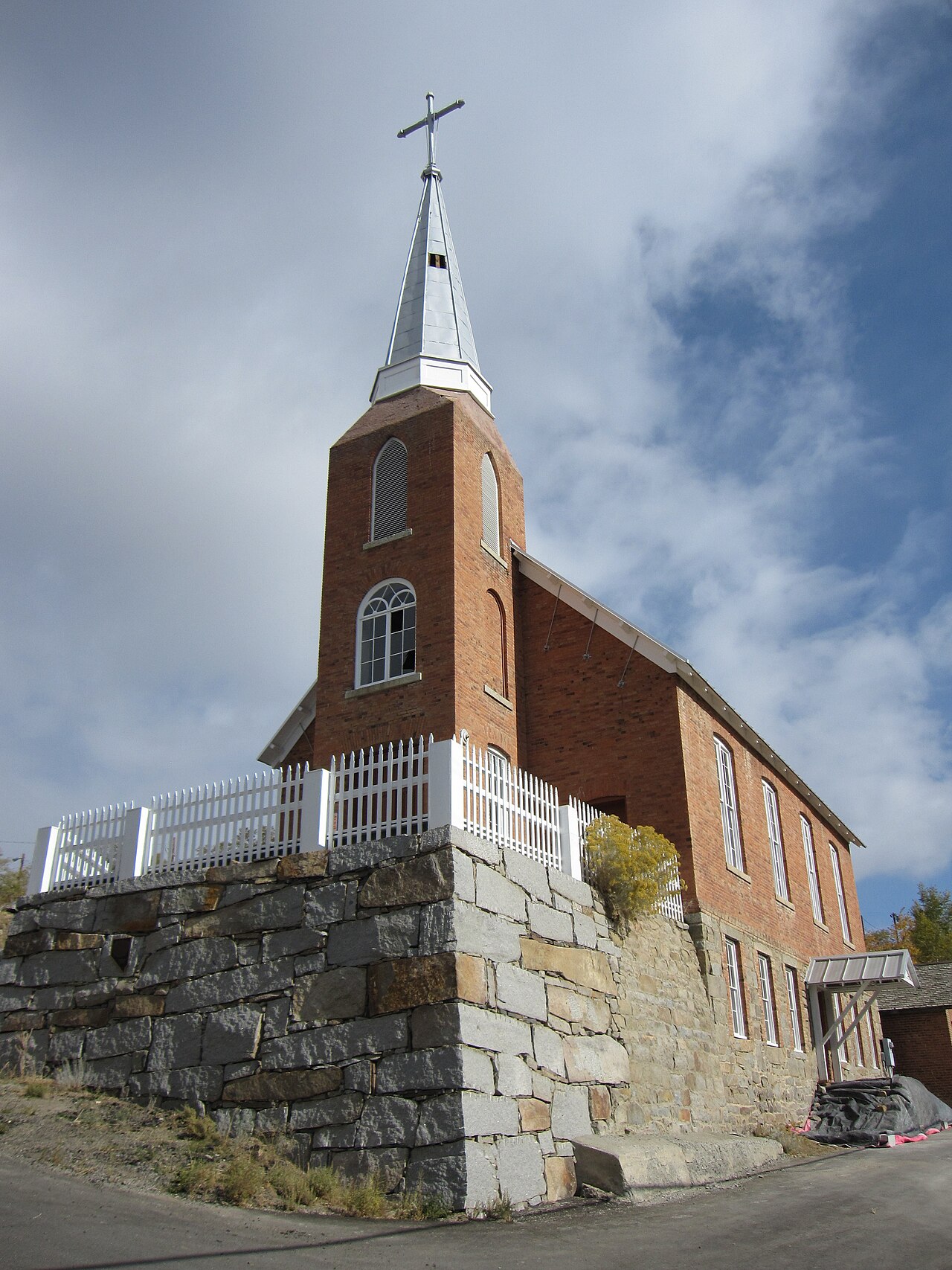
Austin’s main street climbs the canyon, and many of its brick and stone buildings are still standing. The Lander County Courthouse, built in 1871 to a design by Daniel P. Bell, is a two-story brick building with Greek Revival touches. The court moved to Battle Mountain when the county seat did in 1979, and the building has housed county offices since. St. Augustine’s Catholic Church, built in 1866, is generally described as the oldest surviving Catholic church building in Nevada; it has a 75-foot belfry, 1939 biblical murals by Rafael and Duff Jolly and an 1884 Kilgen pipe organ, and it has been restored as a cultural center. The Methodist church (1866) and St. George’s Episcopal Church (1877–78) also survive, and the Gridley store dates to 1863. The International Hotel, which still runs a saloon, began as a Virginia City building in 1859 and was taken apart, hauled over the mountains by wagon and put back together in Austin in 1863.
Uranium and turquoise
Two later finds kept prospectors interested. In 1953 Joe and Rudy Rundberg found uranium minerals about three miles south of town, and the Apex mine ran until 1968 and produced the mineral apexite. In 1973 Rita Hapgood found a small, rich pocket of turquoise in hills north of Austin. Known as Lander Blue, it yielded roughly 90 to 110 pounds of vivid blue spiderweb turquoise, among the most valuable in the world.
Timeline
Historic sites nearby
Further reading
Sources
Nevada SHPO — Austin historical marker
Western Mining History — Austin, Nevada
Wikipedia — Austin, Nevada; Stokes Castle; Lander County Courthouse; Reuel Colt Gridley
The Mark Twain Project — Roughing It, Chapter 45
Greater Austin Area Chamber of Commerce — Rich History
Travel Nevada — St. Augustine’s Cultural Center; Austin Historical Society
Photos: Austin, about 1868, Timothy H. O’Sullivan, National Archives (public domain). Gridley engraving, Harper’s Weekly, 1865 (public domain). Stokes Castle and courthouse photographs by Famartin, CC BY-SA 4.0. St. Augustine’s Church photograph by Chris M Morris, CC BY 2.0. All via Wikimedia Commons.