Deadwood, South Dakota: Wild Bill, Calamity Jane & the Most Lawless Camp in the Black Hills
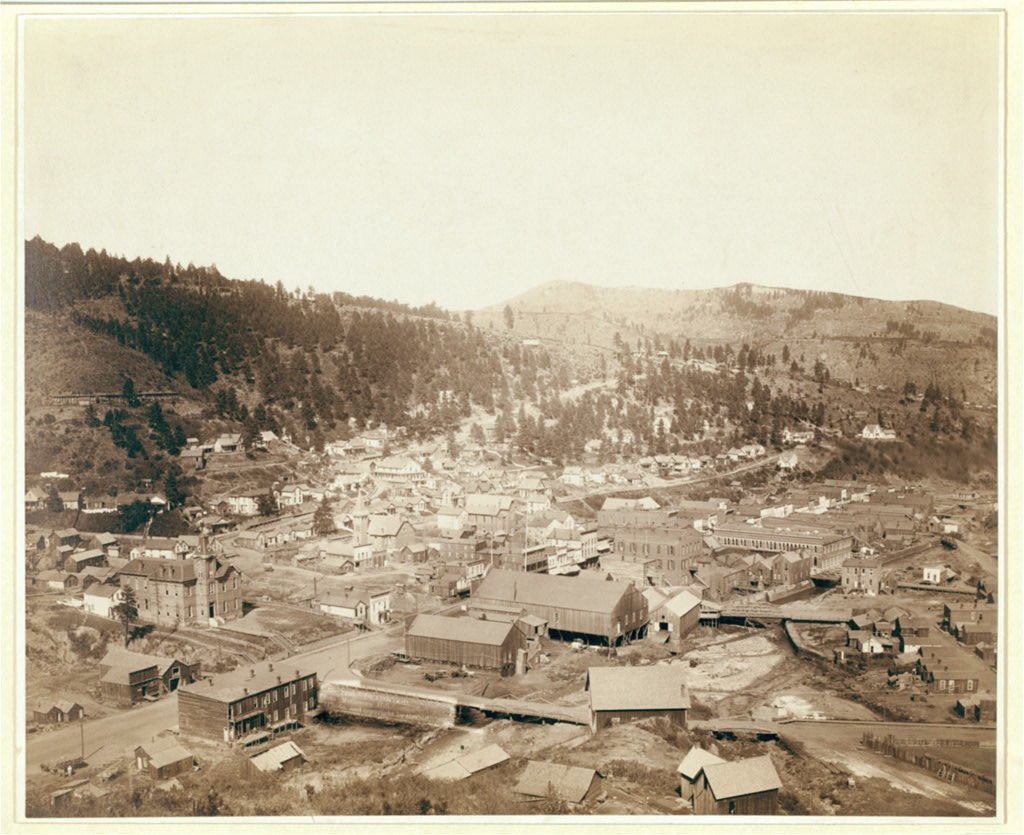
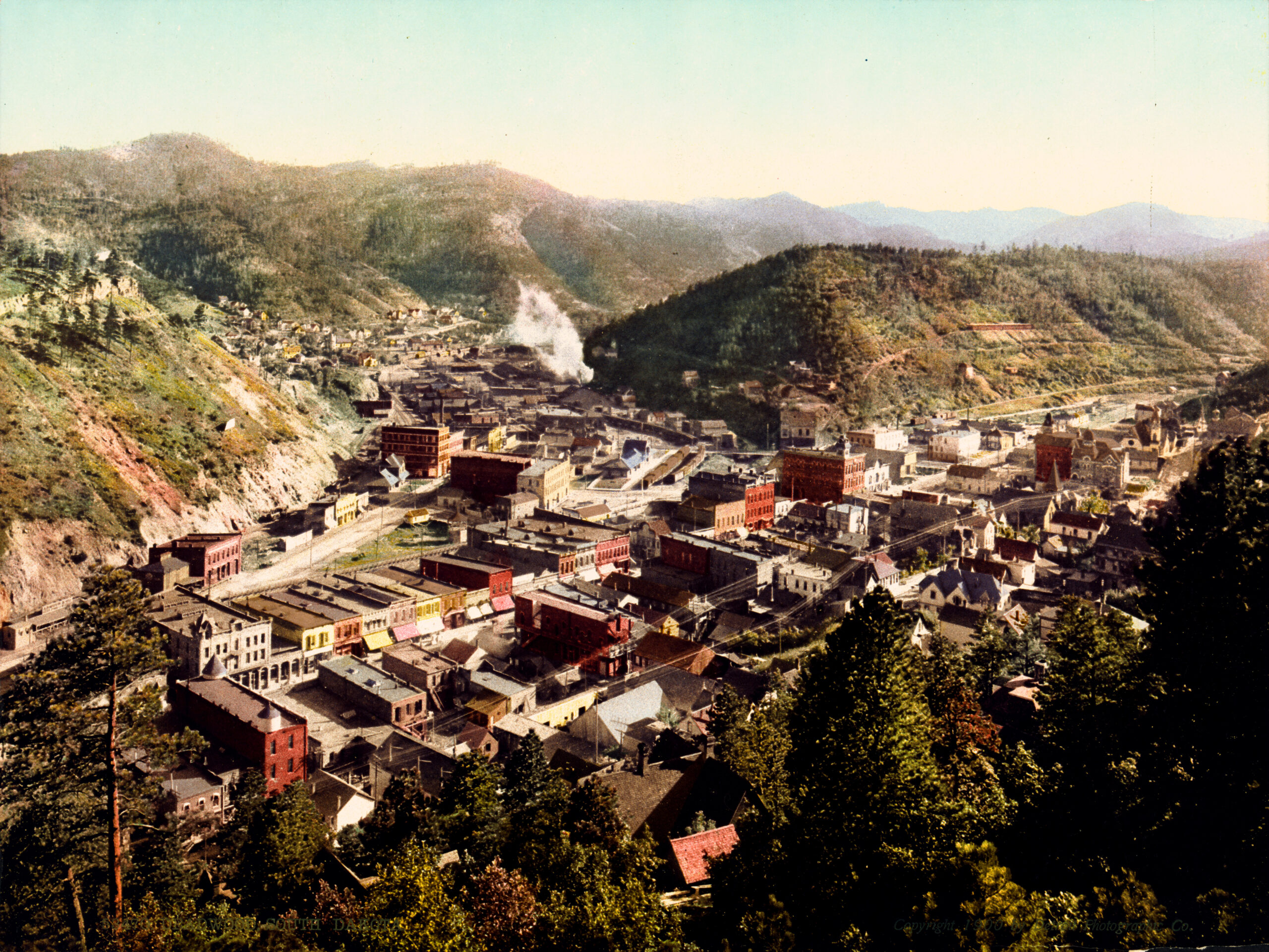
In the spring of 1876, thousands of miners flooded illegally into the Black Hills of South Dakota — land reserved to the Sioux under the 1868 Treaty of Fort Laramie. The camp they built in a narrow gulch became one of the most notorious places in American history: violent, chaotic, spectacularly wealthy, and operating entirely outside the law. Within months, Wild Bill Hickok had been shot dead at a poker table. Within years, the camp had a stock exchange, electric power, and a railroad connection. And unlike virtually every other gold rush boomtown, Deadwood never fully died — it just kept reinventing itself.
“Deadwood’s early lawlessness was not simply cultural — it was structural, arising from rapid settlement on land lacking lawful cadastral and municipal systems.” — National Park Service NHL nomination materials
An illegal camp on treaty land
To understand Deadwood you have to start with the legal reality: it should not have existed at all. The Black Hills were reserved to the Sioux and associated nations under the Treaty of Fort Laramie, signed April 29, 1868. The hills were sacred to the Sioux and explicitly protected under federal law.
What broke the treaty open was the 1874 Black Hills Expedition led by George Armstrong Custer — officially tasked with finding a location for a fort, but also explicitly exploring for gold. When Custer’s expedition reported gold discoveries, the news spread rapidly and the pressure on the treaty became overwhelming. Prospectors flooded into the Black Hills in direct violation of federal law, and the U.S. government — facing a choice between enforcing the treaty and accommodating the rush — ultimately chose the latter. The result was the Great Sioux War of 1876–1877 and the effective taking of the Black Hills from the Sioux, a dispossession that remains contested to this day.
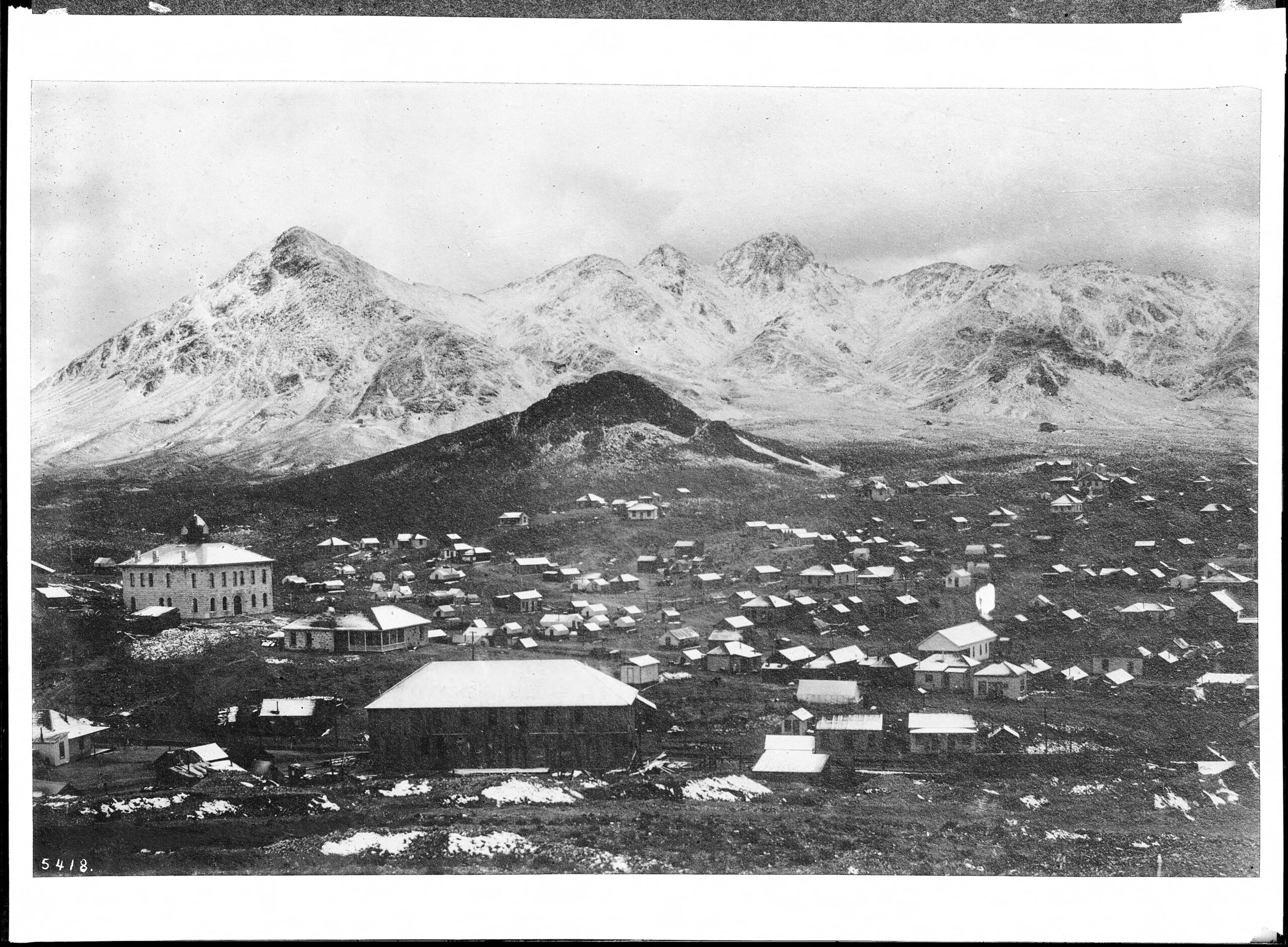
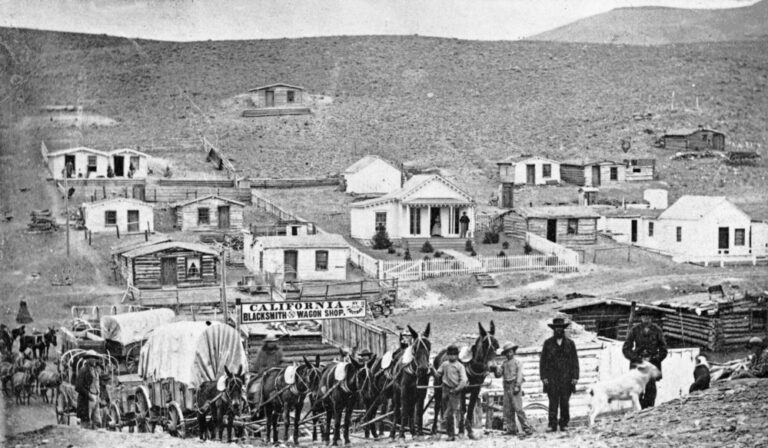
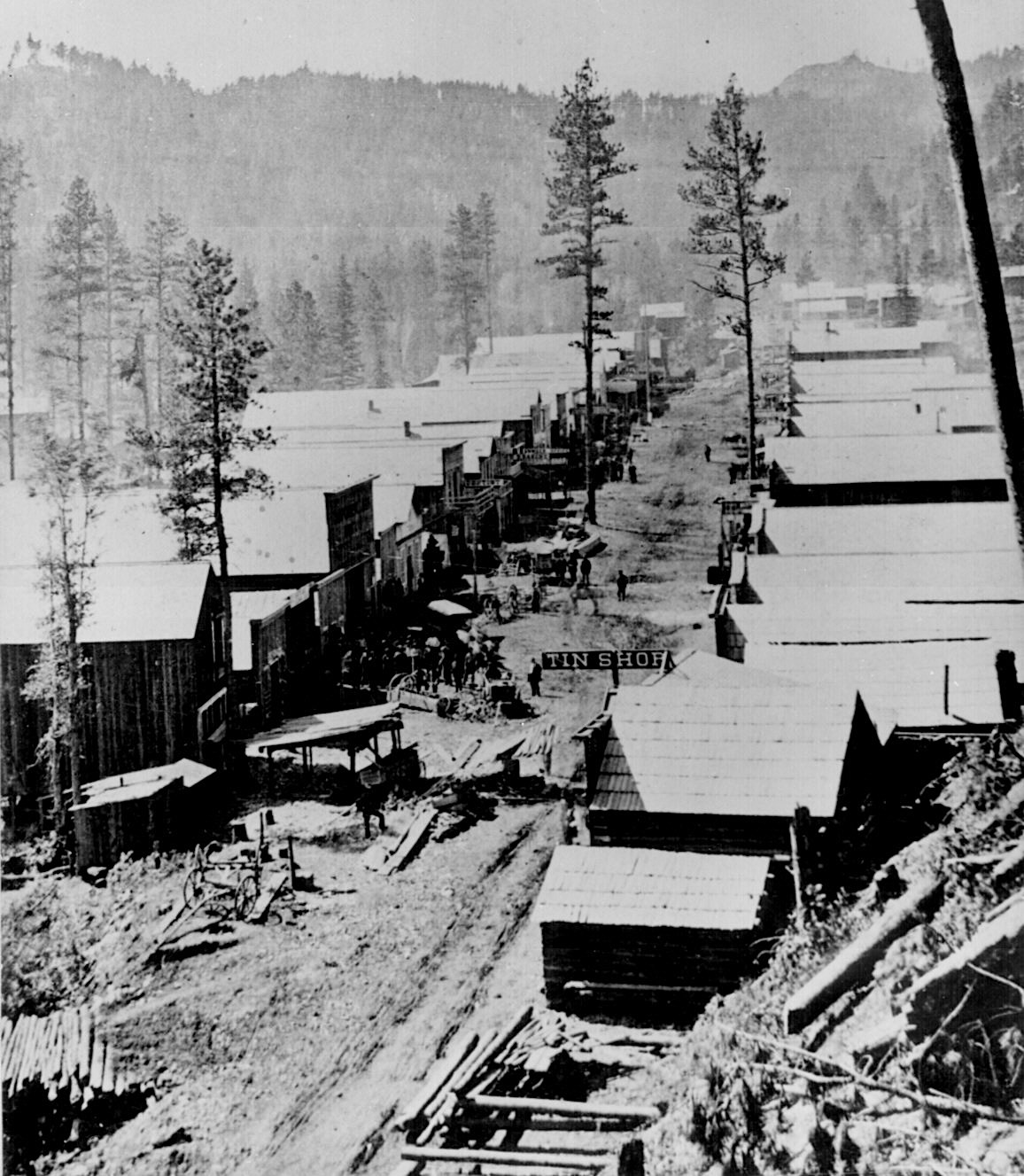
Deadwood grew out of this context. The townsite was formally laid out on August 26, 1876, but by then a chaotic camp had already been operating for months — developing its own ad hoc “miners’ court” justice system in the absence of any legitimate government authority. The disorder that made Deadwood famous wasn’t just a product of rough men and rough times. It was a structural consequence of building a city on land with no legal framework for settlement.
Wild Bill Hickok: the killing that defined a city
On August 2, 1876 — just days after the townsite was formally laid out — James Butler “Wild Bill” Hickok was shot and killed while playing poker at Saloon No. 10 in Deadwood. He was shot from behind by Jack McCall. Hickok was 39 years old and had been in Deadwood for only a matter of weeks.
The killing of Wild Bill Hickok is the single most documented event in Deadwood’s history and the one that most shaped its reputation. What followed was equally remarkable: a local miners’ court acquitted McCall — a legally dubious proceeding given the camp’s lack of proper jurisdiction. McCall was later retried by a legitimate territorial court, convicted, and executed by hanging. The two-trial sequence illustrates perfectly the legal chaos of Deadwood’s early existence.
The most famous detail of Hickok’s killing — that he was holding a hand of black aces and eights when he was shot, ever after known as “the dead man’s hand” — is almost certainly a later embellishment. No contemporaneous source records the specific cards. The “dead man’s hand” narrative appears to have crystallized in sources from the 1920s onward, decades after the event. The core facts are documented: Hickok was killed in Deadwood, at a poker table, by Jack McCall, shot from behind. The specific card hand is folklore.
Calamity Jane — documented presence, legendary romance
Martha Jane Cannary — known as Calamity Jane — is the other figure most associated with Deadwood’s Wild West mythology. Her connection to the Black Hills is historically real: she was present in the region during the boom years and is buried at Mount Moriah Cemetery in Deadwood, alongside Wild Bill Hickok. Her death and burial are treated as documented historical fact in local interpretive materials.
The romantic legend — that Calamity Jane was Hickok’s constant companion or lover — is far more complicated. It is heavily shaped by later storytelling, dime novels, and entertainment traditions including the acclaimed HBO series. The documented reality of their relationship is considerably more ambiguous than the popular narrative suggests.
The boom — and the fires that kept reshaping it
At its peak rush-era intensity, Deadwood held an estimated 25,000 people in and around the narrow Black Hills gulch — though this figure is best understood as a rush-region estimate rather than a stable city count. The 1880 U.S. Census recorded a more modest 3,777 people in Deadwood city proper, reflecting how dramatically the initial stampede had already subsided.
Deadwood’s economy evolved rapidly from the initial placer gold rush into deeper, more capital-intensive hardrock mining — centered not in Deadwood itself but in nearby Lead, where George Hearst and partners developed the Homestake Mine into one of the most productive gold mines in American history. Deadwood served as the regional service hub: banking, commerce, entertainment, and supply for the broader mining operation.
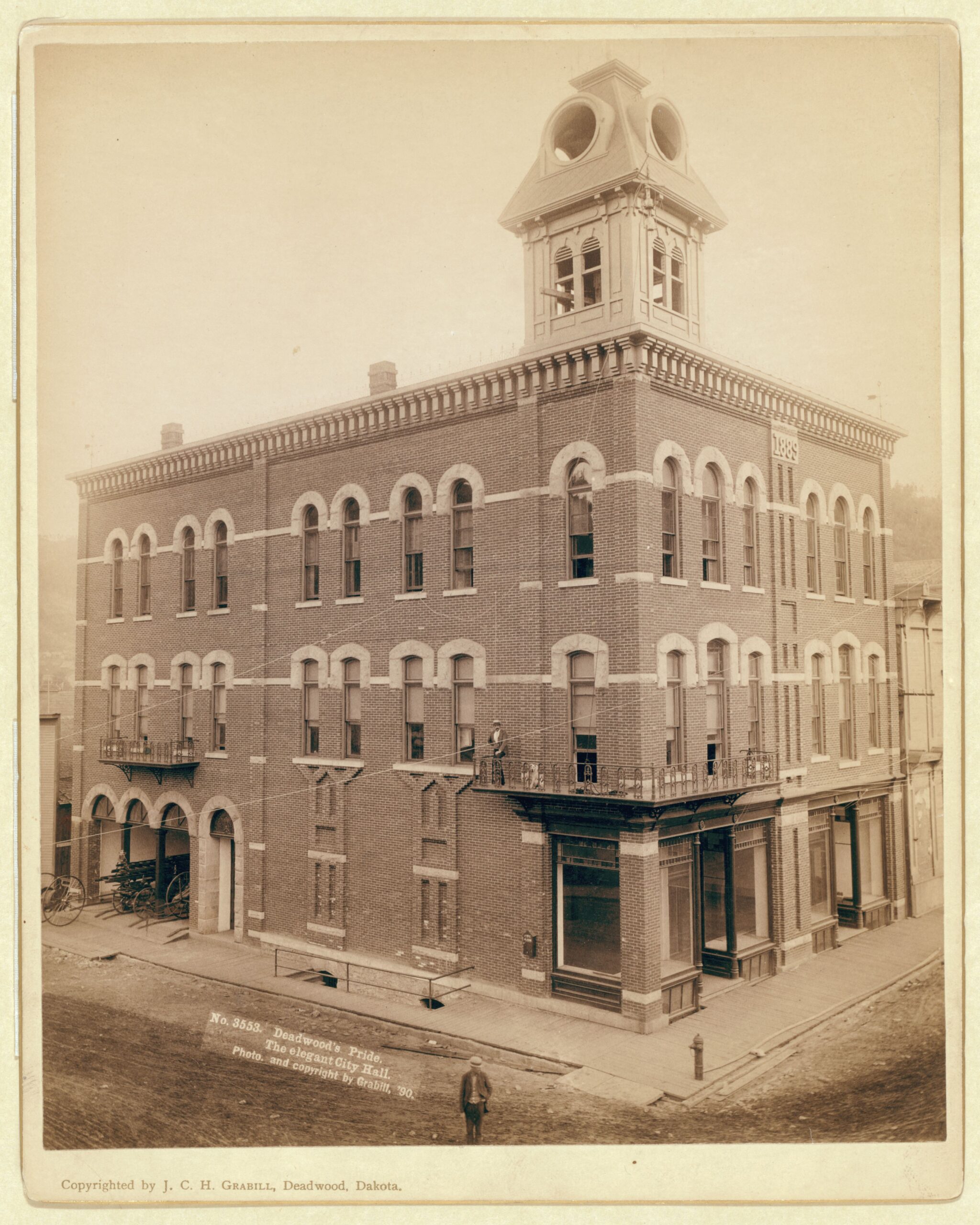
The town was repeatedly reshaped by fire. The major fire of September 26, 1879 destroyed large sections of Deadwood’s built environment and triggered significant outmigration. Rebuilding changed the town’s architectural character but also imposed repeated capital costs that made recovery harder each time. The depression of 1893 dealt another severe blow — the NPS nomination materials note a sharp population drop following the economic contraction, with some accounts describing a fall from boom-era highs to around 1,000 residents.
Al Swearengen and the Gem Theatre
No account of Deadwood is complete without Al Swearengen, proprietor of the Gem Theatre — the most notorious entertainment venue in the Black Hills. Swearengen and the Gem are historically documented: interpretive sources describe his role in Deadwood’s entertainment and prostitution economy, and he became one of the most complex and discussed figures of the era, immortalized in the HBO series by Ian McShane.
The scale and specific details of Swearengen’s operation vary considerably across retellings — modern portrayals tend to amplify extremes. The documented reality is that the Gem was real, Swearengen was real, and his operation was a central part of Deadwood’s vice economy. The precise revenues and specific acts attributed to him in popular culture should be treated as dramatized rather than documented.
Deadwood today — a living city, not a ghost town
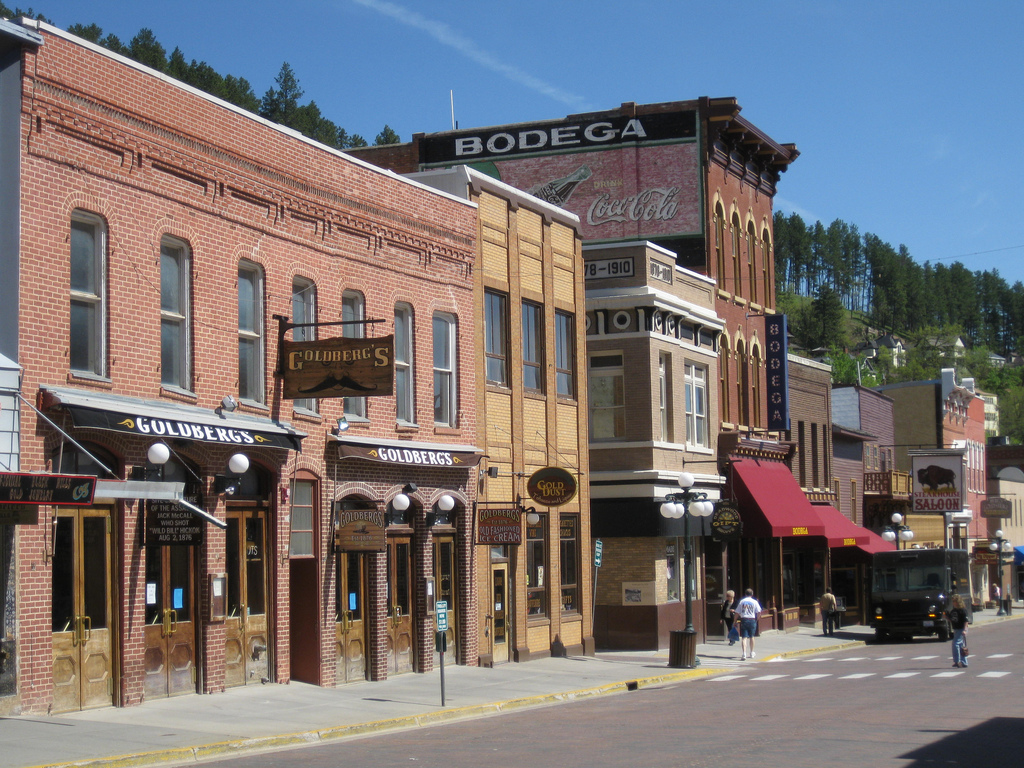
Deadwood is unusual among the towns on this site: it never fully became a ghost town. It contracted dramatically after the boom years, and by 1970 the population had fallen to 2,409. But it never emptied out completely, and in the late 20th century it found a new identity as a heritage tourism destination.
The turning point was 1961, when Deadwood was designated a National Historic Landmark district — one of the largest such districts in the country, recognizing the preserved frontier-era architecture of the core streetscape. Then in 1989, South Dakota voters approved limited gaming in Deadwood — not as an end in itself but explicitly as a preservation finance mechanism. Casino revenues fund the ongoing maintenance and restoration of the historic district. It’s an unusual and largely successful model that has allowed Deadwood to maintain its historic character while remaining economically viable.
Today Deadwood has a resident population of around 1,400, a robust tourism economy, professionally operated museums, guided tours, and regulated gaming — all coexisting within a streetscape that still feels genuinely connected to the Wild West era.
Key dates
What to see in Deadwood
Ghost towns near Deadwood
Sources
National Park Service — Deadwood Historic District NHL nomination
National Archives — Treaty of Fort Laramie (1868)
National Park Service — Great Sioux War interpretive article
Deadwood History Inc. — Hours & Admission
City of Deadwood — Deadwood timeline · Mount Moriah Cemetery
South Dakota State News — Hanging of Jack McCall
Travel South Dakota — Plan your trip to Deadwood