Rhyolite Ghost Town, Nevada: Boom, Bust & the City That Vanished in a Decade
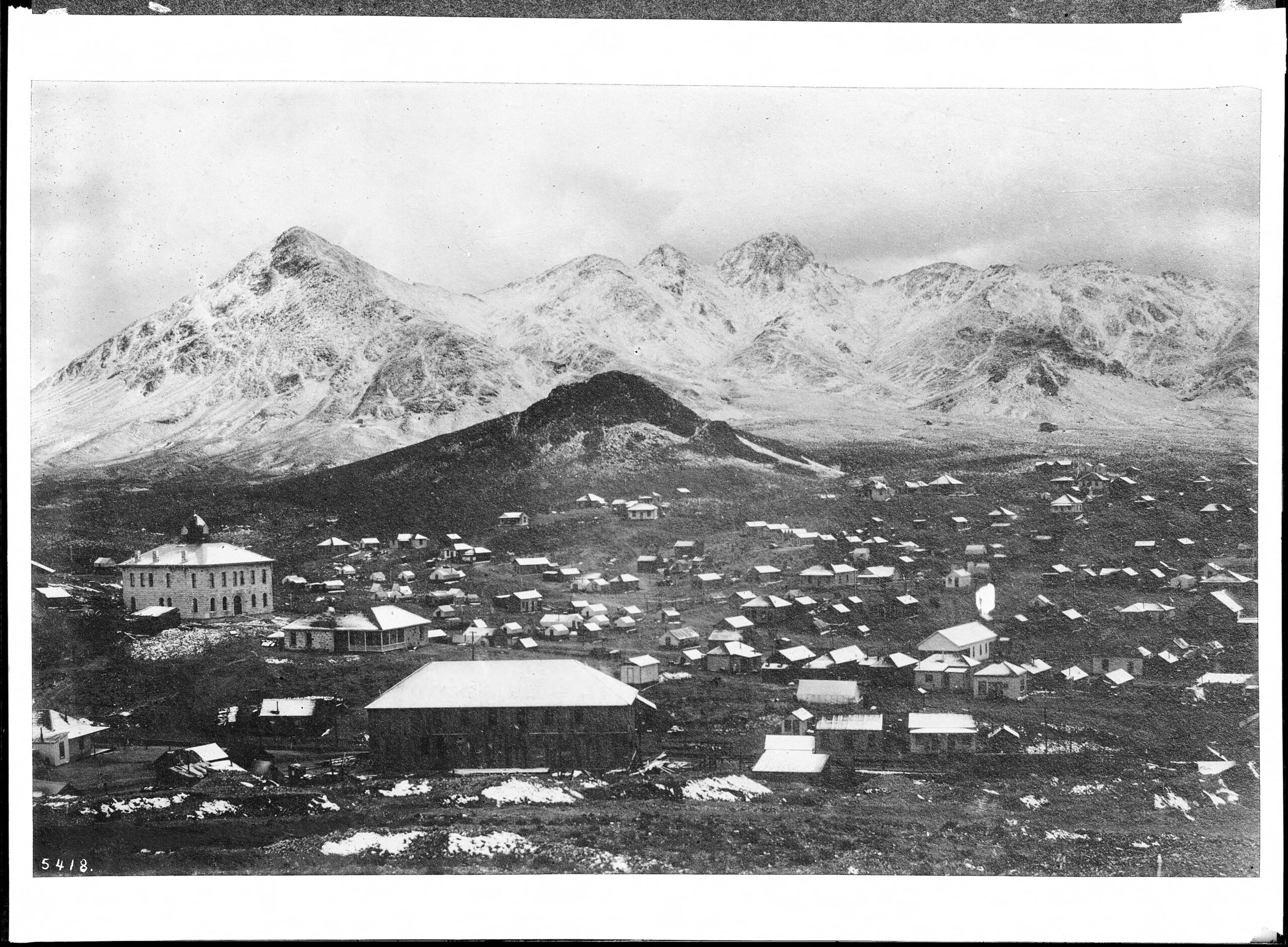
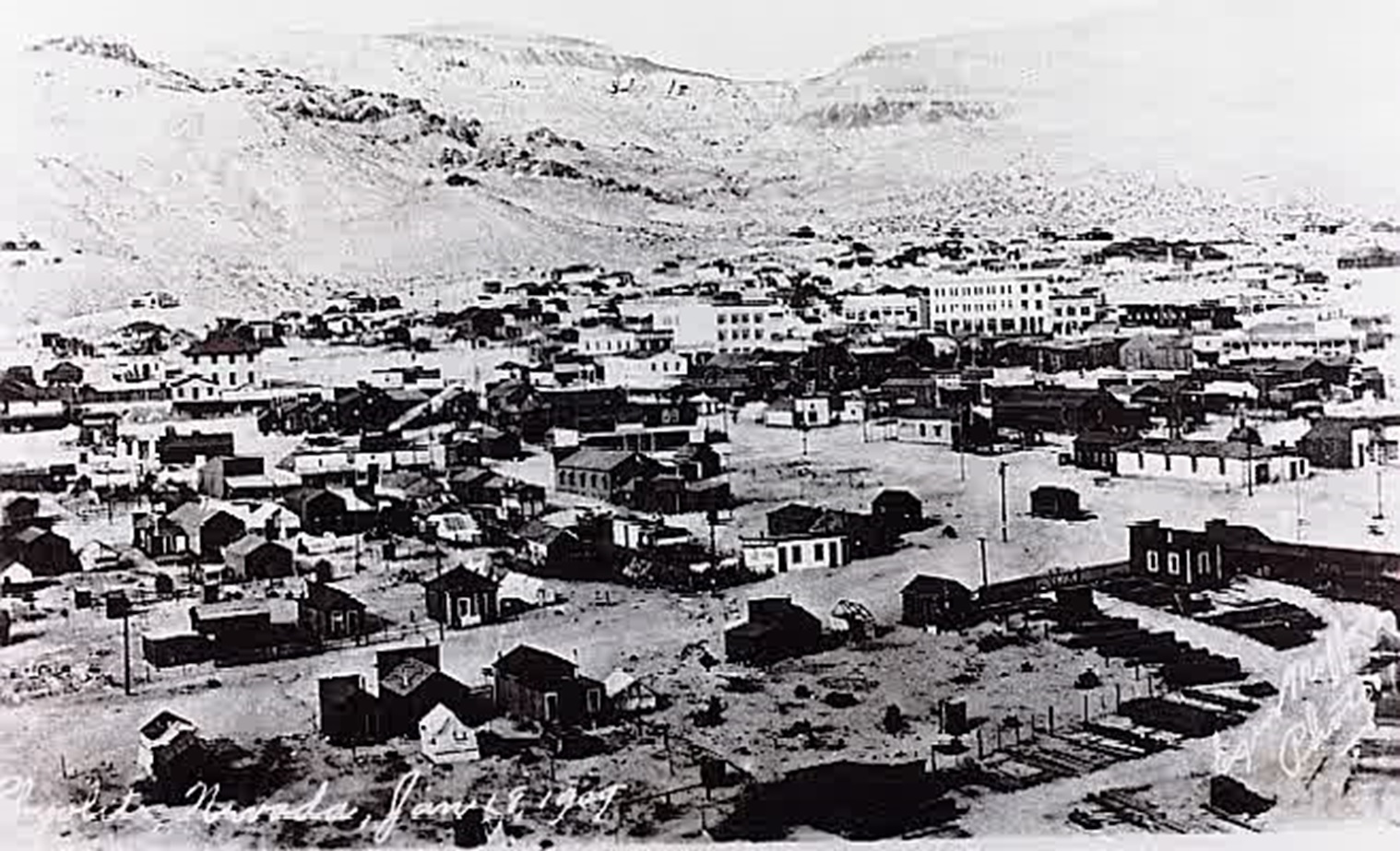
In the summer of 1904, two prospectors discovered gold in the remote Bullfrog Hills of southern Nevada. Within four years, a city of thousands had risen from the desert floor — complete with three railroad lines, a stock exchange, electric lights, an opera house, and a three-story concrete bank. By 1916, it was silent. Rhyolite is one of the most dramatic boom-and-bust stories in the history of the American West, and today its ruins stand as a free, accessible, and strikingly photogenic ghost town just four miles from the Nevada town of Beatty.
“Some bunches of rich ore have been found, but the mass as a whole is of very low grade.” — U.S. Geological Survey Bulletin 303, 1907
The Bullfrog discovery and the birth of Rhyolite
The story begins on August 4, 1904, when prospectors Frank “Shorty” Harris and Ernest “Ed” Cross discovered a rich gold deposit in what would become known as the Bullfrog district. The find triggered an immediate rush. Within weeks, hundreds of men were flooding into the remote canyon. Harris and Cross later disagreed about the precise details of who found what first — a detail worth noting, since boomtown origin stories tend to be shaped as much by memory and reputation as by fact.
What followed was not a single founding event but a process of competing townsite companies racing to establish settlements within miles of each other. By November 1904, the towns of Bullfrog, Bonanza, and Rhyolite had all been “started” by rival promoters, each staking out lots and selling to incoming settlers. Rhyolite — named for the silica-rich volcanic rock found throughout the hills — quickly emerged as the dominant settlement, absorbing residents from its competitors as its fortunes rose.
The boom years: a city in the desert
Rhyolite’s growth was extraordinary even by the standards of the Nevada mining booms. By May 1905 the town already counted twenty saloons — a standard frontier measure of economic activity — along with multiple banks and newspapers. The presence of banks and a stock exchange this early is significant: it signals that Rhyolite’s economy was as much about speculative investment as actual mining. Investors were pouring money into the district on the expectation of future returns, not just current ones.
At its peak around 1907–1908, Rhyolite had an estimated population of around 5,000 people — though some sources cite figures as high as 10,000 when the wider Bullfrog district is included. The Nevada Historical Society’s most reliable estimate puts the town proper at approximately 5,000 by 1907. Whatever the precise number, Rhyolite was at that point the third-largest city in Nevada.
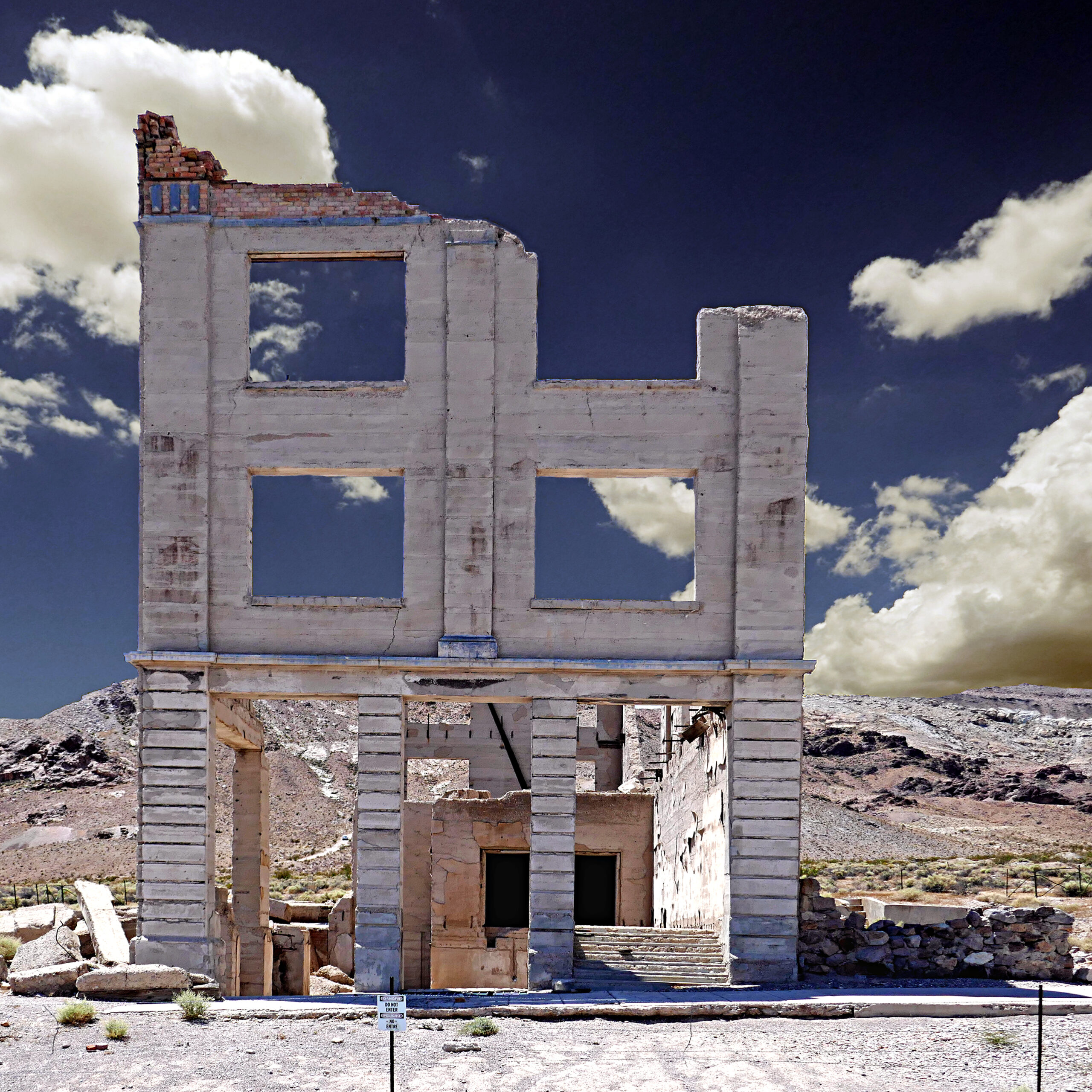
The town’s infrastructure was remarkable for its remote desert location. Three railroad lines connected it to the outside world: the Las Vegas and Tonopah Railroad and the Tonopah and Tidewater Railroad among them. Running water, electricity, a telephone exchange, a hospital, a school, churches, lodging houses, and 53 saloons all operated simultaneously. The centerpiece was the Cook Bank Building — a three-story reinforced concrete structure built in 1908 at a cost of $90,000, equivalent to roughly $3 million today.
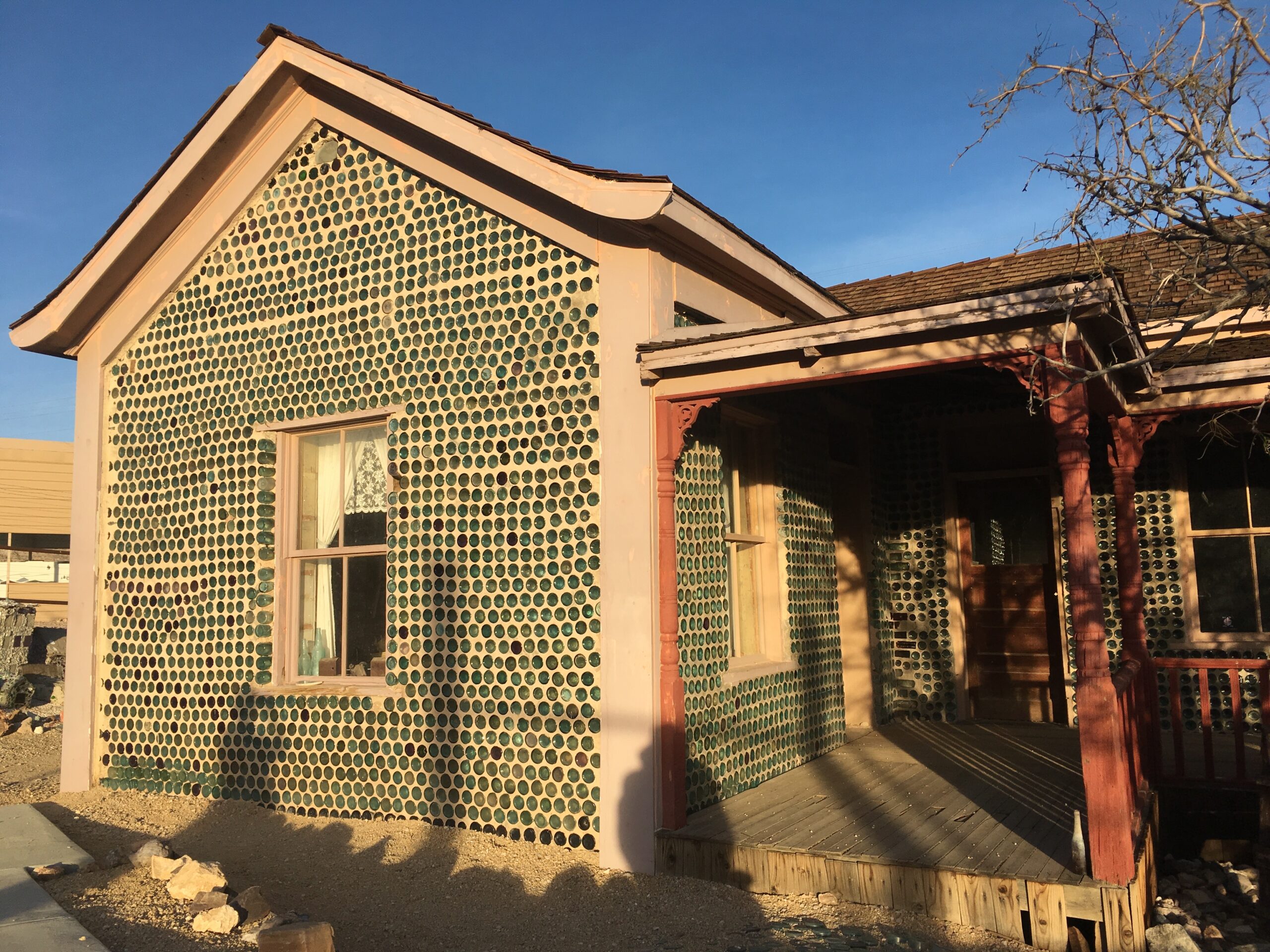
The bottle house — Rhyolite’s most unusual landmark
Among Rhyolite’s many curiosities, the Bottle House stands apart. Built in 1906 by miner Tom Kelly, the structure was constructed from approximately 50,000 glass bottles — primarily Adolphus Busch beer and liquor bottles sourced from the town’s many saloons — mortared together in rows. Building materials were scarce and expensive in the remote desert; empty bottles were not.
The house proved remarkably durable. It survived over a century of desert heat, cold, and wind, and was later used as a filming location by Paramount Pictures in the 1920s when Hollywood discovered Rhyolite’s ruins as a ready-made Western backdrop. The Bottle House remains one of the best-preserved structures on the site today.
The collapse: ore, capital, and the Panic of 1907
The seeds of Rhyolite’s destruction were present even during its boom. A 1907 U.S. Geological Survey bulletin examining the Bullfrog district made a blunt assessment of the ore quality: while rich pockets existed, “the mass as a whole is of very low grade.” Low-grade ore deposits can be profitable — but only with dependable transport, water supply, efficient milling, and sustained capital investment. These were exactly the conditions that became fragile when financial confidence faltered.
The financial panic of 1907 was the first major blow. The same speculative capital that had fueled Rhyolite’s rapid growth evaporated quickly when broader markets contracted. Investors who had bought into mining stocks and town lots on the expectation of future returns began to exit. The infrastructure that made Rhyolite viable — railroads, water, electricity — became costly liabilities when ore throughput declined.
By 1910 the population had dropped sharply. The closure of the Montgomery-Shoshone Mine in 1911 — the district’s most prominent and productive operation — delivered the decisive blow. The last newspaper folded in 1912. Electricity was shut off around 1914–1916 (sources differ on the exact date). By the late 1910s, Rhyolite was effectively empty — less than fifteen years after its founding rush had begun.
“When an economy’s service layer is built on expectations of future mining returns rather than stable realized returns, shocks in capital markets translate quickly into out-migration.”
Hollywood and a second life
Even in abandonment, Rhyolite found occasional purpose. In the 1920s, Paramount Pictures used the ruins as a filming location for The Air Mail, reportedly restoring some structures for the shoot. The dramatic concrete skeleton of the Cook Bank Building and the wide desert landscape made the site a natural choice for filmmakers seeking an authentic Western backdrop without the expense of building sets.
Then in 1984, Belgian artist Albert Szukalski created a haunting outdoor sculpture at the edge of the townsite: a life-size recreation of Leonardo da Vinci’s Last Supper rendered in ghostly white silhouette figures against the desert. This installation became the founding piece of the Goldwell Open Air Museum, a private outdoor sculpture park that now sits adjacent to the historic area and is open 24 hours a day, seven days a week, free of charge.
Rhyolite today
The Rhyolite Historic Area is managed by the Bureau of Land Management (BLM) as a day-use site on federal public land — not inside Death Valley National Park, though it sits just outside the park boundary. Access is free, the road is paved and accessible by regular passenger car, and the site is open year-round from sunrise to sunset.
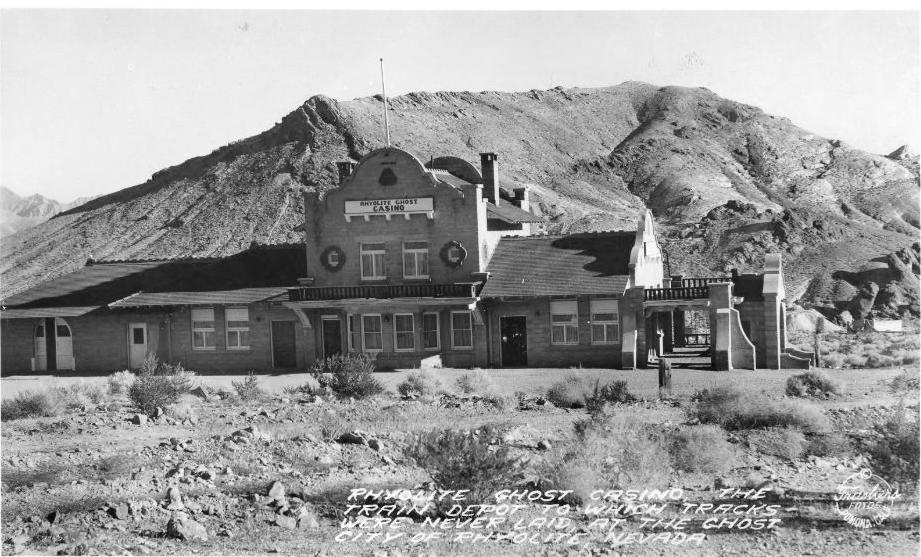
The ruins are extensive and legible. The Cook Bank Building’s three-story concrete skeleton dominates the landscape. The Bottle House still stands. The Las Vegas and Tonopah Railroad depot — surprisingly intact — gives a visceral sense of how connected and modern Rhyolite once was. Foundations, crumbling walls, and the outlines of streets are still readable across the site. And at the entrance, the Goldwell sculptures add an unexpected contemporary layer to the historic landscape.
What to see
The Cook Bank Building
Built in 1908 at a cost of $90,000, the Cook Bank’s three-story concrete skeleton is Rhyolite’s most iconic image. The roofless structure’s open window frames create natural compositions against the surrounding mountains and desert sky — it’s one of the most photographed ruins in the American West.
The Tom Kelly Bottle House
Built in 1906 from approximately 50,000 glass bottles, this is one of the most remarkable improvised structures on the western frontier. Stand close and you can still make out the individual bottles embedded in the mortar. It later served as a Paramount Pictures filming location in the 1920s.
The Railroad Depot
The Las Vegas and Tonopah Railroad depot is one of Rhyolite’s best-preserved buildings. It’s a powerful reminder that this wasn’t a rough mining camp — it was a city with three rail connections to the outside world.
Goldwell Open Air Museum
Just at the entrance to Rhyolite, this private outdoor sculpture park founded by Belgian artist Albert Szukalski is open 24/7, free of charge. The centerpiece is a ghostly white silhouette recreation of the Last Supper — haunting and beautiful against the desert landscape. Non-commercial photography is welcome; commercial use requires permission from the property owners.
Ghost towns nearby
Further reading
Sources
Bureau of Land Management — Rhyolite Historic Area
National Park Service — Rhyolite Ghost Town, Death Valley
National Park Service — Death Valley Historic Resource Study
U.S. Geological Survey — Bulletin 303: Goldfield and Bullfrog Districts (1907)
Nevada Historical Society Quarterly (1972) · Goldwell Open Air Museum — goldwellmuseum.org
Travel Nevada — Rhyolite Ghost Town
More ghost towns in Nevada: Goldfield