Goodsprings, Nevada: The Boomtown That Outlasted Its Own Ghosts
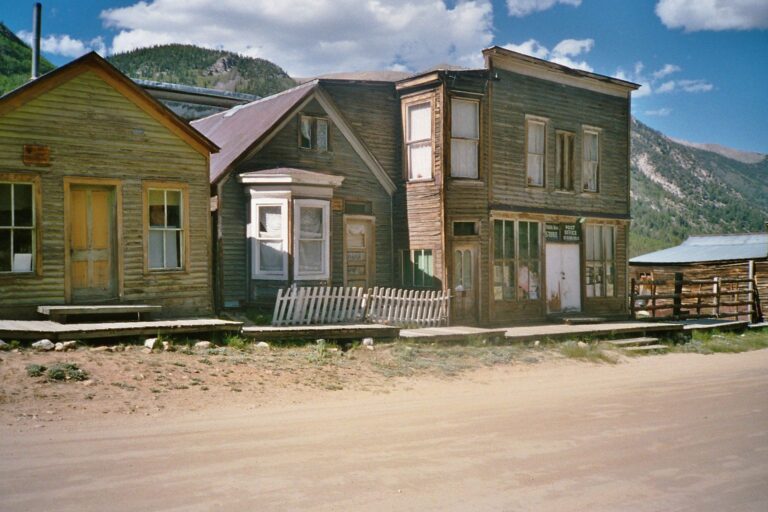
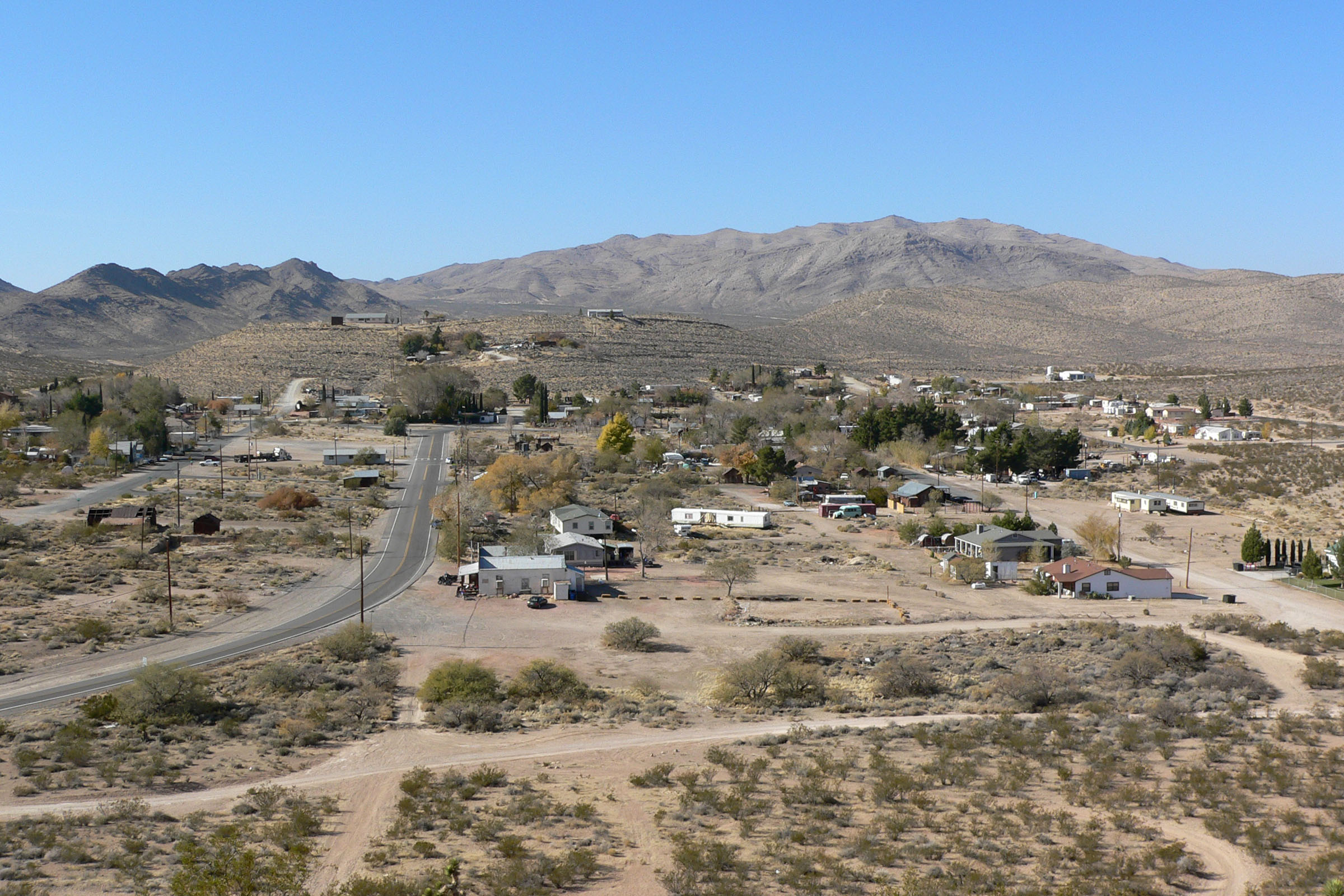
Most ghost towns end with a last resident locking a door and driving away. Goodsprings never quite did. Tucked into the southeastern foothills of the Spring Mountains, about half an hour southwest of the Las Vegas Strip, it briefly outgrew Las Vegas itself, collapsed almost overnight when a single war ended, and then refused to disappear. A little over a century later a couple of hundred people still live along its dirt-shouldered streets, a 1913 saloon still serves burgers to travelers, and a schoolhouse from the same year still holds classes.
That stubborn survival is what makes Goodsprings unusual. It carries the full arc of a Great Basin mining camp — a spring, a rancher, a strike, a railroad, a fortune, a bust — but it kept enough of its bones intact that you can still walk through the story rather than just read a plaque about it.
Water First, Then Ore
The town owes its existence to an accident of geology: natural artesian springs bubbling up in an otherwise punishing desert. Around 1868 a cattle rancher named Joseph Good set up a camp near that water to graze stock and mill small amounts of ore, and his name stuck to the place long before there was a town to attach it to.
Mining in the surrounding Yellow Pine district actually predates the settlement by decades. Mormon prospectors had opened rich lead deposits at nearby Potosi Mountain back in 1856 — the oldest documented lode mine in Nevada. Gold turned up in the district in 1893, and the usual sequence followed: prospectors, a scatter of tent cabins, a crude mill, and a post office, all before the century turned.
The Yellow Pine Machine
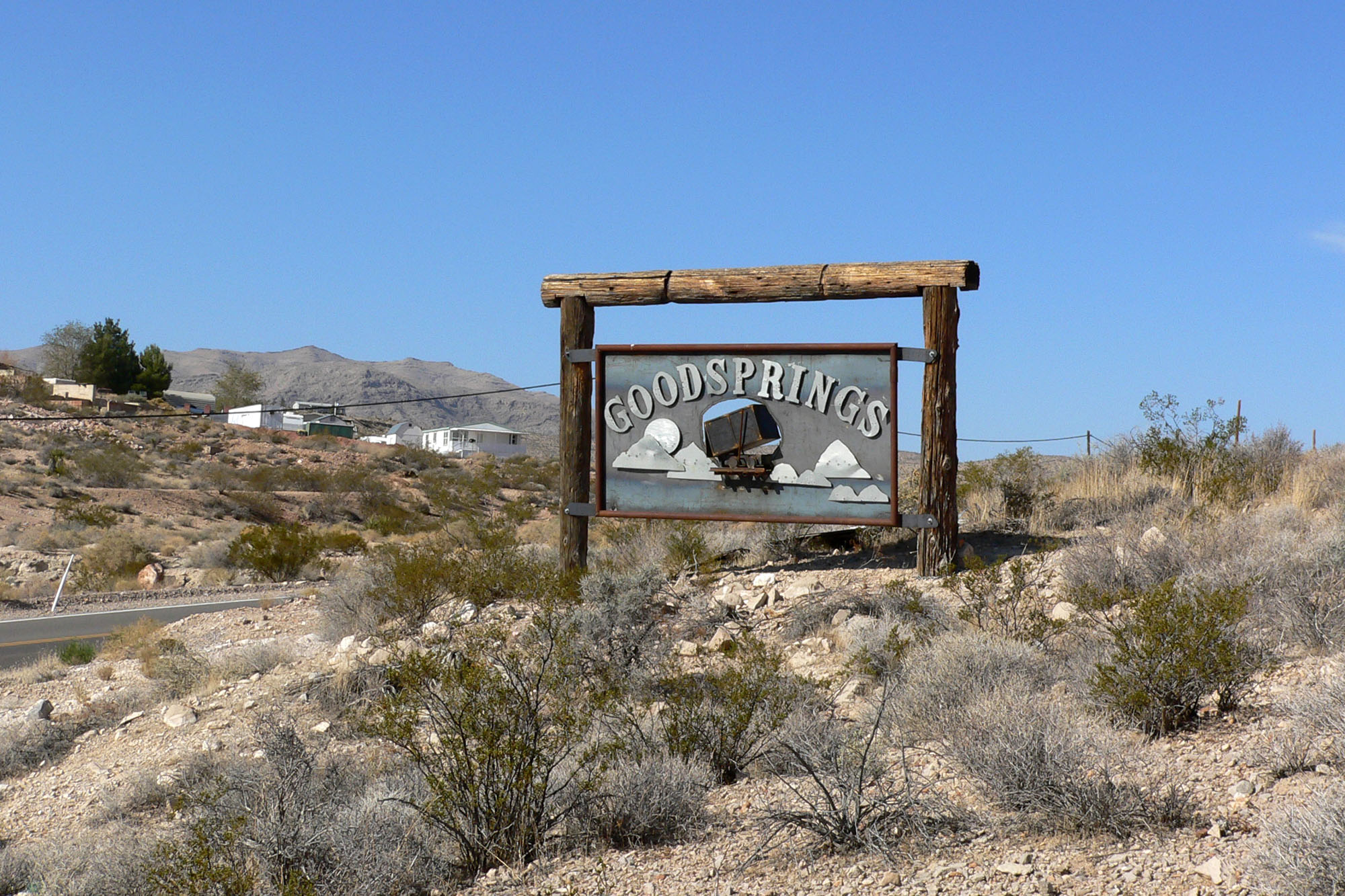
Goodsprings was formally founded in 1900, and the following year it got the engine that would drive its boom. In 1901 J.F. Kent incorporated the Yellow Pine Mining Company, consolidating a tangle of regional claims into a single operation capable of pulling zinc, lead, copper, silver, and gold out of the same district. Consolidation mattered: it turned scattered prospects into an industry.
What the district lacked was a cheap way to move ore. That changed in 1905, when the San Pedro, Los Angeles and Salt Lake Railroad ran a mainline siding through Jean, a few miles east. By 1911 a narrow-gauge line connected the Yellow Pine mines directly to the Jean siding, and the economics flipped. Ore that had been expensive to haul was suddenly cheap to ship, and Goodsprings surged.
Peak: 1915–1916
The boom crested between 1915 and 1916, when the population reached somewhere between 800 and 1,000. The timing was no coincidence. The First World War had created enormous demand for lead and zinc — the metals that go into ammunition — and the Yellow Pine district delivered. Between 1915 and 1925 it produced more than $25 million in mineral wealth.
Main Street filled out accordingly. At its height the town supported nine saloons, several hotels, restaurants, dry-goods stores, a bank, a bakery, a theater, a weekly newspaper, a hospital, an automobile dealership, an ice-cream parlor, and a modern schoolhouse. In May 1916 the businessman George Fayle opened the two-story Fayle Hotel, advertised as the finest in the West: twenty rooms, electric light, steam heat, and hot and cold running water. Las Vegans drove out for the weekend to eat and drink there.
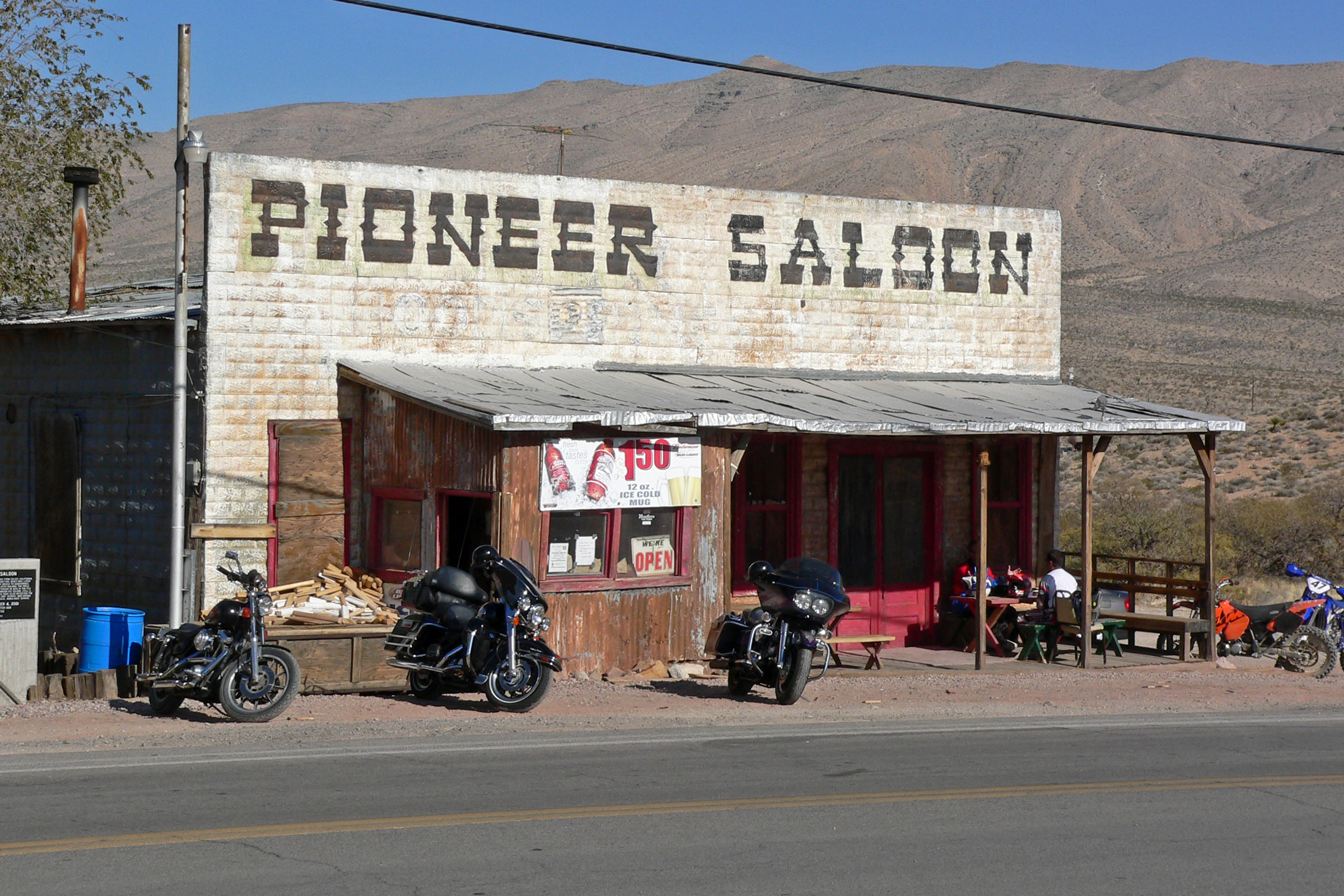
The Pioneer Saloon
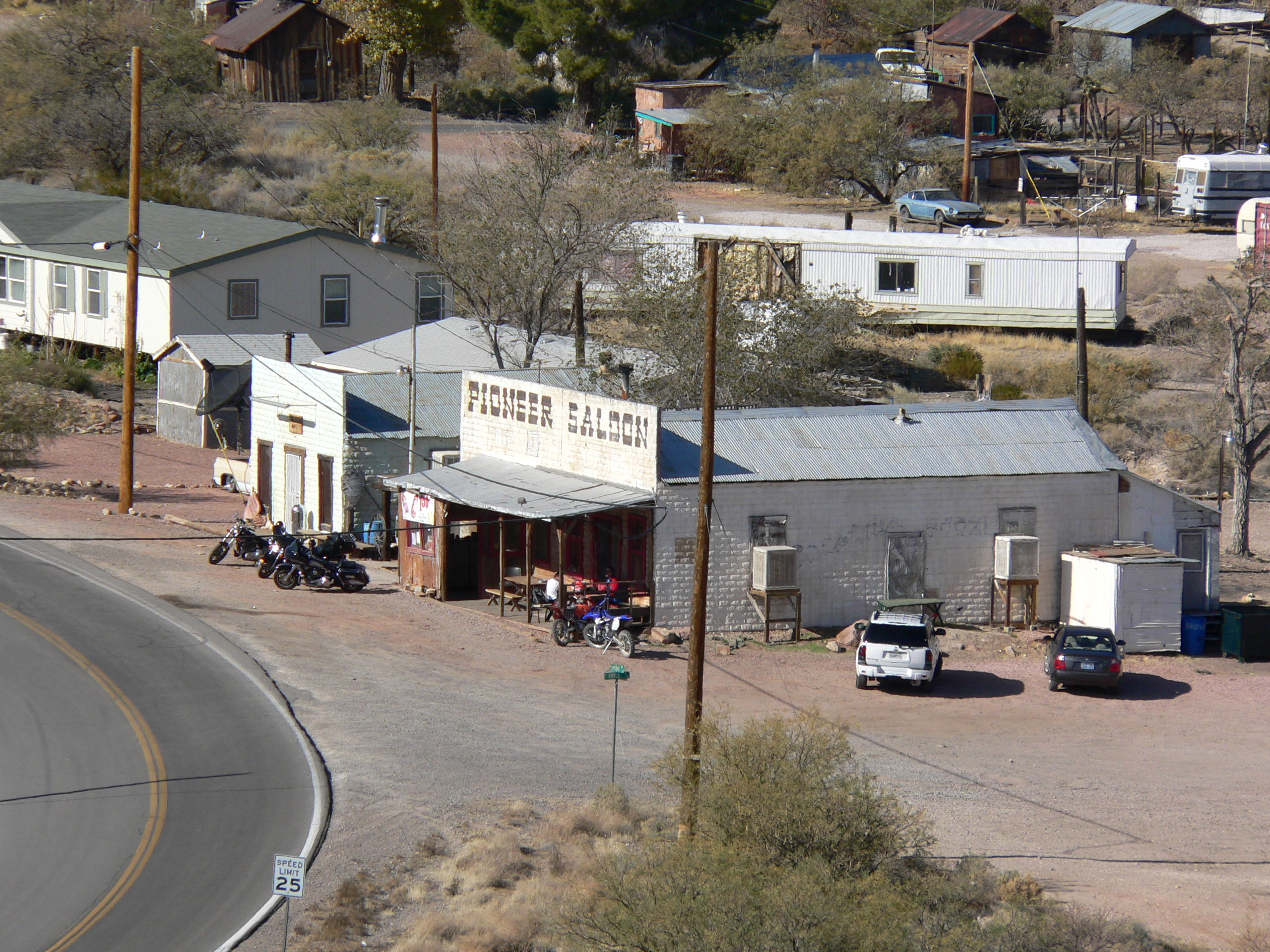
Fayle had built something more durable three years earlier. The Pioneer Saloon, put up in 1913, is now the oldest continuously operating bar in southern Nevada, and it survives for a very practical reason: it is made of metal. Its walls are prefabricated stamped-tin sheets ordered from Sears, Roebuck & Company, a fire-resistant skin that spared the building from the blazes that consumed its wooden neighbors over the decades.
Inside is a solid mahogany bar with a travelogue of its own. It was built in Brunswick, Maine, in the 1860s, shipped around Cape Horn to San Francisco, hauled by ox-wagon to the mining town of Rhyolite, and finally relocated to Goodsprings. Like the town around it, the bar outlasted several places that were supposed to be more important.
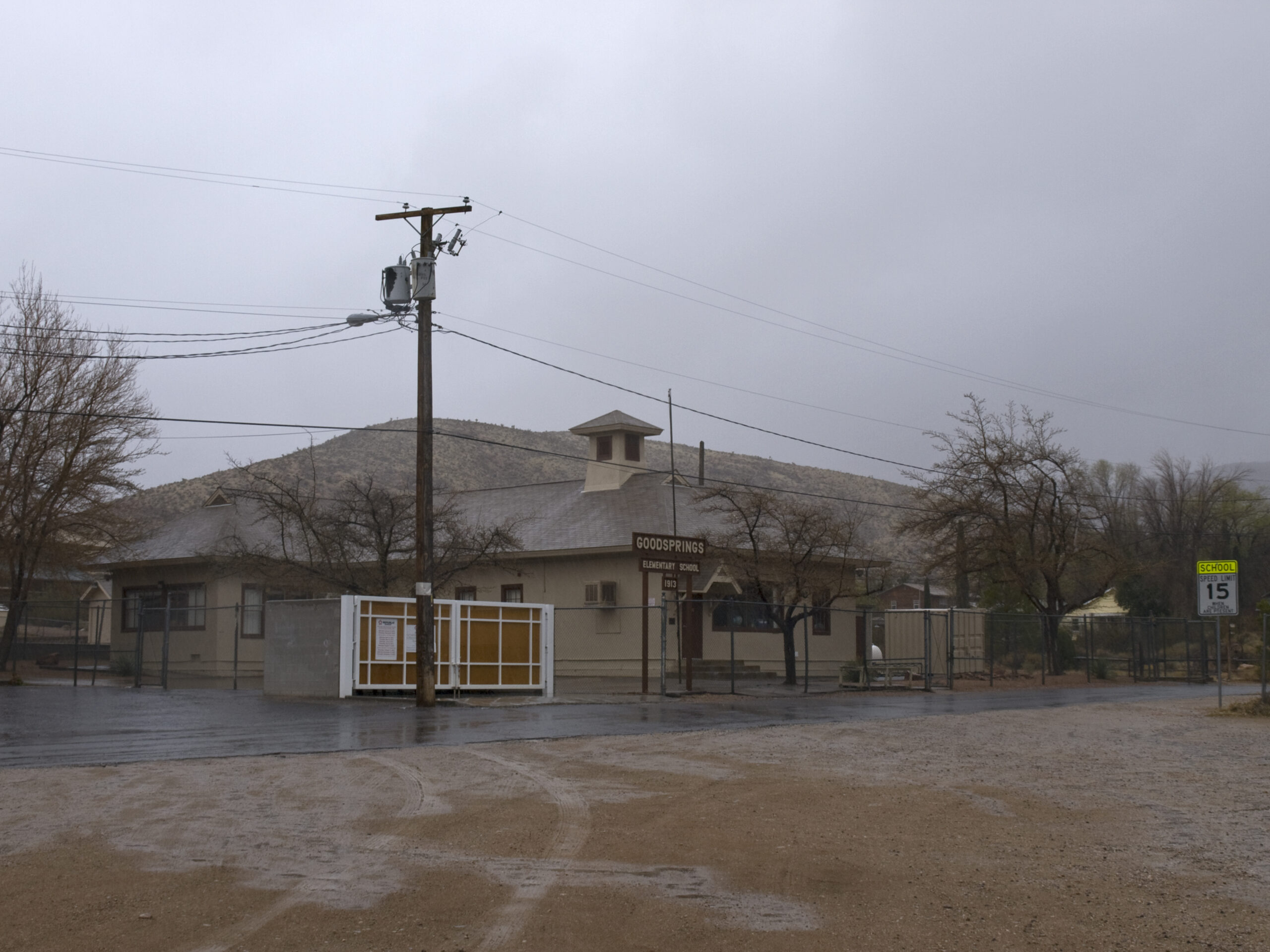
The schoolhouse on West San Pedro Avenue opened in September 1913, replacing an earlier tent facility from 1907. Built to an early-twentieth-century plan-book design, right down to its rooftop bell tower, it holds a distinction few buildings can claim: it is the oldest school in Clark County that was built as a school and is still used as one. It was added to the National Register of Historic Places on March 21, 1996.
The Bust
The collapse arrived with the armistice. When the First World War ended in November 1918, federal war contracts were cancelled almost overnight, and the price of zinc and lead — the whole basis of the local economy — fell with them. Mines closed, layoffs followed, and the boom evaporated.
The town’s bad luck compounded fast. In December 1918 George Fayle, its chief promoter and the man behind the hotel and the saloon, died at thirty-seven in the global influenza pandemic. By 1920 the population had fallen to roughly 400. The narrow-gauge railroad to Jean stopped running in 1930, and in 1934 its tracks were pulled up and sold for scrap — a fittingly literal dismantling of the machine that had built the town.
A Card Game and a Plane Crash
Two events fixed Goodsprings in the wider imagination, and both are genuine. In 1915, at the height of the boom, an out-of-work miner named Paul Coski was caught cheating in a high-stakes card game inside the Pioneer Saloon. The dealer, Joe Armstrong, drew a gun and killed him. Three bullet holes punched into the stamped-tin wall are still there, displayed alongside a copy of the coroner’s report and period newspaper coverage.
The second event drew national attention. On January 16, 1942, the actress Carole Lombard, her mother, and fifteen Army Air Corps servicemen died when TWA Flight 3 crashed into nearby Mount Potosi on the way home from a war-bond rally. Lombard’s husband, Clark Gable, came straight to Goodsprings and waited at the Pioneer Saloon while recovery crews worked up the frozen mountain. He sat at the end of that mahogany bar for the better part of three days. The saloon keeps a memorial room with recovered wreckage, photographs, and clippings.
The Long, Slow Middle
The Second World War brought a brief bump in mineral demand, but production slid again after 1945. A short flurry of uranium prospecting in the early 1950s — five tons of ore shipped from the Green Monster Mine in 1951 — did nothing to reverse the trend, and mid-century atomic testing at the nearby Nevada Test Site added environmental worry to economic decline. A series of fires kept eating the old commercial core, and in 1966 the historic Fayle Hotel burned. What remained was a small, stubborn residential town rather than a going concern.
Reborn as a Wasteland
Goodsprings found an unlikely second act in 2010, when the video game Fallout: New Vegas used it as its opening setting and recreated real structures, including the Pioneer Saloon and the schoolhouse, inside a post-apocalyptic Mojave. The digital version sent real tourists to the actual town, and the community now hosts an annual “Fallout Fan Celebration” that draws thousands of costumed visitors and enough traffic that Clark County has to manage it. It is a strange kind of preservation — a mining camp kept alive partly by a game about the end of the world — but it works.
What Survives
Goodsprings avoided the total ruin that swallowed most of its neighbors, and several original buildings are still standing and in use. Beyond the Pioneer Saloon and the schoolhouse, you can find the original Goodsprings General Store, the stone Campbell Cabin, the local Community Club, and the Goodsprings Cemetery, where George Fayle and other pioneers are buried. For a town whose economic reason for existing vanished a century ago, that is a remarkable amount of continuity.
Timeline
Planning a Visit
Getting There
Nearby Ghost Towns & Historic Sites
Southern Nevada packed a lot of mining history into a small radius, and Goodsprings makes a good base for exploring it.
Further Reading
Sources: Wikipedia, “Goodsprings, Nevada” · Travel Nevada, “Pioneer Saloon” · Legends of America, “Goodsprings, Nevada” · Nevada State Historic Preservation Office, National Register documentation · Patera, Goodsprings Nevada (Western Places No. 23) · Paher, Nevada Ghost Towns & Mining Camps, Vols. I–II.
Photo credits: Pioneer Saloon (hero & side), townsite, town sign, and desert view by Stan Shebs, CC BY-SA 3.0; Goodsprings Schoolhouse by Ymblanter, CC BY-SA 3.0. All via Wikimedia Commons.