Gilman, Colorado
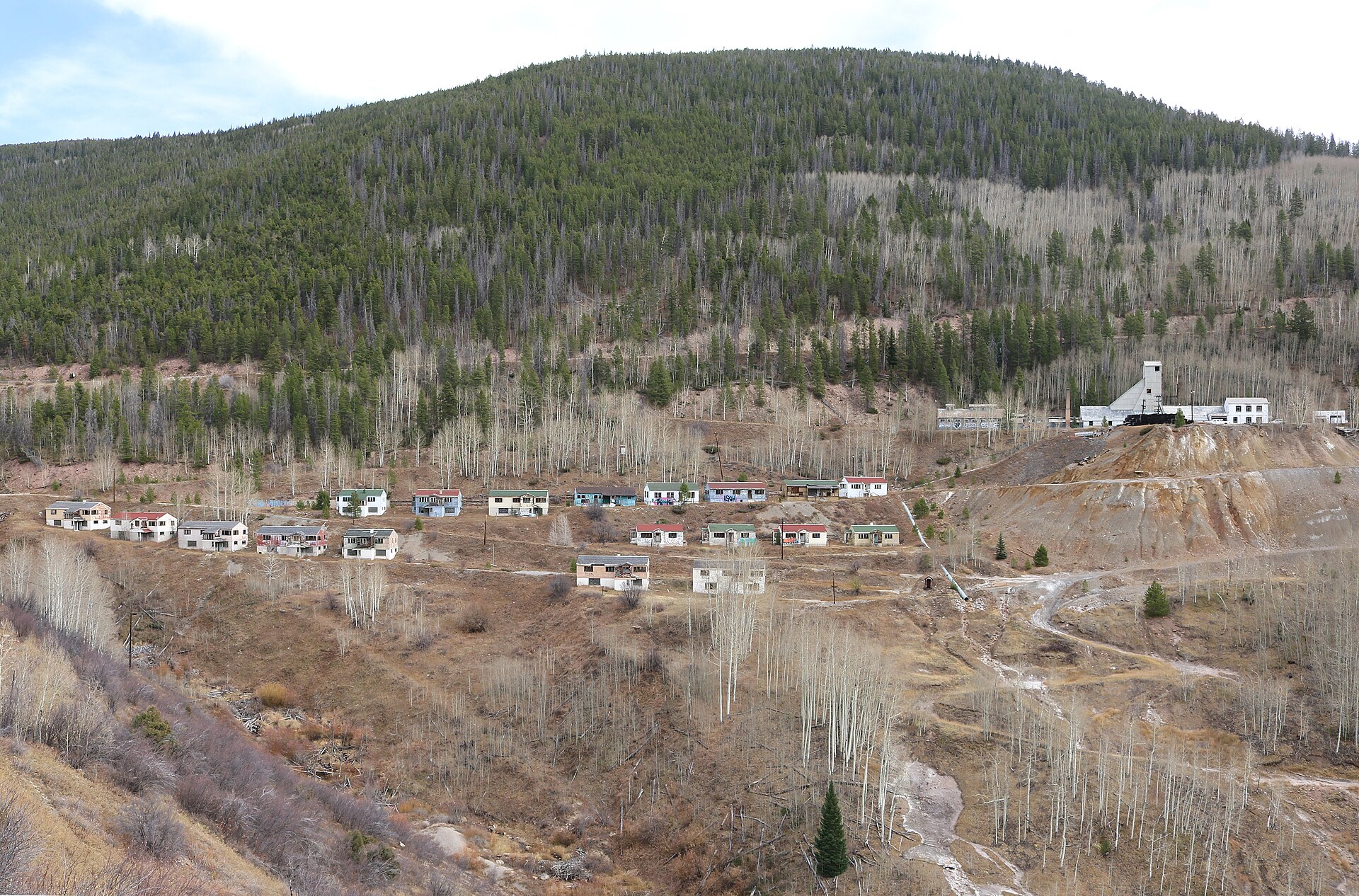
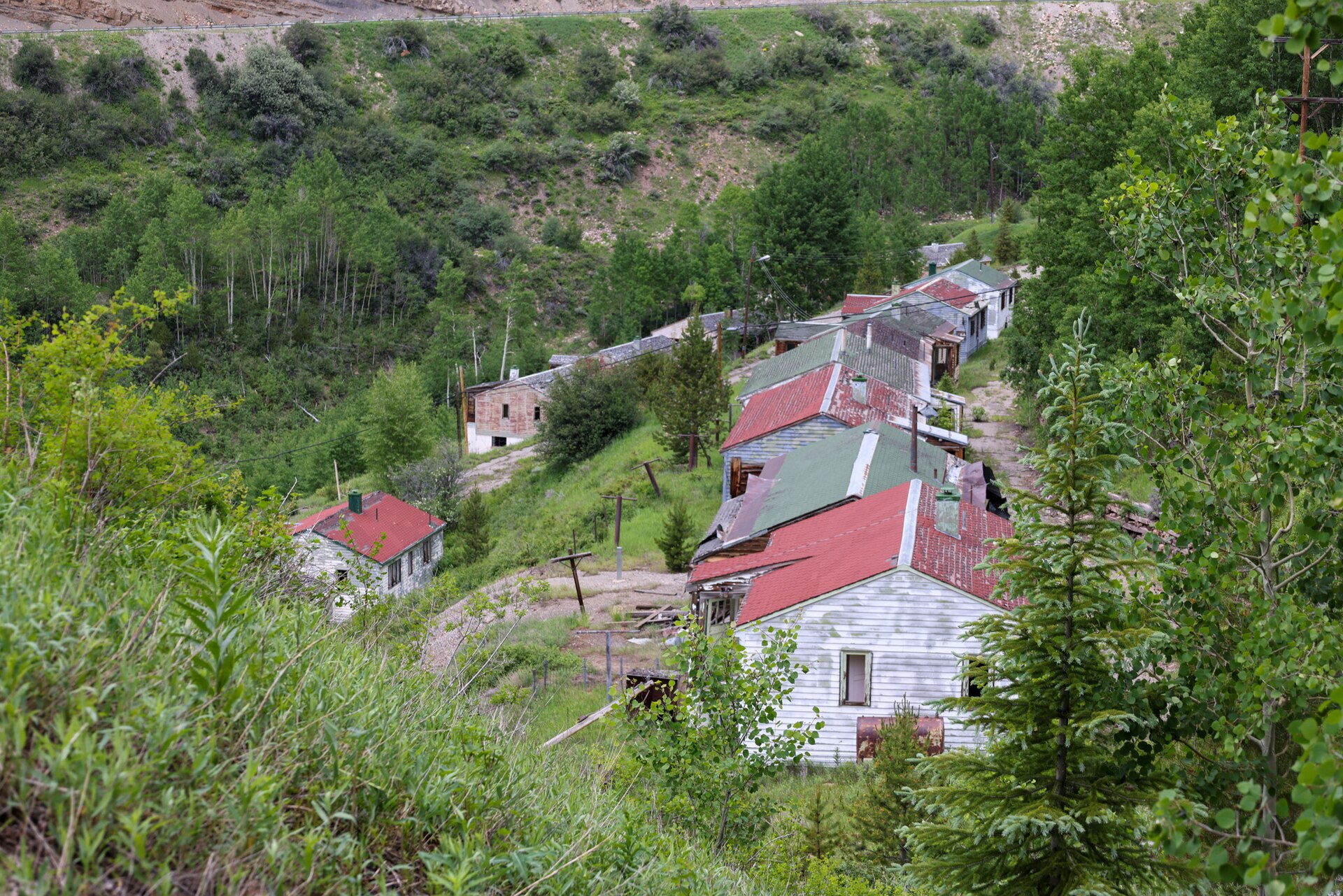
Most ghost towns sit where you can walk them. Gilman you can only look at — a cluster of wood-frame houses and mine buildings clinging to a 600-foot cliff above the Eagle River, plainly visible from U.S. Highway 24 but fenced, patrolled, and strictly off-limits. For a century Battle Mountain gave up silver, then lead, then the zinc that made Gilman the biggest zinc producer in Colorado history. When the mine finally closed and the pumps shut off, the flooded workings began bleeding acid and heavy metals into the river — and in the mid-1980s the EPA and the mine’s owners cleared the town out for good.
This is the documented history of Gilman, Colorado — from a frantic 1880s silver camp to a New Jersey Zinc company town to a 235-acre Superfund site. Where the record and the legend diverge — and Gilman has some famous legends — we say so.
Silver on Battle Mountain, 1879–1900
Industrial Battle Mountain began in May 1879, when Judge D.D. Belden struck silver-lead ore in the limestone during the Leadville boom and opened the Belden Mine. In the early 1880s a Red Cliff prospector and judge, John Clinton, consolidated the richest claims — including the Iron Mask Mine — and laid out a townsite on his own land atop the cliff, first called “Clinton.” The Denver & Rio Grande pushed a narrow-gauge line up the canyon floor in 1882, and in 1886 a post office opened; to avoid confusion with Clinton, California, the town was renamed for Henry M. Gilman, the Iron Mask superintendent who had donated land for its first school. At its 1885–86 peak the district held around 1,500 people, with an opera house, a Congregational church, and a newspaper, the Gilman Enterprise.
Then the ground shifted twice. The 1893 Silver Crash, following repeal of the Sherman Silver Purchase Act, collapsed prices and forced many operators to suspend work — just as deeper shafts were hitting sulfide ore heavy with zinc, a metal smelters of the day penalized or rejected outright. And on August 19, 1900, a fire that started in a Main Street residence swept the densely packed wooden business district, destroying 33 buildings, among them the post office, school, hotel, and church.
The zinc mountain and the company town, 1905–1977
What had been a liability became the whole business. In 1905 the Eagle Milling and Mining Company reopened the Iron Mask with roasting furnaces and magnetic separators that could pull zinc out of the iron and lead sulfides, turning the old metallurgical nuisance into Gilman’s main product. From 1912 the Empire Zinc Company — a subsidiary of the New Jersey Zinc Company — systematically bought the individual claims, the mills, and eventually the entire townsite, dissolving the independents into a single company town built around the consolidated Eagle Mine.
In 1929 New Jersey Zinc did something remarkable: it excavated a flotation mill directly inside the mountain’s quartzite bedrock, so ore could be mined, crushed, and milled hundreds of feet underground — safe from Battle Mountain’s avalanches and held at a stable temperature. The Depression forced a temporary pivot to copper and silver (1931–41), but World War II brought zinc back full-scale, with more than 700 workers and a town above 1,000 residents. By 1972 the district had produced over $328 million in ore, and New Jersey Zinc ran a fully serviced company town — wood-frame homes, a company grocery, an infirmary, even a bowling alley.
The pumps stop, the river turns orange, 1977–1986
Gulf + Western Industries bought New Jersey Zinc in 1966, and faced with falling metal prices and rising environmental scrutiny it shut the underground mill and primary zinc mining in December 1977. Minor copper-and-silver work limped on until 1983, when the property was sold to an independent investor, Glenn Miller, whose venture failed almost at once under the operating costs and looming environmental liabilities. When Miller went bankrupt and abandoned the site in 1984, the electricity to the underground dewatering pumps was cut — and groundwater rose to flood the mine’s many levels.
That flooding set off the crisis. Oxygenated water reacting with exposed sulfides generated acid mine drainage, and millions of gallons carrying zinc, cadmium, lead, arsenic, and manganese began seeping from the lower portals into the Eagle River, turning it bright orange and killing aquatic life for miles. In late 1984 the EPA judged the townsite unsafe from heavy metals and structural collapse; in early 1985 the Battle Mountain Corporation evicted the last residents; and the post office closed for good on April 22, 1986. That June the 235-acre area — the townsite, the Eagle Mine, 14 waste-rock piles, and eight tailings piles holding over eight million tons of toxic waste — was placed on the Superfund National Priorities List as the Eagle Mine site.
Cleanup, CBS, and a resort that never came, 1988–today
Because Glenn Miller was bankrupt, regulators went after the deep pockets behind Gulf + Western — which, through a chain of mergers, had become Viacom and then CBS Operations, leaving CBS legally responsible for the cleanup. Remediation began in 1988: mine portals were sealed with concrete bulkheads to trap the worst water underground; more than 65,000 cubic yards of tailings were dug up and moved to a lined, capped, revegetated Consolidated Tailings Pile at Maloit Park; and in 1990 a dedicated water-treatment plant opened near Minturn, processing about 140 million gallons a year and pulling roughly 175 pounds of heavy metals — mostly zinc — out of the water every day before returning it, clean, to the Eagle River.
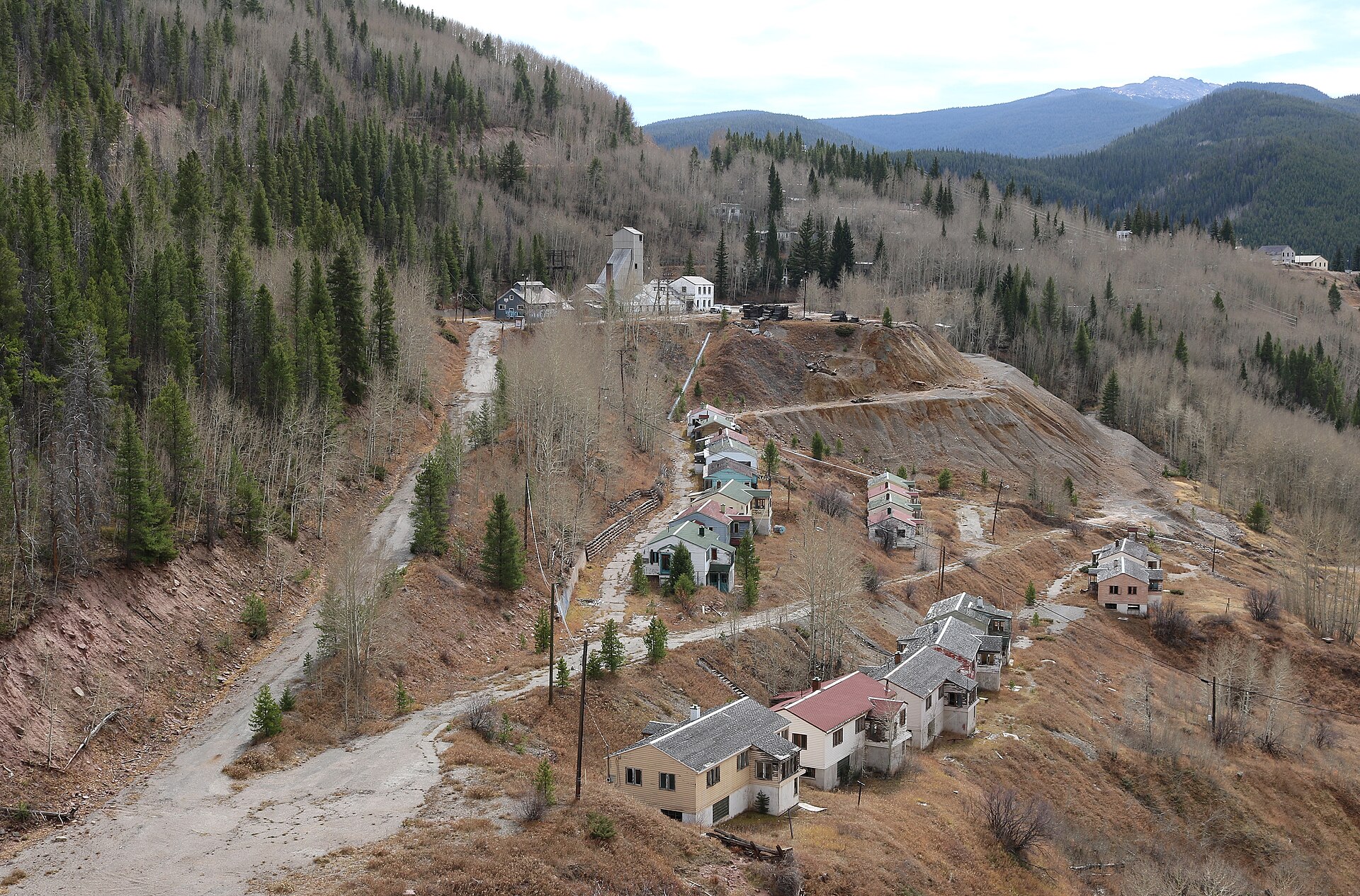
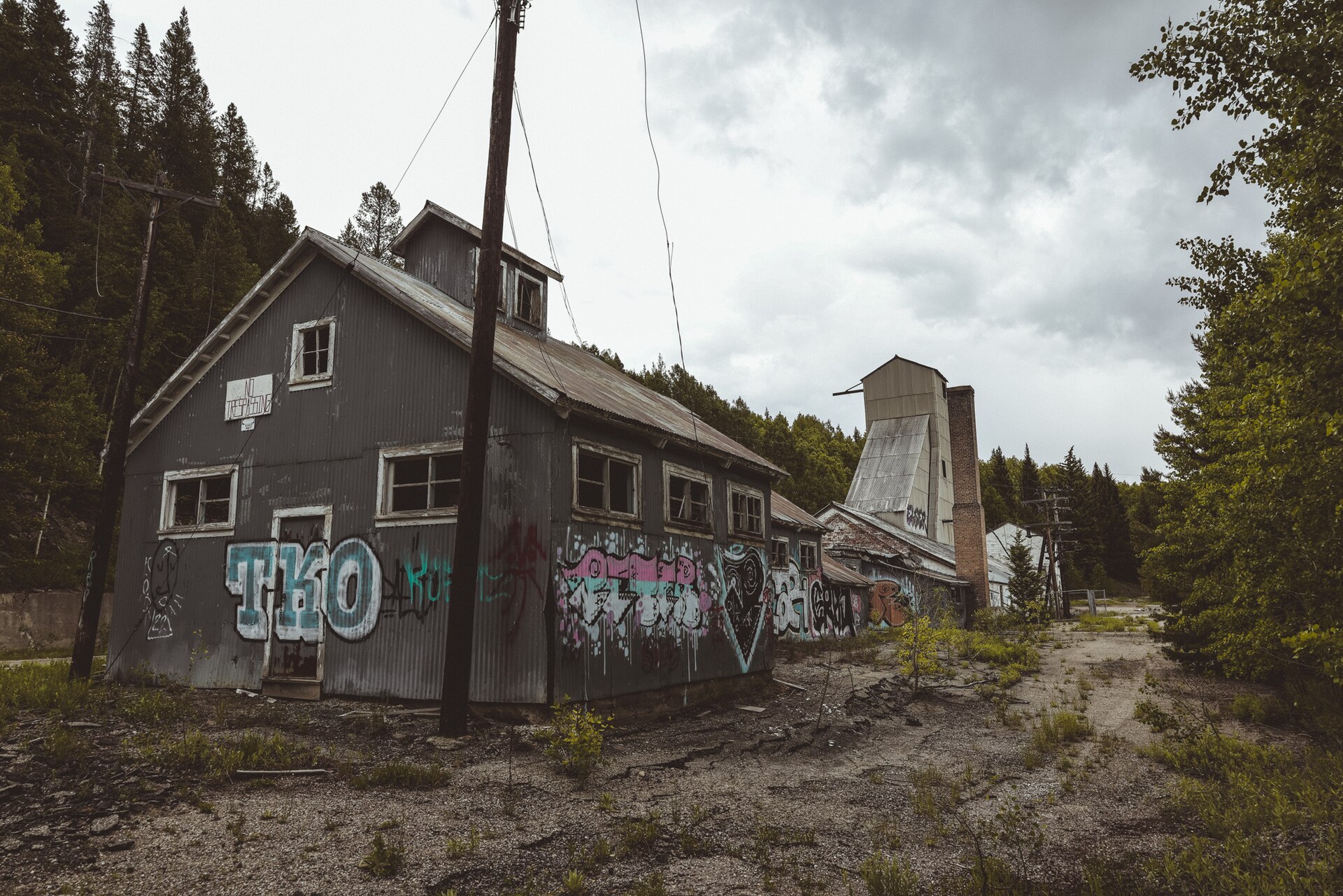
Gilman almost got a second life. In 2007 the developer Bobby Ginn proposed a $1.5 billion luxury ski-and-golf resort across Gilman and Battle Mountain — 1,700 homes, an 18-hole course, a private ski hill — and in 2008 Minturn voters approved annexing the land by an 87% vote. Then the 2008 financial crash killed the financing, and the project was abandoned in 2009. So Gilman still clings to its cliff: company houses and 1890s cabins, headframes and offices, cars rotting in garages, every window broken and the walls covered in graffiti as the snow slowly brings the roofs down.
Timeline
Visiting Gilman today
Unlike most ghost towns, Gilman cannot be walked — but it can be seen. It is private property inside an active Superfund site, and the only legal way to experience it is from the highway.
Nearby ghost towns
Further reading
Sources
Gilman, Colorado — Wikipedia. en.wikipedia.org
Gilman, Colorado — Western Mining History. westernmininghistory.com
Gilman, Colorado: A Company Town — Legends of America. legendsofamerica.com