St. Marie, Montana
Most ghost towns are built by a boom and killed by a bust. St. Marie was built by the Cold War. In the mid-1950s the Air Force dropped a complete, California-style suburb — curving streets, cul-de-sacs, a thousand ranch homes — onto the empty Montana prairie to house the crews of a nuclear bomber base guarding the Arctic approaches. At its peak, Glasgow Air Force Base held more people than the county seat. Then intercontinental missiles made the bombers obsolete, the base closed, and a grand plan to turn it into a retirement village collapsed into decades of frozen pipes, abandoned duplexes, and one of the strangest legal sieges in Montana history.
This is the documented history of St. Marie — Glasgow AFB: how an instant city rose and emptied, how a retirement dream failed, and what remains today, where Boeing tests jets on a Cold War runway beside streets of rotting suburbia. Where the record and the legend diverge, we say so.
An instant city for the nuclear age, 1955–1968
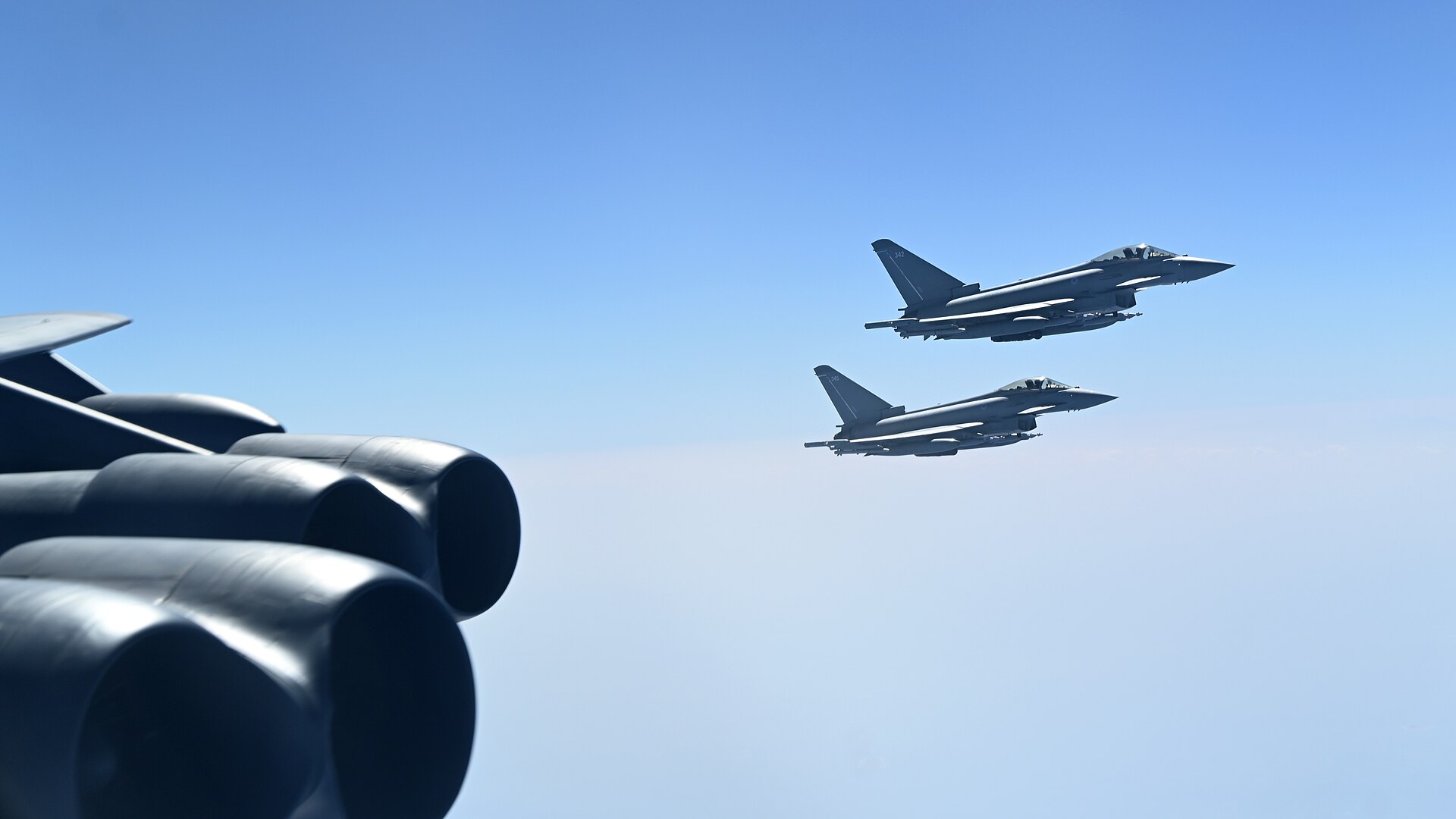
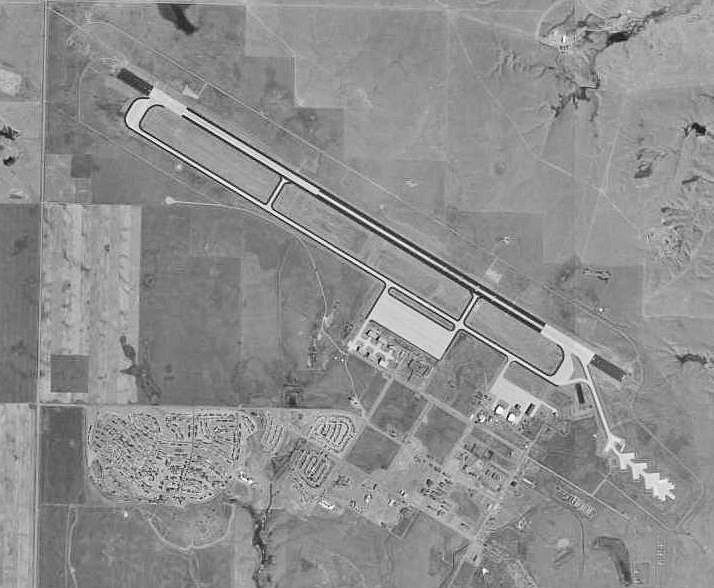
In 1955 the Department of Defense chose a remote expanse of wheat fields about 17 miles north of Glasgow — and 48 miles south of Canada — for a major air-defense installation, picked for its northern position, flat terrain, and clear skies. Activated in 1957 under Air Defense Command with an 8,900-foot runway, the base soon hosted the 13th Fighter-Interceptor Squadron and its supersonic F-101 Voodoos, armed with nuclear-tipped air-to-air missiles to intercept Soviet bombers coming over the pole. In 1960 the base passed to Strategic Air Command, the runway was stretched to 13,500 feet for B-52 bombers and KC-135 tankers, and by 1963 the 91st Bombardment Wing held the field.
To house the thousands of airmen and their families on the empty steppe, the military built a complete mid-century suburb — curvilinear streets, cul-de-sacs, and roughly a thousand ranch homes and duplexes — along with its own school system, a 50-bed hospital, a chapel, a theater, a bowling alley, an officers’ club, and central utility plants. At its peak in the mid-1960s the base held somewhere between 7,000 and 12,000 people, more than the neighboring county seat of Glasgow. It was, in effect, an independent city that had never grown from a crossroads — it had been delivered whole.
Thirteen days on alert, 1962
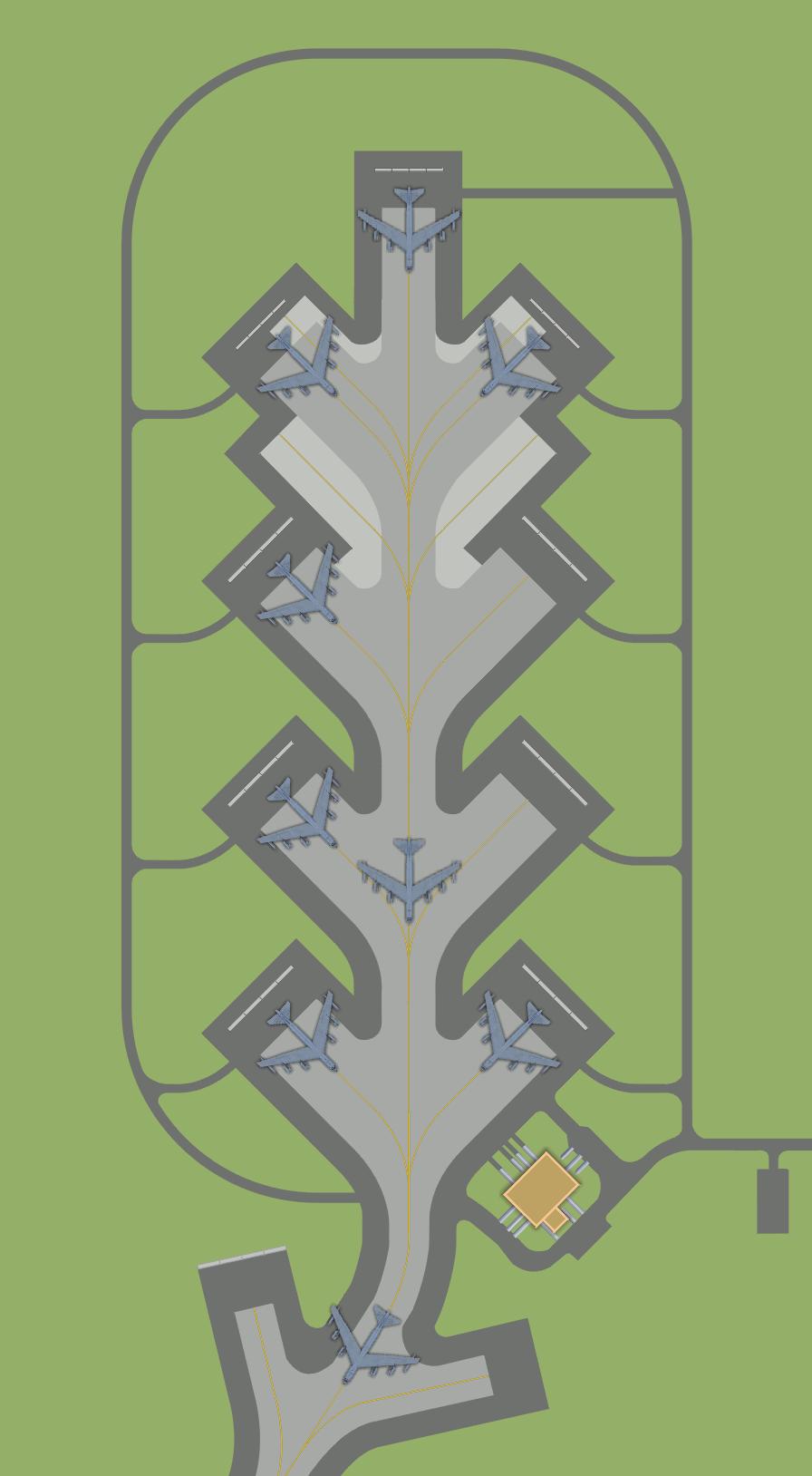
During the Cuban Missile Crisis in October 1962, Glasgow’s bomber crews lived on continuous combat alert. Their B-52s sat fueled and pre-heated on the base’s specialized “Christmas Tree” apron, ready to launch nuclear strike routes over the North Pole at a moment’s notice. In the quarters just across the base, spouses and children spent those two weeks under blackout conditions, keenly aware that their manicured suburb was a high-priority target for a Soviet counterstrike.
The base closes, the county empties, 1968–1976
The same technology that justified the base soon made it obsolete: as intercontinental ballistic missiles replaced manned interception, short-range bomber and interceptor fields lost their purpose. In 1968 the Air Force closed Glasgow AFB and moved the 91st’s designation to Minot, North Dakota, where it became a Minuteman missile wing. The effect on Valley County was brutal — roughly 16,000 military and civilian people left almost overnight, and the county lost about a third of its population between 1968 and 1970 as schools shrank, businesses shuttered, and real-estate values collapsed.
The base got a brief reprieve. From 1971 to 1976 it was reactivated as a SAC dispersal airfield and an Army Safeguard anti-ballistic-missile depot — controversial enough that members of Congress complained northern Montana was becoming a “nuclear ammunition dump.” In 1976 the Department of Defense shut Glasgow AFB for good and handed the property to the General Services Administration.
The St. Marie experiment and its collapse, 1979–2000s
Rather than let the vast complex rot, the government sold it. Between 1979 and 1986, retired officer Patrick Kelly and a group of partners bought the base housing from the GSA for about $400,000, renamed the neighborhood “St. Marie” after Kelly’s daughter, and marketed it in military magazines as an affordable retirement village for former service members. Several hundred retirees came, drawn by cheap homes, a familiar base layout, and low crime, and formed a condominium association to keep up the roads and utilities.
It failed on three fronts. The central utility plant, built to run on Defense Department appropriations, saddled a small homeowners’ association with crushing bills. The isolation was severe — 15 to 20 miles to Glasgow for groceries, fuel, or a doctor, and genuinely dangerous for elderly residents during high-plains blizzards. And most bizarrely, Sovereign Citizen groups operating as entities like DTM Enterprises bought tax-lien certificates on roughly 400 delinquent homes for as little as $504 each, then waged years of “paper terrorism” — filing fraudulent liens, forming parallel associations, and freezing property titles until legitimate sales became impossible. By the 2000s most of the suburb stood empty and unheated, its ranch homes wrecked by freeze-thaw: burst pipes, collapsed roofs, condemned blocks.
St. Marie today
The 2020 census counted 306 residents — a handful of renovated duplexes sitting directly beside whole streets of boarded-up 1950s suburbia slowly returning to sagebrush. The airfield, though, found an unlikely second life. Rechristened the Glasgow Industrial Airport, its 13,500-foot runway and empty, interference-free airspace made it ideal for The Boeing Company, which intermittently uses it to flight-test commercial and experimental jetliners — advanced aircraft screaming over the ruins of a Cold War town.
Timeline
Visiting St. Marie today
St. Marie is an open civilian community — the residential streets are public roads you can drive freely, no fees or checkpoints — but almost everything you’ll want to look at is off-limits up close, and for good reason.
Nearby ghost towns
Further reading
Sources
Glasgow Air Force Base — Wikipedia. en.wikipedia.org
St. Marie, Montana — Wikipedia. en.wikipedia.org
91st Missile Wing — Wikipedia. en.wikipedia.org