Bodie Ghost Town, California: The Most Lawless City in the American West
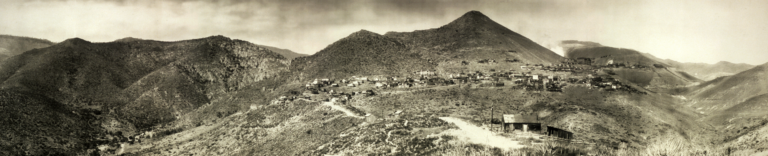
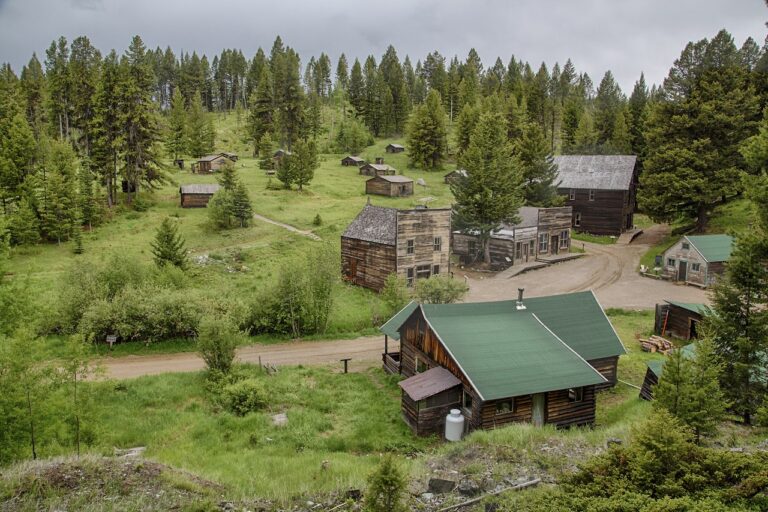
In July 1859, a prospector named William S. Bodey discovered gold in the high desert hills of northeastern California. He didn’t live to see what his discovery would become — lost in a snowstorm that same winter, his body never recovered. The town that bore his name went on to become one of the largest and most infamous cities in California: violent, lawless, and spectacularly wealthy. Today, Bodie is the best-preserved ghost town in the American West — 110 original buildings standing exactly as their occupants left them, in a landscape unchanged for over a century.
“Goodbye God, I’m going to Bodie.” — A young girl’s diary entry, upon learning her family was relocating to the town notorious as the most lawless place in the West.
Origins: a discovery and a death
The story of Bodie begins with William S. Bodey and his partner E. S. Taylor, who found placer gold in the Bodie Hills in July 1859. A formal mining district was organized the following year in 1860. But Bodey himself never saw the town that would carry his name — leaving to get supplies that winter, he was caught in a snowstorm and was never found. It was an early and brutal illustration of the Bodie Hills’ most defining characteristic: elevation.
Bodie sits at 8,375 feet above sea level in the high desert of Mono County, near the Nevada border. Winter temperatures regularly drop far below zero. Roads become impassable for months at a time. The same isolation that preserved Bodie so perfectly for posterity made it extraordinarily expensive and difficult to operate as a working town.
For nearly two decades after the initial discovery, Bodie remained a modest mining camp of little significance. Then, in 1876, everything changed.
The boom: California’s most notorious city
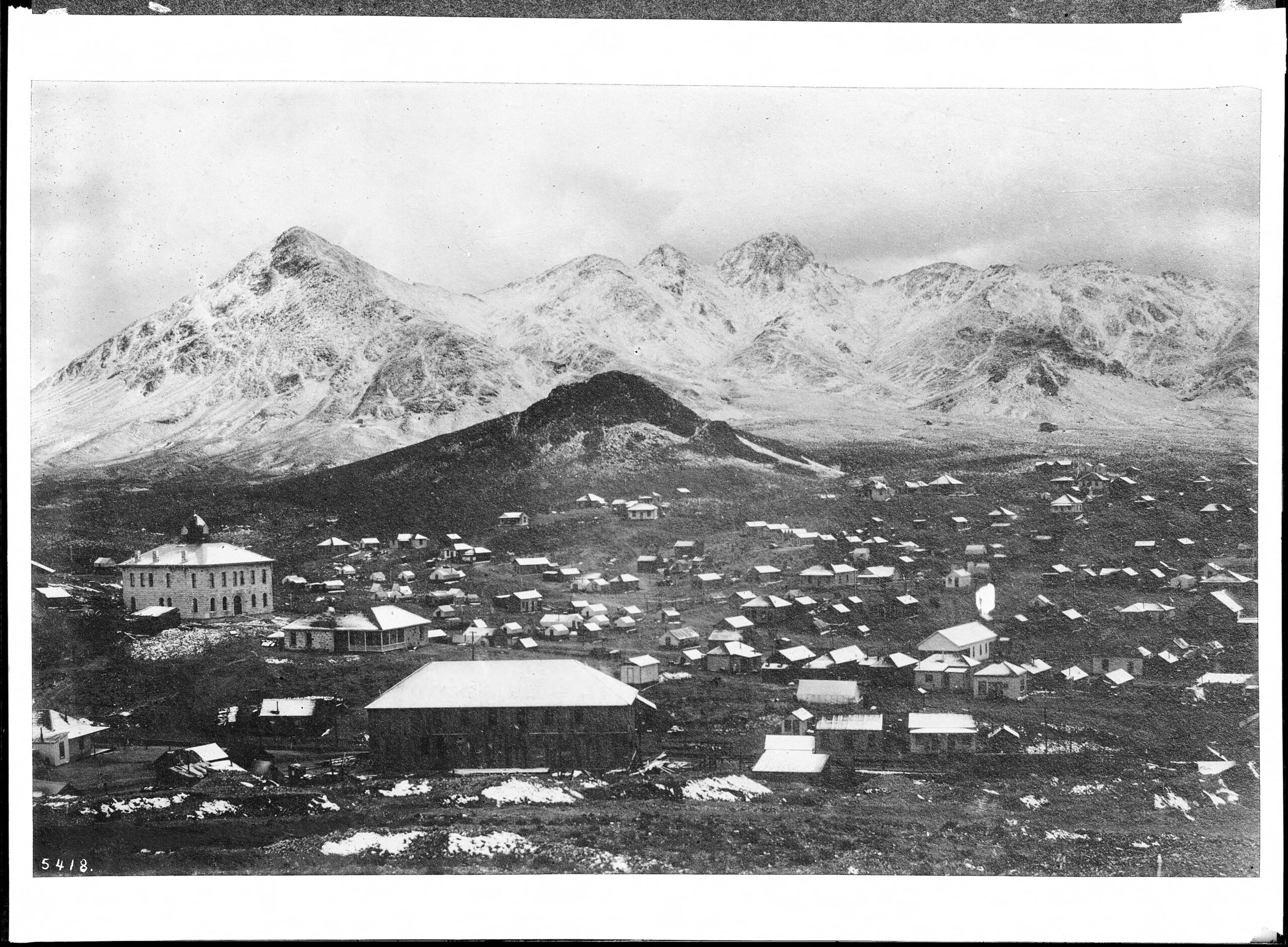
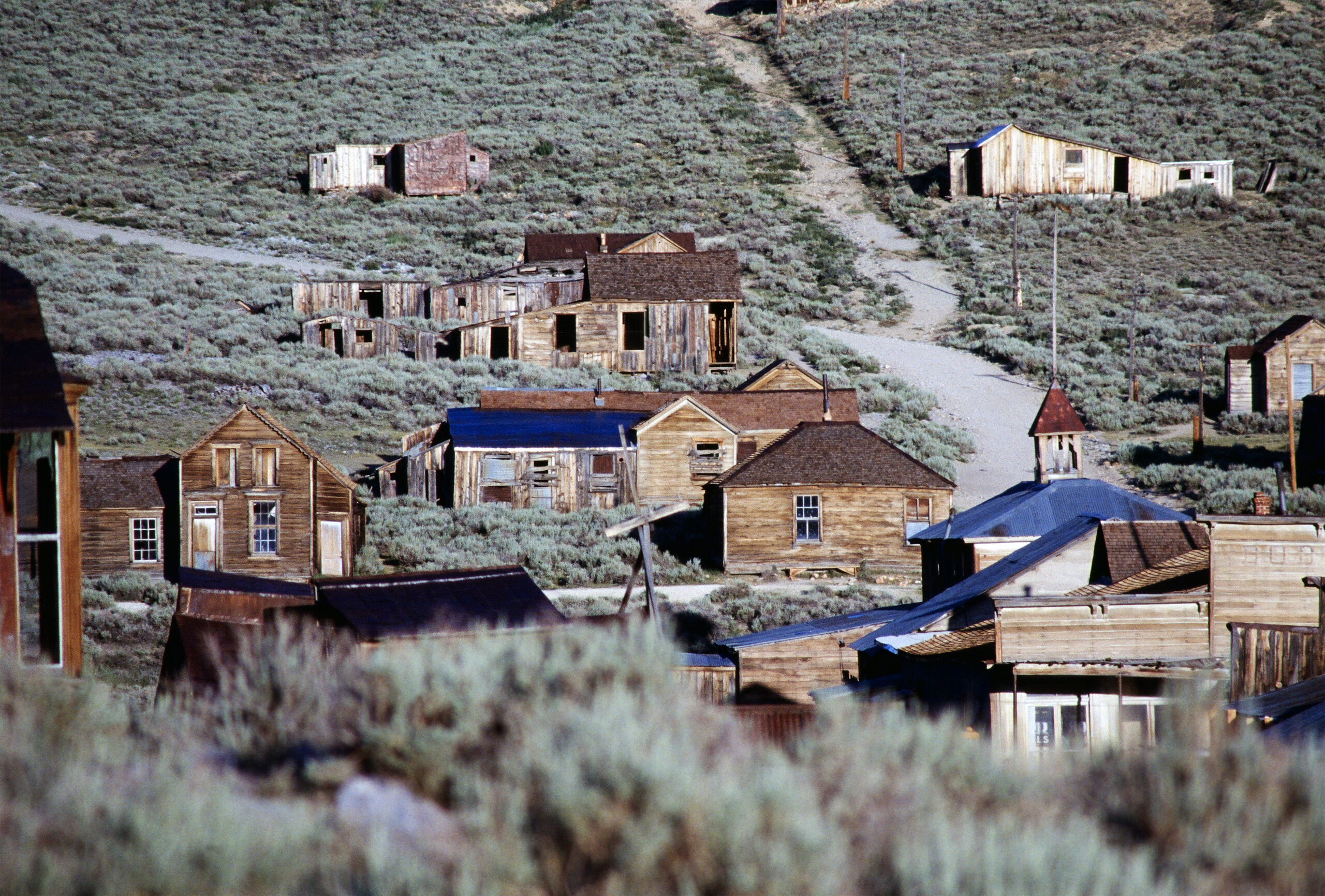
The discovery of a major gold-silver lode deposit at the Bunker Hill Mine in 1876 triggered one of the most explosive episodes of urban growth in California history. Within three years, Bodie had transformed from a struggling camp into a city of 8,000 to 10,000 people — one of the largest in California at the time.
The mining economy was formidable. The Bodie district ultimately produced approximately 1.46 million troy ounces of gold and 7.3 million troy ounces of silver from around 1.5 million metric tons of ore — the equivalent of $34 million to $70 million depending on the time window and pricing methodology used. Over 90% of this output came from veins in the Bodie Bluff–Standard Hill intrusive plug, a geological concentration that explains both the explosive early boom and the eventual bust when those ore bodies shifted to lower grades.
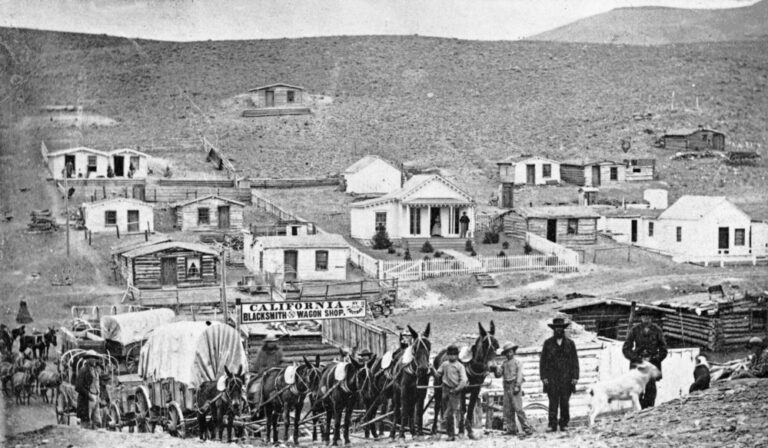
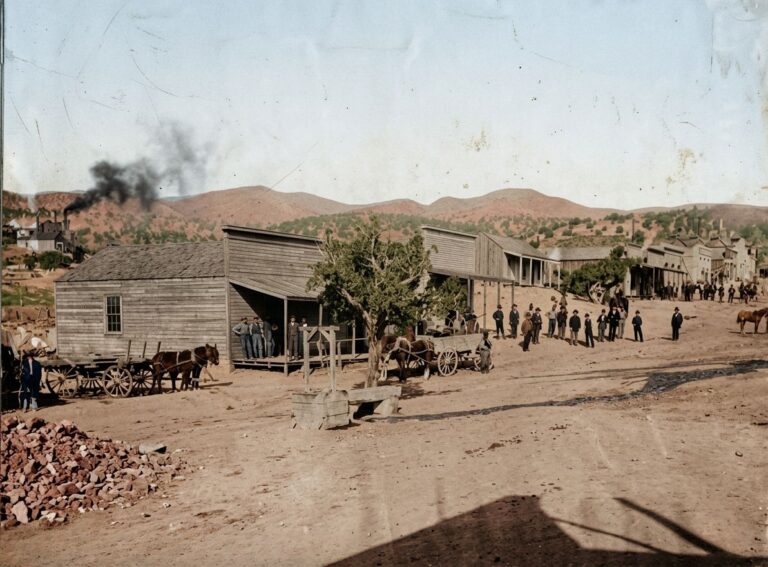
At its peak, Bodie had around 2,000 structures, 65 saloons, multiple newspapers, a stock exchange, churches, a Chinatown, and a red-light district. The National Park Service describes it as an “archetype of the violent, lawless western mining town” — a reputation that was well earned. Murders, robberies, and stage holdups were regular events. The town’s own residents referred to a particularly bad actor as “a bad man from Bodie.”
The Standard Gold Mill — an industrial landmark
The centerpiece of Bodie’s industrial operation was the Standard Gold Mill, documented by the Historic American Engineering Record (HAER) as an intact example of the “model California stamp mill” — a mature, standardized form of late-19th-century gold processing technology. Stamp mills crushed ore-bearing rock so that gold and silver could be extracted through chemical processes.
In October 1898, a fire broke out in the boiler room and destroyed the existing mill. What happened next says something important about Bodie’s resilience: the mill was rebuilt immediately, and a new stamp mill was operating by February 1899. Even during the post-peak years, the Standard Company remained sufficiently confident in the ore reserves to rebuild major processing infrastructure at speed. The mill continued operating until mining finally ceased in 1942.
Decline, fires, and a slow fade
Remarkably, Bodie’s decline began almost immediately after its peak. NPS places the onset of contraction at 1879 — the same year the town reached its maximum population. By 1886, just seven years later, the population had fallen to roughly 1,500. The same geological reality that made Bodie’s boom so spectacular drove its bust: the richest ore was concentrated in specific vein systems, and as those high-grade zones gave way to lower-grade material at depth, the economics became increasingly difficult.
Two major fires accelerated the decline. The fire of 1892 destroyed a significant portion of the town. A second devastating fire in 1932 burned much of what remained of the commercial district. Between the declining mines and the fires, Bodie shed people and buildings steadily through the early 20th century.
The final chapter came during World War II, when the U.S. government ordered the shutdown of non-essential gold mining operations in 1942 to redirect labor and resources toward the war effort. Bodie’s mines closed, the last residents departed, and the town fell silent — more than 80 years after William Bodey first found gold in the hills above.
Bodie today — arrested decay
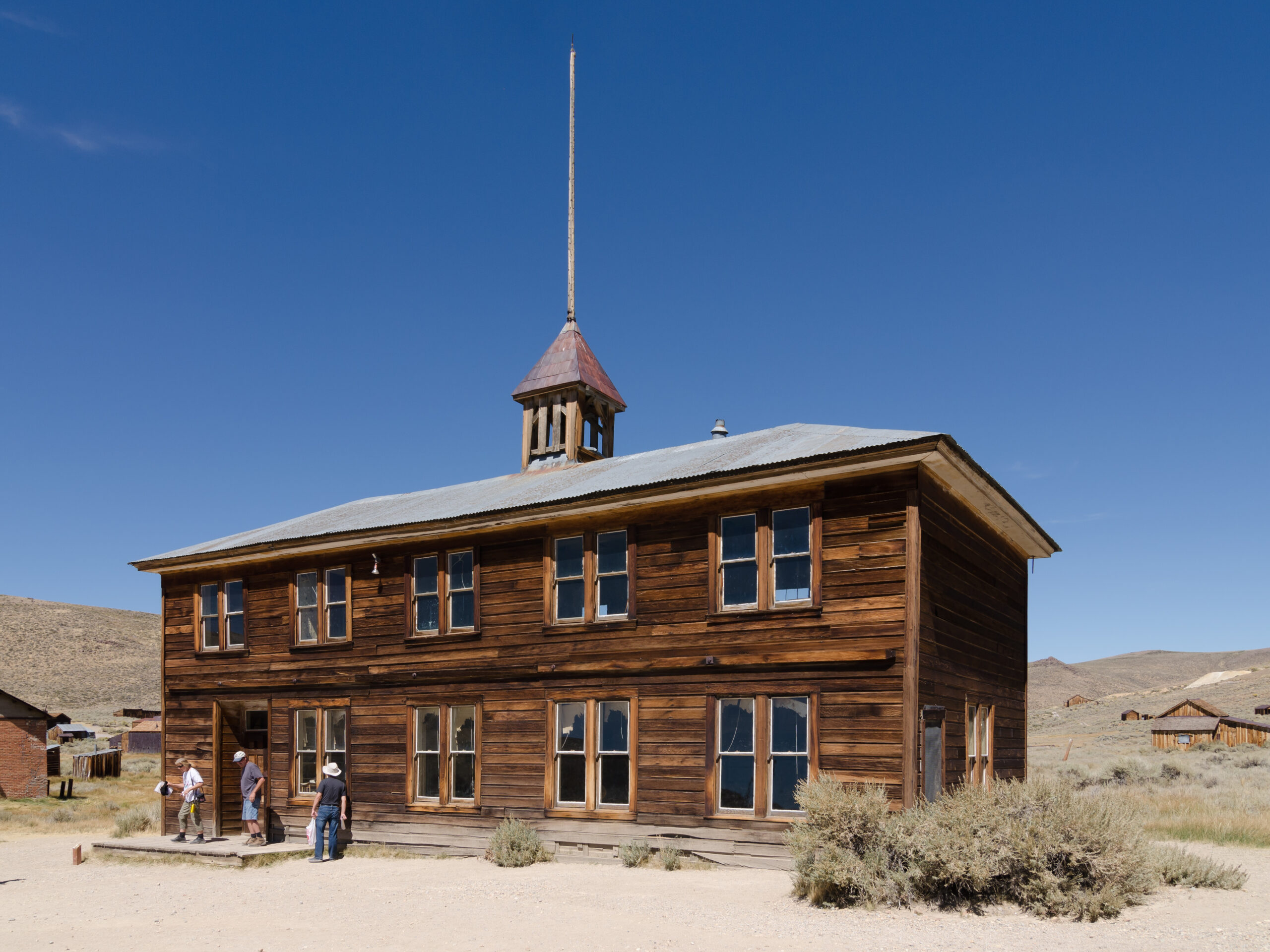
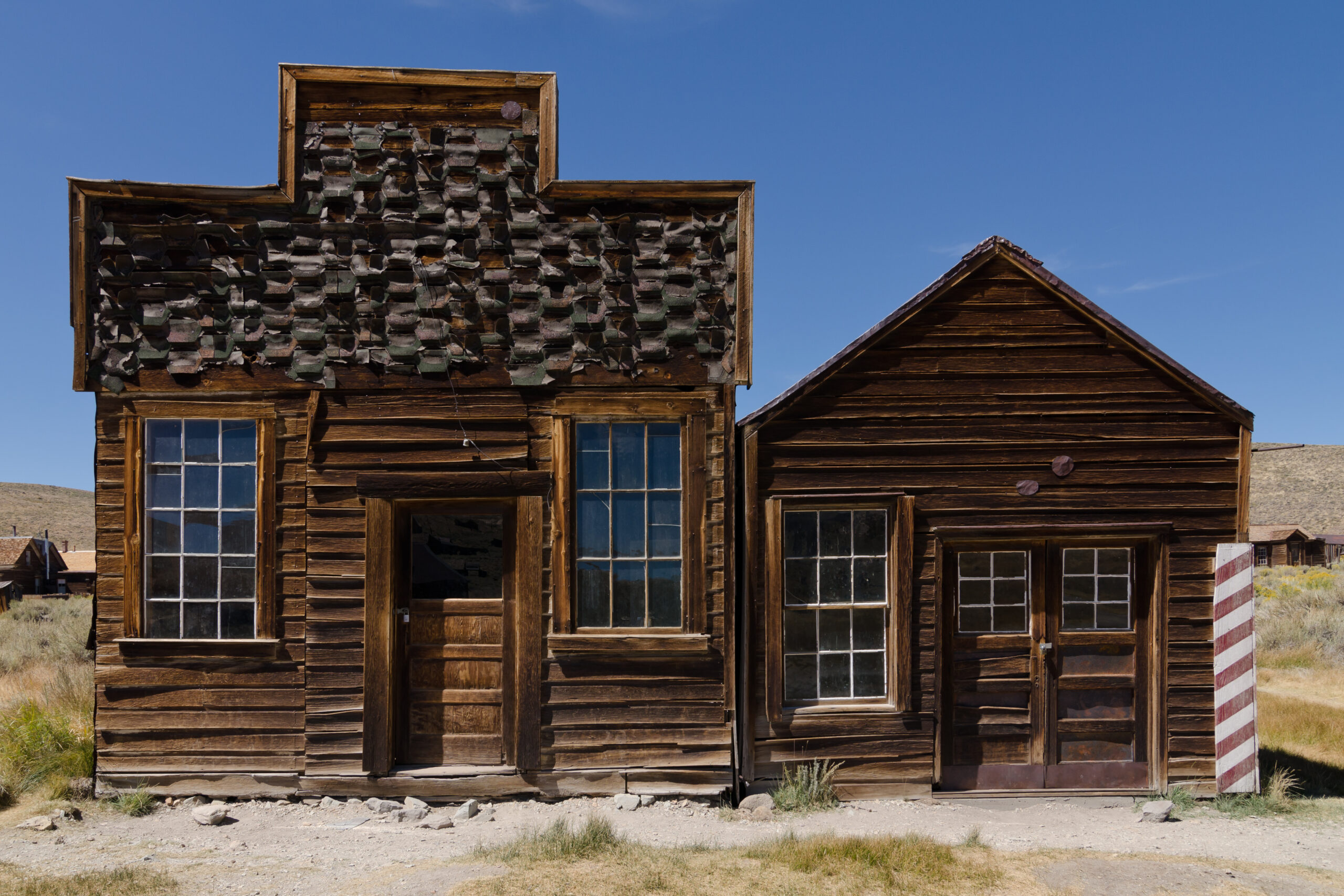
Bodie became a National Historic Landmark in 1961 and a California State Historic Park in 1962 — crucially, before the remaining structures could be dismantled or sold off. California State Parks manages the site under a philosophy of “arrested decay”: buildings are stabilized to prevent collapse, but they are deliberately not restored. The weathering, the broken windows, the peeling paint, the abandoned belongings — all of it is considered part of the historical record. It is the opposite of the fate that befell Drawbridge, California’s only San Francisco Bay ghost town, which was left to sink into the tidal marsh with no such intervention.
Of the approximately 2,000 structures that once stood in Bodie, 110 buildings remain. Inside many of them, original contents are still in place: bottles on shelves, furniture in rooms, equipment in the stamp mill, a pool table in the saloon. The town looks less like a museum exhibit and more like a place where everyone simply walked away one day — which, in many ways, is exactly what happened.
Key dates
What to see at Bodie
The Standard Gold Mill
The most significant industrial survival at Bodie, documented by the Historic American Engineering Record as an intact example of the “model California stamp mill.” The mill’s full array of stamp-milling equipment is still in place — a rare surviving example of 19th-century gold processing technology at scale. Guided access is available through the park.
Main street and commercial district
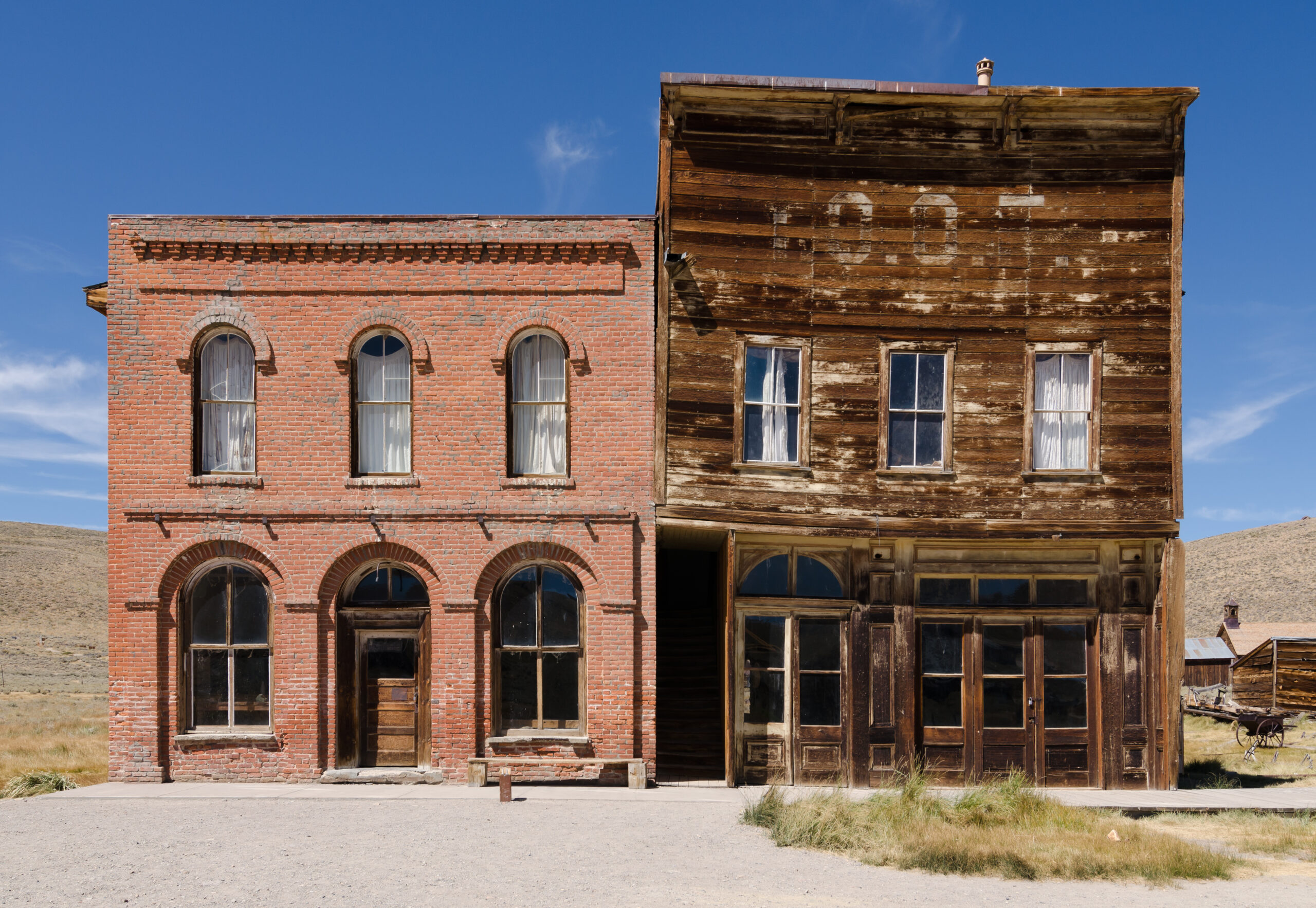
Walking Bodie’s main street is the closest thing available to stepping into the 1880s American West. The Miners Union Hall, the saloon with its pool table still in place, the general store with goods on shelves — the arrested decay philosophy means these interiors look inhabited rather than curated.
The Methodist church
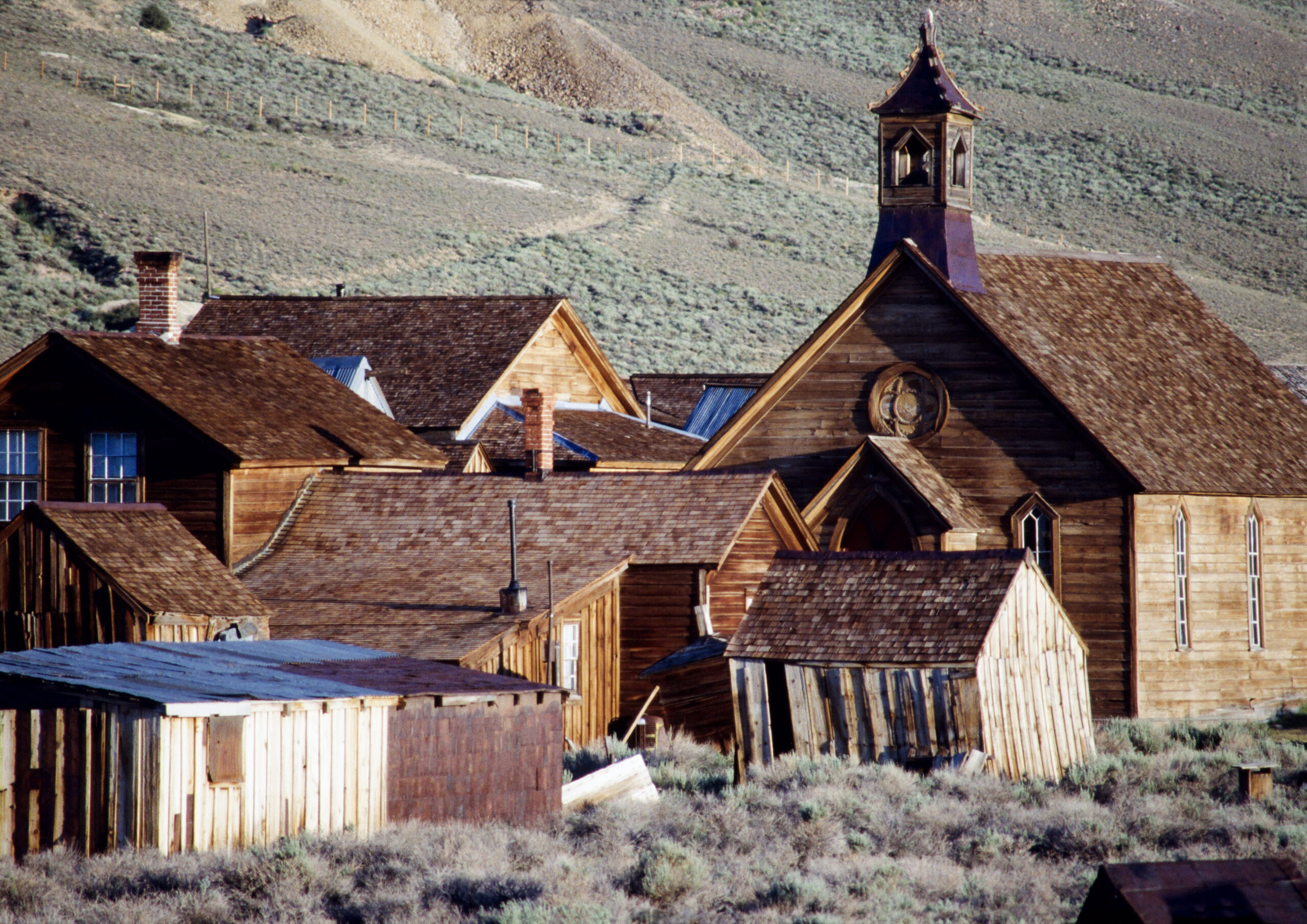
One of Bodie’s most photographed buildings, the white wooden Methodist church has stood since the boom years and remains structurally sound. Its simple architecture against the high desert landscape is a quintessential Bodie image.
The cemetery
Bodie’s cemetery, on the edge of town, contains the graves of miners, townspeople, and a notable collection of children — a reminder that Bodie was a real community, not just a mining camp. The grave of Rosa May, one of Bodie’s most famous residents, is here.
The Bodie Museum
The park’s small museum interprets the town’s history with artifacts and photographs. It’s worth a visit before or after walking the townsite to give context to what you’re seeing.
Ghost towns nearby
Further reading
Sources
National Park Service — Bodie Historic District
California State Parks — Bodie State Historic Park
California State Parks — How to Get Here · Winter Visits
Historic American Engineering Record (HAER) — Standard Gold Mill documentation
U.S. Geological Survey — Geologic map of the Bodie Hills
California Division of Mines and Geology — Bulletin 206: Geology and ore deposits of the Bodie Mining District
Bodie Foundation — bodiefoundation.org · (760) 932-7574
Caltrans road conditions SR-270 — Check before visiting
← Back to California Ghost Towns
More ghost towns in California: Cerro Gordo, Calico, North Bloomfield & Malakoff Diggins