Cerro Gordo Ghost Town, California: The Silver Mine That Built Los Angeles
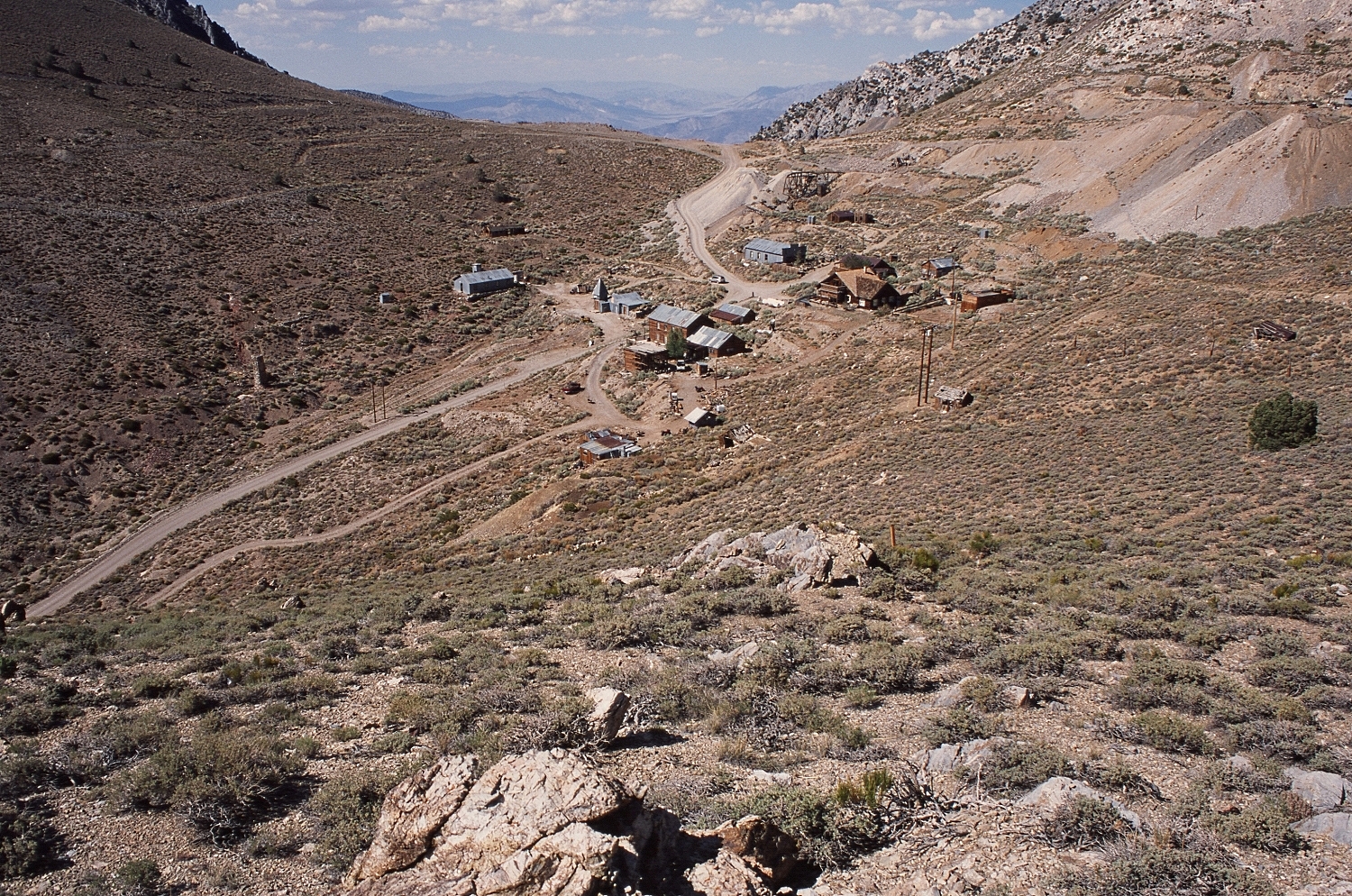
At 8,500 feet above sea level, on a barren ridge in the Inyo Mountains of eastern California, sits one of the most consequential ghost towns in American history. Cerro Gordo — Spanish for “Fat Hill” — produced so much silver and lead in the 1870s that it funded the founding infrastructure of Los Angeles. Its bullion flowed 200 miles south by mule train, filled the coffers of the city’s first banks, and kept its early merchants solvent. Without the Fat Hill, the city of Angels might have remained a dusty pueblo for another generation.
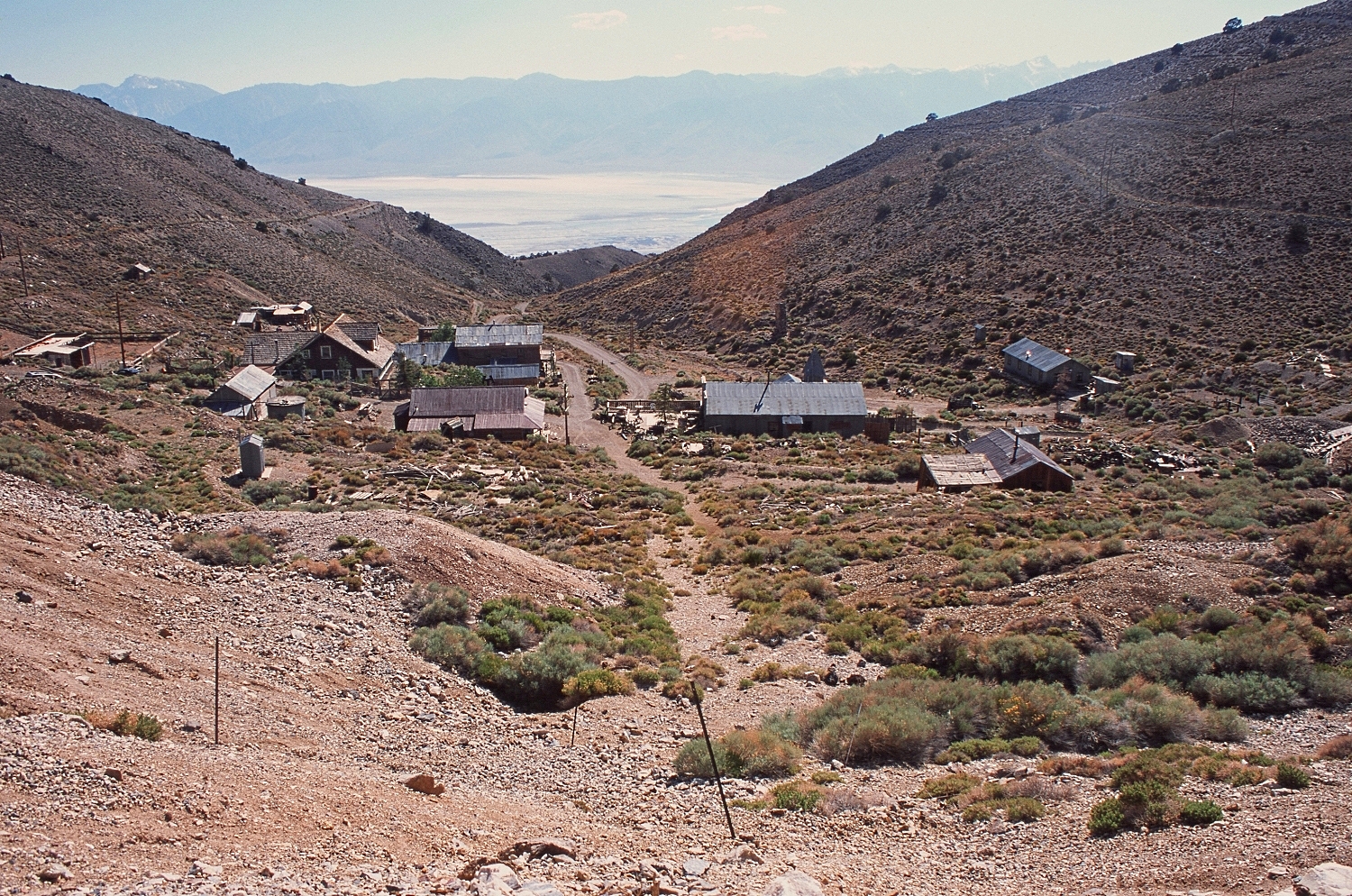
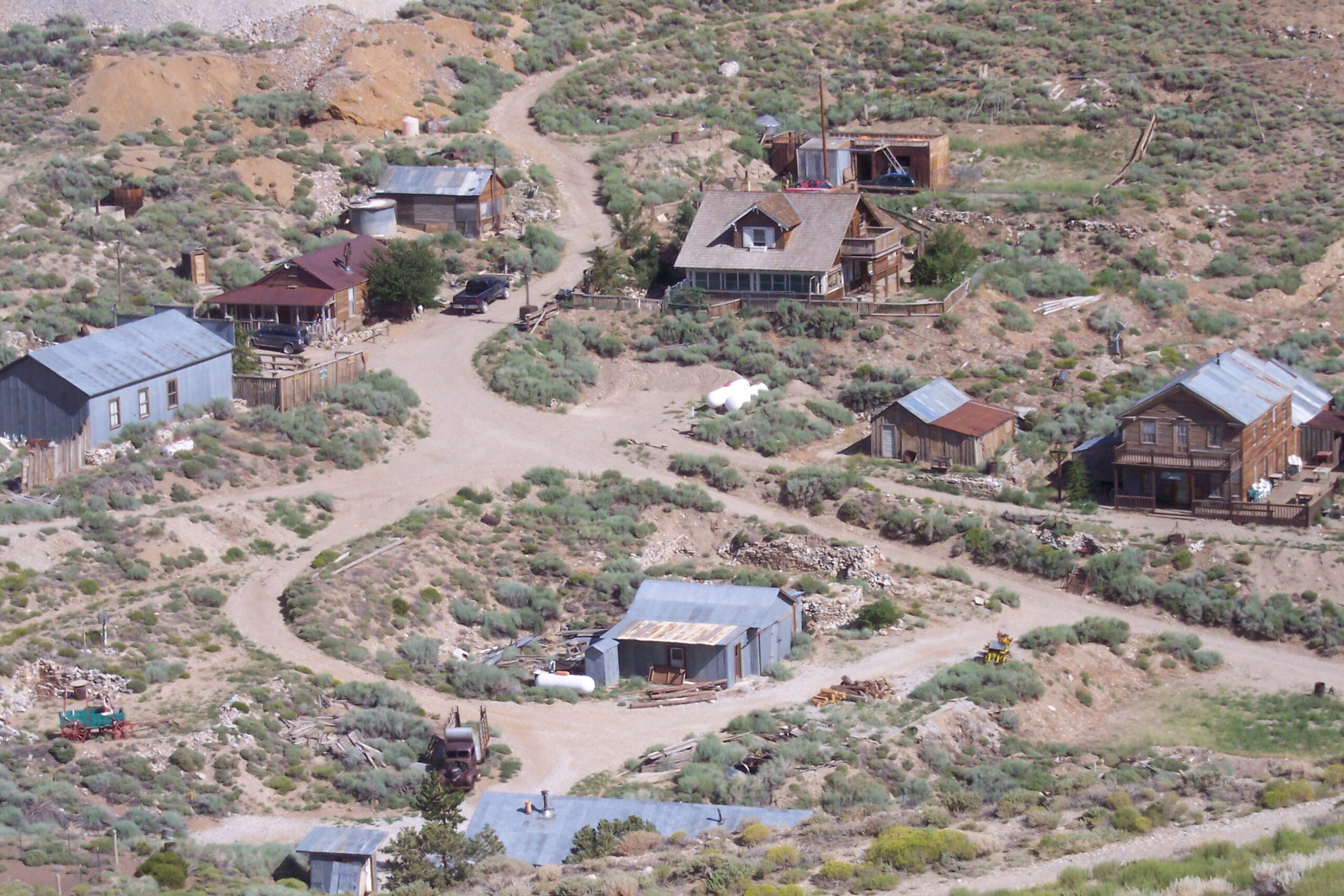
Today, Cerro Gordo is a privately owned ghost town operating as a living historical site, a restoration project, and — since 2020 — an unlikely digital phenomenon. Getting there requires a 4WD vehicle, a tolerance for switchbacks, and respect for a site that is still very much someone’s home. What you’ll find at the top is one of the best-preserved, most historically layered ghost towns in the American West.
“The mines that built L.A.” — the enduring nickname for Cerro Gordo, reflecting a period when nearly one-third of all business through the Port of Los Angeles was tied to the mountain’s silver output.
Geology and environment: why the mountain was both a treasure and a trap
The Inyo Mountains are a fault-block range on the western edge of the Great Basin, where complex tectonic activity millions of years ago deposited rich veins of silver-bearing galena, lead, and zinc within the limestone and metamorphic rock. The same geology that created the wealth created the challenge: the summit of Buena Vista Peak sits at roughly 8,500 feet, with no natural water sources, no timber of consequence, and extreme temperature swings that could kill equipment and men with equal efficiency.
Any settlement at Cerro Gordo would be entirely dependent on supply chains that ran up a steep, winding mountain road. Water had to be hauled up. Timber had to be hauled up. Food had to be hauled up. The ores that came down had to justify, financially, everything going up. For about a decade, they did — and then they stopped.
The discovery: Pablo Flores and the birth of the Lone Pine District (1865–1866)
In 1865, a Mexican prospector named Pablo Flores made the definitive discovery of rich silver veins near the mountain’s summit. He was not the first person to know about the Inyo Range’s mineral potential — Mexican prospectors had frequented the area for years — but Flores’s find was rich enough and documented enough to trigger the sequence of events that followed.
The discovery was not peaceful. Early accounts describe an initial party of five Mexican prospectors who encountered local Native American resistance. Three of the five were killed; the survivors were reportedly released only after promising never to return. The violence set a precedent. Cerro Gordo would be, for most of its boom years, a town that settled disputes with guns rather than courts.
By April 1866, the Lone Pine Mining District was formally organized to provide legal structure for the exploding number of claims. The transition from individual prospecting to industrial-scale operation was driven largely by Victor Beaudry, a French-Canadian businessman who had previously worked the Comstock Lode in Nevada. Beaudry understood the real economics of a remote mining camp: the money wasn’t just in the ore. It was in the control of supplies. He established a general store and began systematically acquiring claims from prospectors who couldn’t pay their debts.
The bonanza era: Belshaw, the Yellow Grade Road, and the birth of an industrial empire (1868–1877)
The transformation of Cerro Gordo from a rough mining camp into a genuine industrial operation came in 1868 with the arrival of Mortimer Belshaw of San Francisco. Where Beaudry was a merchant, Belshaw was an engineer. He designed and built a superior blast furnace — the Belshaw Furnace — that dramatically increased the efficiency of lead and silver extraction, allowing the operation to process ore grades that earlier methods couldn’t handle economically.
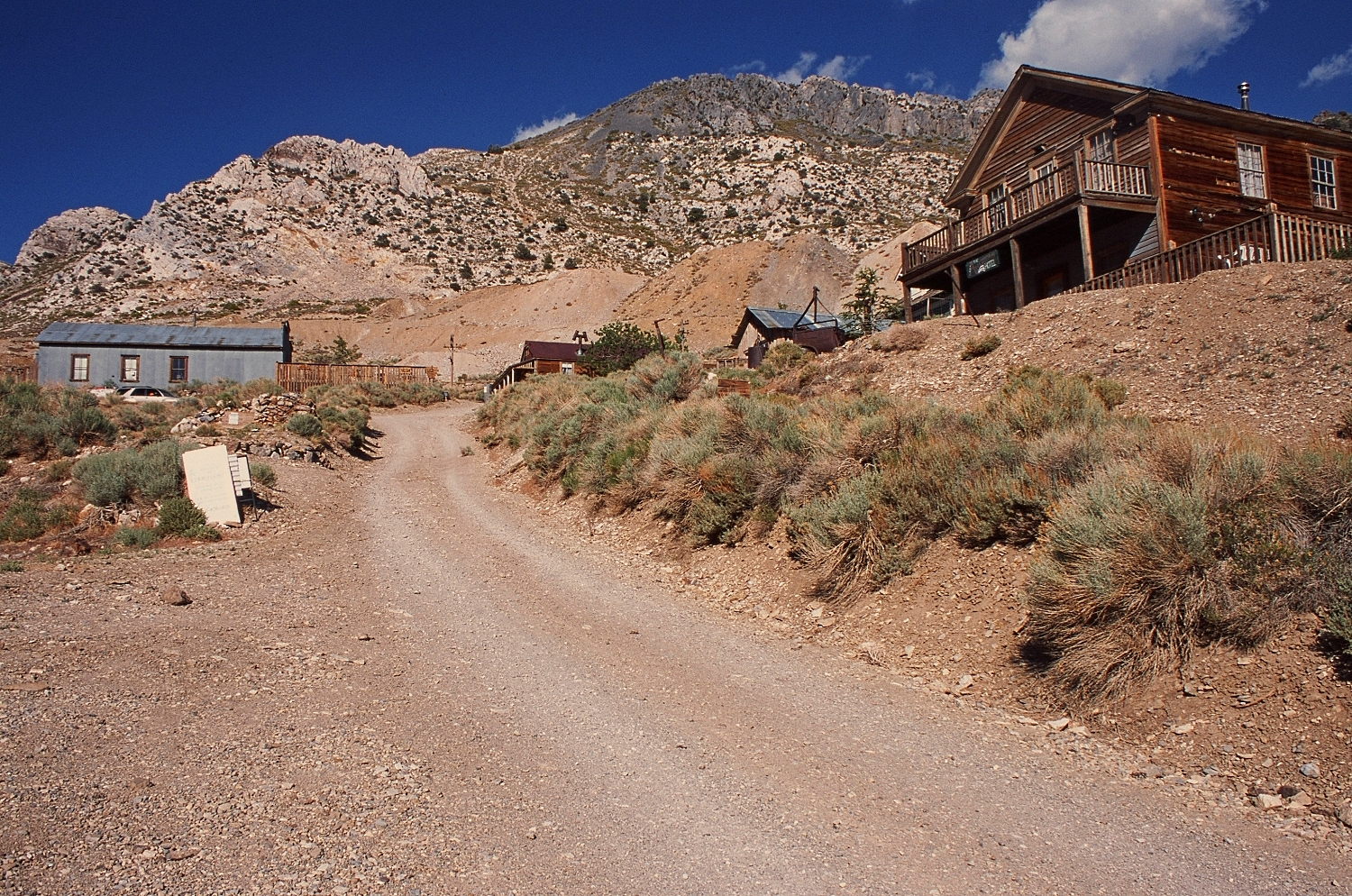
To solve the problem of getting the bullion down from 8,500 feet, Belshaw constructed the Yellow Grade Road — a steep, winding, 8-mile wagon path with a 5,000-foot elevation drop — and established a toll system for its use. He effectively controlled both the production and the export of the mountain’s wealth. By 1869, Cerro Gordo was the primary source of lead and silver in the entire nation.
The scale of output was extraordinary. Silver-lead ingots, each weighing approximately 85 pounds, were transported down the mountain to the shores of Owens Lake. There, steamships — including the Bessie Brady and the Molly Stevens — ferried the bullion across the water to the town of Cartago. Then came the final and most legendary leg: the mule trains of Remi Nadeau, who managed a fleet of hundreds of wagons and thousands of animals hauling silver 200 miles south to the pueblo of Los Angeles.
High-altitude lawlessness: life and death on the Fat Hill
At its peak in the mid-1870s, Cerro Gordo’s population fluctuated between an estimated 4,000 and 4,800 residents, packed into over 500 structures on a mountain ridge. Seven saloons served that population. Five hotels. Three brothels. The town’s sociological makeup was volatile: American pioneers, Mexican miners, Chinese laborers, and European entrepreneurs crowded together in an environment with no church, no schoolhouse, and no permanent jail for much of its boom period.
The result was predictable. Contemporary newspapers and modern historical accounts agree that Cerro Gordo averaged roughly a murder a week during its peak years. The most common catalyst was whiskey. The most common method was a gun. Women like brothel madam Lola Travis — who operated a dance hall and a series of small rooms near the Assay Office — were significant business owners in a town where the line between commerce and violence was thin and frequently crossed. Physical evidence of the gunfights survives: bullet holes are still visible in the walls of surviving saloon structures today.
Three eras, three economies
| Feature | Silver Era (1865–1880) | Zinc Era (1905–1940s) | Modern Era (2018–Present) |
|---|---|---|---|
| Primary resource | Silver, lead | Zinc carbonates | Tourism, history |
| Peak population | 4,000–4,800 | ~500–1,000 | 1 (caretaker/owner) |
| Transport method | Mule teams, steamships | Aerial tramway, rail | 4WD vehicles |
| Social stability | Extremely low (lawless) | Moderate (industrial) | High (private/regulated) |
| Defining event | 1877 fire & silver crash | 1912 aerial tramway | 2020 hotel fire & rebuild |
The fall of silver: fire, drought, and the collapse of 1877
The seeds of Cerro Gordo’s first decline were geological and environmental before they were financial. By 1875, ore quality had begun to diminish. The local water supply — already strained by a town of thousands — dried up entirely. The pinyon pine forests of the Inyo Mountains, which had been harvested to produce charcoal for the smelters, were largely gone. Fuel became scarce. Operating costs rose. Margins narrowed.
The decisive blow came in 1877. A major fire swept through the town and the mines, destroying much of the wooden infrastructure essential for extraction and processing. Simultaneously, the global price of lead and silver began a prolonged decline. Capital retreated. Workers followed. By 1880, the once-bustling metropolis of 4,000 was nearly empty, with only a handful of miners working low-grade claims in the ruins. Cerro Gordo’s first era was over in roughly fifteen years.
The zinc resurgence: a second life for a dying mountain (1905–1940s)
Cerro Gordo’s second act began in 1905, driven not by silver but by zinc. The mountain’s zinc carbonates — minerals that had been dismissed as waste during the 19th-century silver boom — were now commercially valuable. In 1909, Louis D. Gordon arrived and modernized the mines, constructing a new bunkhouse (1904) and the Gordon House (1909), both of which survive today.
The technological centerpiece of the zinc era was an aerial tramway completed in 1912, which connected the Cerro Gordo mines directly to the narrow-gauge Southern Pacific Railroad at the town of Keeler below. The tramway eliminated the need for the Yellow Grade Road for ore transport, dramatically reducing costs. At its peak, Cerro Gordo became the largest producer of zinc in the United States, shipping roughly 1,000 tons of ore daily.
The zinc era supported a smaller, more stable population through the 1930s. After World War II, however, mining at this elevation became economically unviable once more. By the late 1940s, the mountain was largely abandoned for the second time in its history.
Legends, folklore, and historical fact
Cerro Gordo’s isolation and dramatic history have generated a body of folklore that is now inseparable from its identity. The following accounts distinguish between documented historical events and stories whose origins are more difficult to verify.
The 30 entombed Chinese miners
The most enduring legend of Cerro Gordo holds that 30 Chinese immigrant miners were entombed in a catastrophic mine shaft collapse, and that the town’s management — viewing the laborers as expendable — made no effort to rescue or recover them. The story is compelling and captures the brutal labor conditions of the 19th-century frontier. However, contemporary 19th-century newspaper records documenting a single event involving 30 deaths in this manner have proven elusive. The presence of a Chinatown at Cerro Gordo and the general disregard for immigrant worker safety are well-documented historical facts; this specific incident is classified as folklore.
The murder of Postmaster Henry Boland (1892)
On December 29, 1892, William “Billy” Crapo, a French-Canadian engineer and former postmaster, became enraged over an election dispute. He stepped out of his house — located next to the American Hotel — and shot Henry Boland, the current postmaster, and Boland’s friend John Thomas. Boland was killed instantly. Crapo fled into the mountains and was never apprehended, despite a $500 reward for his capture. His residence, the Crapo House, stood as a museum piece for over a century before its destruction in the 2020 fire.
The sandbagged beds
A popular legend holds that the nightly violence was so severe that miners slept with sandbags stacked around their beds to stop stray bullets from penetrating their shacks. The frequency of shootings in Cerro Gordo during its peak years is historically well-documented. The specific detail of sandbagged sleeping quarters, however, is generally treated by historians as colorful exaggeration — a story that captures the town’s lethal reputation rather than documenting a verified practice.
The modern revival: pandemic, YouTube, and the 2020 fire
For decades after its final abandonment, Cerro Gordo was maintained by Mike and Jody Patterson, who lived in the Gordon House and operated the site as a private museum, preserving it in a state of “arrested decay.” In June 2018, the town was sold for $1.4 million to entrepreneurs Brent Underwood and Jon Bier.
Underwood moved to Cerro Gordo full-time in March 2020 — just as the global pandemic began — and started documenting his life at 8,500 feet on his YouTube channel, Ghost Town Living. The channel has since accumulated millions of views, effectively funding the restoration through the modern creator economy: viewers watch the history, donate to the project, and occasionally volunteer on-site.
The most significant setback of the modern era came on June 15, 2020 — exactly 149 years to the day after the American Hotel’s original opening. A fire, suspected to be electrical, destroyed the historic American Hotel, the Crapo House, and the ice house. The loss of the American Hotel — the town’s architectural centerpiece — was a major historical tragedy. In 2021, Underwood began a multi-year project to rebuild the hotel using historically accurate methods, a process that was ongoing through 2025 and 2026.
“It’s the kind of place where you can spend an afternoon and feel like you’ve touched something real about the American West — not a replica, not a re-enactment, but the actual thing.”
What to see
The American Hotel site and ongoing reconstruction
The American Hotel was the architectural centerpiece of Cerro Gordo for over a century — until its destruction in the June 2020 fire. Since 2021, owner Brent Underwood has been rebuilding it using historically accurate methods, documenting the process on the Ghost Town Living YouTube channel. The reconstruction project is one of the most ambitious heritage restoration efforts currently underway anywhere in the American West.
The Belshaw Smelter and furnace ruins
The remnants of Mortimer Belshaw’s blast furnace complex are among the most significant industrial archaeology on the site. This was the technological heart of the bonanza era — the place where ore became bullion and the wealth of the Inyo Mountains became the capital of early Los Angeles.
The Gordon House and bunkhouse
Built during the zinc era, these early 20th-century structures represent the second chapter of Cerro Gordo’s industrial history. The Gordon House served as the residence for the Patterson family, the site’s longtime stewards, for decades. Both structures are among the best-preserved buildings on the property.
The mine shafts and aerial tramway remnants
The remnants of the 1912 aerial tramway system — which once connected the mines to the railhead at Keeler — are visible on the mountainside below the town. The mines themselves are extensive; Underwood has spent considerable effort mapping and exploring the underground workings, much of which is documented in his YouTube series.
The view
At 8,500 feet, the panorama from Cerro Gordo is extraordinary: Owens Valley directly below, the Sierra Nevada wall rising to the west, the arid expanse of the Saline Valley to the northeast. It’s the same view that generations of miners woke up to every morning, and it hasn’t changed.
Ghost towns nearby
Further reading
Sources
Cerro Gordo official site — cerrogordomines.com/pages/about
Cerro Gordo visit information — cerrogordomines.com/pages/visit
Wikipedia — Cerro Gordo, California
Legends of America — The Rise and Fall of Cerro Gordo, California
Chapman University Digital Commons — The Abandonment of the Cerro Gordo Silver Mining Claim, 1869
Inyo Mountains: Cerro Gordo Mining Camp — mtnmouse.com
Pin in the Atlas — Cerro Gordo: Living Full Time With Ghosts
Lone Pine Chamber of Commerce — Ghost Towns of the Lone Pine Area