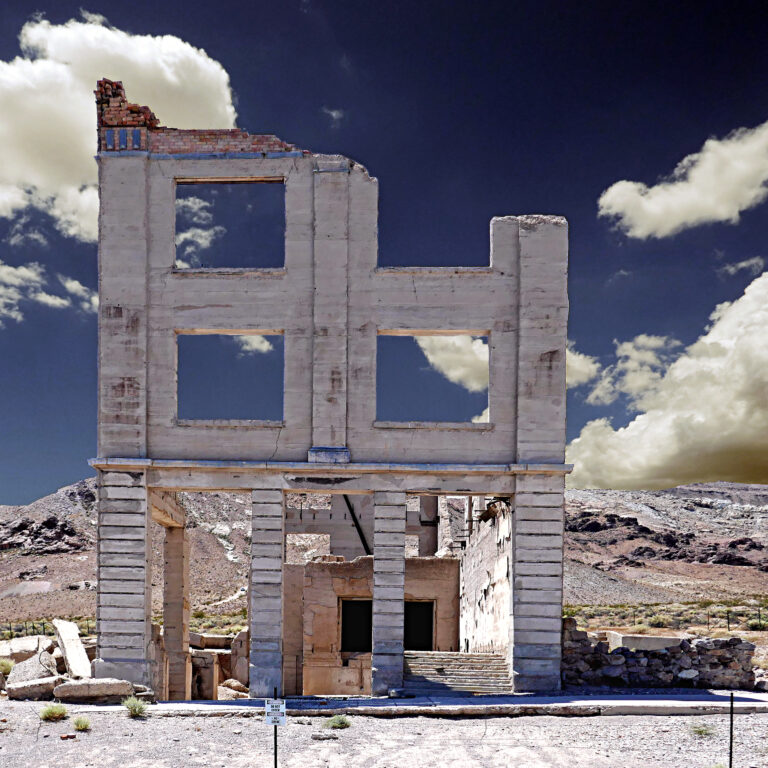
Nelson, Nevada: The Lawless Gold Canyon on the Colorado River
Nevada
Gold & Silver Mining
By the Ghost Town Archive editorial team
Founded
Gold strike 1861; town of Nelson formally established 1905
Peak Population
500+ miners in the 1880s — larger than the Las Vegas Valley at the time
Primary Industry
Gold, silver, copper & lead (Techatticup Mine)
County / Region
Clark County, Nevada; Eldorado Canyon, ~45 mi SE of Las Vegas
Total Output
~$10 million in mineral wealth over eight decades
Status
Privately preserved historic site & mine-tour attraction
Grounds open daily 9 a.m.–5 p.m. · guided mine tours by reservation · on NV-165, ~11 mi east of US-95

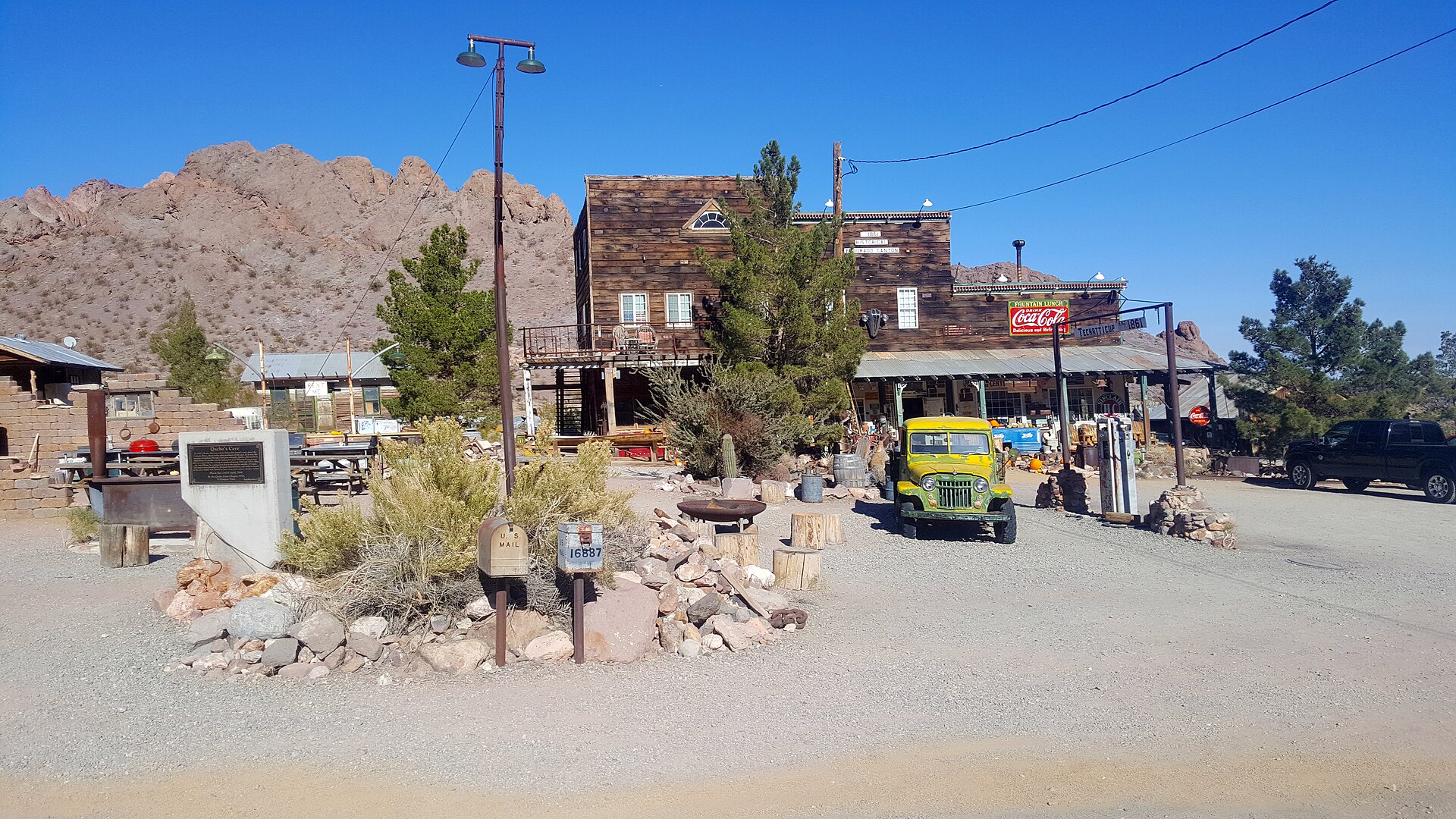
Nelson ghost town in Eldorado Canyon, the restored site of the Techatticup Mine. Photo: Don Ramey Logan, CC BY-SA 4.0, via Wikimedia Commons.
Eldorado Canyon is a narrow, rugged gorge in southern Nevada that cuts down to the Colorado River about 45 miles southeast of Las Vegas. For a few violent decades it held one of the richest gold strikes in the region — and a reputation as one of the most lawless mining districts in the American West. The town that grew up here, Nelson, outlived its mines, survived a deadly flood, and today survives as one of Nevada’s most atmospheric preserved ghost towns.
Its story runs from Indigenous turquoise miners and Spanish prospectors to Civil War deserters, renegade outlaws, and a Hollywood plane-crash prop — all packed into a single desert canyon.
Turquoise, Spanish Silver, and a Chief’s Guidance
Long before prospectors arrived, the canyon was a resource corridor for the Ancestral Puebloans and later the Paiute and Mojave, who mined local turquoise and used the river for trade and seasonal camps. In 1775 Spanish surveyors working the lower Colorado noted outcrops of gold, silver, and lead near the canyon mouth and briefly worked the surface silver, but without heavy crushing equipment they gave up and left.
Anglo-American prospecting resumed in the 1850s. In 1858 steamboats began ascending the Colorado from Yuma, giving the remote canyon a way to bring in heavy mill machinery and ship out ore. The decisive moment came in 1861, when Mojave chief Irataba guided prospector John Moss to a rich vein about five miles inland — the Salvage Vein, a steeply stacked ribbon of gold, silver, copper, and lead. Moss and his partners organized the Colorado Mining District that year, and the rush was on.
The Techatticup Mine
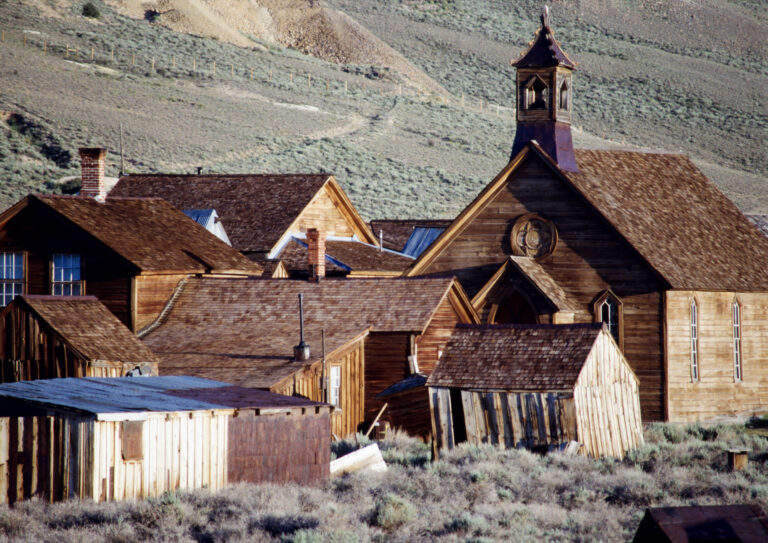
The Techatticup Mine became the largest and most lucrative operation in the canyon — the oldest and richest gold mine in southern Nevada, producing millions in ore over roughly eight decades. Its name was adapted from Paiute words (variously given as tecahenga, “hungry,” or to-sup, “bread”), from encounters where Native people asked the early camps for food. Miners followed the Salvage Vein underground with picks, shovels, and candlelight, timbering the shafts and hauling quartz to heavy stamp mills along the wash. The mine drew serious money, including California senator George Hearst — father of publisher William Randolph Hearst.
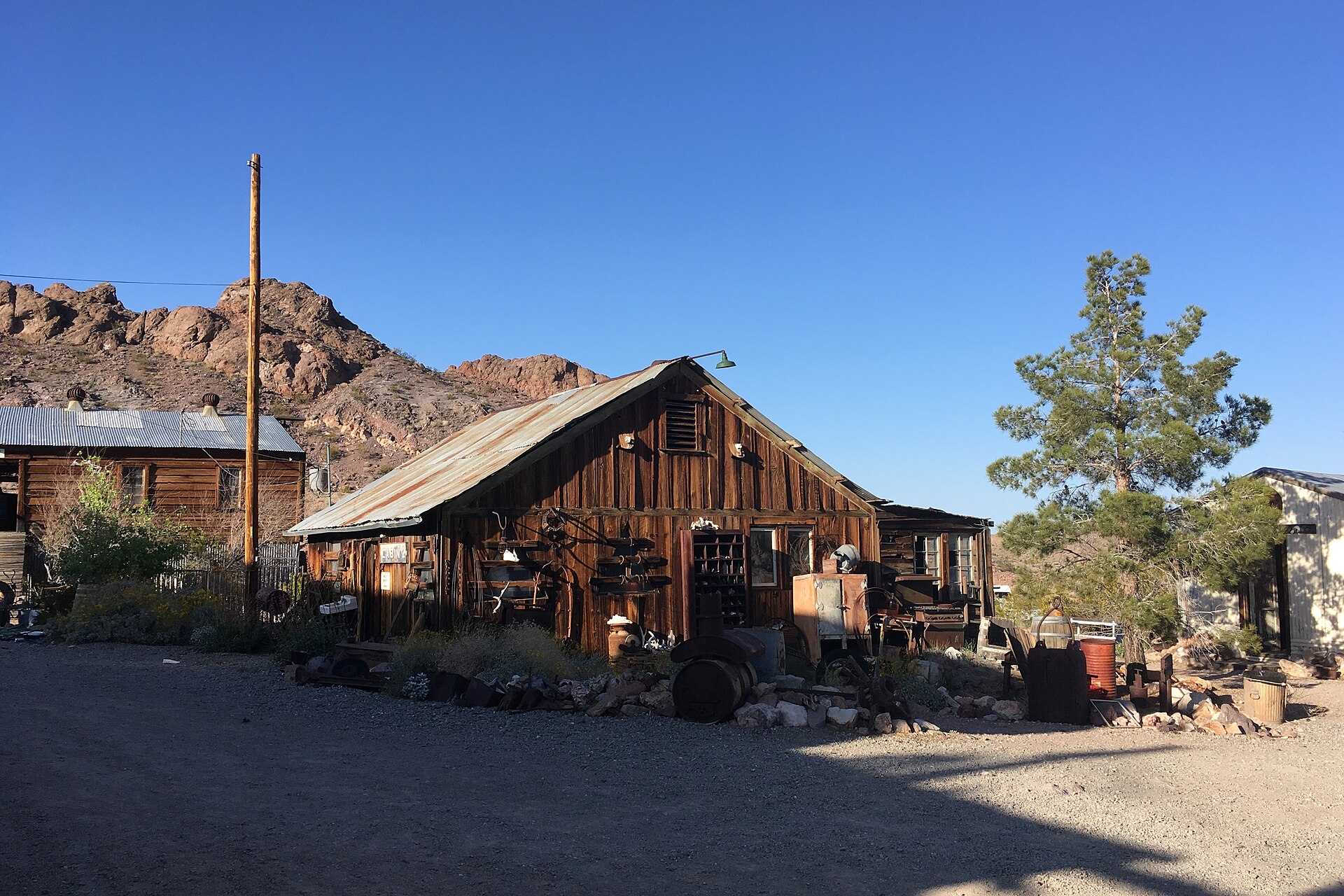
A surviving timber building at the Techatticup, southern Nevada’s oldest and richest gold mine. Photo: Agnieszka Kwiecień, CC BY-SA 4.0, via Wikimedia Commons.
“The Most Lawless Place in the West”
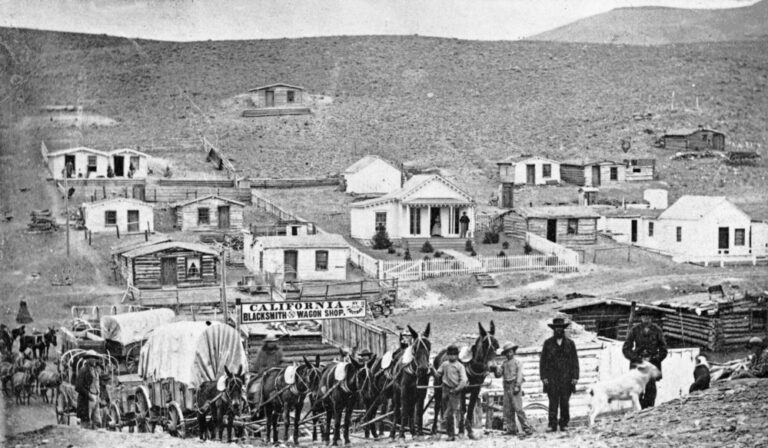
From the 1860s into the 1880s, Eldorado Canyon earned a reputation as one of the most violent mining districts anywhere in the West. The Civil War brought deserters from both armies into the canyon’s extreme isolation, and North–South loyalties split the camps into hostile factions that fought openly. Formal law enforcement was effectively absent: the nearest sheriffs were more than 200 miles away in Hiko and Pioche, and they largely refused to enter the canyon for fear of ambush. Disputes over claims, ownership, and wages were settled by armed posses, miners’ courts, and gunfire. The U.S. Army even planted a short-lived military post here from 1867 to 1869, but the lawlessness returned the moment the soldiers left.
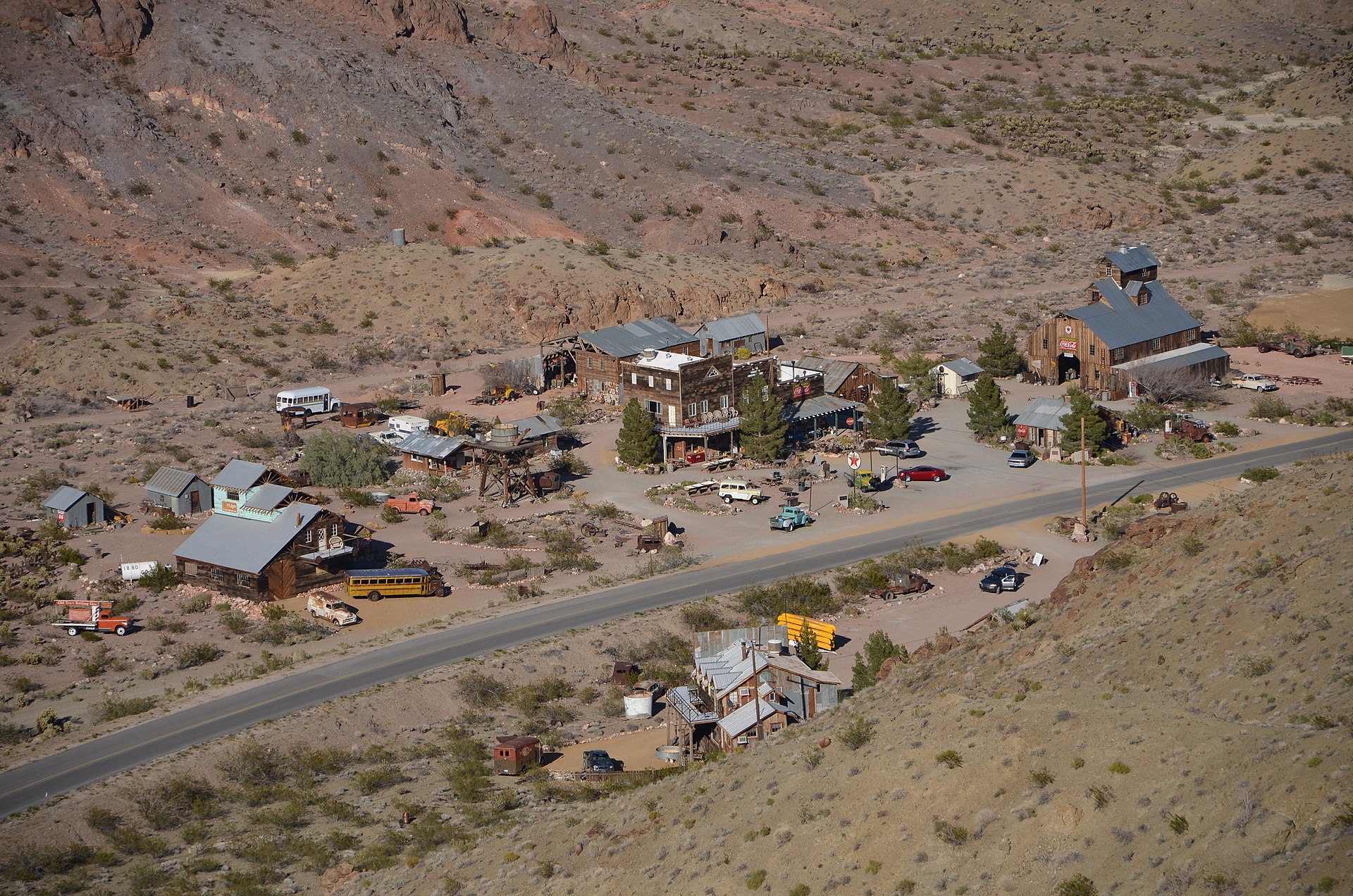
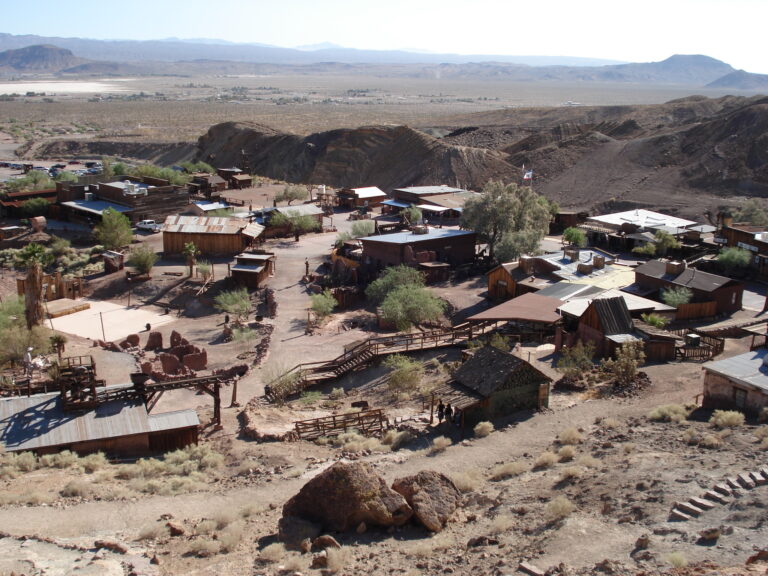
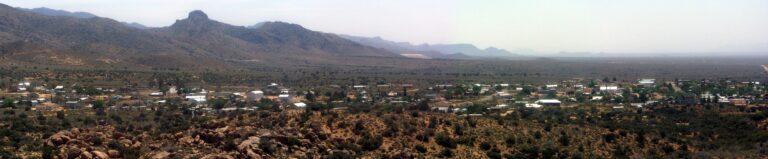
Nelson strung out along the floor of Eldorado Canyon, about 45 miles southeast of Las Vegas. Photo: Hypersite, CC BY-SA 3.0, via Wikimedia Commons.
The canyon’s isolation also produced figures who loom large in southern Nevada history. In 1897 a Southern Paiute man recorded as Avote killed five settlers in the area, among them the miner and teamster Charles Nelson — whose name the town later took. More notorious still was Queho, a man of Cocopah and Paiute descent remembered in regional chronicles as an outlaw blamed for the deaths of more than twenty people across southern Nevada between about 1910 and 1919. One of his last attributed victims, Maude Douglas, was killed near the Techatticup Mine in 1919 after serving as a community nurse during the 1918 influenza pandemic. Despite posses and bounties, Queho vanished into the canyon’s caves; his remains were reportedly found in a cave in 1940.
In the 1880s more than 500 miners lived in Eldorado Canyon — more than in the entire Las Vegas Valley at the time.
Boom, Decline, and the 1974 Flood
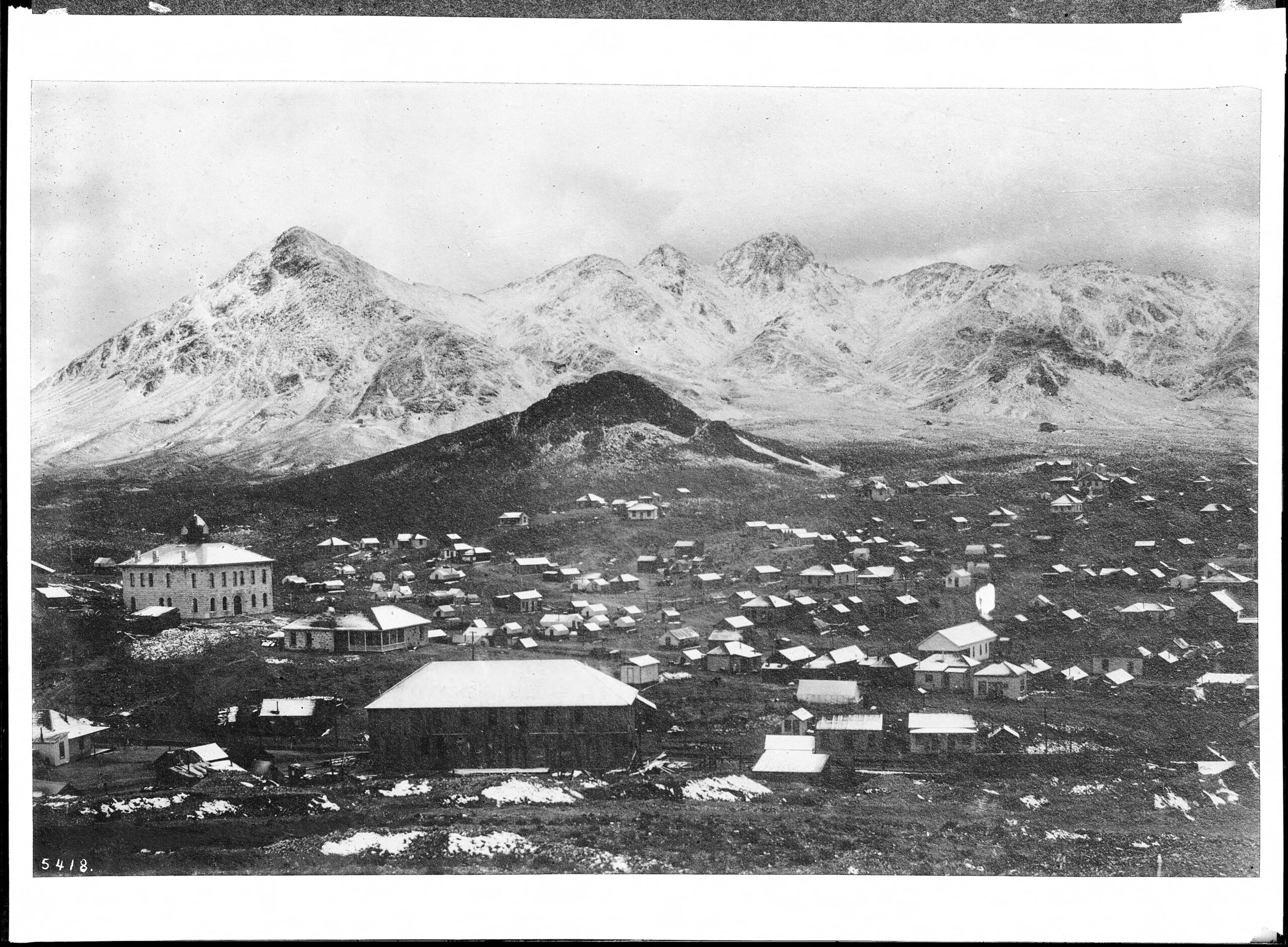
The town of Nelson was formally laid out in 1905 near the upper canyon as the district’s residential and processing center, anchored by a 50-ton reduction smelter. Output rose and fell through the early 20th century, with a last burst in the late 1930s and early 1940s supplying strategic metals for World War II. Then rising labor costs, falling ore grades, and the federal War Production Board’s Limitation Order L-208 — which shut gold mines nationwide — ended it. The Techatticup closed for good around 1942–1945. All told, the district produced an estimated $10 million in mineral wealth, and Nelson dwindled to fewer than 35 residents.
On September 14, 1974, a sudden cloudburst sent a wall of water and debris roaring down the canyon wash. The flash flood destroyed Nelson’s Landing, the riverside port at the Colorado River, sweeping away buildings, docks, and vehicles and killing nine people. The landing was never rebuilt.
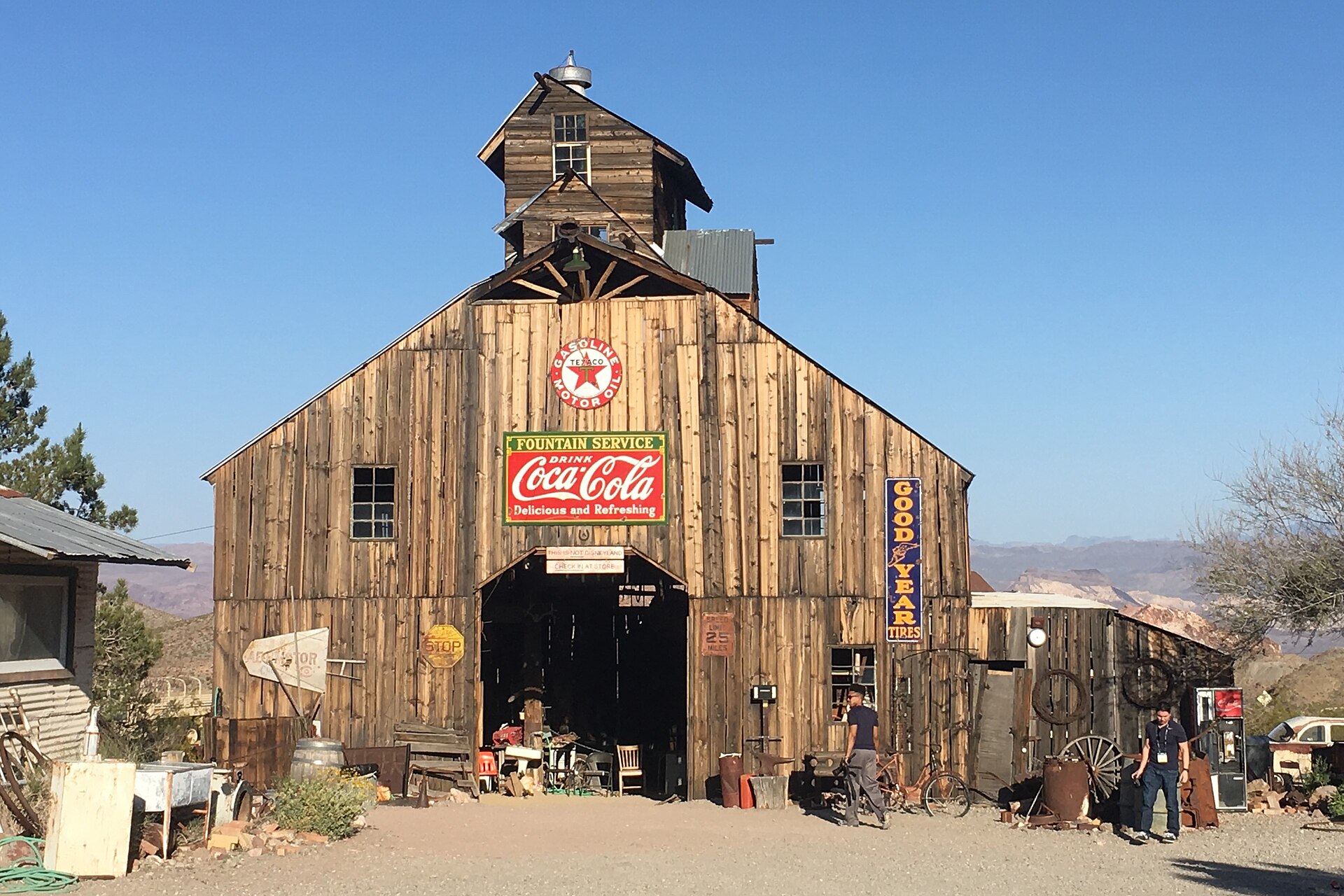
Restored buildings and vintage relics at Nelson, now an open-air historic site. Photo: Agnieszka Kwiecień, CC BY-SA 4.0, via Wikimedia Commons.
What Survives Today
In 1994 Tony and Bobbie Werly bought 50 acres of the historic mining land, including the Techatticup site, stamp-mill remains, bunkhouse, and miner cabins. Over the following decades the family restored buildings, stabilized shafts, and cleared debris to create an open-air historic destination. Surviving elements include timbered adits, exposed quartz veins, rusted ore cars, stamp-mill machinery, vintage gas pumps, and authentic living quarters. The photogenic site has also hosted film and media shoots, and still displays props such as the staged plane crash from the 2001 film 3000 Miles to Graceland.
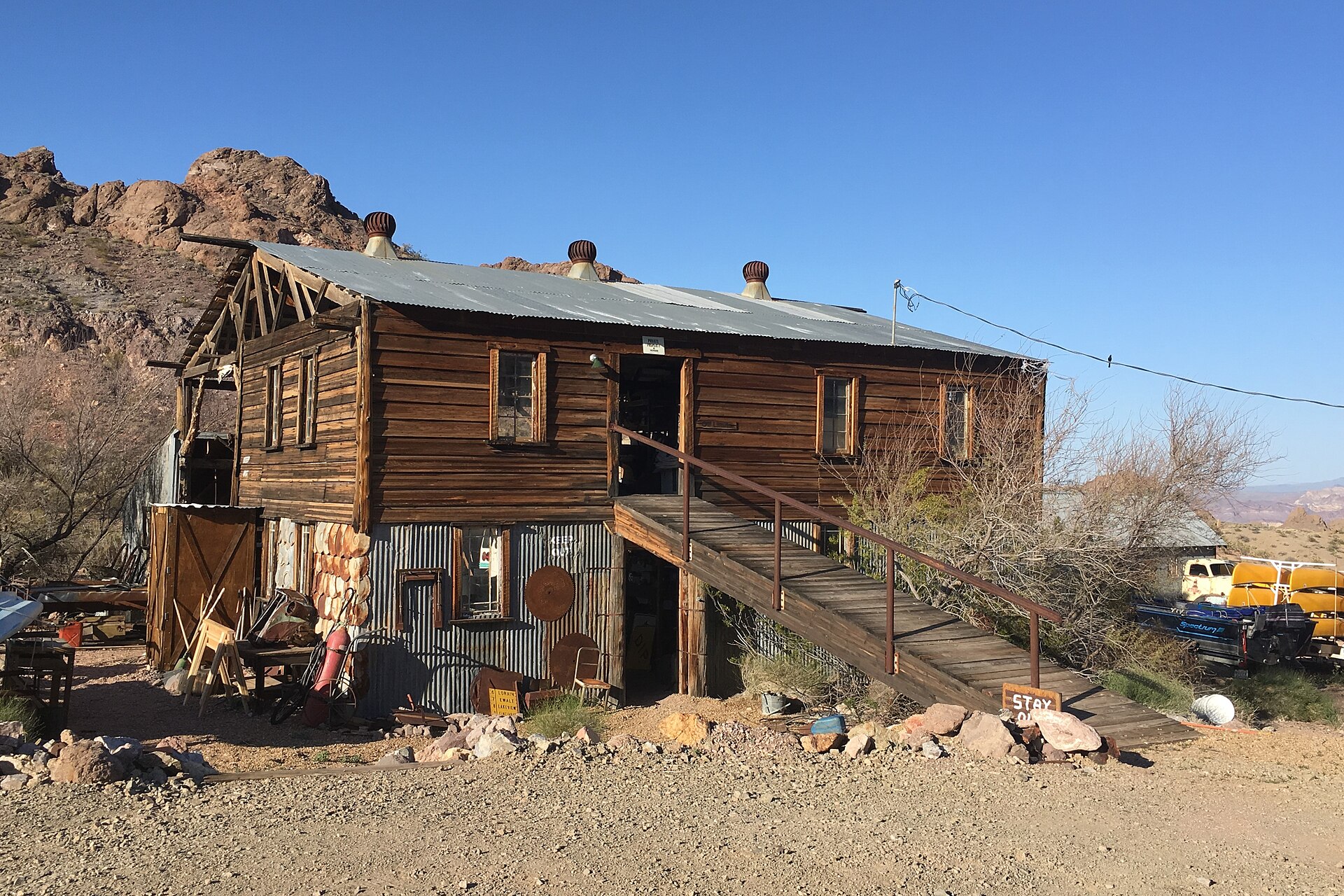
The large timber mill building at the heart of the Techatticup site. Photo: Agnieszka Kwiecień, CC BY-SA 4.0, via Wikimedia Commons.
Folklore, not fact: Two stories cling to the canyon — that vast unmined gold veins still lie sealed behind collapsed chambers in the Techatticup, and that spectral “hell dogs” guard gold buried by Civil War deserters. Both are local legend rather than documented history; enjoy them as canyon lore.
Timeline
1775
Spanish surveyors note gold, silver, and lead near the canyon mouth; briefly work surface silver.
1858
Steamboats begin ascending the Colorado from Yuma, opening the canyon to heavy equipment.
1861
Chief Irataba guides John Moss to the Salvage Vein; Colorado Mining District organized.
1867–69
U.S. Army maintains a short-lived post to curb lawlessness; violence returns after withdrawal.
1880s
Peak boom — 500+ miners, more than the entire Las Vegas Valley.
1897
Charles Nelson, for whom the town is named, is among five settlers killed by Avote.
1905
Town of Nelson formally established with a 50-ton reduction smelter.
1919
Maude Douglas killed near the Techatticup Mine, attributed to the outlaw Queho.
1942–45
Wartime Order L-208 closes gold mines; the Techatticup shuts down permanently.
1974
September flash flood destroys Nelson’s Landing on the Colorado River; nine die.
1994
The Werly family buys 50 acres and begins restoring the Techatticup site.
Respect the desert and the mine. Eldorado Canyon is real mining country: stay out of any shafts, adits, or structures not part of a guided tour, and never enter underground workings on your own. Summer temperatures here are extreme — carry plenty of water and avoid midday heat. The canyon is prone to sudden flash flooding, as the deadly 1974 flood showed, so never enter washes when storms threaten anywhere upstream. Cell service is limited.
Visitor Information
Grounds
Open daily 9 a.m.–5 p.m. (closed Thanksgiving & Christmas Day)
Mine Tours
~60–75 min guided walk; typically 9 a.m., noon & 2 p.m. by reservation
Location
16880 NV State Hwy 165, Nelson, NV 89046
Tour Pricing
Roughly $20 adults, $12.50 ages 5–12, under 5 free (confirm current rates)
Photography
Casual handheld photos OK; commercial/wedding shoots require paid permits
Extras
Canoe & kayak rentals for nearby Colorado River coves
From Las Vegas, take US-95 south past Boulder City, turn east onto Nevada State Route 165, and continue about 11 miles into the canyon to the site. The grounds are privately operated as Eldorado Canyon Mine Tours; hours, tour times, and prices change seasonally, so call ahead to confirm and to book underground tours.
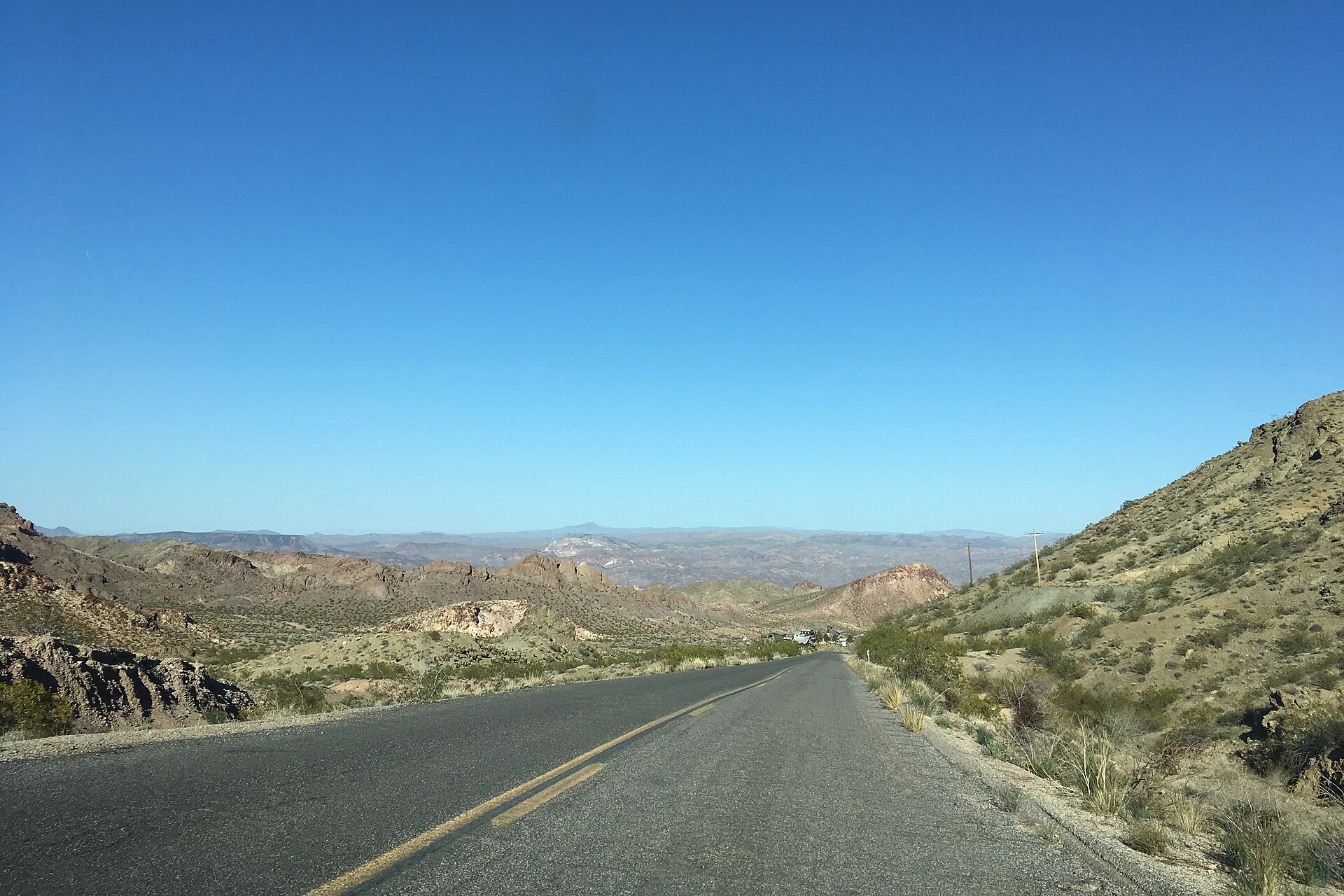
State Route 165 drops through the desert toward Nelson and the Colorado River. Photo: Agnieszka Kwiecień, CC BY-SA 4.0, via Wikimedia Commons.
Nearby Ghost Towns
Nelson sits within reach of several other historic southern Nevada mining and pioneer sites.
Further Reading
Eldorado Canyon and Nelson, Nevada: Historical Documents, Reminiscences, Commentary
Donna Andress (1997) — the primary local history, compiled by a longtime Nelson resident.
Nevada Ghost Towns and Mining Camps
Stanley W. Paher (1970) — the definitive statewide reference, covering 600+ sites.
Nevada’s Turbulent Yesterday: A Study in Ghost Towns
Don Ashbaugh (1980).
Nevada Ghost Towns
Lambert Florin (1971) — a photo-historical survey of the state’s abandoned sites.
Ghost Town Archive
Ghost Town Archive documents the history and current condition of abandoned and preserved towns across the American West. Our guides are compiled from state and federal park records, county histories, and primary-source archives, and are reviewed for accuracy before publication. We visit and verify site conditions where possible and update guides as access and hazards change.
Safety & access disclaimer: Ghost towns and historic mining sites can present real hazards, including unstable structures, open or hidden mine shafts, uneven ground, extreme heat, flash-flood-prone washes, and remote terrain with limited cell service. Conditions, opening hours, fees, and access rules change without notice. This guide is for general information only — always check current conditions with the operator or managing agency before you travel, obey posted signs and closures, respect private property, and take nothing but photographs. You are responsible for your own safety.
Nevada ghost towns
Nelson
Eldorado Canyon
Techatticup Mine
Clark County
gold mining
Colorado River
Colorado Mining District
Queho
George Hearst
Nelson’s Landing
Las Vegas
Eldorado Canyon Mine Tours
Sources: Travel Nevada and Nevada Division of Minerals materials; Legends of America; Intermountain Histories; Nevada Mining Association; Eldorado Canyon Mine Tours (operator information); Andress, Eldorado Canyon and Nelson, Nevada (1997); Paher, Nevada Ghost Towns and Mining Camps (1970); Ashbaugh, Nevada’s Turbulent Yesterday (1980); Nevada Historical Society Quarterly. Photos: townsite by Don Ramey Logan (CC BY-SA 4.0); aerial by Hypersite (CC BY-SA 3.0); mine buildings, relics, mill, and canyon road by Agnieszka Kwiecień (CC BY-SA 4.0); all via Wikimedia Commons.