Panamint City, California: The Silver Senators’ Boomtown in Surprise Canyon
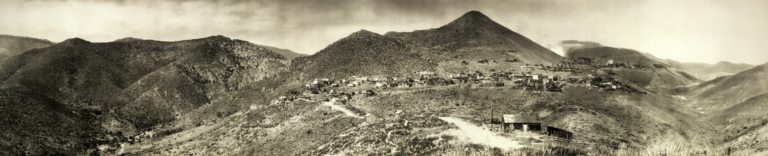
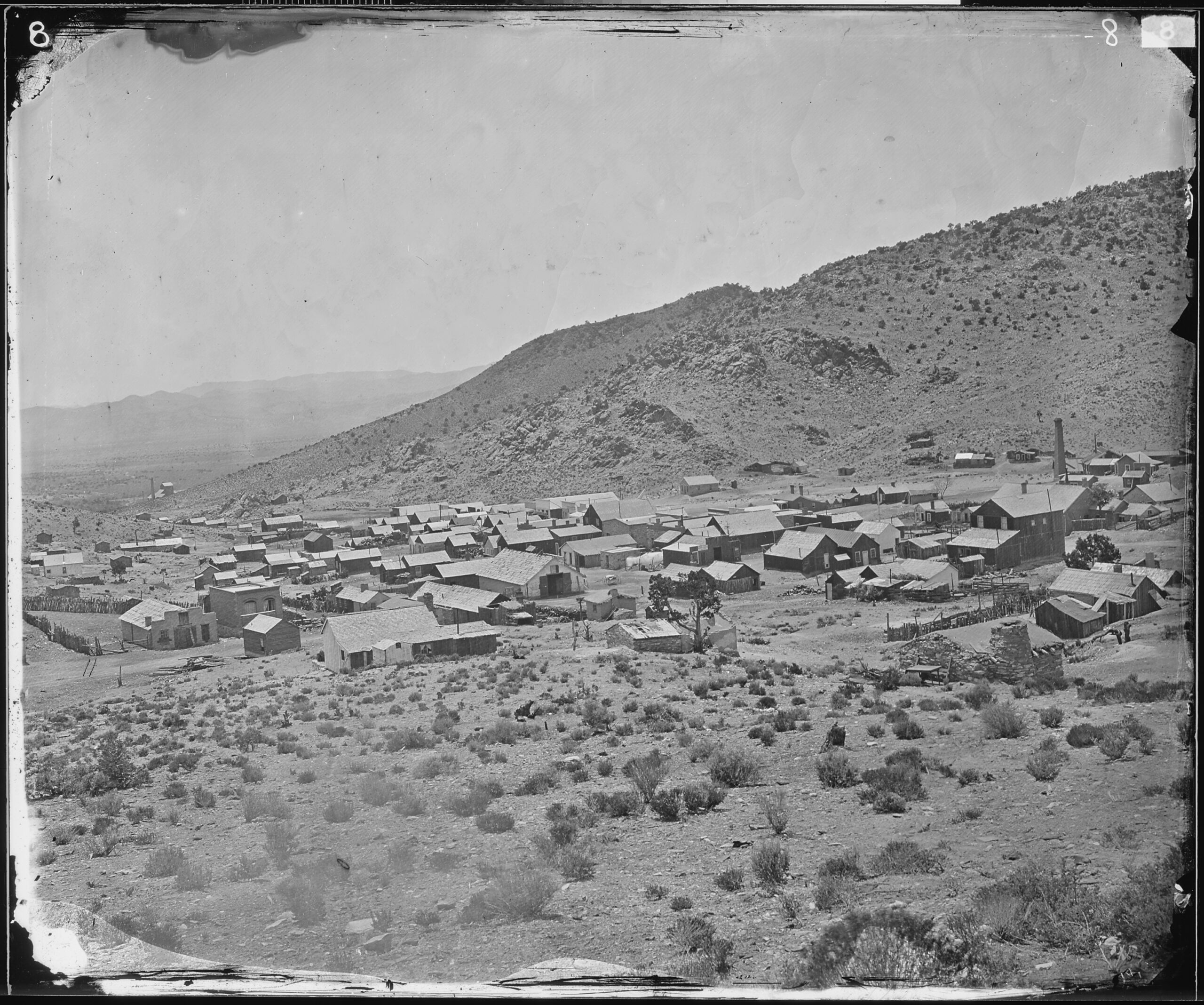
Panamint City was a silver boomtown wedged into Surprise Canyon, high in the Panamint Range on the west side of what is now Death Valley National Park. Prospectors found rich silver ore at the head of the canyon in late 1872 or early 1873, and in 1874 two Nevada senators, John P. Jones and William M. Stewart, poured money into the district. By the end of that year 1,500 to 2,000 people crowded a mile-long street of tents, stone huts, saloons and stores. The boom faded within a year, a cloudburst flood tore through the canyon on July 24, 1876, and the senators’ mill shut down in May 1877. Today the town is a hike-in ruin, reached only on foot up a wet, steep canyon, where a brick mill smokestack still stands above the old townsite.
Silver at the head of Surprise Canyon
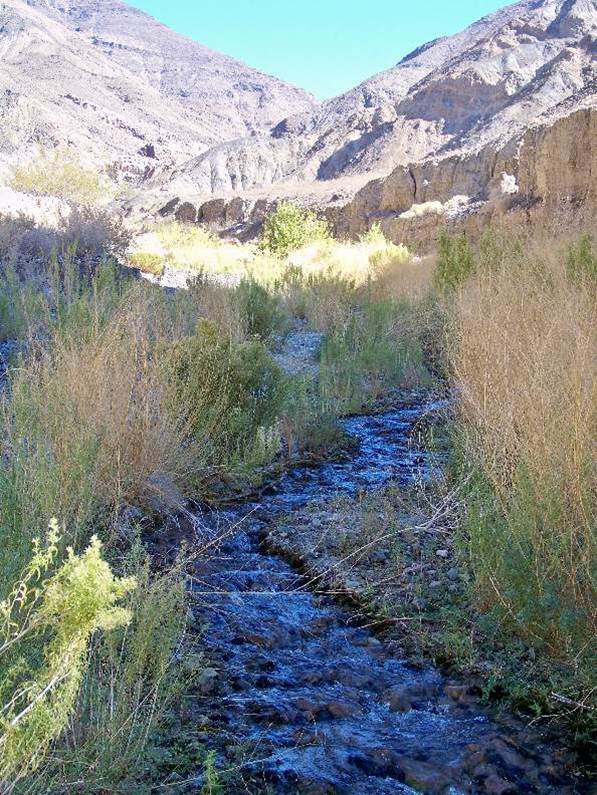
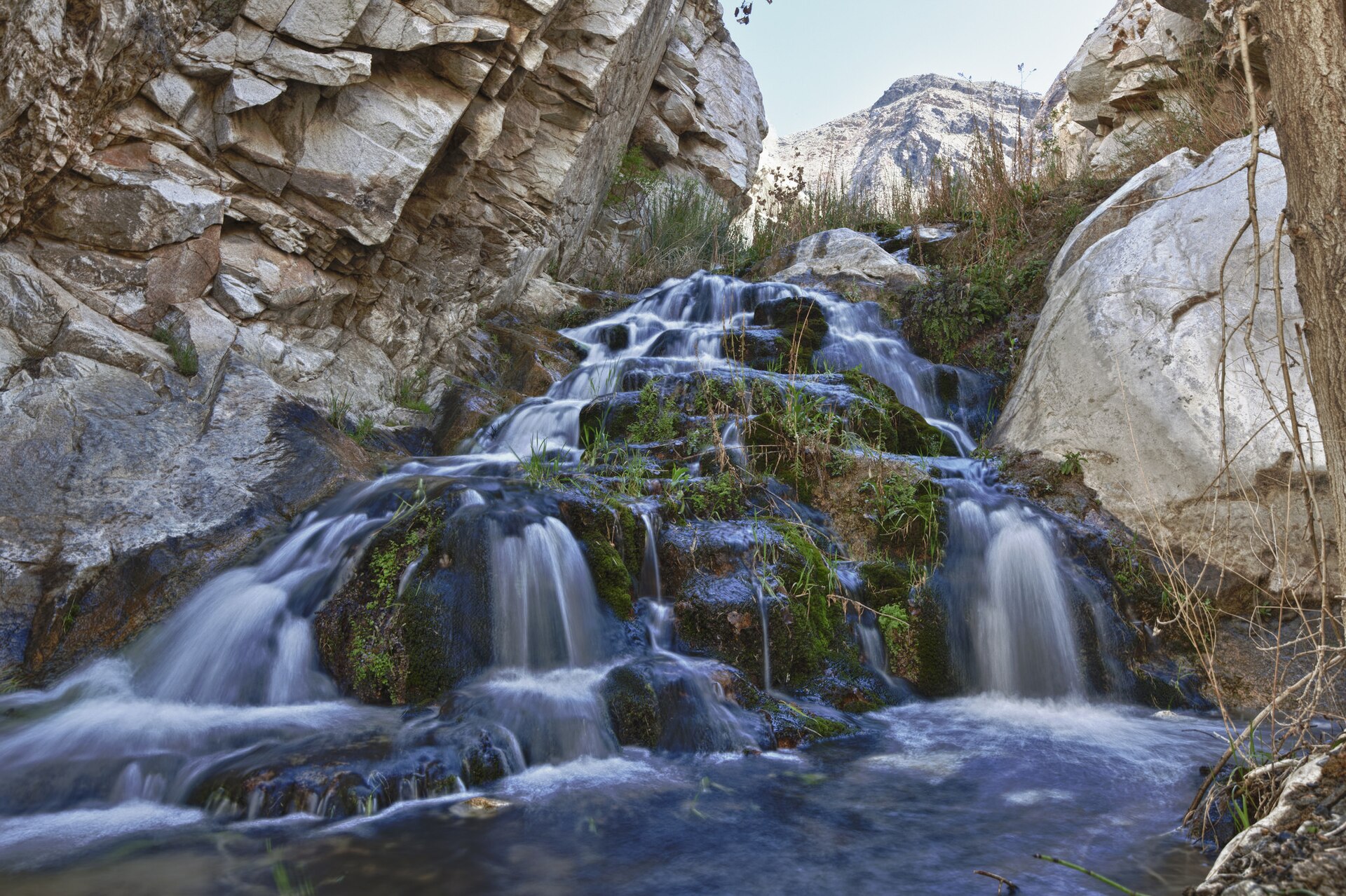
Surprise Canyon cuts deep into the west face of the Panamint Range, just south of Telescope Peak. Its lower end narrows between high rock walls, and a spring-fed creek runs through it most of the year, which made it a hard place to find and a good place to hide. The silver was found near the top of the canyon by three prospectors, Richard C. Jacobs, William L. Kennedy and Robert Stewart. Kennedy told a Los Angeles paper in late 1873 that he had located the first claim that January.
On February 1, 1873, the three men posted notices calling a miners’ meeting at the camp of R. C. Jacobs & Co. on February 10. That meeting organized the Panamint Mining District and elected Robert Stewart its recorder, with his office in Surprise Valley, the upper basin of the canyon where the main claims lay. By late August a newspaper reported about a hundred silver lodes, two to thirty feet wide, assaying at $200 to $1,200 a ton.
The Silver Senators
The camp needed money to dig deep and build mills, and a mining promoter named E. P. Raines went looking for it. He showed off rich ore in Los Angeles in December 1873, then took his case to Senator John P. Jones of Nevada, who had made a fortune on the Comstock Lode. Jones brought in his fellow Nevada senator, William M. Stewart, and the pair became known as the Silver Senators. They organized the Panamint Mining Company with $2 million in capital stock and, by one history’s count, spent at least $350,000 buying the best mines.
Their main business was the Surprise Valley Mill and Water Company. Stewart bought Jacobs’s ten-stamp mill, the toll road that ran up Surprise Canyon, a site for a larger mill and all the principal mines. The toll road had been built by Bart McGee and others for about $30,000, and in late 1874 a traveler paid $3 to take two horses and a wagon up it.
One of the senators’ deals was with mine owners who had robbed Wells Fargo. According to one history, Stewart arranged an amnesty for them, but only after about $12,000 of their profit was paid to Wells Fargo to cover its losses. Wells Fargo never opened an express office in Panamint City.
A mile of tents, saloons and stone huts
The rush came in 1874. A wagon road from Los Angeles reached the canyon that summer, and by November two stage lines served the camp. Freight came from San Bernardino through Cajon Pass and from Los Angeles past Indian Wells, and Remi Nadeau’s Cerro Gordo Freight Company soon joined the trade, hauling lumber, grain, flour and whiskey in and ore and bullion out.
By November 1874 about 1,000 people lived in the canyon. The main street ran for about a mile, muddy and rutted, lined with tents, rubbish and about fifty frame or stone buildings, plus log and rock huts dug into the slopes. The Bank of Panamint opened, and on November 26, 1874, T. S. Harris printed the first issue of the Panamint News. There was never a school, a church, a jail or a hospital, but there were plenty of saloons, and the Oriental billed itself as the finest on the coast outside San Francisco. The town cemetery lay a short way up Sour Dough Canyon.
December 1874 was the height of the boom. The Surprise Valley company worked six mines with 200 miners, Jacobs’s ten-stamp mill began production in the middle of the month, and the population reached 1,500 to 2,000. A French visitor that December spent his first night in the dug-out cellar of a restaurant. When the snow got deep in January, many miners left for warmer country.
The silver cannonballs
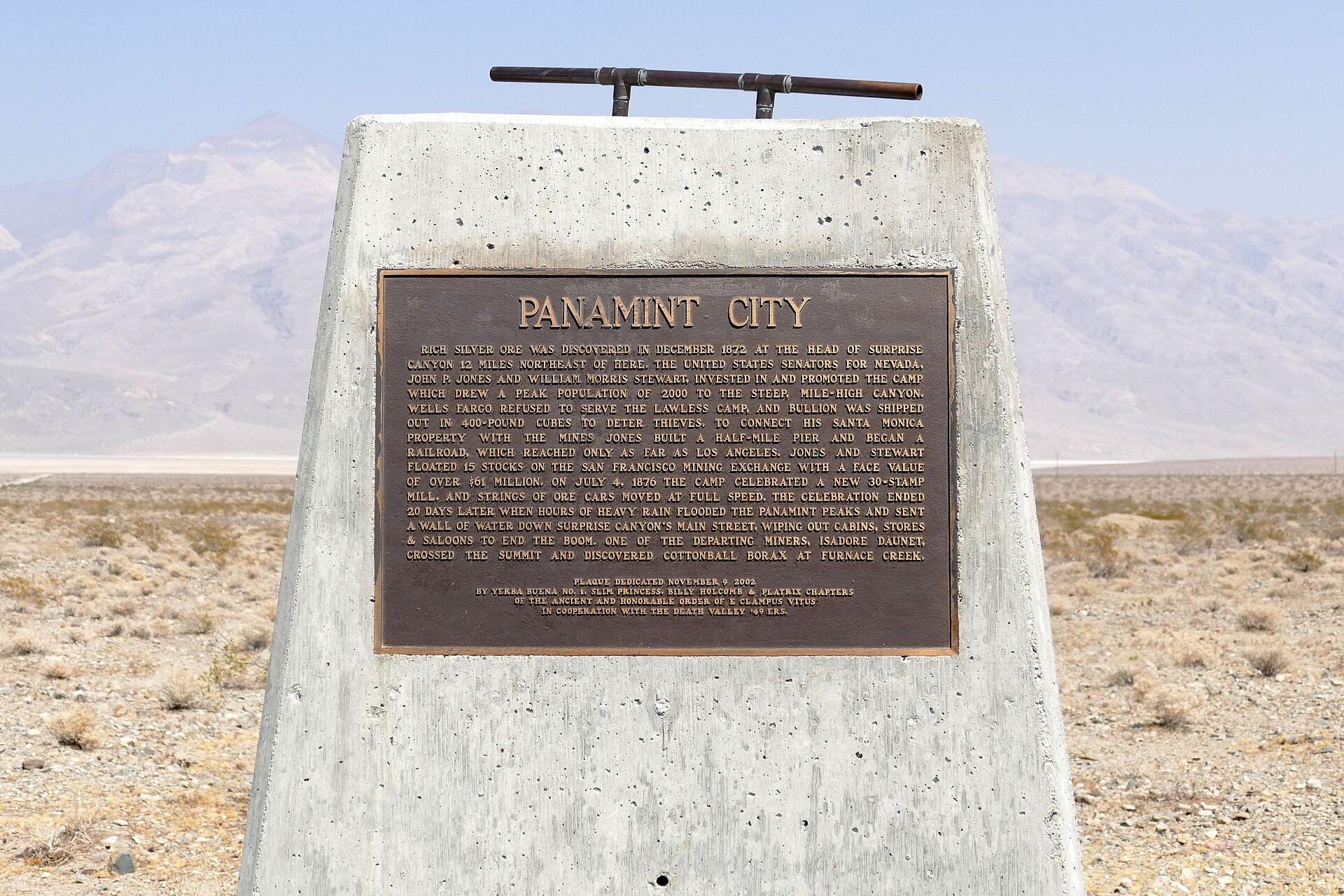
Panamint City’s best-known story is about how the silver got out. With no Wells Fargo office and a canyon full of hard men, the senators are said to have cast their bullion into huge silver balls, too heavy for a robber on horseback to carry off, and sent them down the road unguarded. The story is told on the roadside marker in Panamint Valley and in most histories of the town.
The twenty-stamp mill
The senators’ big mill went into operation on June 29, 1875. The Surprise Valley Mill and Water Company’s twenty-stamp mill, built by Daniel P. Bell, took ore from the Wyoming and Hemlock mines, which came down the mountain on a 2,600-foot wire tramway. The ore averaged $80 to $100 a ton, the mill furnace burned three cords of wood a day at $12 a cord, and miners and mill hands earned $4 to $5.50 a day. The richest ore had already been shipped all the way to England for smelting. The mill’s brick smokestack is the landmark that still stands in the canyon today.
Bust and flood
The mill started just as the money ran out. In August 1875 William Ralston’s Bank of California failed, taking much of the Comstock’s wealth and San Francisco’s appetite for mining stock with it. Panamint’s ores were also getting harder and more costly to work below the rich surface pockets. T. S. Harris printed his last Panamint News on October 21, 1875, and moved the paper to the new silver camp of Darwin, where it became the Coso Mining News. By November most people had left.
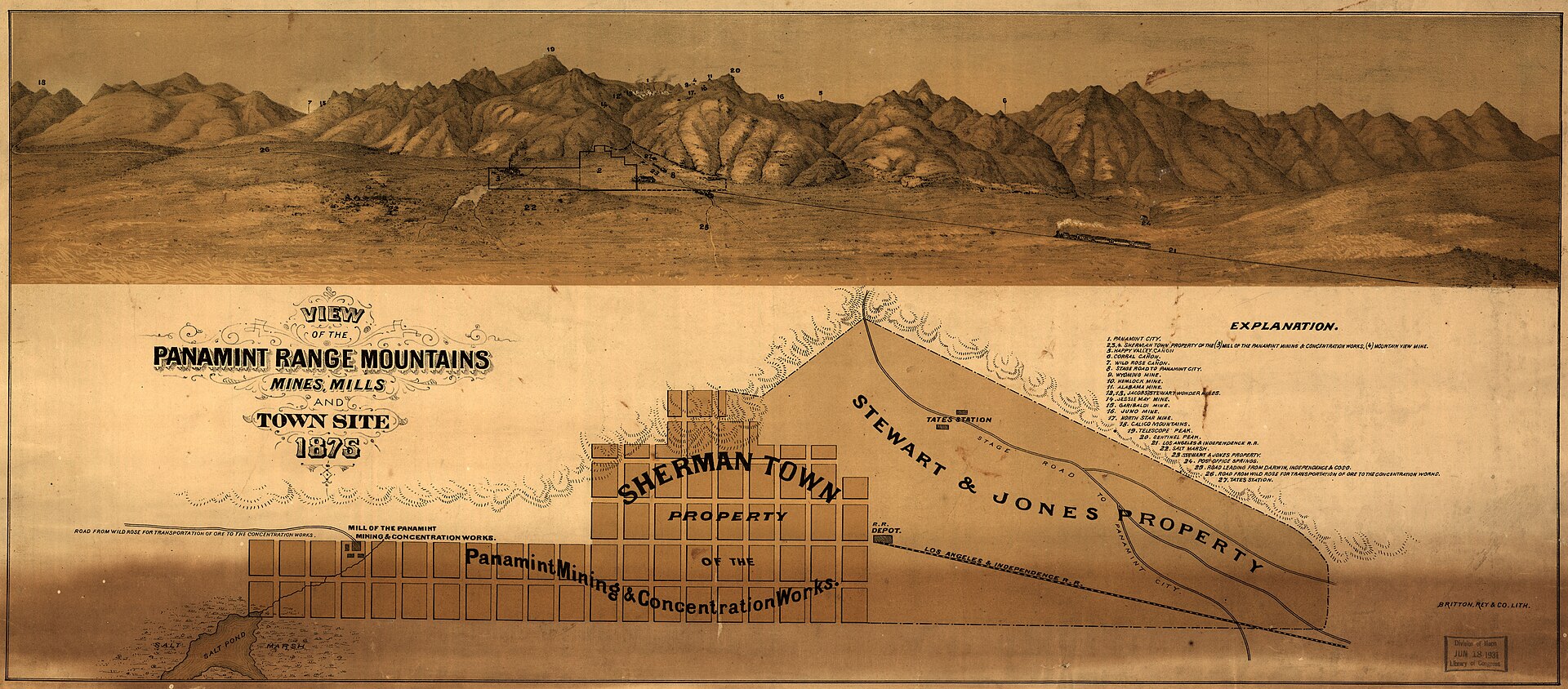
Senator Jones had backed a railroad, the Los Angeles and Independence, that was meant to reach Panamint someday, and promoters had laid out a terminus town called Shermantown on the floor of Panamint Valley. The railroad collapsed in 1876 when its Los Angeles bankers failed, and Shermantown never became more than a stage station. By that spring the Wyoming and Hemlock mines were worked out. Then, on July 24, 1876, a cloudburst over the Panamint Range sent a flash flood down Surprise Canyon and carried away much of what was left of the town. According to Harlan D. Unrau’s National Park Service history of Death Valley, the flood killed 15 people.
Jones held on longest. In May 1877, during a stock panic, he shut down the Surprise Valley mill and mines. Of the roughly $2 million the Silver Senators put into Panamint, they seem to have gotten little or nothing back.
A long afterlife
Panamint City never quite died. According to a 1905 newspaper account, unpaid workmen took over the property after the owners fell out, worked it until they had their wages, then set fire to some buildings and left. Richard Decker reopened the post office in 1887 and kept it going until 1895. In 1897 the town had just two residents, watching over decaying stores and billiard halls still full of furniture, idle mills and one hardware store that still sold goods to passing miners.
Gold strikes in the nearby canyons and at Ballarat, the new supply town in Panamint Valley, brought prospectors back. In 1905 Jack Curran, called the King of the Panamints, relocated the old Panamint Mine, and in 1907 a miner counted about a dozen vacant buildings left around the old mill site. Al Meyers of Goldfield bought the Panamint Mine by 1912, a toll road up the canyon was planned in the early 1920s, and Mary A. Thompson ran the Panamint lead mine in 1926. The American Silver Corporation leased the claims in 1947 and 1948, built a camp and improved the road, then went bankrupt in March 1948 without shipping ore. Interest picked up again in the 1970s, but the veins stayed hard to follow.
What ended the mining era was water again. Cloudbursts in 1983 and 1984 washed out the Surprise Canyon road, and it was never rebuilt for ordinary traffic. After years of four-wheel-drive crawlers winching up the canyon’s waterfalls, the Bureau of Land Management locked a gate on the road in May 2001.
From mining camp to national park
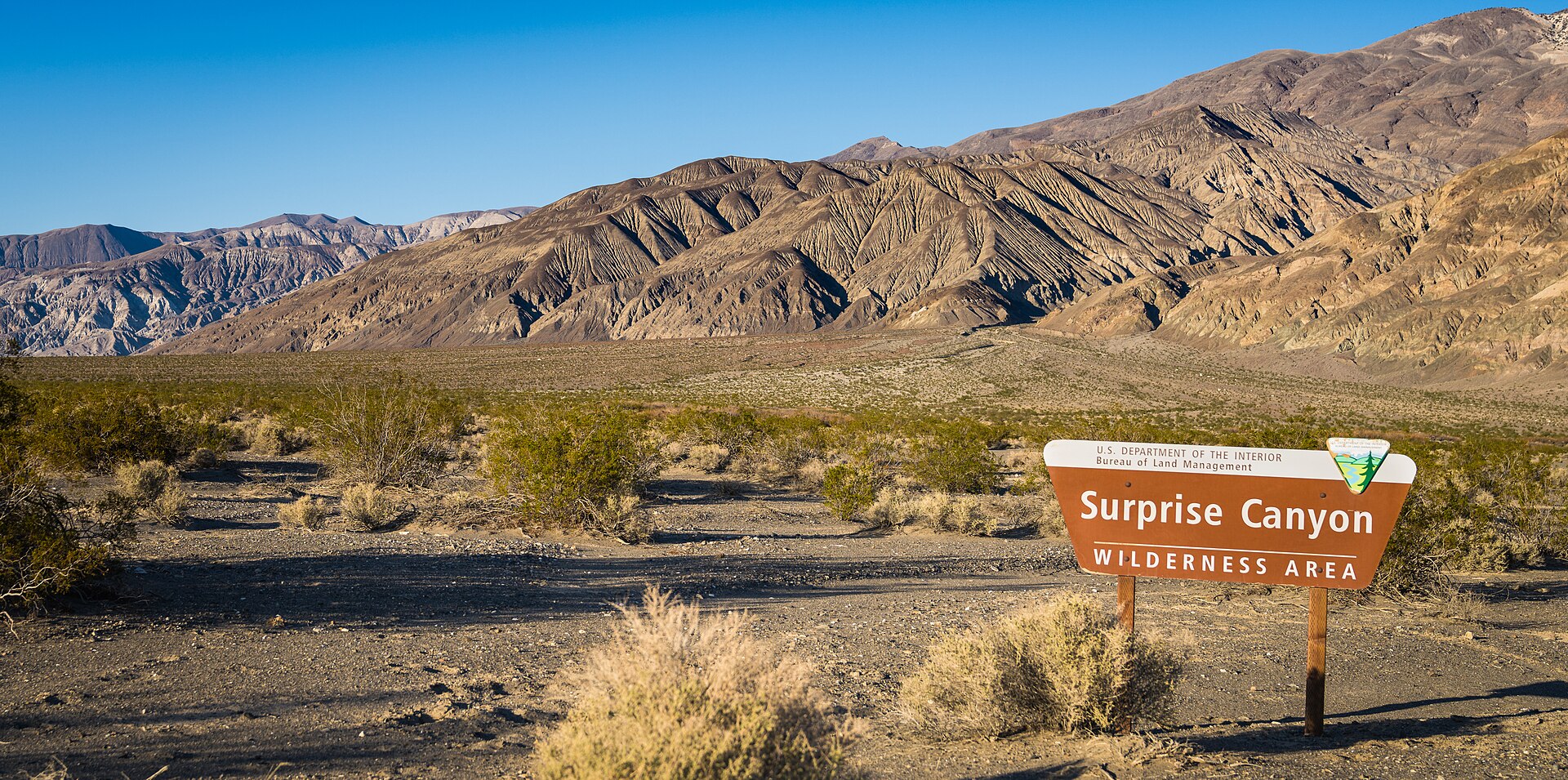
The California Desert Protection Act of October 31, 1994 added the upper Panamint Range, including Panamint City, to the newly enlarged Death Valley National Park. The lower canyon became the BLM’s Surprise Canyon Wilderness. The old road and the private land in the townsite were left out of the wilderness as a narrow corridor, so patented mining claims and cabins still sit inside the park. On March 12, 2019, the John D. Dingell, Jr. Conservation, Management, and Recreation Act made about 7 miles of Surprise Canyon Creek a Wild and Scenic River.
Legends and tall tales
Panamint City has a reputation to match its scenery. A Park Service page repeats the old description of it as the “toughest, rawest, most hard-boiled little hellhole” that ever passed for a town, and says its founders were outlaws who gave up crime when they found silver. Popular histories add a red-light district called Maiden Lane and a population of 5,000.
What remains
The brick smokestack of the twenty-stamp mill is the town’s landmark, standing above the townsite near the head of the canyon. The Park Service calls it the chimney of the smelter. Around it are stone foundations and walls, dugouts, mine dumps, adits and scattered machinery from more than a century of mining. A few later cabins also stand in town, and hikers know some of them by nicknames such as the Panamint Hilton and the Castle. Parts of the townsite are private mining claims.
The remains are protected. Inside the national park it is illegal to dig, collect, or climb on or enter historic structures, and old mine openings can collapse or hold bad air. Rodents in old cabins can carry hantavirus, so many hikers camp outside them.
Timeline
Historic sites nearby
Further reading
Sources
National Park Service — Historic Resource Study: A History of Mining, Section III, Harlan D. Unrau’s history of Death Valley, Death Valley ghost towns, Backpacking, Wilderness permits, Entrance fees and Alerts and conditions
Bureau of Land Management — Surprise Canyon Creek Wild and Scenic River; U.S. Fish and Wildlife Service — National Wild and Scenic Rivers: Surprise Canyon
Desert Fever, via Digital-Desert — Panamint; The E-Sylum — Silver Panamint balls revisited; American Heritage — Panamint: Suburb of Hell
Beyond Nevada Expeditions — Shermantown; HMdb — Panamint City marker; Hiking Project — Panamint City; Wikipedia — Panamint City, California
Photos: Britton, Rey & Co., 1875 lithograph, Library of Congress, public domain; Bureau of Land Management, Surprise Canyon waterfall, wilderness sign and Sterling White, Surprise Canyon creek, public domain; Maxence Peniguet, Panamint City marker, CC BY 2.0; via Wikimedia Commons