Thurmond, West Virginia: The Coal Town That Out-Earned Cincinnati and Died When Steam Did
Thurmond sits at the bottom of the New River Gorge in southern West Virginia, wedged between a cliff face and a river with nowhere to go but up. For about twenty years in the early 20th century, that inaccessible slot of land generated more freight revenue than the shipping centers of Cincinnati and Richmond combined. At its peak, around 15 passenger trains a day stopped here, four million tons of “smokeless” Appalachian coal shipped out annually, and the Southside district across the river — known as “the Dodge City of the East” — hosted a poker game that local legend claims ran without interruption for 14 years.
Then diesel locomotives replaced steam, and Thurmond lost its reason to exist almost overnight. The town had been built to service steam engines — to water them, coal them, and turn them around. Diesel engines needed none of that. By the 1950s the infrastructure was obsolete, the businesses were closed, and the population had fallen to almost nothing. Today Thurmond is technically still an incorporated municipality — the least-populous incorporated town in West Virginia, with three to five residents depending on the year — and most of it is owned and managed by the National Park Service as part of New River Gorge National Park and Preserve.
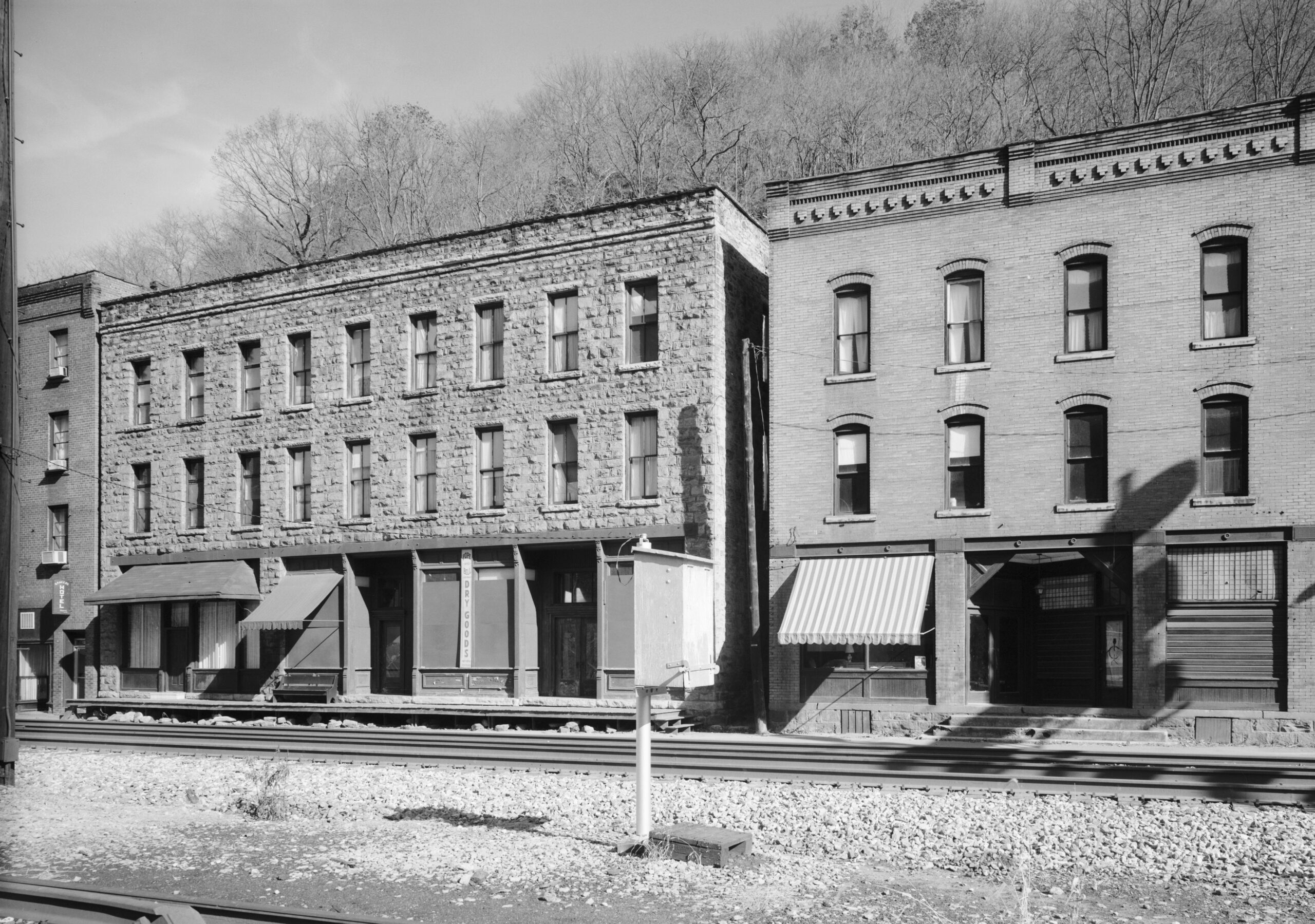
It is also, without much competition, the most dramatic ghost town east of the Mississippi: a row of brick commercial buildings clinging to a narrow bench above a wild river, surrounded on all sides by the forested walls of an 80-mile gorge.
“Thurmond was a steam town. Everything it was — every building, every job, every dollar — existed to keep those engines running. When steam ended, Thurmond ended.”
Captain Thurmond and the C&O Railway
The town takes its name from Captain William Dabney Thurmond, a former Confederate officer who led a band of Partisan Rangers during the Civil War. In 1873 he was commissioned to survey 73 acres of rugged terrain on the north bank of the New River, and received the deed to the property as payment for his services — the same year the Chesapeake & Ohio Railway completed its main line from the Atlantic coast to the Ohio River through the gorge.
The coincidence of geography and timing was everything. The C&O needed the gorge; the gorge needed someone to own it. But development was slow. By 1884 only a single residence stood on the property. The transformation came in the late 1880s with two decisive investments: a wood-framed passenger station built in 1888 on land donated by Thurmond, and a railroad bridge spanning the New River just east of the settlement between 1888 and 1889. Then in 1892, landowner Thomas G. McKell negotiated with the C&O for a branch line up Dunloup Creek, connecting Thurmond to the coal fields of the Glen Jean area. That connection made Thurmond the primary switching and assembly point for the entire New River coal field.
The industrial zenith: more revenue than Cincinnati
By 1910, Thurmond had achieved something extraordinary for a town most Americans had never heard of. Its position at the confluence of several branch lines made it the primary switching center for all coal generated in the surrounding mines. The numbers are almost absurd in retrospect: Thurmond’s freight operations produced $4,824,911 in annual revenue — the highest figure of any station on the entire C&O mainline — outpacing the combined freight receipts of Cincinnati, Ohio, and Richmond, Virginia. Four million tons of coal moved through annually. Between 75,000 and 95,000 passengers passed through each year on up to 15 trains a day.
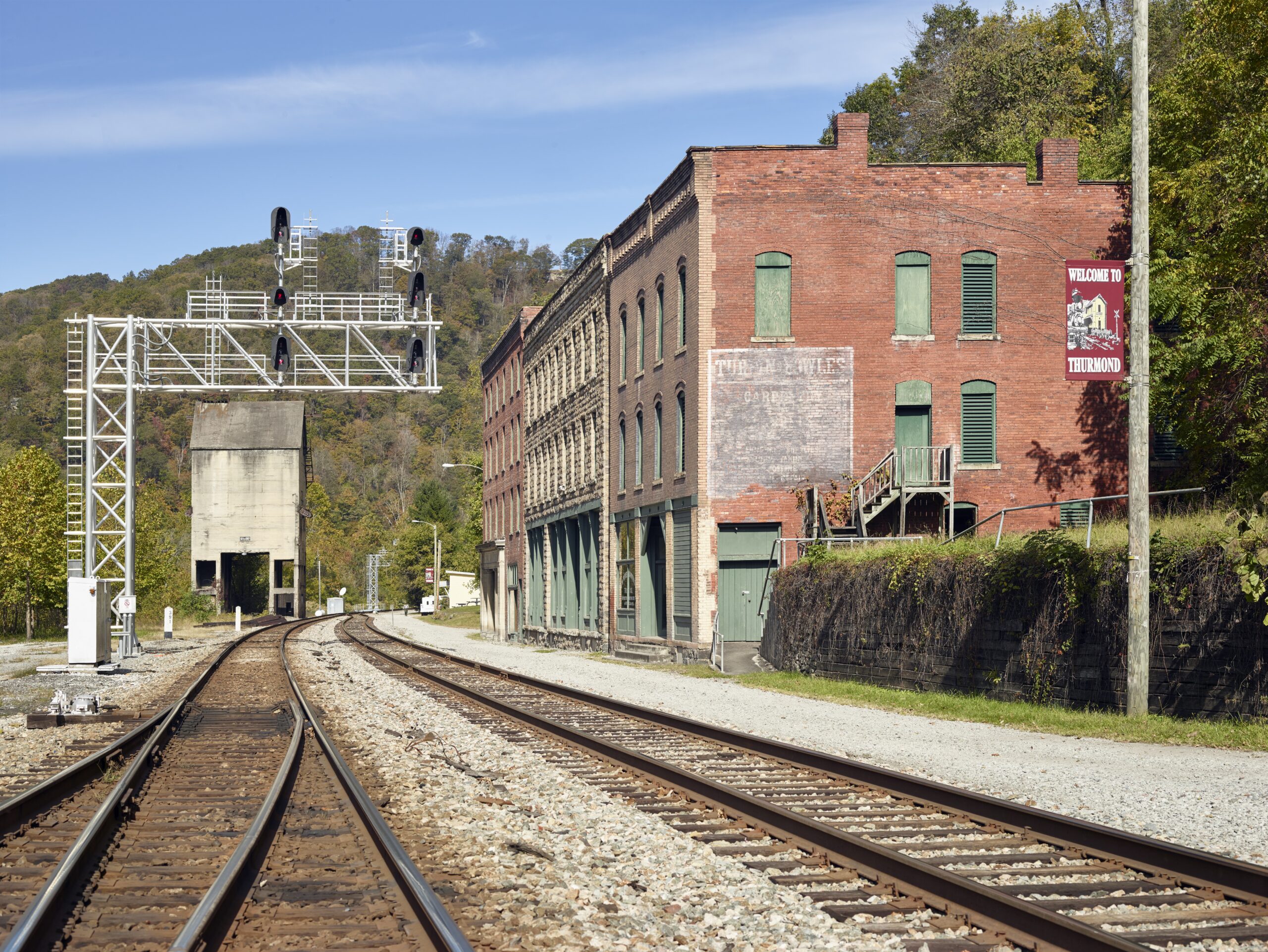
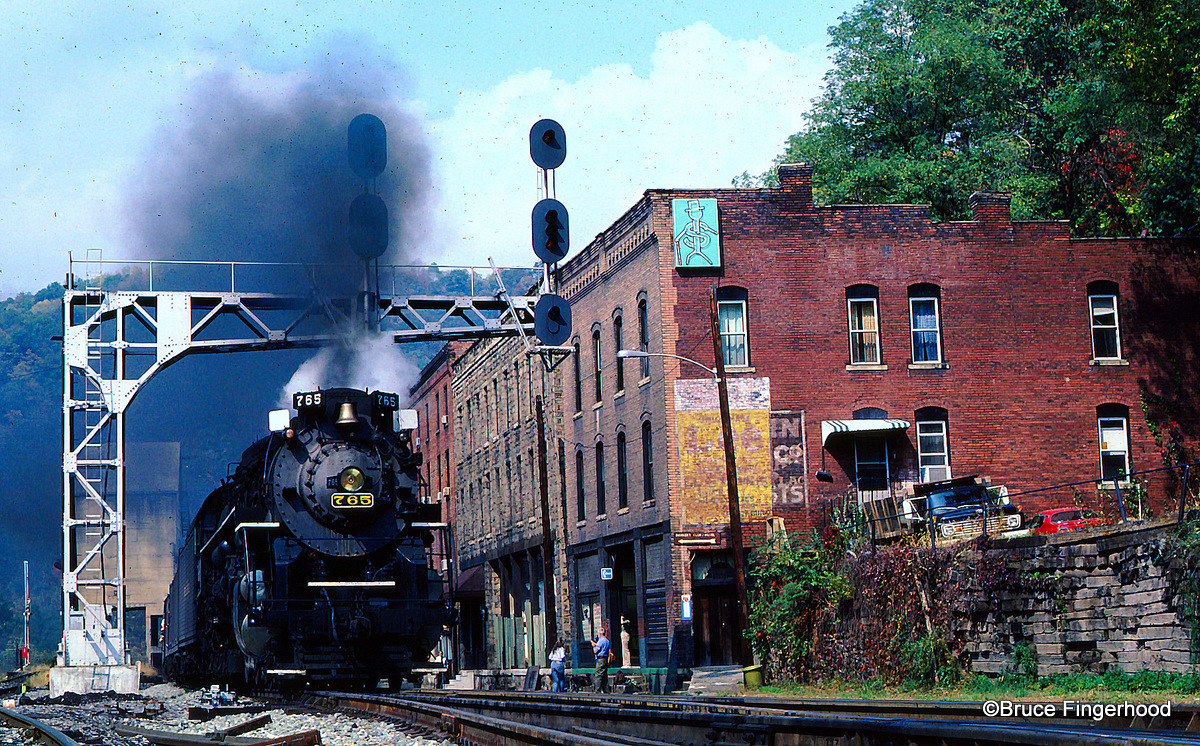
The physical town reflected the extreme topography it occupied. With only a narrow floodplain between the river and the gorge wall, the commercial district was forced into a tight linear arrangement where buildings fronted directly onto the railroad tracks with no intervening street. Until 1921, the tracks were the town’s only connection to the outside world — Thurmond was accessible exclusively by rail. The architecture climbed the steep hillside behind the commercial row in standardized types reflecting the rigid hierarchy of railroad employment. Significant surviving structures include the Mankin-Cox Building (1904), which housed the Mankin Drug Company and the New River Banking and Trust Company, and the restored 1904 depot, which replaced the original 1888 station after a fire destroyed it in 1899.
The Baptist and the Baron: Thurmond’s divided soul
Thurmond’s social history was defined by a sharp ideological split between its founder and his chief business rival. Captain Thurmond was a devout Baptist who maintained a strict “dry” policy on his land — no alcohol, no gambling. The incorporated town on the north bank of the river reflected his values completely.
Thomas G. McKell, the businessman who had brokered the branch-line deal that made Thurmond possible, had no such scruples. He established a community on the south side of the river — variously called the “Southside,” “Ballyhack,” or “Balahack” — that operated as the explicit mirror image of Thurmond proper. The centerpiece was the Dunglen Hotel (also spelled Dun Glen), a massive 100-room wooden structure completed in 1901. Around it grew saloons, gambling houses, and brothels that served coal miners, railroad crews, and wealthy coal operators alike.
The Southside quickly acquired a reputation that spread well beyond the gorge. It was dubbed the “Dodge City of the East” — a comparison to the lawless Kansas cattle town that its contemporaries apparently felt was apt. Violence, robberies, and murders were frequent enough to become part of the town’s identity. Captain Thurmond, whose name the entire settlement bore, was reportedly mortified by the association. Despite his strict governance of the north bank, the name “Thurmond” became synonymous everywhere with the vices of the Southside.
The 14-year poker game — and what the evidence actually shows
The most famous story about Thurmond is the claim that a continuous poker game ran at the Dunglen Hotel from its opening in 1901 until West Virginia Prohibition began on July 1, 1914 — an unbroken stretch of 14 years. Local lore holds that the game was recognized by the Guinness Book of World Records and Ripley’s Believe It or Not as the longest ever played, that as much as $50,000 sat on the table at any given moment, and that some players lost entire coal mines in the proceedings.
The story is almost certainly embellished, and may be entirely fictional. Historical analysis has found no firsthand accounts of the specific game; the story did not appear in print until 1959 — 29 years after the Dunglen Hotel burned down. The Guinness Book of World Records has stated they have no record of the game in their system. Researchers now believe the “14-year” figure likely described the total duration of the gambling era at the hotel rather than any single uninterrupted game.
What is documented is the culture of excess on the Southside. The Dunglen was real, the gambling was real, and the scale of vice was real enough to generate contemporary newspaper coverage and the lasting “Dodge City” reputation. The specific poker game claim lives in the same category as many frontier legends: built on a genuine foundation, inflated by decades of retelling.
Notable characters and local folklore
Beyond the poker game, Thurmond accumulated a roster of vivid local figures. Harrison Ash, the town’s Chief of Police, was said to carry seven notches on his gun and patrol the saloons with a physical presence that kept even the Southside crowd cautious. Whether the notches represented actual killings or a carefully cultivated reputation is not recorded.
The most darkly comic story belongs to magistrate Leo Schaffer, who reportedly presided over what local accounts call a “corpse court.” When a deceased man was pulled from the river found to be carrying a concealed weapon, Schaffer allegedly fined the corpse for the infraction — then used the dead man’s own money to pay the fine and cover his burial costs. The story is almost certainly apocryphal, but it captures something true about the frontier pragmatism that governed life in the gorge.
Fires, floods, and the end of the Dunglen
Thurmond’s physical history was punctuated by repeated disasters. The original 1888 passenger depot burned in 1899 and was replaced by the current 1904 brick structure. In 1908 a Great Flood washed away the original railroad bridge; its replacement, completed in 1915, still stands.
The symbolic end of the Southside era came on July 22, 1930, when the Dunglen Hotel was destroyed by arson. The 100-room wooden structure that had been the engine of Thurmond’s vice economy for nearly three decades burned to the ground. Its destruction marked not just the end of a building but the collapse of the entire culture that had grown around it — the gambling, the saloons, the brothels had already been weakened by Prohibition, and the arson finished what the law had started.
Decline: when diesel killed a steam town
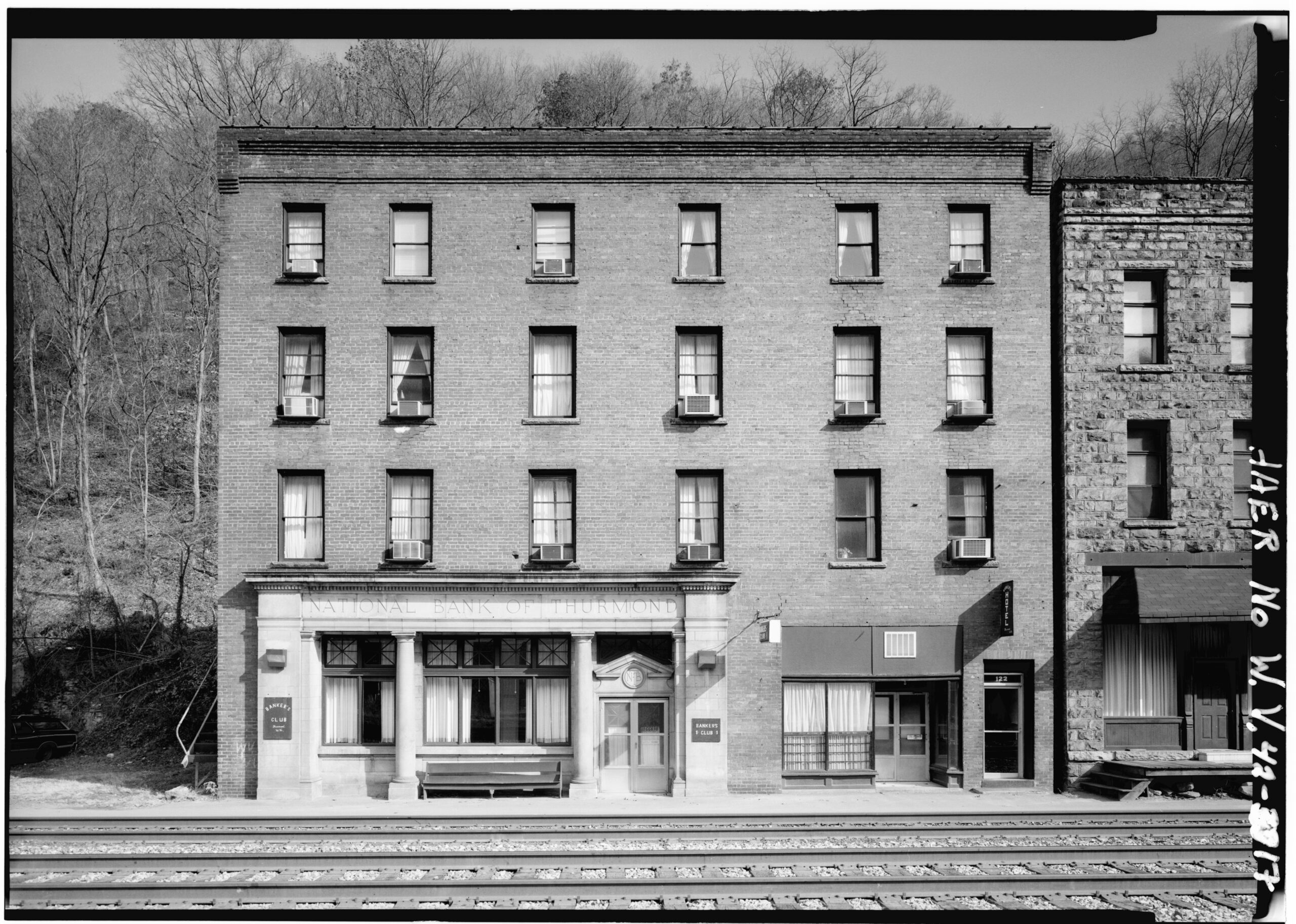
Thurmond’s decline was not a slow attrition so much as a structural elimination. The Great Depression closed several businesses including the National Bank of Thurmond. But the decisive blow came in the 1950s with the C&O Railway’s conversion from steam to diesel locomotives.
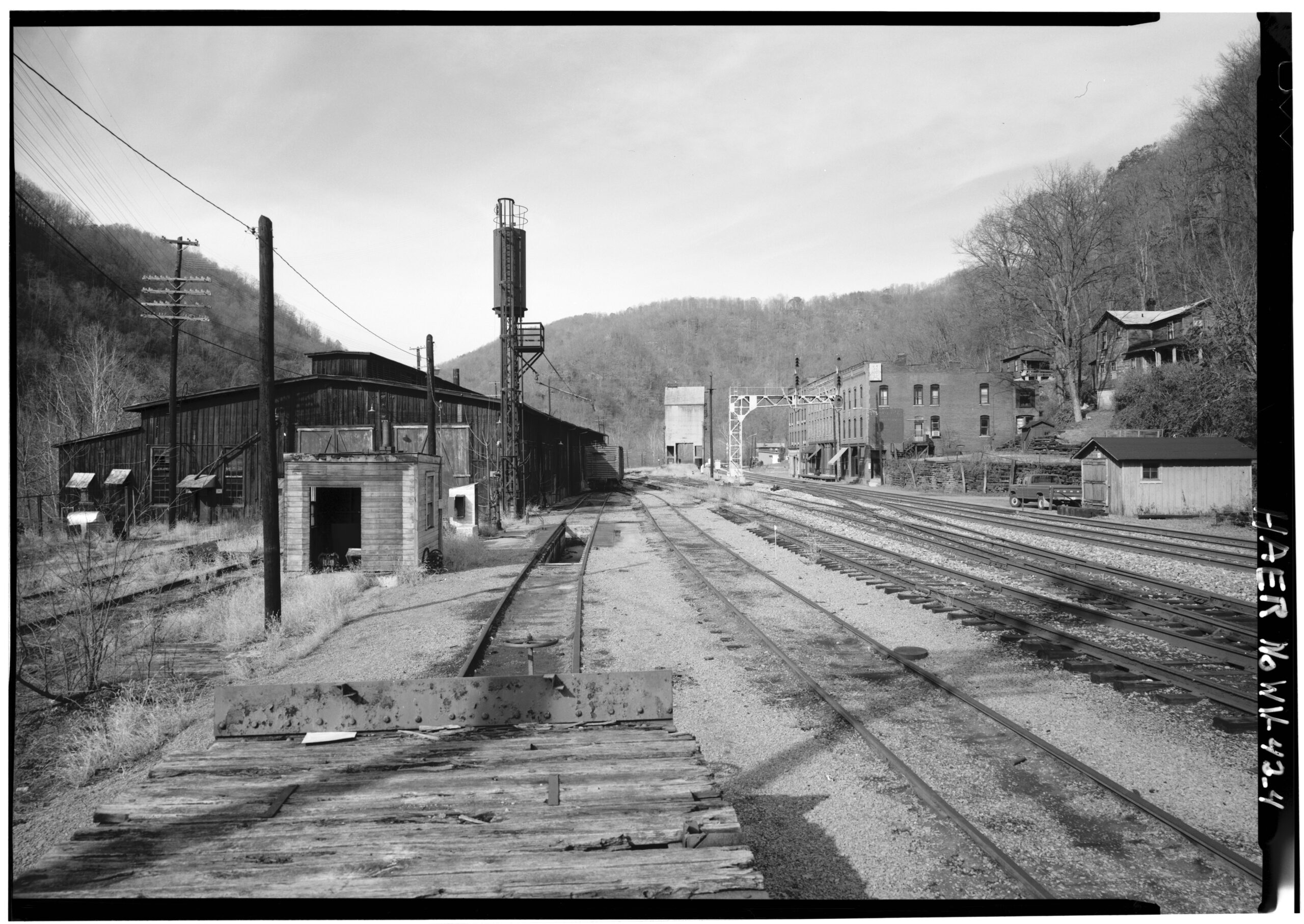
Thurmond had been engineered from the ground up to service steam engines: to water them, coal them, turn them around on its 70-foot (later 100-foot) turntable, and send them back out. Diesel engines could travel far longer distances without servicing and required none of the infrastructure Thurmond had been built to provide. Almost simultaneously, the rise of the automobile and the construction of modern highways through the region bypassed the gorge entirely. A town that had been accessible only by rail until 1921 found itself stranded as the railroad economy collapsed around it.
The population drained away through the 1950s and 1960s. By the time the NPS began acquiring properties in 1978 as part of the New River Gorge National River designation, Thurmond was already a ghost town in everything but its incorporation paperwork. Today it remains on the books as a municipality — the least-populous incorporated town in West Virginia — with a population that fluctuates between three and five people.
Matewan and Thurmond’s cinematic legacy
In 1986, director John Sayles selected Thurmond as the primary filming location for his 1987 film Matewan, a critically acclaimed account of a 1920 coal miners’ strike in Mingo County. Thurmond was chosen as a stand-in for the real town of Matewan because its deserted state and preserved early-20th-century architecture required minimal modification to read convincingly as a 1920s mining community. The production featured Chris Cooper, James Earl Jones, and Will Oldham, and its success brought renewed international attention to the gorge and its ghost towns.
Timeline
Ghost towns nearby
Further reading
Sources
National Park Service — Thurmond — New River Gorge National Park & Preserve (history, revenue figures, infrastructure)
National Park Service — Thurmond Depot visitor center (hours, access, fees)
National Park Service — Gambling at the Dunglen Hotel (poker game legend analysis, Guinness non-confirmation)
Legends of America — Thurmond, West Virginia — National Park Ghost Town
Thurmond WV official site — thurmondwv.org · History page
WV Encyclopedia — Thurmond entry · Dun Glen Hotel entry · Matewan entry
Wikipedia — Thurmond, West Virginia · Matewan (film)
NPS Teaching with Historic Places — Thurmond: A Town Born from Coal Mines and Railroads
New River Gorge CVB — The Dunglen Hotel
WV Explorer — Eight ghost towns in southern West Virginia worth visiting (nearby towns reference)