Grafton Ghost Town, Utah: The Pioneer Settlement That Floods Built and a Canal Killed
Everything about Grafton’s location seems wrong. The town sits on the south bank of the Virgin River, isolated from every neighboring settlement by the water it depended on. The river was heavily silted, filling the irrigation ditches fast enough that farmers had to dredge them once a week — a labor demand far heavier than almost anywhere else in Utah’s Dixie. The land was productive but punishing, the floods were catastrophic and recurring, and the community was spiritually required to be there anyway.
That requirement came from Brigham Young. In the late 1850s, the LDS Church leadership needed cotton — the Civil War was about to sever traditional Southern supply lines, and the Church was working toward economic self-sufficiency. The warm, low-elevation terrain of the Virgin River basin, dubbed “Utah’s Dixie,” was the answer. Grafton was one of several settlements planted along the river as part of what became known as the Cotton Mission, and its people tended their fields and orchards and endured their floods with the conviction that the work itself was an act of faith.
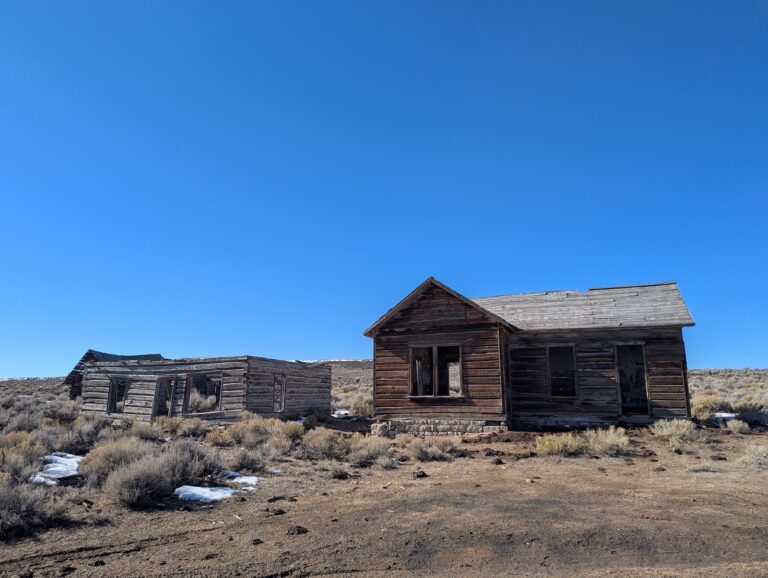
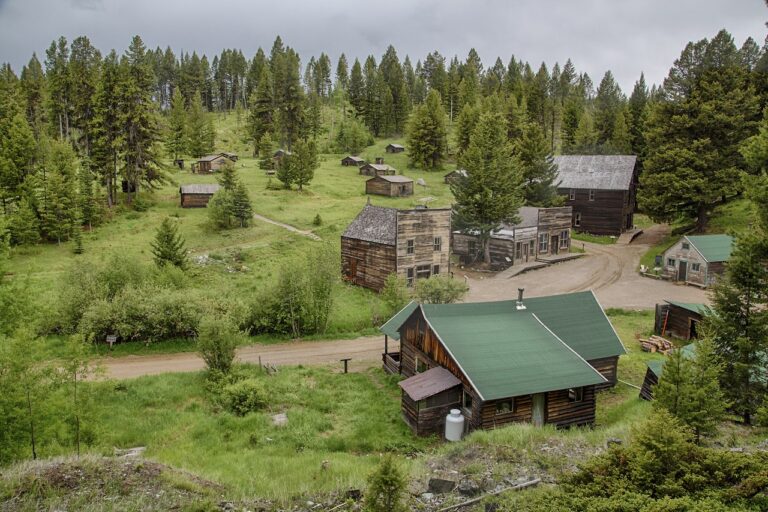
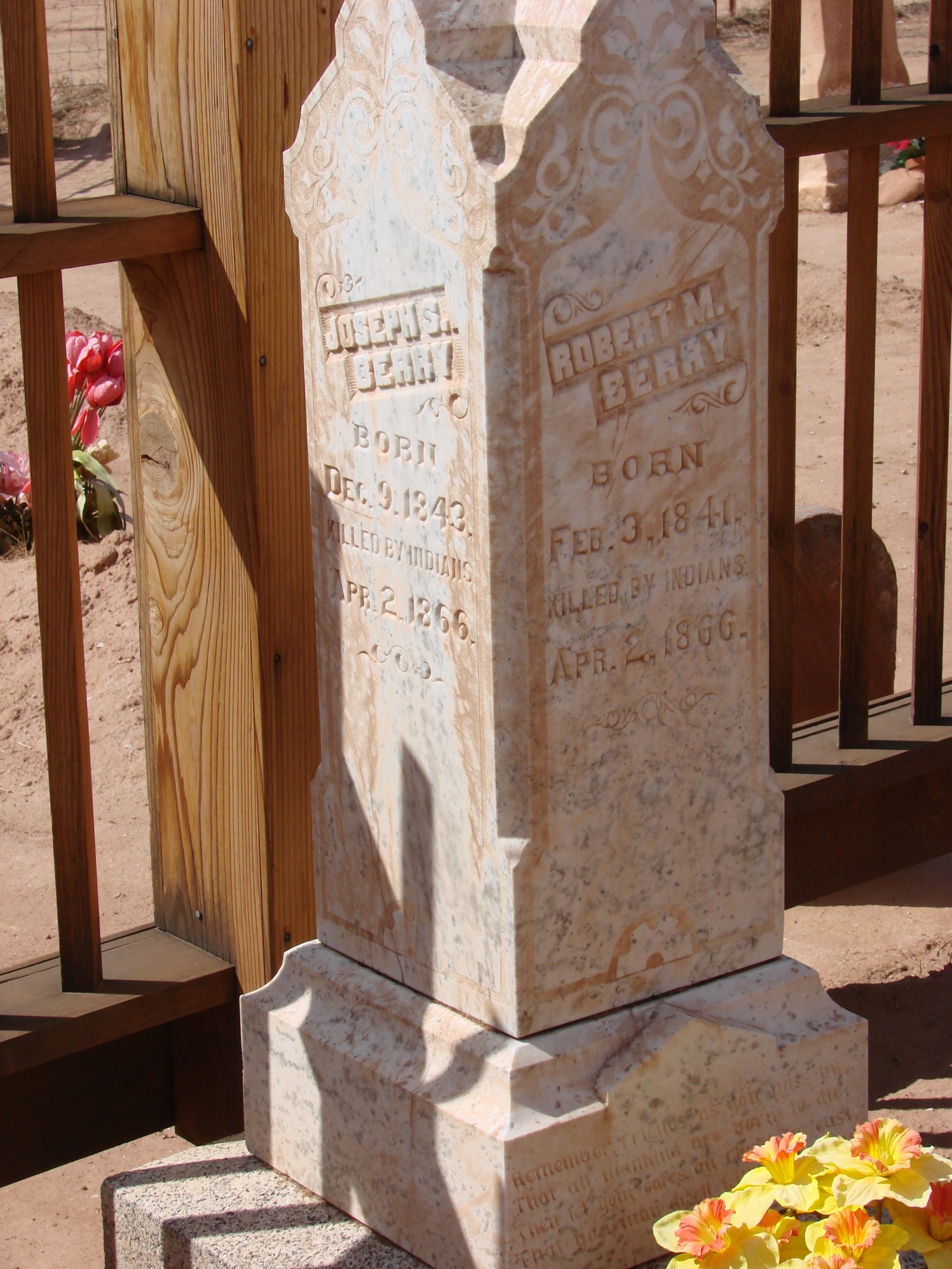
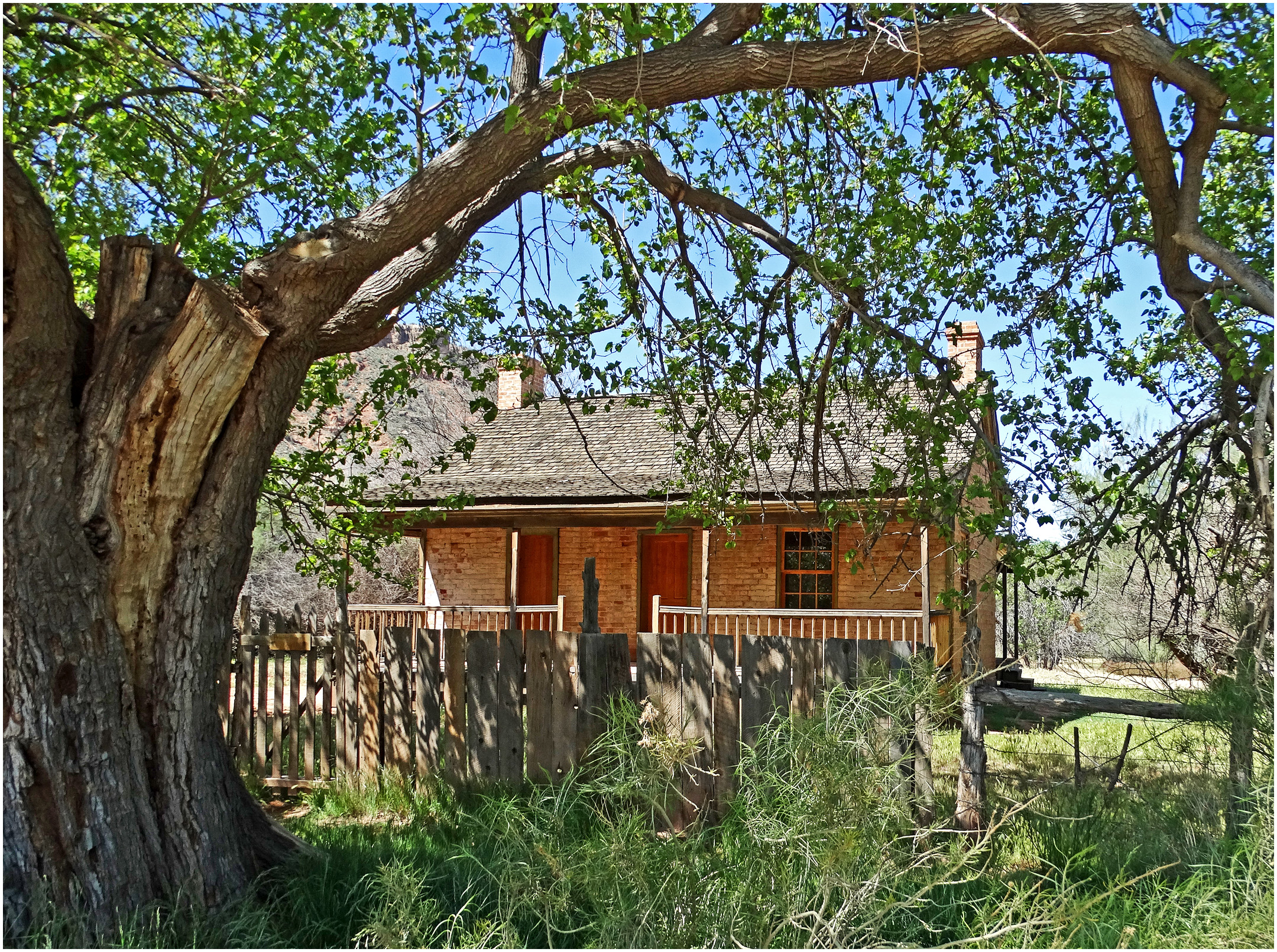
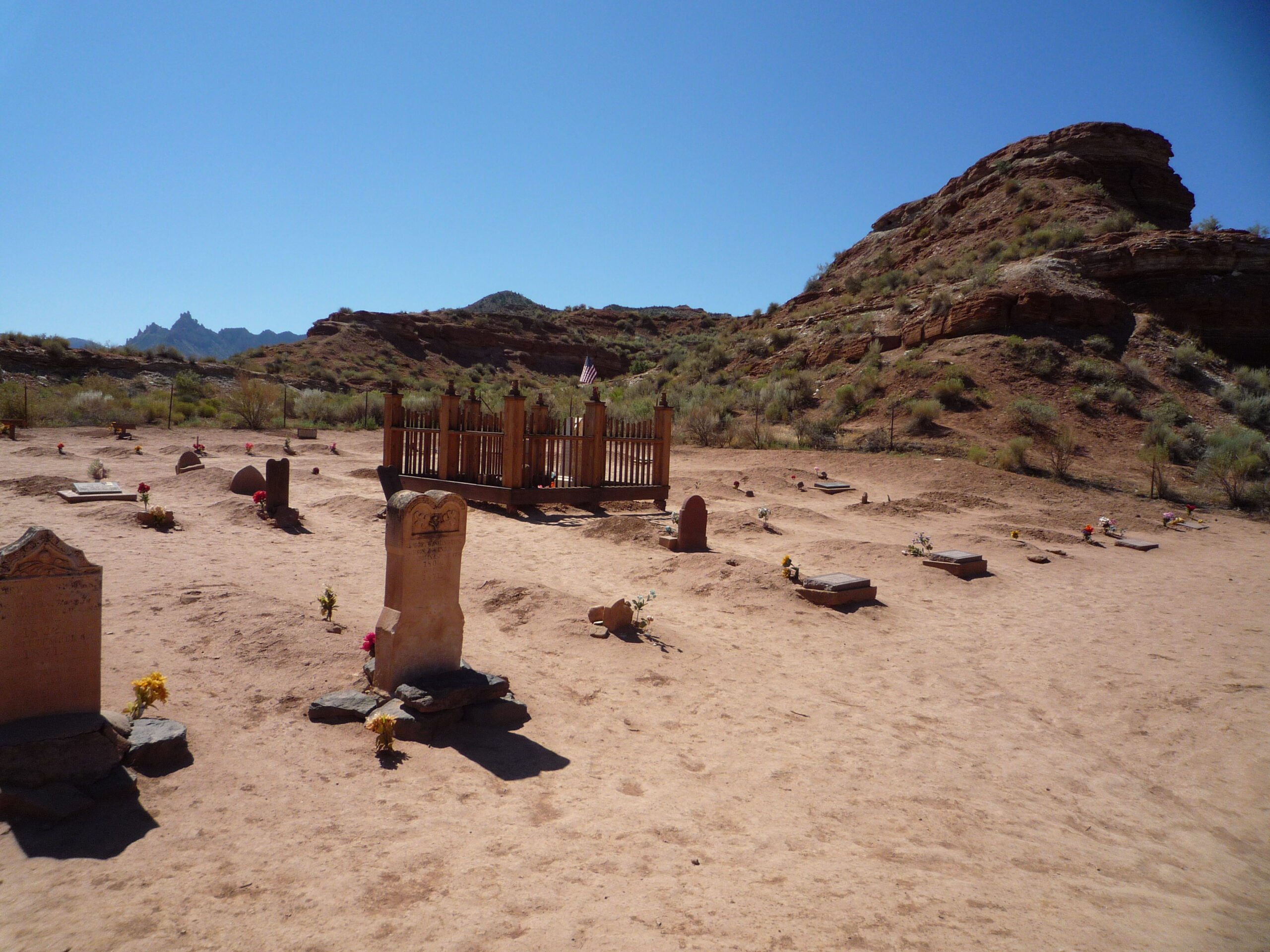
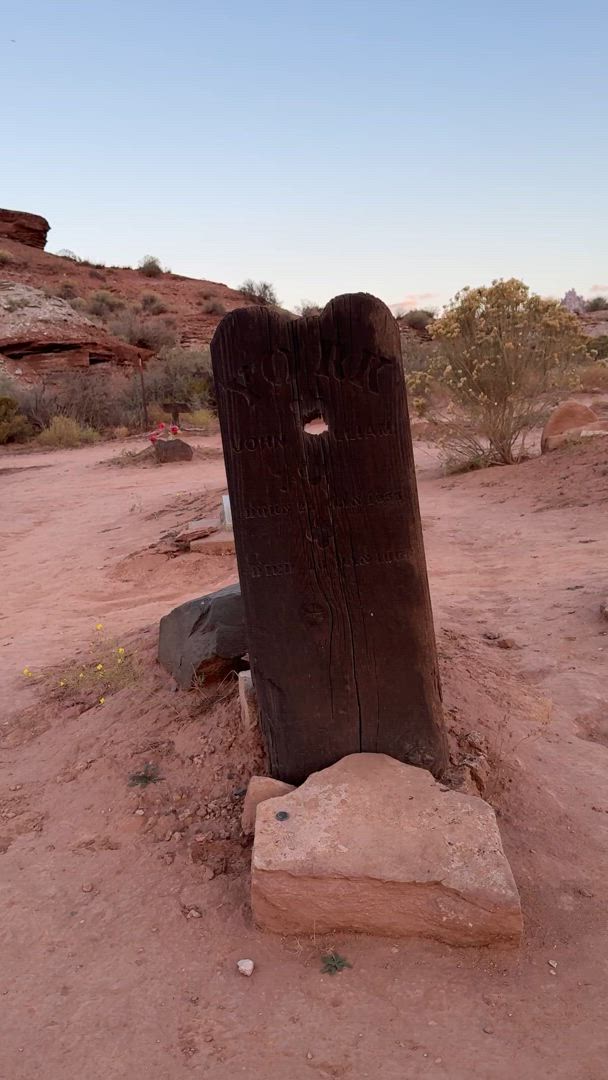
The town was abandoned in 1944. What remains — a cluster of adobe and timber buildings, a schoolhouse with handmade brick walls, and a small cemetery with the graves of pioneer families and Southern Paiute neighbors buried side by side — is the best-preserved ghost town in Utah, and one of the most photogenic in the entire West. It’s also where Paul Newman and Robert Redford rode a bicycle in one of the most beloved scenes in American cinema.
“The very isolation that forced Grafton’s abandonment also protected it. No one bothered to tear it down, update it, or improve it away.”
The Cotton Mission and the founding of Wheeler
Grafton’s story begins a mile downstream at a settlement called Wheeler, established in December 1859 by five founding families: the Barneys, Davies, McFates, Platts, and Shirts. Led by Nathan Tenney, these settlers were responding to a direct call from Brigham Young to colonize the lower Virgin River basin and establish cotton production as a pillar of LDS economic independence.
The theological dimension of this mission was inseparable from the physical labor. Settlers understood the grueling work of digging irrigation canals and constructing dwellings in a volatile floodplain as a demonstration of faith — the taming of the desert as a covenant act. The geography, however, was indifferent to faith. The Virgin River provided the water that made cultivation possible and the floods that periodically erased everything built along its banks.
The Great Flood of 1862 and relocation to New Grafton
The catastrophe that ended Wheeler and created Grafton began on January 8, 1862. A prolonged meteorological event — remembered in the region as “The Great Flood” — brought weeks of torrential rain to southern Utah, swelling the Virgin River far beyond its banks. Wheeler was obliterated. Historical accounts describe houses, furniture, clothing, and even three barrels of molasses being swept downriver.
In the midst of the destruction came one of the stranger human moments in the town’s history: a woman went into labor as the floodwaters rose. Neighbors moved her to safer ground during the torrent, and the child was born safely. In a gesture that captured both the settlers’ dark humor and their capacity to find meaning in calamity, the child was named Marvelous Flood Tenney.
Following the flood, the settlers relocated approximately one mile upriver to higher ground. They named the new site “New Grafton” — after Grafton, Massachusetts, birthplace of several of the founding families — a name that eventually shortened simply to Grafton. The location offered more safety from immediate flooding, but the choice of the south bank of the river created an isolation that would define the town’s character for the rest of its life. Grafton was the only significant settlement on that side of the Virgin; reaching Rockville or any other neighbor always meant crossing the river.
Agricultural life on the south bank
Grafton’s agricultural economy was shaped entirely by the difficulty of its position. The Virgin River in this stretch carried an exceptionally heavy silt load, rapidly filling the irrigation channels that the settlers spent enormous labor to construct. Dredging the canals at least once a week was a routine requirement — a maintenance burden that consumed time and energy other communities could direct toward expansion and improvement.
Despite this, Grafton became a genuine agricultural hub. The settlers discovered the climate was ideal for orchards, and the town developed a regional reputation for its peaches, apricots, and apples. Wheat, alfalfa, and sorghum were also grown successfully. Cotton production continued but gradually gave way to food crops as the Civil War ended and the market for locally grown cotton collapsed.
The isolation of the south bank also shaped Grafton socially. Cut off from neighbors by the river, residents developed an unusually tight communal bond — relying on one another for everything from labor to spiritual support to entertainment. The town’s weekend dances, held in the 1886 schoolhouse, drew settlers from all along the Upper Virgin River valley. Cowboys from nearby ranches were regular attendees, and the socials reportedly ran until dawn.
The 1886 schoolhouse: the heart of Grafton
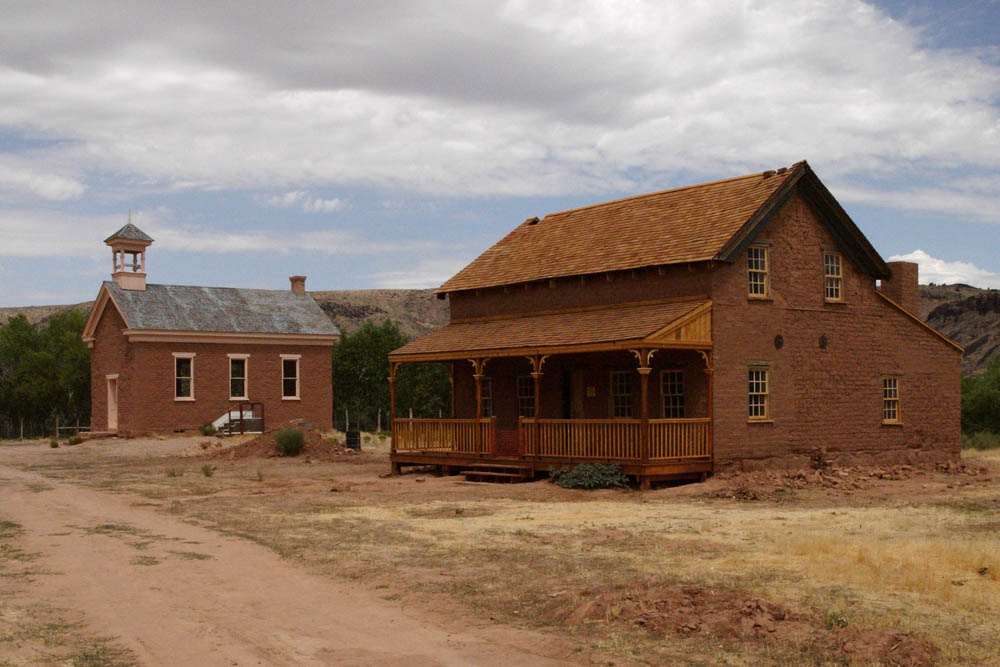
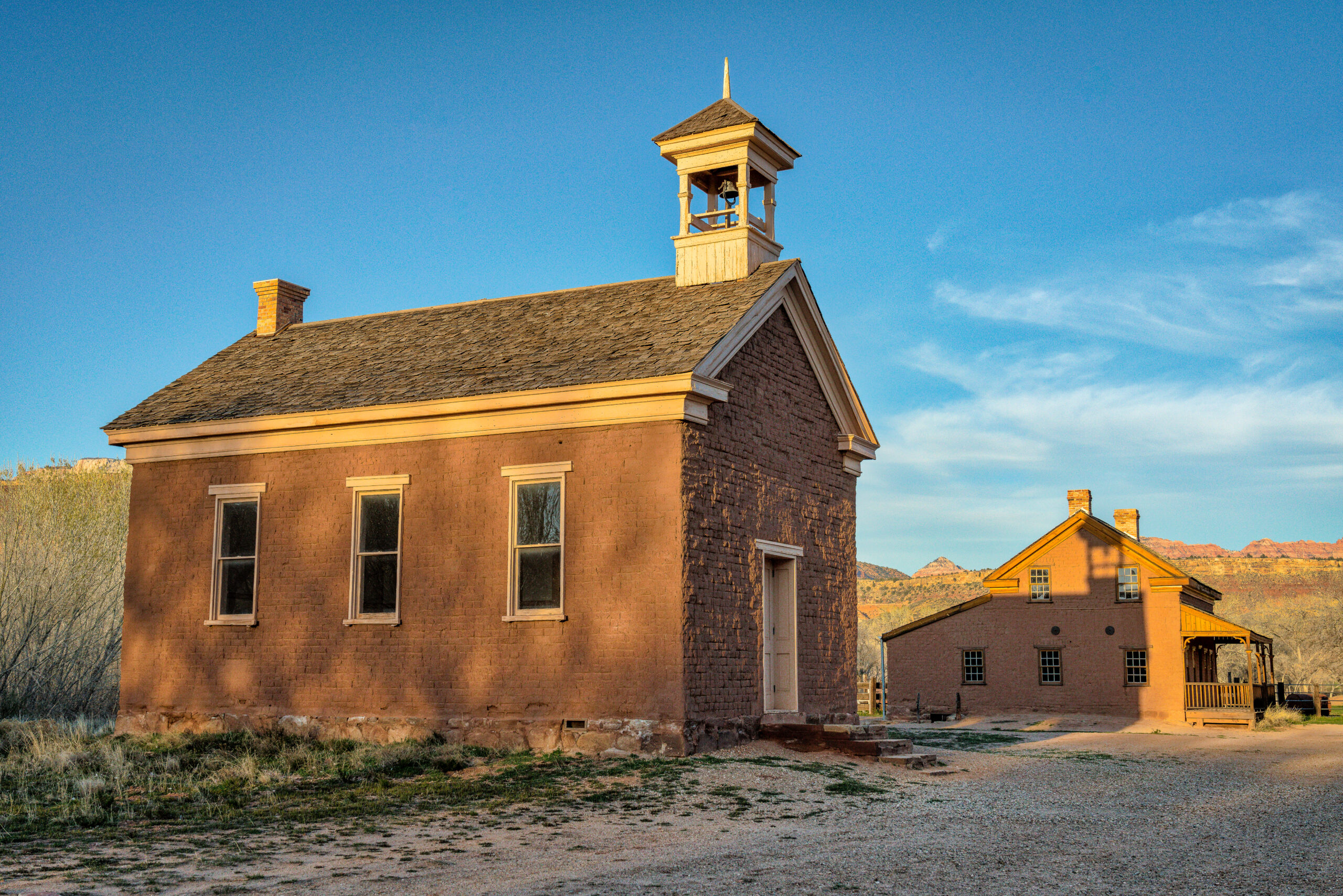
The most significant surviving structure at Grafton — and one of the most remarkable pioneer buildings in Utah — is the 1886 Schoolhouse/Church. Its construction was a community achievement of considerable difficulty. The foundation was quarried from lava rock in the nearby hills. The walls were built from colored adobe bricks made by hand from a local clay pit. The timber for the roof and framing was hauled nearly 75 miles from Mount Trumbull across the Arizona Strip — a journey that required enormous effort in an era of wagon transport.
The building served as the one-room schoolhouse until the 1918–1919 school year and as the meetinghouse for the local LDS branch throughout Grafton’s active life. When school enrollment fell to nine students in 1919, the children were transferred to Rockville and the building’s educational function ended. The LDS branch was officially discontinued in 1921. Together, these closures marked the institutional death of Grafton as a community — the buildings still stood, but the structures that had given collective life its meaning were gone.
The Black Hawk War and temporary abandonment (1866–1868)
Before the slow demographic attrition of the early 20th century, Grafton experienced a more abrupt emptying. In 1866, at the height of the Black Hawk War — a period of conflict between Mormon settlers and primarily Ute and Navajo groups across central and southern Utah — the LDS leadership ordered the evacuation of isolated settlements to larger, more defensible towns. Grafton was completely abandoned, its residents relocating to Rockville.
What followed was an unusual arrangement. Rather than letting the fields go fallow, Grafton’s farmers commuted daily from Rockville to tend their orchards and crops, traveling miles each way through a landscape that was actively dangerous. When the conflict subsided in 1868 and families returned, they were joined by members of the Southern Paiute tribe who established a camp on the outskirts of town. These neighbors became integrated into Grafton’s agricultural life over the following decades — and several are buried in the Grafton cemetery alongside the pioneer families, a detail that complicates any simple narrative of the era’s racial dynamics.
The Hurricane Canal and the final decline
Grafton’s end was neither dramatic nor sudden. The Hurricane Canal, completed in 1904, brought reliable water to the lower benches of the Virgin River valley and enabled the founding of the city of Hurricane in 1906. For farmers who had spent decades fighting silt, flooding, and river crossings, the contrast was obvious. More stable land, less labor, better access to neighbors — the younger families and more prosperous farmers left for Hurricane and Rockville, and the departure accelerated through the 1910s and 1920s.
By 1930, the census recorded only 23 people in Grafton. The last remaining families — including descendants of the town’s founders — departed in 1944. Two years later, in 1946, the property was purchased by movie producer Harry Sherman, who recognized that the isolation and authenticity that had made Grafton impossible to sustain made it invaluable as a film location — a place where a camera could turn and find nothing modern in any direction.
Butch Cassidy and the Sundance Kid — Grafton’s cinematic legacy
Grafton’s film history begins earlier than most people realize. In 1929, the town served as a location for In Old Arizona — the first outdoor sound film, nominated for five Academy Awards and a landmark in cinematic history. The production proved that synchronized sound could be recorded in a natural outdoor environment, a technical achievement that changed filmmaking permanently. The following year, The Arizona Kid (1930) returned to the same landscape, using Grafton’s authentic frontier buildings as a ready-made backdrop.
But the production that permanently fixed Grafton in the American imagination came in 1969. Butch Cassidy and the Sundance Kid, starring Paul Newman and Robert Redford, used Grafton as the setting for the outlaws’ hideout — the place where Butch, Sundance, and the schoolteacher Etta Place lived between jobs. The iconic bicycle scene, set to “Raindrops Keep Fallin’ on My Head,” was filmed here against the red cliffs of the Virgin River canyon. While Etta Place’s house was a purpose-built set, the Alonzo Russell home and the 1886 schoolhouse served as genuine historic backdrops, their aged adobe and timber exactly right for a story set in the same era they were built.
Folklore and ghost lore
Grafton’s evocative ruins and its cemetery — with graves of children, young mothers, and accident victims — have generated a substantial body of local lore. The most frequently cited figures are the “White Lady of Grafton,” described as a woman in a long white or calico dress wandering the cemetery, and a “Widow in Black” said to haunt the roads at dusk searching for children lost to floods.
The most historically grounded ghost story — insofar as the underlying tragedy is documented — concerns Loretta Russell and Elizabeth Ballard, two girls who died in 1866 when a wooden beam supporting a swing reportedly collapsed. Their graves are in the Grafton cemetery. The story of “playful spirits” appearing to children at the site is a more recent folkloric addition.
Timeline
Ghost towns nearby
Further reading
Sources
Grafton Heritage Partnership Project — History & Settlement · Historic Features · Directions
Wikipedia — Grafton, Utah — population data, timeline, abandonment chronology, film history
Visit Utah — Grafton Ghost Town — hours, access, pet policy
Wikipedia — Duncan’s Retreat, Utah · Silver Reef, Utah · Northrop, Utah
Washington County Historical Society — Shunesburg · Duncan’s Retreat
Movie Locations — Butch Cassidy and the Sundance Kid filming locations
Zion Ghost Tours — Grafton ghost lore overview (used for folklore documentation only)
Platt, Lyman D. and Karen. Grafton: Ghost Town on the Rio Virgin. Grafton Heritage Partnership. Available via Grafton Heritage.