Burke, Idaho: The Canyon Town Where Trains Ran Through the Hotel
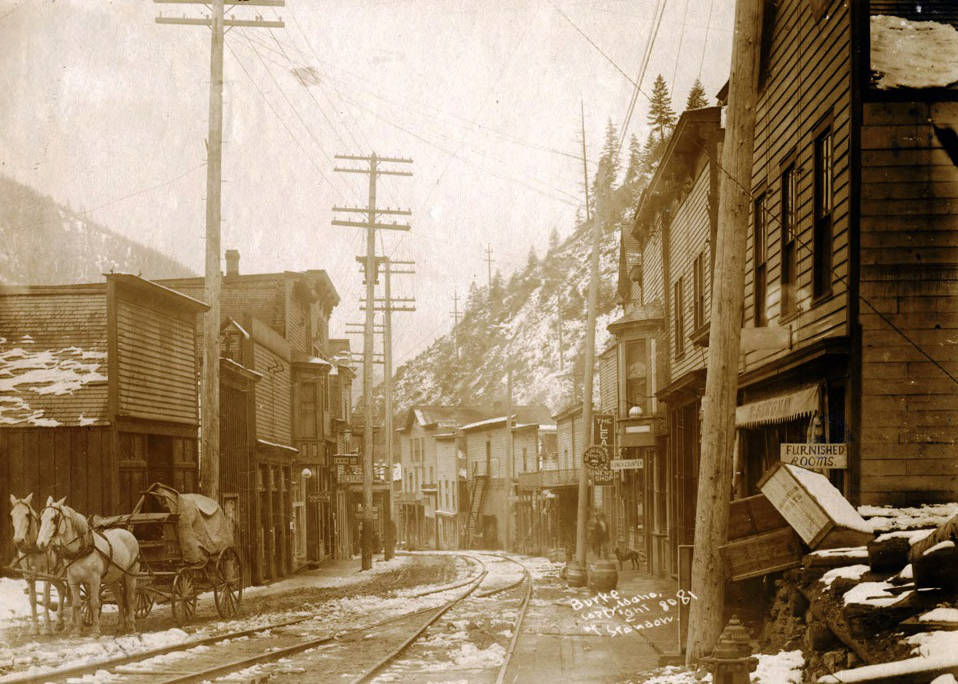
Burke was a mining town wedged into the bottom of Canyon Creek, seven miles above Wallace in the Coeur d’Alene Mining District of north Idaho. The canyon was so narrow that the railroad ran down the main street and straight through the town’s biggest hotel, with the creek flowing underneath it. Silver, lead and zinc from the Tiger, Poorman, Hercules, Hecla and Star mines kept Burke going for more than a century, and its miners were at the center of the violent Coeur d’Alene labor wars of 1892 and 1899. Avalanches, a 1923 fire and the slow decline of the mines emptied the town, and the last mine shut in 1991. Today Burke is a row of hulking mine buildings, a few brick storefronts and the remains of a cleanup that is still under way.
Silver-lead ore in Canyon Creek
Prospectors poured into north Idaho in 1883 and 1884 for placer gold at Murray, over the hills to the north. Galena, the heavy gray ore of lead and silver, turned out to be the district’s real wealth, and in 1884 prospectors found it high up Canyon Creek. John Carton and a partner named Seymour located the Tiger, and the Poorman was staked on the opposite side of the creek about the same time.
Lead-silver ore is bulky and has to be milled and smelted, so the claims needed money. In the fall of 1884 John M. Burke took an option on the Tiger and passed it to S.S. Glidden, who bought the mine for $35,000. By the end of 1885 the Tiger had produced more than 3,000 tons of ore. Prospectors declared a townsite in 1885, and the camp was formally organized in 1887. It was most likely named for John M. Burke, though no record we found says so.
Getting ore out of the canyon was the hard part. By 1887 ore was piling up at the Tiger with no good way to haul it the seven miles to Wallace. Glidden incorporated the Canyon Creek Railroad on July 6, 1887, a three-foot narrow-gauge line, and sold it that year to the railroad builder D.C. Corbin, whose line later passed to the Northern Pacific. The first shipment of ore went down the canyon on December 12, 1887. A post office opened the same year. A second railroad, the Oregon Railway & Navigation Co., later part of the Union Pacific, built up the canyon around 1888 to 1890.
A town with no room
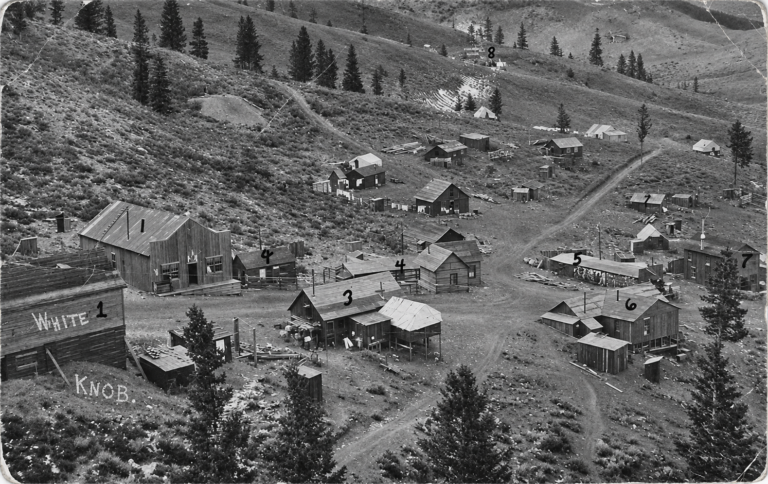
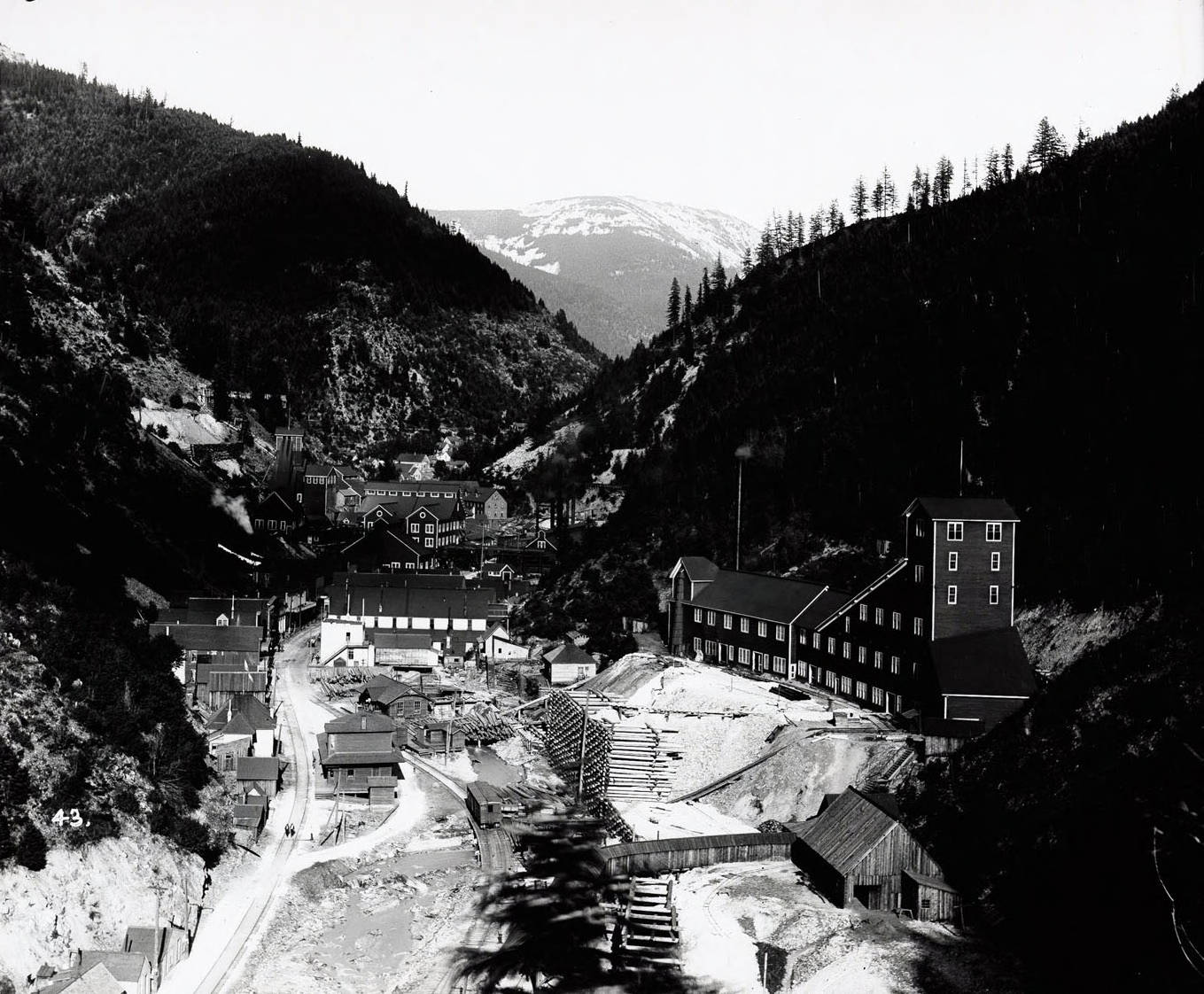
Burke sits at the bottom of a steep V-shaped canyon, often described as only about 300 feet wide at the town. Into that space went the creek, a wagon road, two railroad lines, mine plants, stores, saloons and houses. The tracks ran right down the middle of the main street, and wagons and pedestrians shared it with the trains. People cut terraces into the hillsides for houses, and some dug cave-like dwellings into the slopes.
The most famous building was the Tiger Hotel. It began as a boarding house for Tiger miners and grew into a three-story frame hotel of about 150 rooms after an addition in 1915. With no flat ground left, it was built across the canyon floor: Canyon Creek ran under it, and the road and the railroad tracks passed through its ground floor, so trains pulled right into the building. By one account five passenger trains a day came through, and the hotel dining room served about 1,200 meals a day.
The mines
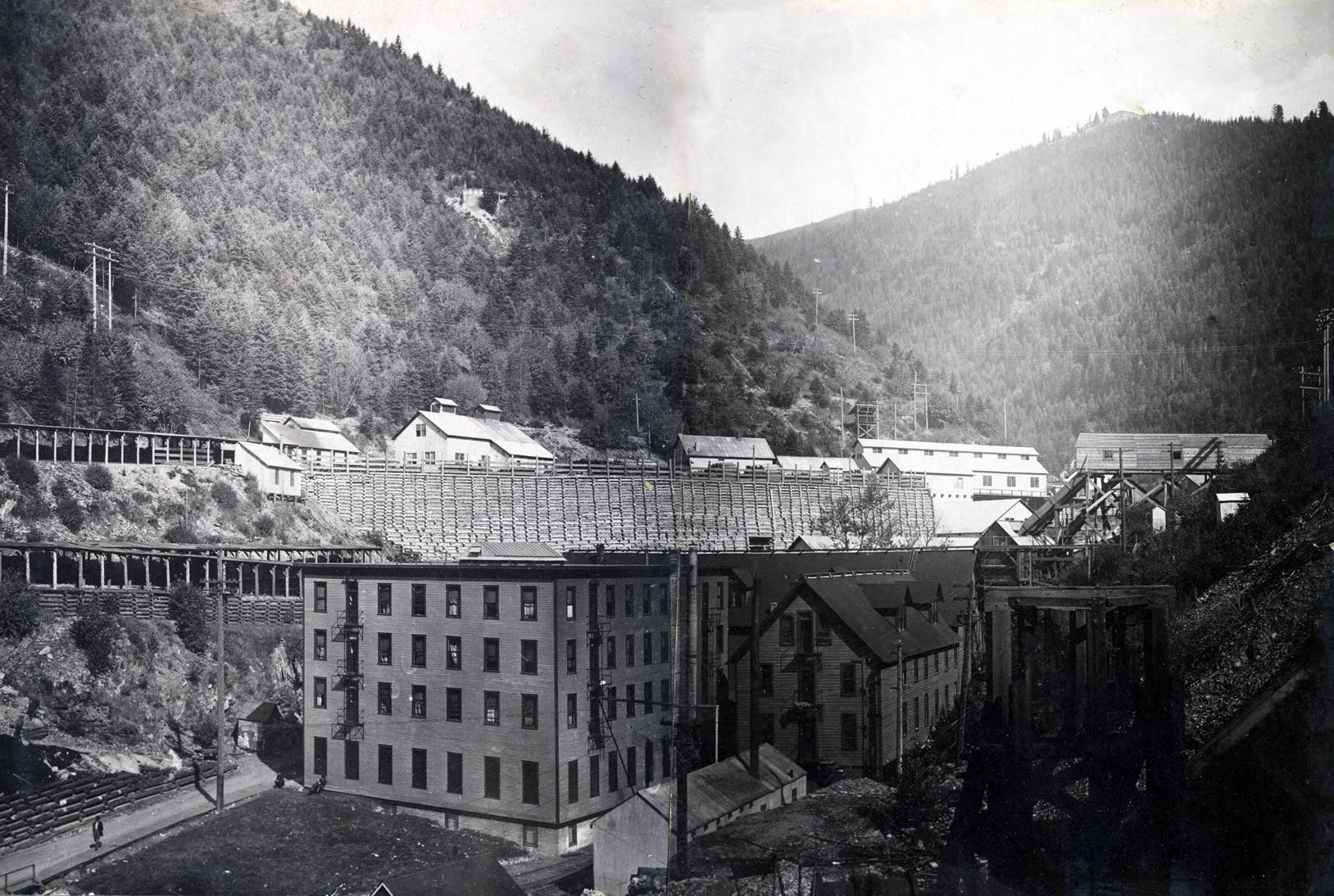
The Tiger and Poorman were Burke’s first big mines. They were joined into one operation in 1895, and after the Federal Mining & Smelting Co. took over, they were closed in October 1908 when the ore gave out. Leasers kept working them, and Hecla bought the property in 1920.
The Hercules was staked in August 1889 by Harry L. Day and Fred Harper and struggled for years. On June 2, 1901, August Paulsen broke into a huge body of rich ore, and the mine paid its first dividend that December. Its small group of partners became some of the richest people in the Inland Northwest. Their money built Spokane landmarks such as the Paulsen Building, and Levi Hutton later founded the Hutton Settlement children’s home there. One early shareholder was a miner named Harry Orchard, who later became notorious. The Hercules shipped its last ore in 1925.
The Hecla claim was located in 1885, and the Hecla Mining Co. was organized in 1891. It became a steady producer and the company grew into one of the biggest silver miners in the country. Its Burke mine reached about 3,600 feet deep before it closed in 1944.
The Star was developed from the 1920s by Hecla and Bunker Hill. It worked the same vein as the Morning mine at Mullan, on the other side of the mountain, and in 1961 the two were joined as the Star-Morning. The workings went below 8,000 feet, among the deepest in the district. The Star shut down in 1982, reopened briefly under a new operator, and closed for good in 1991, ending mining in Burke.
The labor wars of 1892 and 1899
Big companies owned the mines by the 1890s, and the miners organized. In early 1892 the owners cut pay for some underground workers to about $3 a day, while the union wanted $3.50 for every man working underground. The mines shut down, and the owners brought in strikebreakers and armed guards. They also hired the Pinkerton agency. Operative Charles Siringo, using the name C. Leon Allison, became recording secretary of the union at Gem, a short way down the canyon from Burke. When he was found out, he escaped by cutting through the floor of his boarding house and crawling away under the boardwalk.
On July 11, 1892, union miners and company guards fought a gun battle at the Frisco mill near Gem. After hours of shooting, miners sent a load of dynamite down the flume into the mill and blew it apart. The fighting spread to the Gem mine. About six men died that day, roughly three on each side. Governor Norman B. Willey declared martial law, and the National Guard and federal troops occupied the district. Around 600 men were held without trial in makeshift prisons called bullpens, some for months.
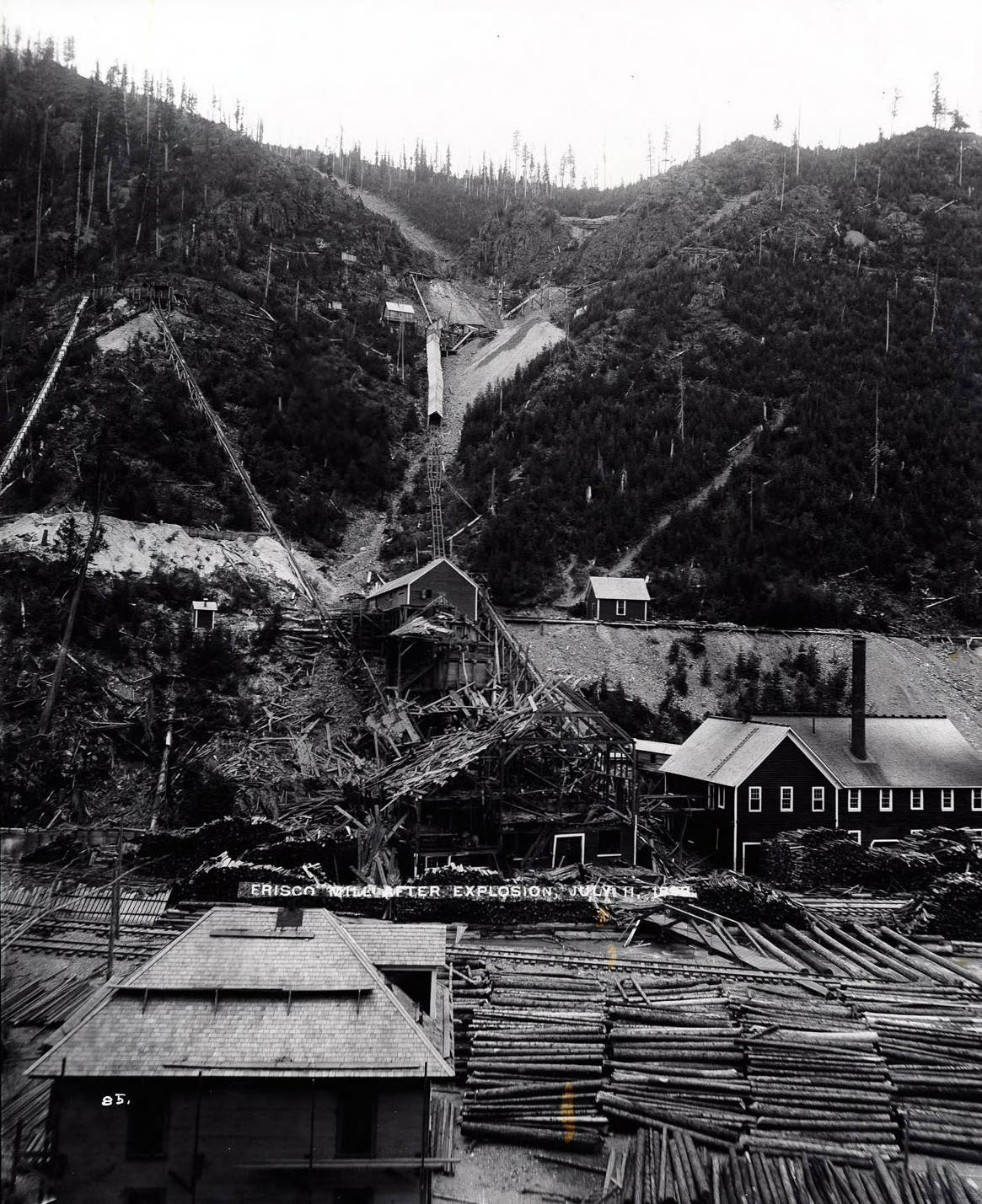
Seven years later Burke was the starting point of the second explosion. On April 29, 1899, a crowd of armed, masked union men took over a Northern Pacific train at Burke. The engineer, Levi “Al” Hutton, drove at gunpoint; he was also one of the partners in the Hercules, which struck it rich two years later. The train picked up dynamite at Frisco, about 80 boxes by most counts, and men climbed aboard all the way down the valley until about 1,000 were on it by the time it reached Wardner. There they blew up the Bunker Hill & Sullivan concentrator, and two men were killed. The train is remembered as the “Dynamite Express.”
Governor Steunenberg declared martial law, federal troops arrived, and hundreds of men were held for months in a bullpen near Kellogg. The fallout lasted years. On December 30, 1905, Steunenberg was killed by a bomb at his gate in Caldwell, planted by Harry Orchard. Orchard’s confession led to the 1907 trial of union leader William “Big Bill” Haywood in Boise, with Clarence Darrow for the defense and William Borah for the prosecution. Haywood was acquitted.
Avalanches, fire and flood
The canyon walls were stripped of timber for mine props and fuel, and snow slid easily off the bare slopes. An avalanche hit Burke on February 4, 1890, killing three people. The worst came in 1910. Late on the night of February 27 a slide came down on Mace, the next camp down the canyon, and early the next morning another slide struck Burke. Together they killed at least 20 people, most of them at Mace.
Fire was the other danger in a town of wooden buildings packed against a rail line. The Tiger and Poorman mills burned in 1896, and a kitchen fire damaged the Tiger Hotel in its first years. In 1913 a flood on Canyon Creek piled mud and debris against the hotel.
The worst fire started on the afternoon of Friday, July 13, 1923. It burned into the next morning and destroyed the Hecla’s surface plant, most of the homes, dozens of businesses and both railroad depots, and it damaged the Tiger Hotel and spread to part of Mace. About 600 people were left homeless and losses ran from $1 million to $2 million. Several hundred miners were underground when the power went out; they climbed out on ladders, and no one died. The Hecla was shut for more than five months, and most of the mine buildings that stand in Burke today date from the rebuilding that followed.
The long decline
Burke peaked around 1910. After that the population drifted down as the older mines played out.
In 1938 the Northern Pacific asked to give up its own line to Burke and share the Union Pacific’s track instead, and rail service eventually ended altogether. The Hecla’s Burke mine closed in 1944. The Tiger Hotel, by then run down and a fire risk, was sold to Ed Woods of Osburn and torn down in 1954. The post office closed in 1966. The Star kept the town alive until 1982, and after a short revival it closed in 1991. By then only about 15 people lived in Burke, and today the townsite is nearly empty, with a few residents farther down the canyon.
Cleaning up the canyon
A century of mining and milling left lead, zinc, cadmium and arsenic in the soil and in Canyon Creek, the largest single source of dissolved metals to the South Fork of the Coeur d’Alene River. Burke Canyon lies within the wider Bunker Hill Superfund site, in the part covering the Coeur d’Alene Basin outside the original Kellogg area. The Lower Burke Canyon Repository, built on the old Star site, holds contaminated soil dug up around the basin.
Cleanup is still going on. State and federal crews have been removing mine waste from the Hecla-Star complex and from under Burke Road, in places more than 20 feet deep, with work expected to wrap up in late 2026. Black Bear and the Standard-Mammoth site at Mace are scheduled next. Expect one-lane stretches and heavy trucks in summer.
What remains
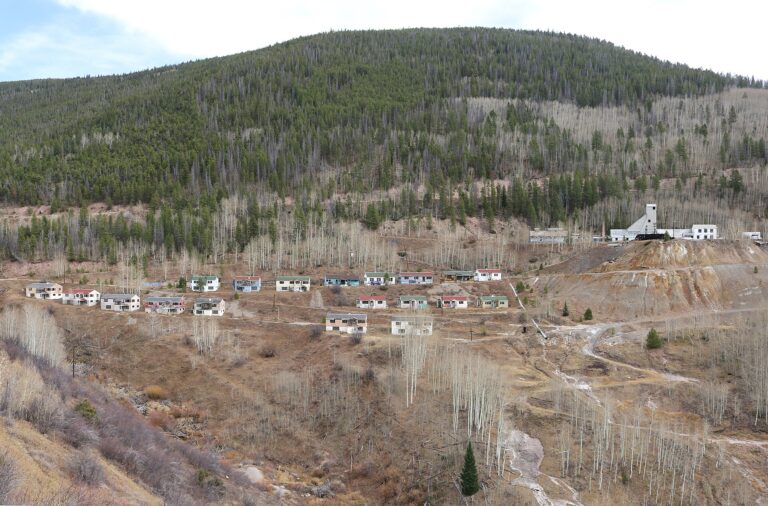
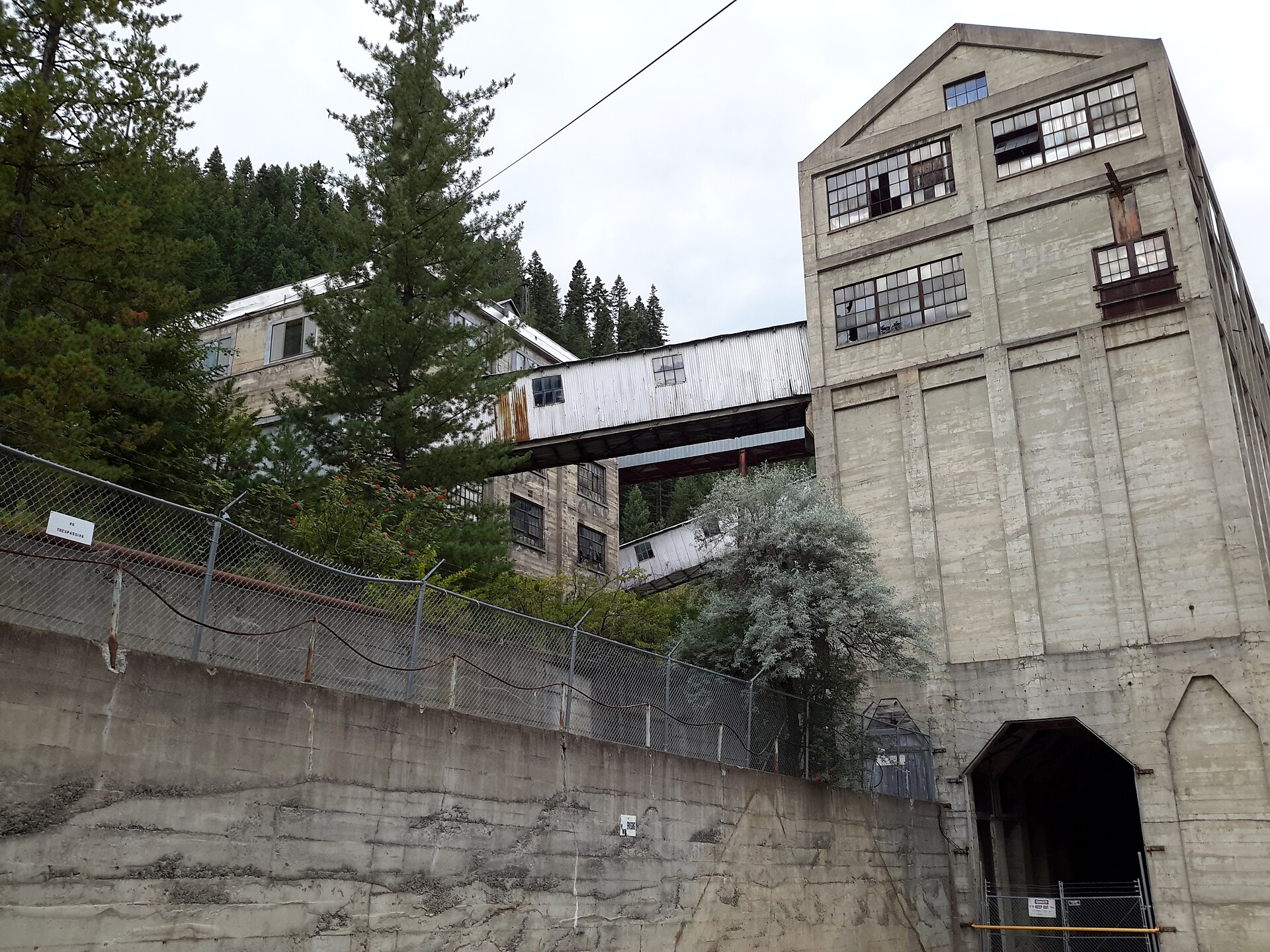
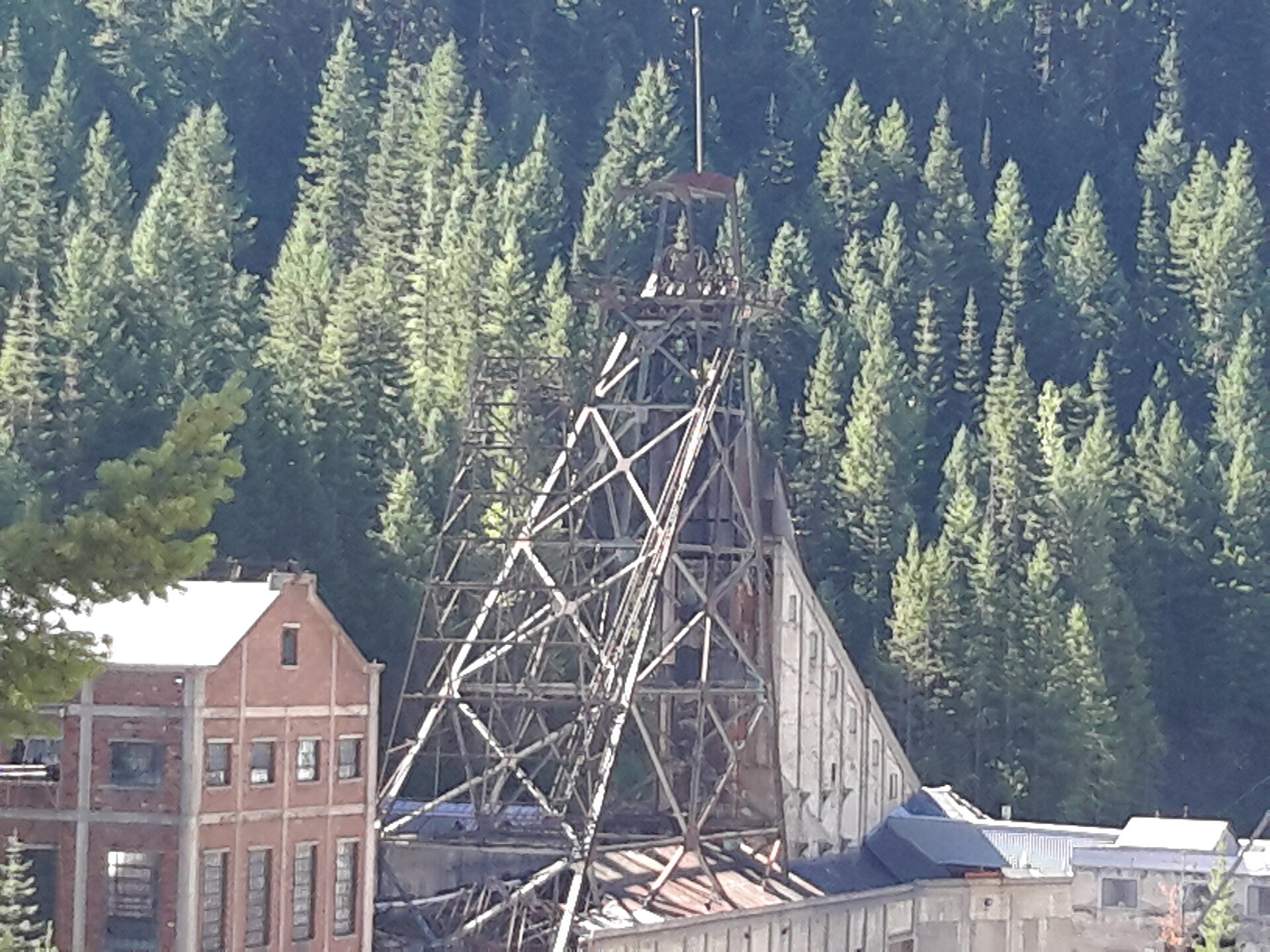
Burke is still a striking place to see. The big brick, concrete and sheet-metal buildings of the Hecla-Star complex, mostly from the 1920s rebuilding, climb the east side of the canyon, linked by enclosed skywalks, with the steel headframe of the Star mine above them. Along the road a few one-story brick buildings survive, including a former store and the post office. Hillside terraces show where houses once stood. A state historical marker near milepost 7 tells the story of the town and the Tiger Hotel. The mine complex is fenced and posted, so look from the road.
Down the canyon, the ruins of the Frisco mill sit near a second historical marker about 1.7 miles below Burke, and the old camps of Gem, Black Bear and Mace line the highway on the way back to Wallace.
Timeline
Historic sites nearby
Further reading
Sources
Wikipedia — Burke, Idaho, 1892 Coeur d’Alene labor strike, 1899 Coeur d’Alene labor confrontation and Idaho State Highway 4
Idaho State Historical Society — Reference Series on the Coeur d’Alene mining wars
University of Idaho Library — The Tiger Hotel, Narrow Burke, Idaho; Archives West — Tiger Hotel Company records and Hercules Mining Company records
Western Mining History — Burke and Mace; Historical Marker Database — Burke marker and Frisco Mill marker
The Spokesman-Review — the 1923 fire and the 1910 avalanches; Coeur d’Alene Press — Burke destroyed by fire 100 years ago; The Inlander — Burke, Idaho and the Dynamite Express
Coeur d’Alene Basin cleanup (Idaho DEQ, EPA and Panhandle Health District) — lead safety FAQs, Burke Canyon cleanup and Lower Burke Canyon Repository; U.S. EPA — Bunker Hill Superfund five-year review
Photos: University of Idaho Library Special Collections, public domain, public domain; Barnard Studio, University of Idaho Library, no known copyright and no known copyright; Kyle Kersey, CC BY 2.0 and CC BY 2.0 (license)