Gold Point, Nevada: From Hornsilver Boomtown to Living Ghost Town
NevadaGold & Silver MiningLiving ghost town · Saloon open weekends·~12 min read
Part of ghost towns near Las Vegas, closest first with drive times from the Strip.
Quick facts
What it isA privately kept 1900s mining camp with about 50 historic buildings and a handful of residents
Earliest campLime Point, a short-lived camp abandoned by about 1882
Silver boomHornsilver, 1908 to about 1910
Gold strikeJ. W. Dunfee, 1927
Renamed Gold PointPost office renamed October 16, 1932
Peak populationAbout 800 to over 1,000 in 1908–09 (sources differ)
Mines closed1942 (War Production Board), last workings in the 1960s
Post office closed1967 or 1968 (sources differ)
ElevationAbout 5,400 feet
LocationAbout 37.35°N, 117.37°W, on NV-774
State / CountyNevada / Esmeralda County
⚠ No fuel, store or reliable cell service · Private town, stay on the public streets · Mine openings in the hills are dangerous · Remove nothing
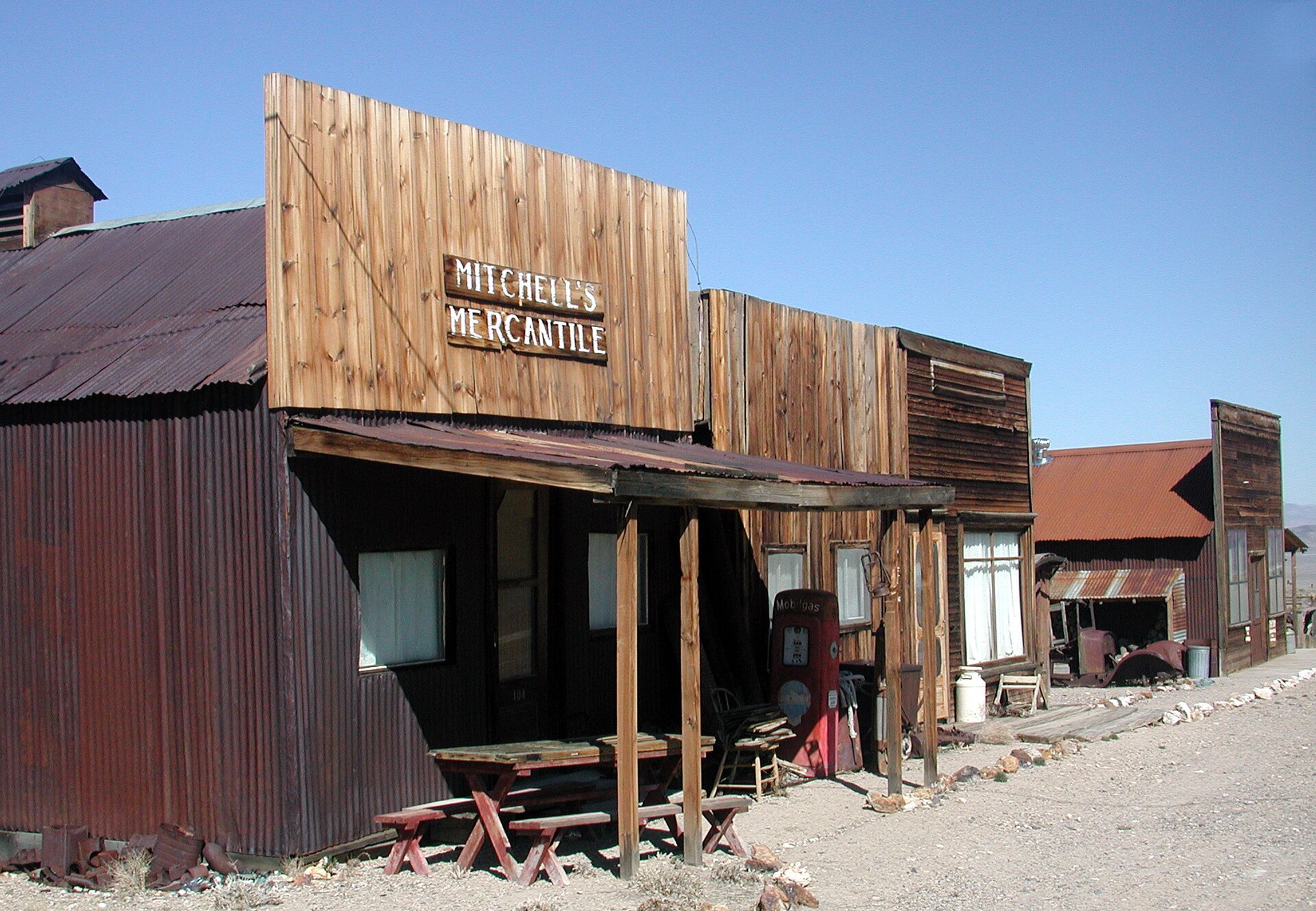
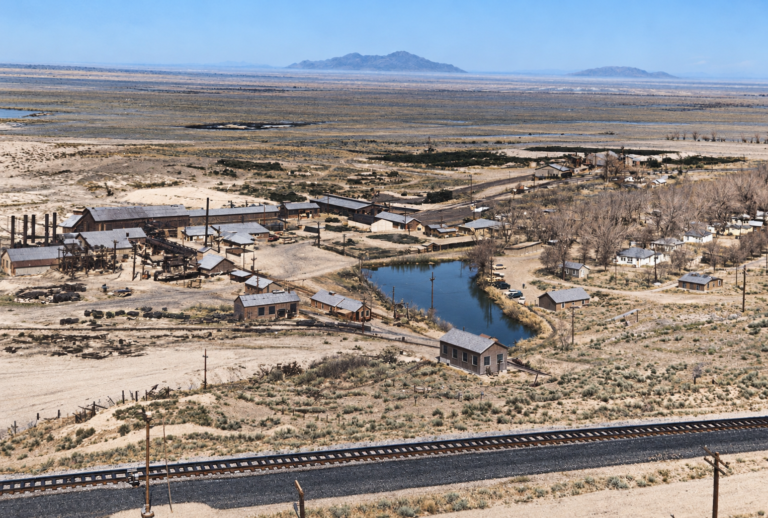
Buildings in the center of Gold Point, looking north. Photographed March 3, 2009. Photo: Finetooth, via Wikimedia Commons, CC BY-SA 3.0.
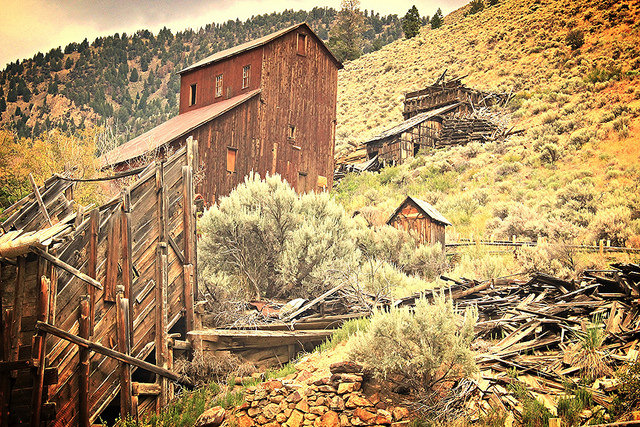
Gold Point is one of the better-kept ghost towns in the Nevada desert, and it is not quite a ghost. About 50 wooden buildings from the early 1900s still stand on the south flank of Slate Ridge, 30 miles southwest of Goldfield, and a few residents live among them. A saloon with a 1909 pool table opens on weekends, a post office from the boom years is a small museum, and some of the miners’ cabins can be rented for the night. The town began as a silver camp named Hornsilver, turned to gold in the late 1920s, lost its mines to a wartime order in 1942 and was saved in the late 1970s by two Las Vegas friends who started buying it up.
Lime Point, the first camp
Prospectors were in these hills in the 1860s and 1870s, when the nearby Palmetto and Tokop districts were organized. A small camp called Lime Point grew up around pale limestone outcrops with weak silver and copper showings. It was a hard place to hold. There was no spring or surface water, so water had to be hauled in, and the ore was stubborn and had to be wagoned a long way to stamp mills at Lida. By about 1882 the camp was empty.
On the dates: One account says prospectors first worked the area around 1880. Another dates the first prospecting to 1868 and the camp to the late 1860s and 1870s. All agree that Lime Point was abandoned by about 1882.
The Hornsilver rush
The big strikes at Tonopah in 1900 and Goldfield in 1902 sent prospectors back into old camps across Esmeralda and Nye counties. Claims staked in 1905 near the base of Slate Ridge became the Great Western Mine, and by 1908 its workings had reached rich veins of cerargyrite, a silver chloride that miners called “horn silver” because it is waxy and can be cut like horn. The rush that spring created the new camp of Hornsilver, half a mile or so from the old Lime Point site.
Hornsilver grew fast. Its newspaper, the Hornsilver Herald, published its first issue in May 1908, and a post office followed that month. Within months the camp had a chamber of commerce, two rival townsite companies, telephone and telegraph offices, stores, assayers, boarding houses and a dozen or so saloons. At its height in 1908 and 1909 it had 200 or more wood-frame buildings plus many tents and shacks. No railroad ever reached it. Freight came from the Ralston depot, about 15 miles east on the Bullfrog Goldfield and Tonopah & Tidewater lines, hauled by teamsters such as Mat Maher, and passengers rode auto-stages from the rail siding for a reported $5 fare.
On the boom’s size: Accounts disagree on the numbers. One gives nearly 800 residents, 11 saloons and more than 200 buildings. Another gives more than 1,000 residents, 13 saloons and 200 to 225 buildings. A reasonable reading is a camp of roughly 800 to 1,000 people at its brief peak. Dates for the first Great Western discoveries also vary: some accounts say 1908, while others say claims were staked in 1905 and rich ore was reached in late 1907 and early 1908.
Bust and revival
The silver bonanza did not last. By late 1909 the camp was caught up in disputes over claim boundaries and apex rights, the early mills recovered little from the deeper sulfide ores, and freight to distant smelters ate profits. Mining slowed sharply from 1910 to 1914 and many people left. A slower revival began around 1915 as titles cleared and better-financed companies took over.
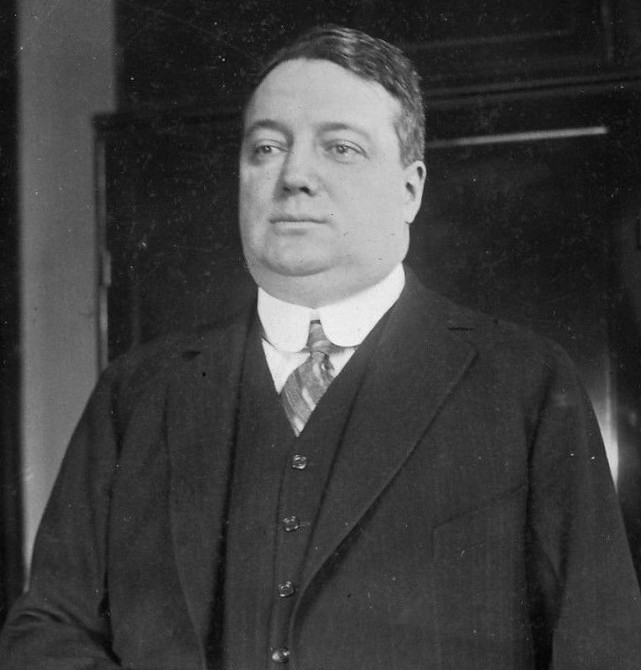
Charles A. Stoneham, about 1910, the New York financier and owner of the Giants baseball team who bought the Great Western Mine in 1922. Public domain.Image: via Wikimedia Commons
In 1922 the Great Western was bought at a receiver’s sale by Charles A. Stoneham, a New York stockbroker and curb-market financier who owned the New York Giants baseball club from 1919 until his death in 1936. Stoneham had mining interests in Goldfield, Tonopah and elsewhere in Nevada.
On Stoneham’s effect on the camp: Sources disagree. One says his purchase did not revive the camp. Another says he put new money into deep shaft work and ore hoisting, that the mine became the district’s leading producer under him and that it yielded more than $500,000 in silver-era output. Either way, the deep development he paid for is credited with setting up the gold discovery that followed.
Gold, a new name and the Depression years
In 1927 a miner named J. W. Dunfee, driving deeper workings on the Great Western property, struck quartz veins carrying native gold. As work continued, gold output came to outrun silver. Operators and merchants wanted to shed the image of an exhausted silver camp and began calling the town Gold Point around 1930, and the post office was officially renamed on October 16, 1932. When the federal government raised the price of gold to $35 an ounce in 1934, Gold Point prospered while much of the country struggled. The Ohio Mines Company ran the Great Western mine and mill, deepened the main shaft, now called the Dunfee Shaft, to more than 1,000 feet, and treated gold ore in a cyanide mill. The town’s population in these years is usually put at 200 to 400.
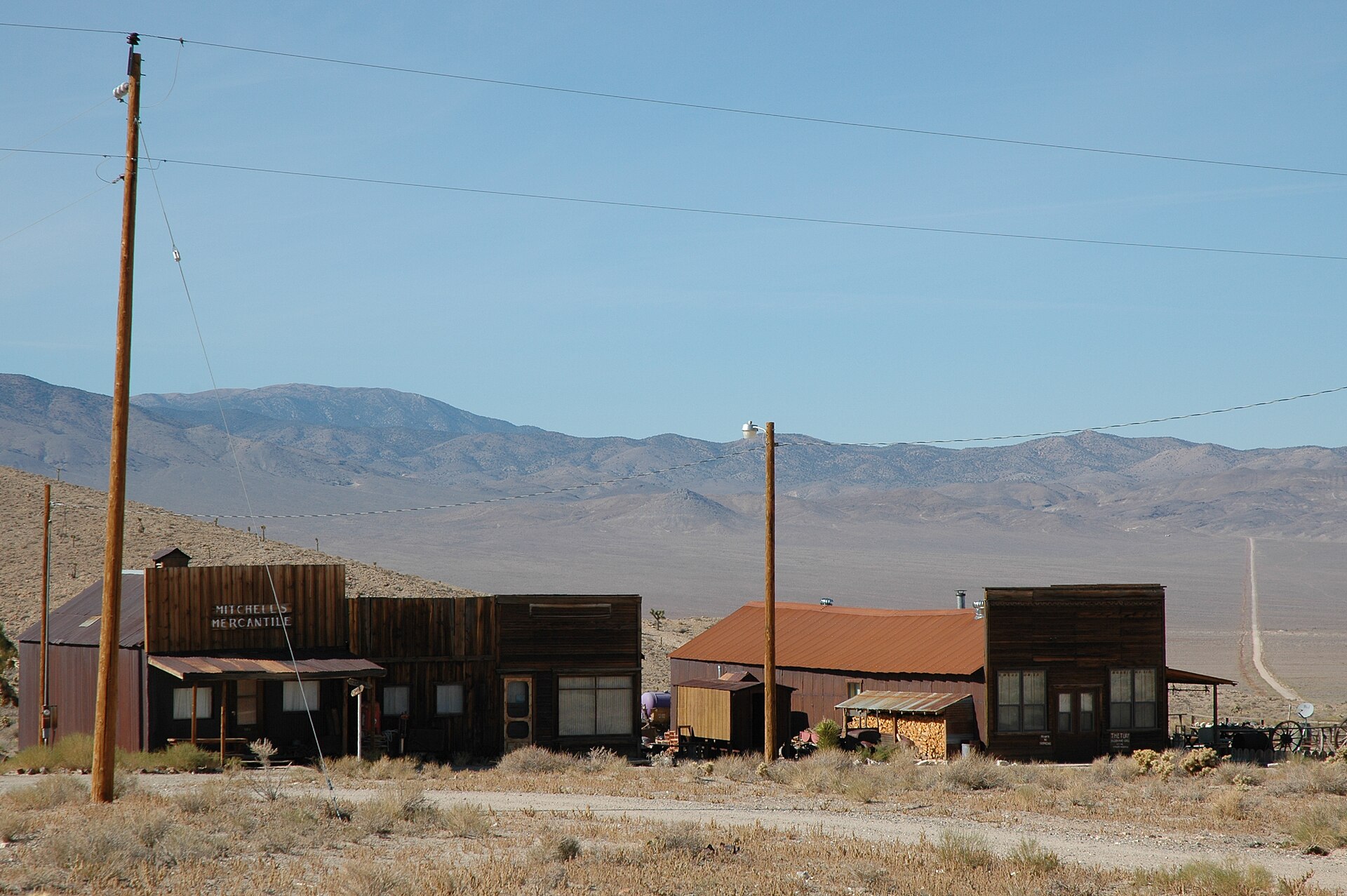
Gold Point’s street, with the desert mountains behind. Photographed October 22, 2009.Photo: Vivaverdi, via Wikimedia Commons, CC BY 3.0
The wartime shutdown
The good years ended on October 8, 1942, when the War Production Board issued Limitation Order L-208 and declared gold mining nonessential, so that labor, steel and explosives could go to copper, zinc and other war metals. The Ohio Mines Company and smaller operators shut down and the workers left for the service or for war plants. After the war, some owners tried again. The workings were dry and in better shape than many, but a fixed gold price and rising costs for wages, power and fuel kept the district from recovering. Small syndicates worked the properties on and off through the 1940s and 1950s. In the 1960s a misfired dynamite blast at the 1,000-foot level of the Dunfee Shaft collapsed the workings, and the operators abandoned the mine.
On the “sudden flight” of 1942: A popular tale says residents heard the order on the radio and left overnight, leaving warm dinners and half-finished drinks on their tables. The documented record shows an orderly wind-down, with miners leaving for military service or other metals districts. The tale is folklore.
Harry and Ora Mae Wiley
Two people tie Gold Point’s mining era to its present. Harry Wiley came to Hornsilver in the 1908 camp, mined, ran a grocery and a Standard Oil station, served on the Esmeralda County Board of Supervisors, and in 1946 was elected to the Nevada State Senate, where he served until his death in 1955. His wife, Ora Mae, had come from Georgia around 1930 and became postmistress. When the post office closed in the late 1960s, she stayed on in the family home and, as the last full-time resident, kept the town’s papers, furniture and records until she died in 1980, at the age of 83.
On the Wileys and the post office: Sources disagree on the years Ora Mae served as postmistress, giving 1942 to 1967 or 1940 to 1964, and on when the post office closed, with 1967 and January 12, 1968 both given. One account also names a second state senator from the camp, Harry DeVotie, which other sources do not mention.
Two men and a ghost town
Since the late 1970s Gold Point has been looked after by private owners rather than a government agency. Herb Robbins, a Las Vegas wallpaper hanger and mining history enthusiast, and a friend visited in the late 1970s and bought three vacant lots for $500 each. A Kremin brother, Walt, joined the partnership in 1981 and they gradually bought the center of town, including Senator Wiley’s home, the 1908 post office and store and a number of miners’ cabins, many still holding original furniture, records and tools. One account says a $223,000 slot-machine jackpot Robbins won in 1997 went into buying property and stabilizing buildings.
Most of the buildings are single-wall board-and-batten construction, with vertical 1×12 boards and no studs. After decades of sun and wind they sagged. Rather than re-side them, the owners stripped the interior walls and built a hidden structural frame inside each shell, repaired the roofs with an underlayer and cedar shingles and left the weathered outside alone. They run the Gold Point Ghost Town Bed & Breakfast and reopened the 1908 Hornsilver Townsite and Telephone Company building as a saloon, and income from lodging and donations goes back into the buildings.
On who bought what, and when: One account says Robbins and Walt Kremin began buying buildings in 1979. Another says Robbins and Walt’s brother Chuck bought the first three lots in 1978 and Walt joined in 1981. The earlier of the two dates fits a visit in the late 1970s followed by the 1981 partnership, but treat the exact years and names as uncertain.
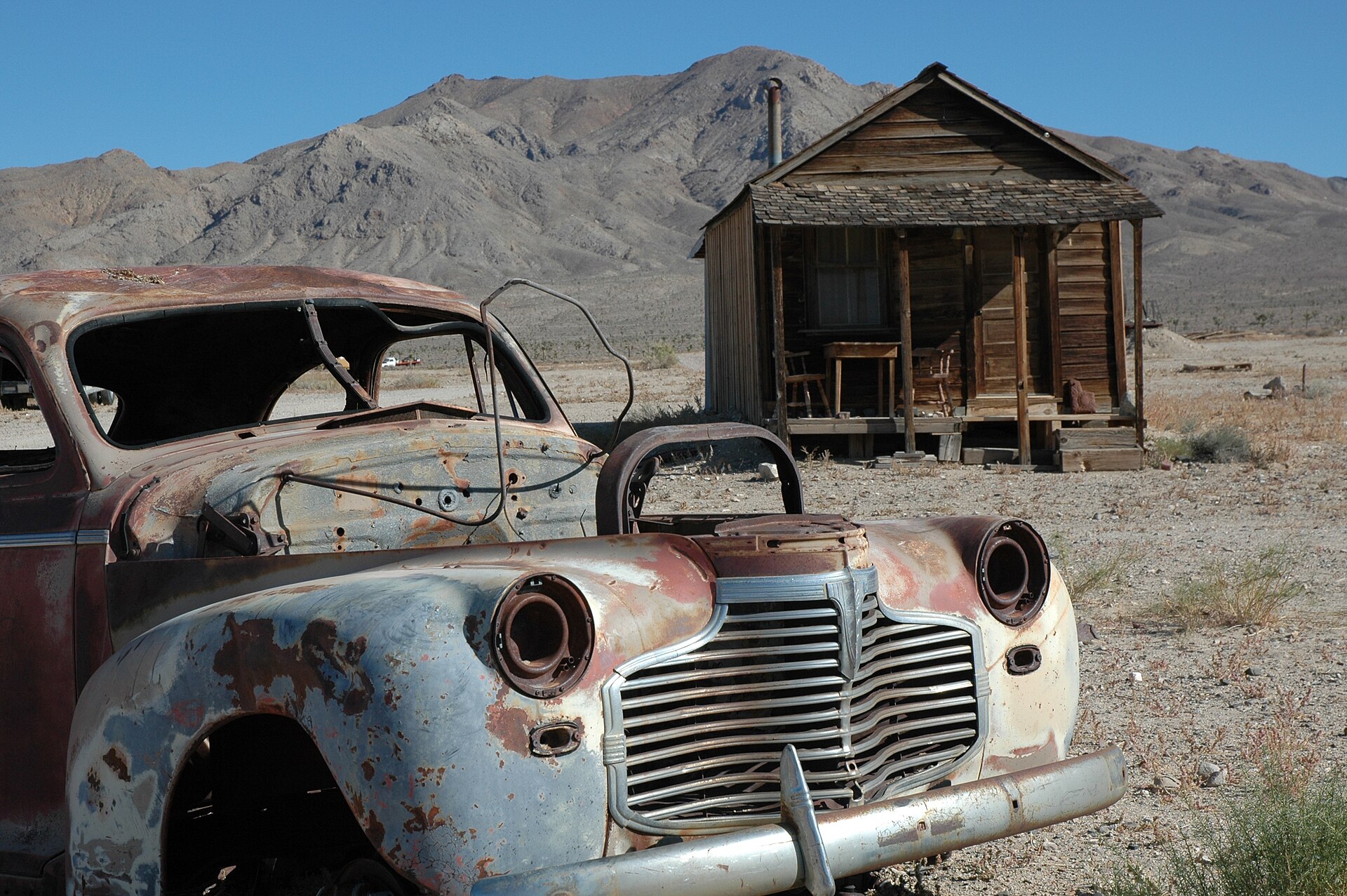
A rusting car and a weathered cabin, with the desert mountains behind.Photo: Vivaverdi, via Wikimedia Commons, CC BY 3.0
Ghost stories
As at most preserved ghost towns, the stories outnumber the records. Guests at the cabins tell of cold spots, footsteps on the floorboards, spectral miners in dusty coats and rattling door latches. Another tale says Senator Wiley still sits in an armchair in his old bedroom, watching over visitors. A prospector’s myth tells of a solid-gold chimney in a lower stope that killed the miners who found it.
What is documented and what is not: The cabins are genuine early twentieth-century buildings preserved for guest use. Wiley died of natural causes in 1955 while in office and his widow kept the house. The Dunfee vein was mined for years until the shaft was brought down by a blast. The ghost stories and the gold-chimney tale are folklore and do not appear in the historical record.
Timeline
1860s–1882
Prospectors work the area; Lime Point camp comes and goes.
1905
Claims staked that become the Great Western Mine.
1908
Rich silver ore, the Hornsilver rush, the Hornsilver Herald and a post office.
1909
Peak population; litigation and high milling costs begin to slow work.
1910–1914
Mining slumps and the camp thins out.
1922
Charles Stoneham buys the Great Western Mine.
1927
J. W. Dunfee strikes gold.
October 16, 1932
The post office is renamed Gold Point.
1934
Gold goes to $35 an ounce and the Ohio Mines Company expands.
October 8, 1942
The War Production Board closes gold mines as nonessential.
1960s
A blast collapses the Dunfee Shaft and ends deep mining.
1967–1968
The post office closes.
Late 1970s
Herb Robbins and partners begin buying and stabilizing the town.
1980
Ora Mae Wiley, the last full-time resident of the old town, dies.
Visit guide — Gold Point, Nevada
Can you visit?Yes, but this is a privately owned town where people live. Stay on the public streets, observe posted private areas and do not look into windows of occupied buildings. There is no entry fee.
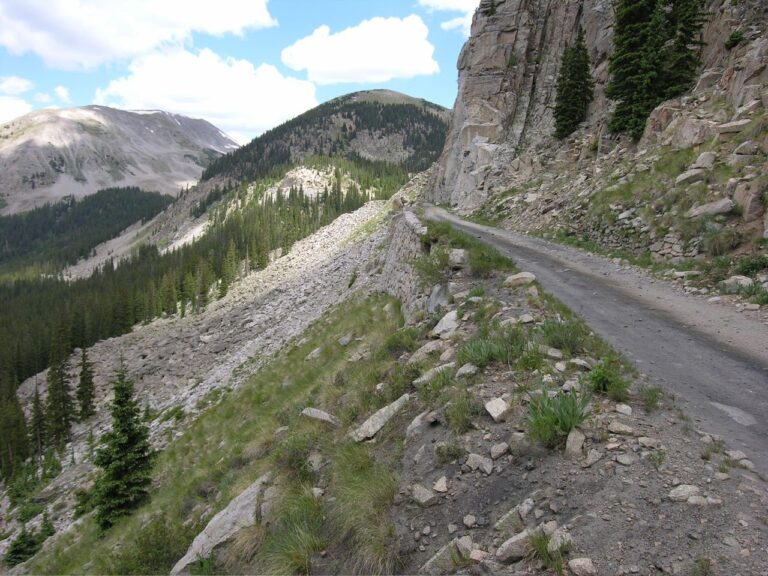
Getting thereGold Point is about 175 miles north of Las Vegas, 30 miles southwest of Goldfield and roughly 40 miles south of Tonopah. From US-95 at Lida Junction, turn west on NV-266 for about 7 miles, then south on NV-774 for about 7 to 8 miles of paved road into town. Passenger cars are fine in dry weather.
CoordinatesAbout 37.35°N, 117.37°W. Approximate.
SaloonThe Gold Point Saloon, in the 1908 Hornsilver Townsite and Telephone Company building, has a vintage bar, a wood stove, a 1909 Brunswick pool table and a shuffleboard table. It usually opens on weekends or by arrangement and serves food and drink.
MuseumThe old post office and general store is a small museum, open on weekends and holidays. Guided visits to it and the Wiley home are offered when the caretaker is on hand.
LodgingThe Gold Point Ghost Town Bed & Breakfast rents restored miners’ cabins and houses, such as the Radkie House and the Senator Wiley Home, and has dry RV parking and tent sites. Book ahead.
ServicesThere is no gas station, store, repair garage or ATM. Fuel and supplies are in Goldfield, Tonopah or Beatty. Cell service is poor or absent. Bring water, a spare tire, a jack and offline maps.
Rules in townThe town speed limit is 15 mph to protect pedestrians and keep dust off the old wood.
EventsA Memorial Day weekend fundraiser and a Fourth of July gathering bring crowds, with food, music and tours.
SkyVery little light pollution makes the night sky exceptional.
Land statusThe surrounding land is public land managed by the Bureau of Land Management. Roads outside town are rough.
Serious hazards: The slopes of Slate Ridge and Mount Dunfee have many old shafts, stopes and winzes. Some are boarded up, but many are open or hidden, and timber and rock around them can fail. Underground air can be bad. Do not enter any opening, and keep your distance from collars and dumps.
Respect the ground: Collecting bottles, nails, cans or boards is prohibited by Nevada law and on public land by federal law. Stay out of private areas and take only photographs.
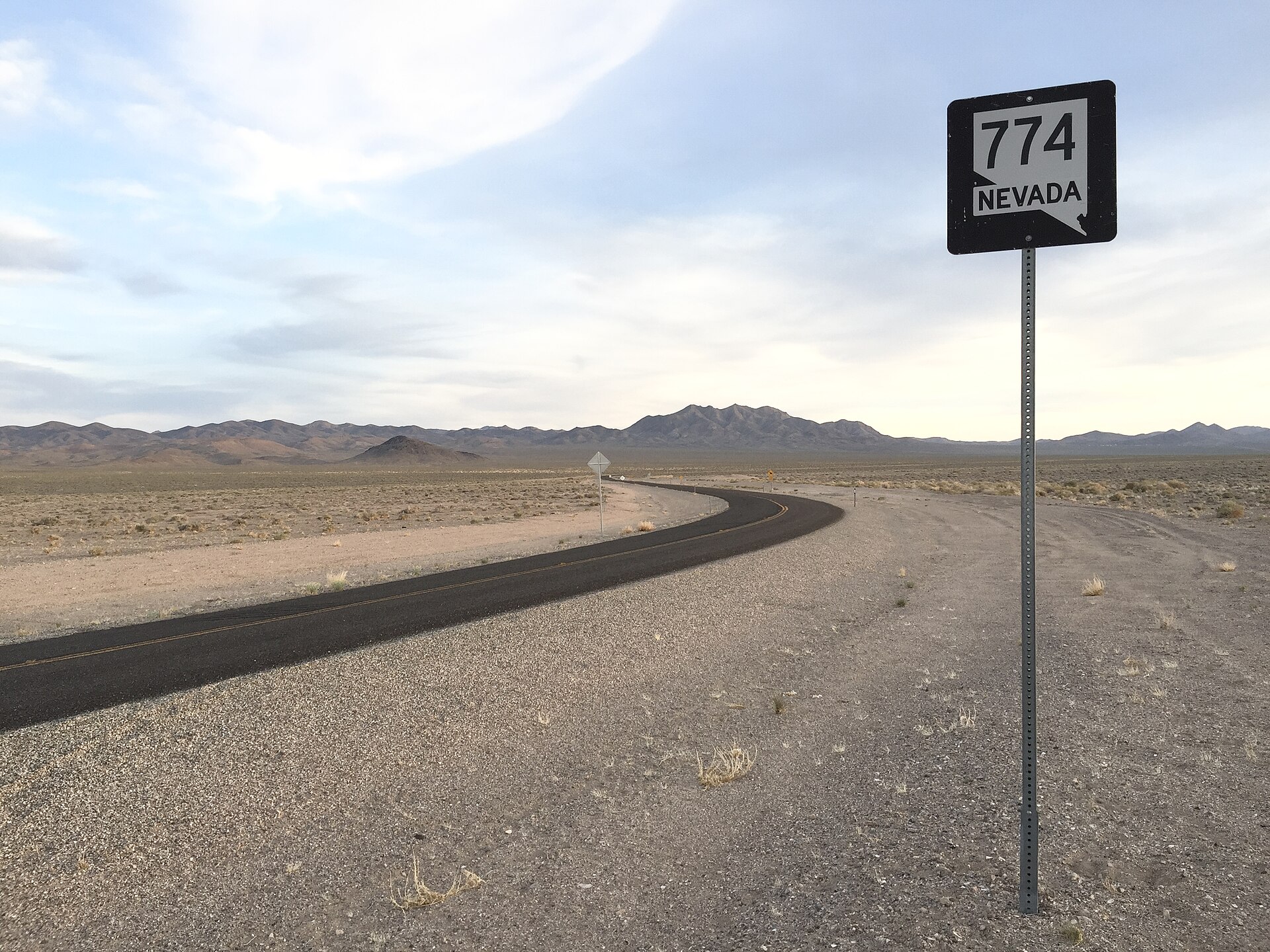
Nevada State Route 774, the Gold Point Road, at its north end. Photographed April 29, 2015.Photo: Famartin, via Wikimedia Commons, CC BY-SA 4.0
Approximate location of Gold Point, Nevada, on the south side of Slate Ridge in Esmeralda County.
Historic sites nearby
On distances: Sources disagree on how far the nearby camps are, so these figures are rough. Lida is given as 8 to 15 miles, Palmetto as 10 to 20 miles and Silver Peak as 15 to 42 miles.
Goldfield, NV
~30 miles northeast, also on this site
The 1902–1910 gold boom and the county seat
Tonopah, NV
~40 miles north, also on this site
The 1900 silver strike that set off the rush
Rhyolite, NV
~45 miles southeast, also on this site
Bullfrog district boomtown near Death Valley
Lida, NV
~10 miles northwest
1870s mill camp · Log cabins, springs and cottonwoods
Palmetto, NV
~15–20 miles northwest
Camp named for Joshua trees · Stone walls and mill ruins
Bonnie Claire, NV
~16–20 miles southeast
Railroad junction at Sarcobatus Flat · Grades and tailings
Silver Peak, NV
~40 miles northwest
One of Nevada’s oldest camps · Stone mill ruins
Further reading
Books, studies and records about Gold Point and the Hornsilver district
Hornsilver/Gold Point, Nevada: Silver Turns to Gold
Alan H. Patera, Western Places, vol. 7, no. 2, 2003 — The standard history of the camp.
The Hornsilver District, Nevada
Frederick Leslie Ransome, USGS Bulletin 380, 1909 — The first geological study of the new strike.
Geology and Mineral Deposits of Esmeralda County, Nevada
J. P. Albers and J. H. Stewart, Nevada Bureau of Mines and Geology, 1972 — Regional geology and production tables.
Mining Districts and Mineral Resources of Nevada
Francis Church Lincoln, 1923 — Early ownership and production notes.
Cultural Resource Evaluation of Gold Point Historic Mining Camp
Paula Sutton, report for the Bureau of Land Management, 1986 — Archaeology and history of the townsite.
Nevada Ghost Towns & Mining Camps
Stanley W. Paher, 1970 — The classic photographic survey.
Gold Point NevadaHornsilverEsmeralda CountyNevadaGold MiningSilver MiningLiving Ghost TownNevada Ghost Towns