Garfield, Utah: The Company Town That Was Moved Away One House at a Time
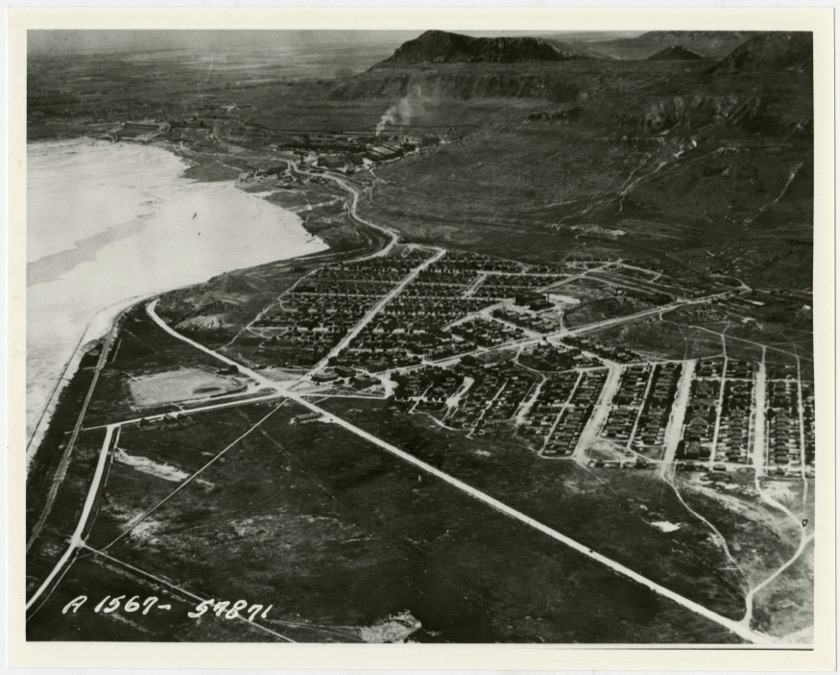
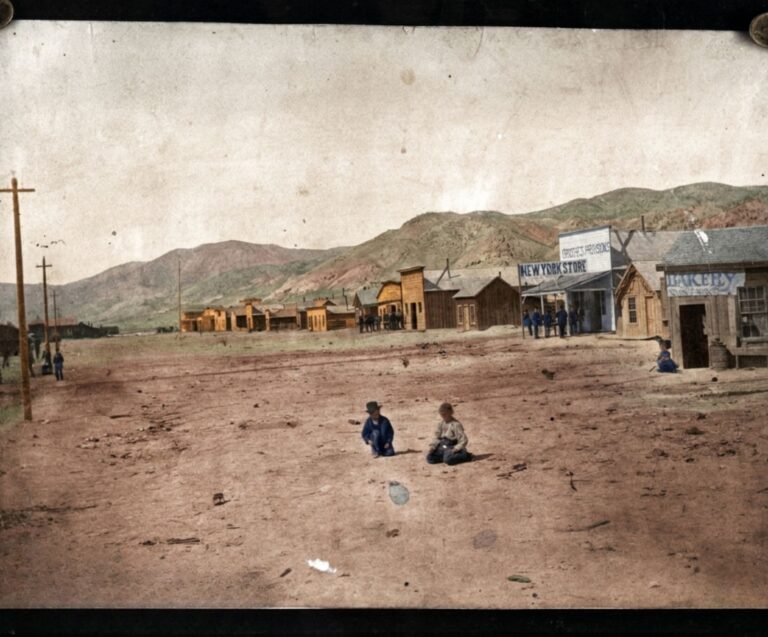
Most ghost towns die slowly. The ore plays out, the railroad pulls its spur, and the buildings sag into the sagebrush over decades until only foundations remain. Garfield, Utah, went differently. At the height of its life — a bustling community of some 3,500 people with a school, a library, a swimming pool, and 394 tidy company houses — it was condemned, not by nature, but by the very industry that built it. Between 1955 and 1957 the town was picked up house by house, loaded onto flatbed trailers, and driven a few miles east to Magna. When the last family left, the streets were bulldozed and buried beneath tailings and slag. Today an active copper smelter stands on the ground where children once walked to school.
Garfield is a rare thing: a company town erased at the peak of its usefulness because the land beneath it became worth more as a dumping ground than as a neighborhood. Its story is less about a boom and bust than about the sheer scale of twentieth-century copper industrialization, and how completely that industry could reshape — and unmake — the human geography around it.
A Narrow Pass on the Lake Shore
Garfield occupied a strategic sliver of ground at the northern tip of the Oquirrh Mountains, where the range meets the southern shore of the Great Salt Lake in western Salt Lake County. It sat along the old 21st South road — the corridor now followed by Interstate 201 — at a natural pinch point where the mountains crowd the lake and force all east-west traffic through a single narrow pass. Interstate 80 today runs along what was the town’s northern edge. For thousands of years, anything moving across the northern Salt Lake Valley had to thread this gap.
That made the site important long before copper. A cliffside cavern at the southwestern margin of what is now the tailings pond yielded human skeletal remains and occupation debris dating the earliest use of the shelter to somewhere between 7000 and 3000 B.C. Prehistoric hunters and gatherers crossing the Great Basin used the cave as a recurring stopover, drawn by the same geography that would later attract a railroad.
Nineteenth-century travelers left their own record of the place. Captain John C. Frémont camped overnight at the future townsite during his second western expedition in 1843, noting the pass as the easiest natural road across the northern valley. In May 1877 the naturalist John Muir spent time nearby at the Lake Point Hotel, surveying the plants and lake ecology of the Oquirrh foothills; his observations from that excursion later appeared in the collection Steep Trails. And in February 1887, in a preview of the hazards the lake shore could deliver, a gale blew a Utah & Nevada Railway train off its tracks near the site, killing conductor Adam Brown.
Copper Builds a Town
Garfield exists because of a revolution in mining that happened a dozen miles to the south, in Bingham Canyon. There, beginning in the early 1900s, engineer Daniel C. Jackling pioneered the open-pit extraction of low-grade copper ore — rock so poor in copper that no one had thought it worth mining until Jackling proved that moving and processing it in enormous volume could turn a profit. That approach demanded smelters and concentrators capable of handling tens of thousands of tons of ore every day, and those plants needed somewhere flat, well-watered, and close to rail. The lake shore below the Oquirrhs fit perfectly.
In 1905 the American Smelting and Refining Company (ASARCO), working with Jackling’s Utah Copper Company, chose the site for the Garfield Smelter, which began operating in 1906. To house the workforce, the partners created the Garfield Improvement Company, a corporate subsidiary that laid out a complete planned town on a surveyor’s grid. The community was hemmed in by industry from the start: the Magna Concentrator Mill opened just to the east in 1907, the Arthur Concentrator followed in 1909, and the whole complex was stitched together by the Bingham & Garfield Railway, incorporated in 1908 and fully running by September 1911.
The railway was a marvel in its own right. Its powerful Mallet compound locomotives hauled more than 10,000 tons of crude ore a day down the sixteen miles from the Bingham pit to the processing plants, while also carrying workers and residents on a daily passenger schedule. Garfield, in other words, was not a town that happened to have industry nearby — it was a single integrated machine for turning mountains into metal, with a neighborhood tucked into one corner of it.
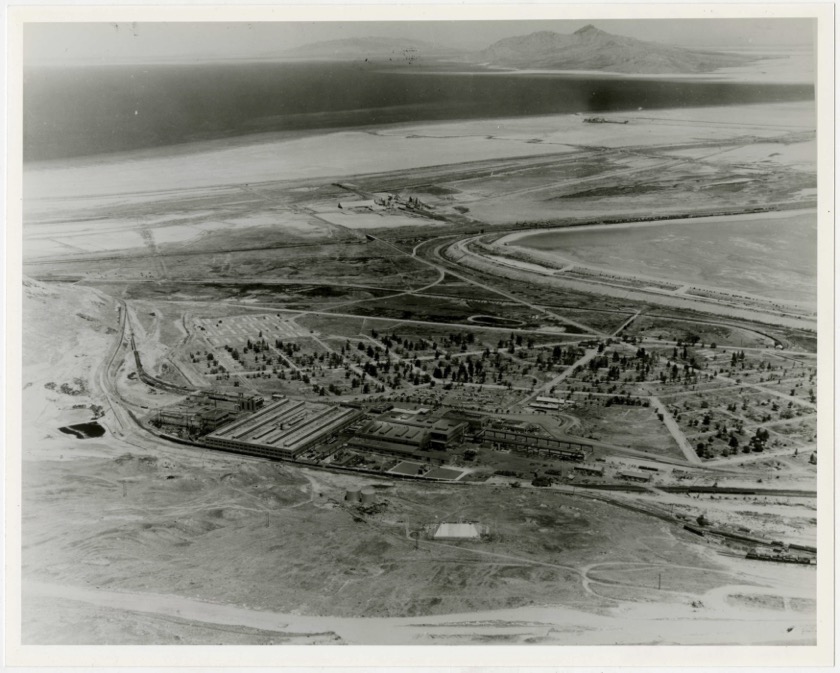
Life in a Corporate Town
By its demographic peak around 1950, Garfield held somewhere between 2,000 and 3,500 people. The town offered a full civic life: an elementary school, a branch library, a community swimming pool, a post office, public parks, and a business district with the shops and services of any small American town of the era. There were 394 single-family homes, standardized company-built houses leased directly to the men who worked the smelter and mills.
But the amenities never changed a basic fact of the place: Garfield was owned. The houses, the streets, the parks, and the storefronts all belonged to the corporation. Residents rented rather than owned, and the same companies that signed their paychecks also managed their water, their schools, and the ground under their feet. This arrangement was common in Western industrial settlements — the copper ghost town of Kennecott, Alaska, ran on a nearly identical model — and it gave the parent company an unusual power that most towns never grant a landlord: the ability to decide, unilaterally, that the town should no longer exist.
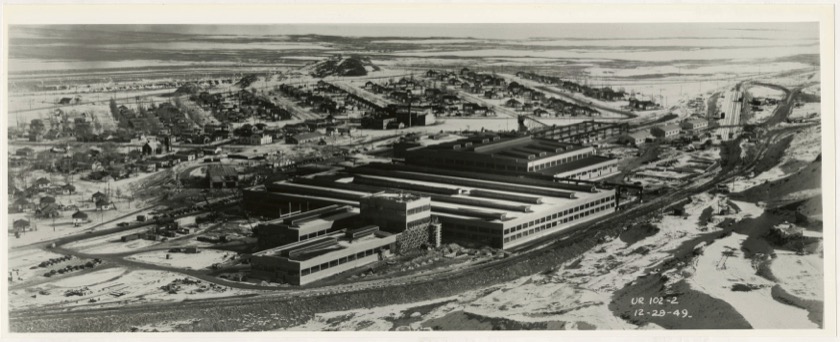
Squeezed Out by the Industry It Served
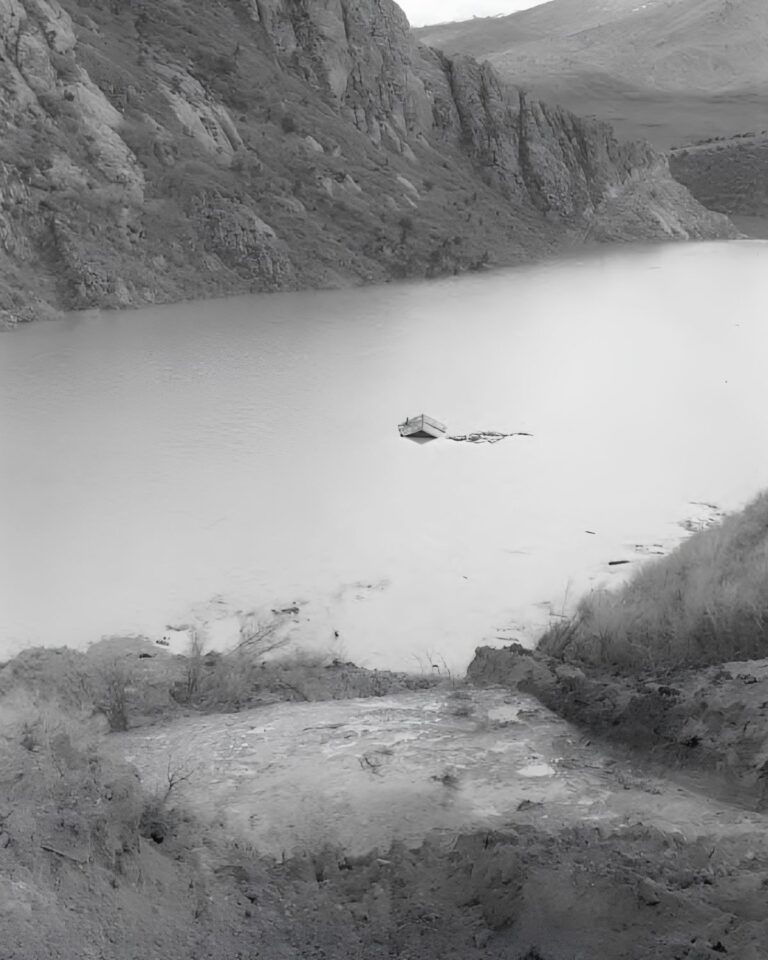
Garfield’s end began, paradoxically, with success. After World War II the Kennecott Copper Corporation — which had bought full control of Utah Copper in 1936 — dramatically expanded its processing capacity. The Magna tailings pond, the vast settling basin where crushed waste rock was slurried and stored, grew from an initial 1,500 acres to more than 5,000, pushing steadily outward against roads and land corridors. At the same time, ASARCO and Kennecott built large sulfuric acid plants beside the smelter to capture sulfur from the stack gases, expanding the first in 1937 and adding a second in 1944.
The result was a town increasingly boxed in by heavy, hazardous industry. Residents lived amid atmospheric pollution, toxic emissions, and acid manufacturing, and the company faced growing liability for keeping families in the middle of it. From a purely corporate standpoint, the math was simple: the acreage under the houses was worth far more as space for slag, tailings, and plant expansion than as a residential neighborhood. Maintaining a town had become an inefficiency.
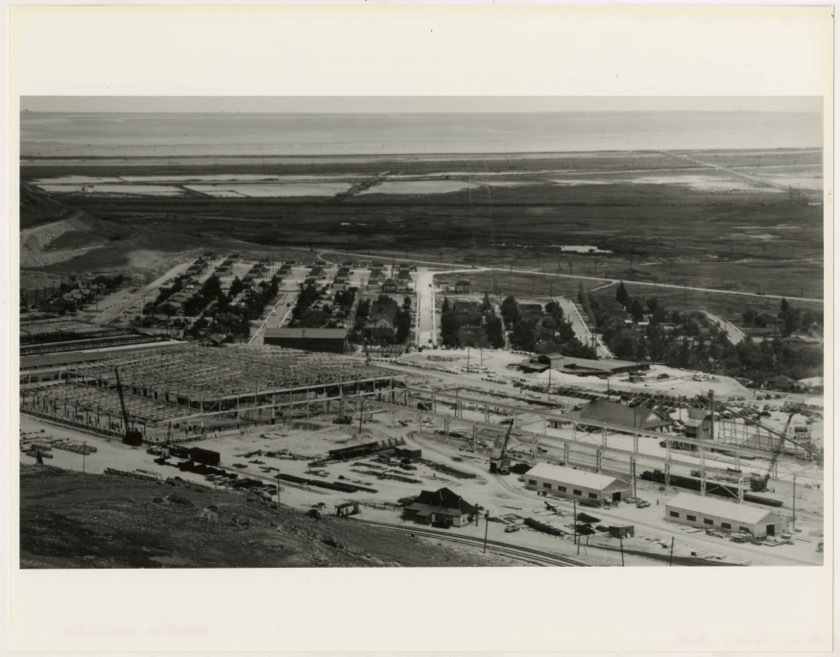
Moving a Town, One House at a Time
In 1955, Kennecott and ASARCO jointly decreed the liquidation of Garfield. Residents were offered the chance to buy their company houses at a discount, on one firm condition: the structures had to be removed from the property. What followed over the next two years was one of the more remarkable feats of American town-clearing. Between 1955 and 1957 all 394 homes were jacked off their foundations, set onto flatbed trailers, and hauled several miles east to new subdivisions in Magna.
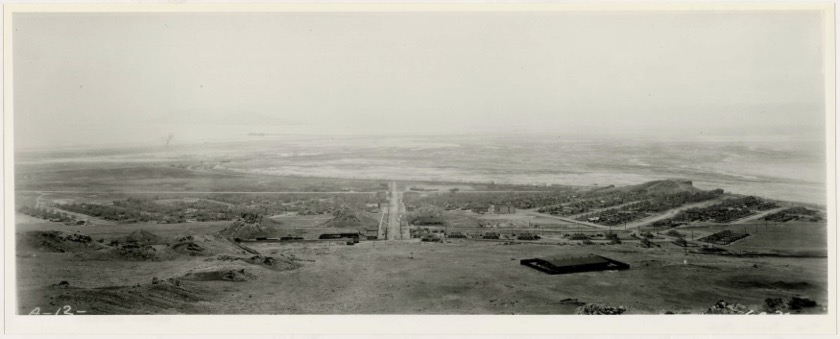
By 1957 every resident had gone. The street grid, the foundations, the school, the pool, and the parks were bulldozed and buried. In 1959 Kennecott bought ASARCO’s Garfield Smelter outright, consolidating the entire industrial tract under one owner. The town that had taken half a century to build was gone in roughly two years — not abandoned, but deliberately deleted.
Dead Man’s Cave and Other Local Legends
The prehistoric cavern above the tailings pond carries a grimmer modern name. Around 1913 an unidentified man took his own life inside it, and locals thereafter called it Dead Man’s Cave. Over the following decades the site accumulated the usual crop of regional folklore — reports of ghost sightings, unexplained lights, and other unexplained phenomena — that made it a fixture of Great Salt Lake shoreline legend, layered oddly atop a shelter that humans had actually used for nine thousand years.
The mountains behind Garfield hold a genuine tragedy as well. On September 18, 1944, two U.S. Marine Corps A-25A Shrike dive bombers on a formation training flight went down in the upper Oquirrhs just southwest of town, killing all four crewmen. The high, rugged crash sites lay undisturbed for fifty-five years until a recovery team pulled one of the airframes out in 1999 for restoration and display at the National Museum of the United States Air Force.
Even the railroad left a buried monument. In 1910 the Bingham & Garfield Railway threw a steel girder bridge 640 feet across Markham Gulch, standing 220 feet above the canyon floor. As Bingham’s operations expanded, waste rock from the elevated dumps poured continuously into the gulch, and over seven decades millions of tons of it filled the gorge completely. By 1981 the canyon was solid ground, the great bridge entombed inside it, and the structure was demolished that September — another piece of Garfield’s world swallowed by the industry it had served.
What Remains Today
Nothing of residential or commercial Garfield survives on the original site. The entire townsite has been absorbed by tailings ponds, smelter operations, rail yards, and highway right-of-way. The clearest surviving trace of the town is off-site: hundreds of the original company houses still stand as private homes in Magna, a functioning neighborhood assembled from a mid-century town that was physically carried there. On the old industrial tract, Rio Tinto–Kennecott’s modern smelter and electrolytic refinery still operate, marked by a 1,200-foot reinforced-concrete stack raised in the late 1970s to meet Clean Air Act standards.
Getting There
Garfield lay about eighteen miles west of downtown Salt Lake City, reached today by Interstate 80 or Interstate 201. There is nothing to visit, but the industrial landscape that replaced the town is unmistakable from the freeway. The coordinates below mark the approximate location of the former townsite on the lake shore, now within Kennecott’s smelter grounds.