Aurora, Nevada: The Boomtown Two States Claimed
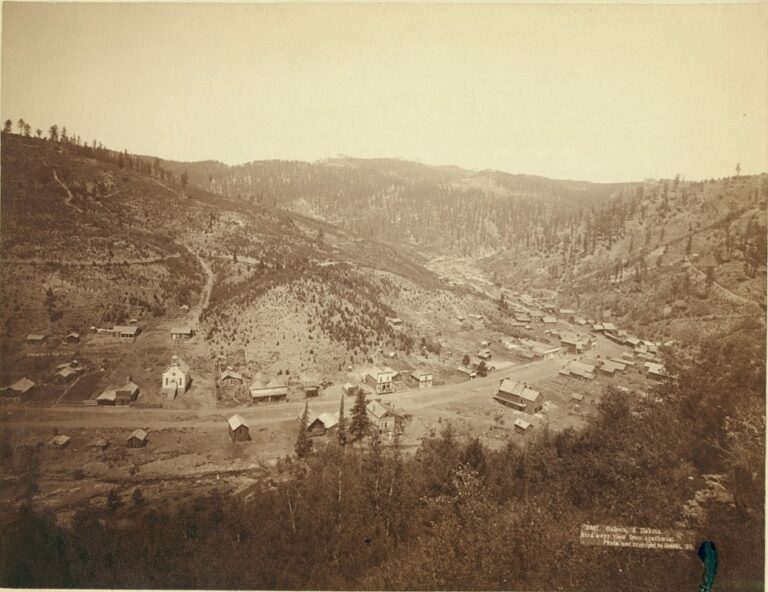
Aurora is a gold and silver ghost town in the hills of Mineral County, Nevada, about 8 miles from Bodie. Prospectors found rich quartz veins here in August 1860, and by 1864 Aurora held thousands of people, brick business blocks, 17 stamp mills and four newspapers. For two years it was the county seat of both Mono County, California, and Esmeralda County, Nevada Territory, until a boundary survey in 1863 put it inside Nevada. Mark Twain tried his luck here in 1862, and in 1864 a citizens’ committee hanged four men of the Daly Gang. The ore gave out within a decade, the brick buildings were torn down for salvage after World War II, and today a cemetery, foundations and mine dumps remain beside a modern gold mine.
The Esmeralda discovery
In August 1860 three prospectors, E. R. Hicks, James M. Cory and James M. Braly, found gold- and silver-bearing quartz in the hills east of Mono Lake. They organized the Esmeralda Mining District, and their first camp, called Esmeralda, stood in a gulch south of the later town. Men poured in from Monoville and the other eastern Sierra camps, and 350 claims were filed within two months. The new town platted to the north was named Aurora, after the Roman goddess of the dawn.
A boomtown of brick
Aurora grew fast. 593 votes were cast there in 1861, and rich strikes on the Wide West and other veins brought a second rush in 1862 and 1863. By 1863 the town had about 700 houses, 20 stores, 22 saloons and 16 quartz mills, and by 1864 there were 17 mills, the largest with 30 stamps. Its richest ore lay close to the surface.
Brick buildings went up along the business streets, and Aurora supported four newspapers, among them the Esmeralda Star, started in 1862, and the Aurora Daily Times. The town built a courthouse, hotels, churches and an armory hall. In May 1862 Company A of the 2nd California Volunteer Cavalry, under Captain Edward A. Rowe, set up Camp Aurora near town during conflicts with Native people in the region, and moved on to Adobe Meadows that summer.
One town, two county seats
Nobody knew in 1860 where the line between California and the new Nevada Territory ran through these hills, and both governments claimed Aurora. In the spring of 1861 California created Mono County and made Aurora its seat. That November, Nevada Territory created Esmeralda County and made Aurora its seat too. For two years the town housed two sets of county officers, two courts and two sets of tax collectors.
The best-known story from those years comes from the election of September 1863. According to many histories, Aurorans voted for California and Mono County offices at the police station and for Nevada Territory and Esmeralda County offices at Armory Hall, on the same day. That same month a joint California and Nevada boundary survey reached the district and placed Aurora about three miles inside Nevada. Mono County’s officials packed up their records and left, and in 1864 Bridgeport became Mono County’s seat.
Mark Twain in Aurora
Aurora’s most famous resident was a failed miner. Samuel Clemens, whose brother Orion was secretary of Nevada Territory, visited briefly in 1861 and came back in April 1862 to try his hand at quartz mining. He shared cabins with partners, bought interests in claims and, by his own account in Roughing It, worked about a week in a quartz mill for $10 a week and board before quitting. Roughing It also tells how he and his partner Calvin Higbie found a rich blind lead near the Wide West mine and lost it by failing to do the required work on the claim.
Clemens had been sending humorous letters signed “Josh” to the Territorial Enterprise in Virginia City, and that summer the paper offered him a job. In September 1862 he left Aurora for Virginia City, where a few months later he first signed his work “Mark Twain.”
The Daly Gang and the vigilantes
Like most early mining camps, Aurora had its share of violence. A gang led by John Daly ran with the town’s toughs and was blamed for robberies and killings on the roads. In 1863 a gang associate stole a horse and was later killed by William R. Johnson. On February 1, 1864, the gang ambushed and murdered Johnson in revenge.
This time the town struck back. Several hundred citizens formed a Citizens’ Safety Committee and arrested the suspects. On February 9, 1864, they hanged four men, John Daly, William Buckley, James Masterson and John “Three-Fingered Jack” McDowell, from a gallows built outside Armory Hall. Territorial Governor James Nye came to Aurora with the U.S. marshal, but no troops were sent and the committee soon disbanded. Historian Roger D. McGrath studied the case in his book on frontier violence in Aurora and Bodie.
The bust
Aurora’s bonanza did not last. The rich ore lay close to the surface, and as the shafts went deeper the gold thinned and the costs rose. Several mills shut down in 1864, and more closed in 1865. On January 6, 1866, a fire on Antelope Street destroyed 21 buildings. By 1870 half the houses stood empty, and by 1880 about 500 people were left, many miners having moved on to Bodie when it boomed in the late 1870s.
Estimates of what the Aurora mines produced in the 1860s run from at least $27 million to about $30 million in gold and silver. Some mining went on, especially on Last Chance Hill in the 1880s, but in 1883 the Esmeralda County seat moved to Hawthorne, and in 1897 the post office closed.
A second life, 1906 to 1919
The gold strikes at Tonopah and Goldfield brought prospectors back. The post office reopened in 1906, and in 1912 Utah mining men Jesse Knight and W. Lester Mangum formed the Aurora Consolidated Mines Company and began work on a large mill. In 1914 George Wingfield’s Goldfield Consolidated Mines Company bought control. Its 500-ton cyanide mill, with 40 stamps, stood at the company town of Mangum next to Aurora. The mill closed in 1918, after producing a little over $1.8 million, and was moved to Goldfield. The post office closed for good on May 31, 1919.
How the brick town disappeared
Unlike Bodie, Aurora was not saved. A handful of people stayed on through the 1920s and 1930s, and many of the brick buildings were still standing. Then, in August 1946, a Southern California contractor began tearing them down and trucking the used brick away; according to one account, much of it ended up in chimneys in San Pedro and Wilmington. By about 1960 the last brick building was gone. The townsite was listed on the National Register of Historic Places on July 30, 1974, but by then only rubble, foundations and the cemetery were left.
Modern mining
Mining at Aurora never fully stopped. Nevada Goldfields opened a modern mine in the district in 1987, and a mine and mill now sit just east of the old townsite. Hecla Mining Company owns the operation through its subsidiary Klondex Aurora Mine. On March 31, 2026, federal permitting was completed for its Polaris Exploration Project on Humboldt-Toiyabe National Forest land, allowing up to 250 drill sites on up to 150 acres of the district.
What remains
The cemetery. Aurora’s hillside cemetery, a short way north of the townsite, is the best-preserved part of the town, and Travel Nevada calls it one of the best historic cemeteries in the state. Among the graves is that of gunman William E. Carder, killed outside the Exchange Saloon on December 10, 1864, whose headstone was later broken by vandals. In 2014 Mineral County regraded the road to the cemetery for a Nevada 150 ceremony that dedicated a monument to ten veterans buried there, and in 2016 the Forest Service and volunteers added an interpretive sign at the entrance. An E Clampus Vitus plaque from 1986 stands nearby.
The townsite. Brick rubble, stone and concrete foundations, and faint street lines mark the old town.
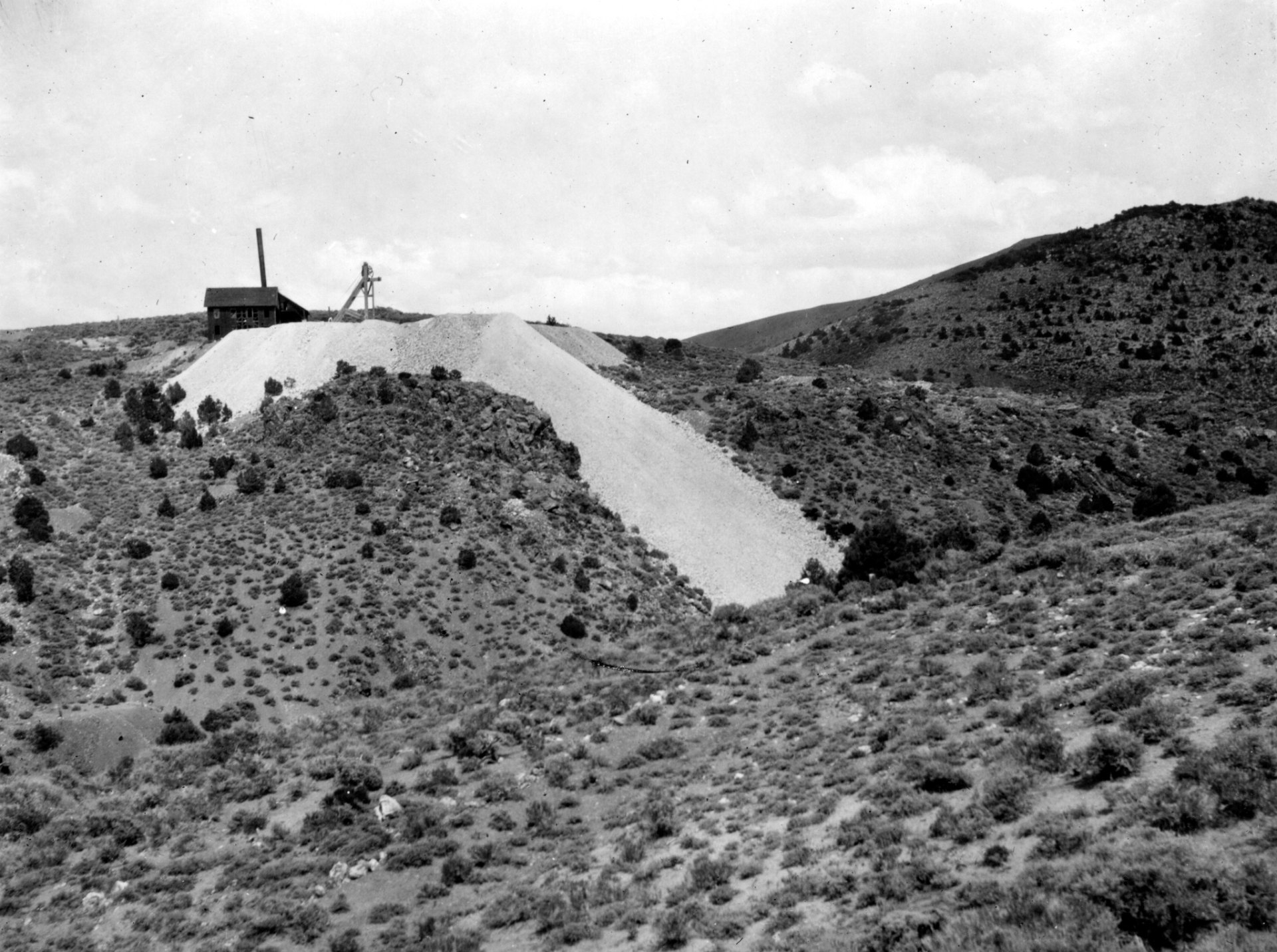
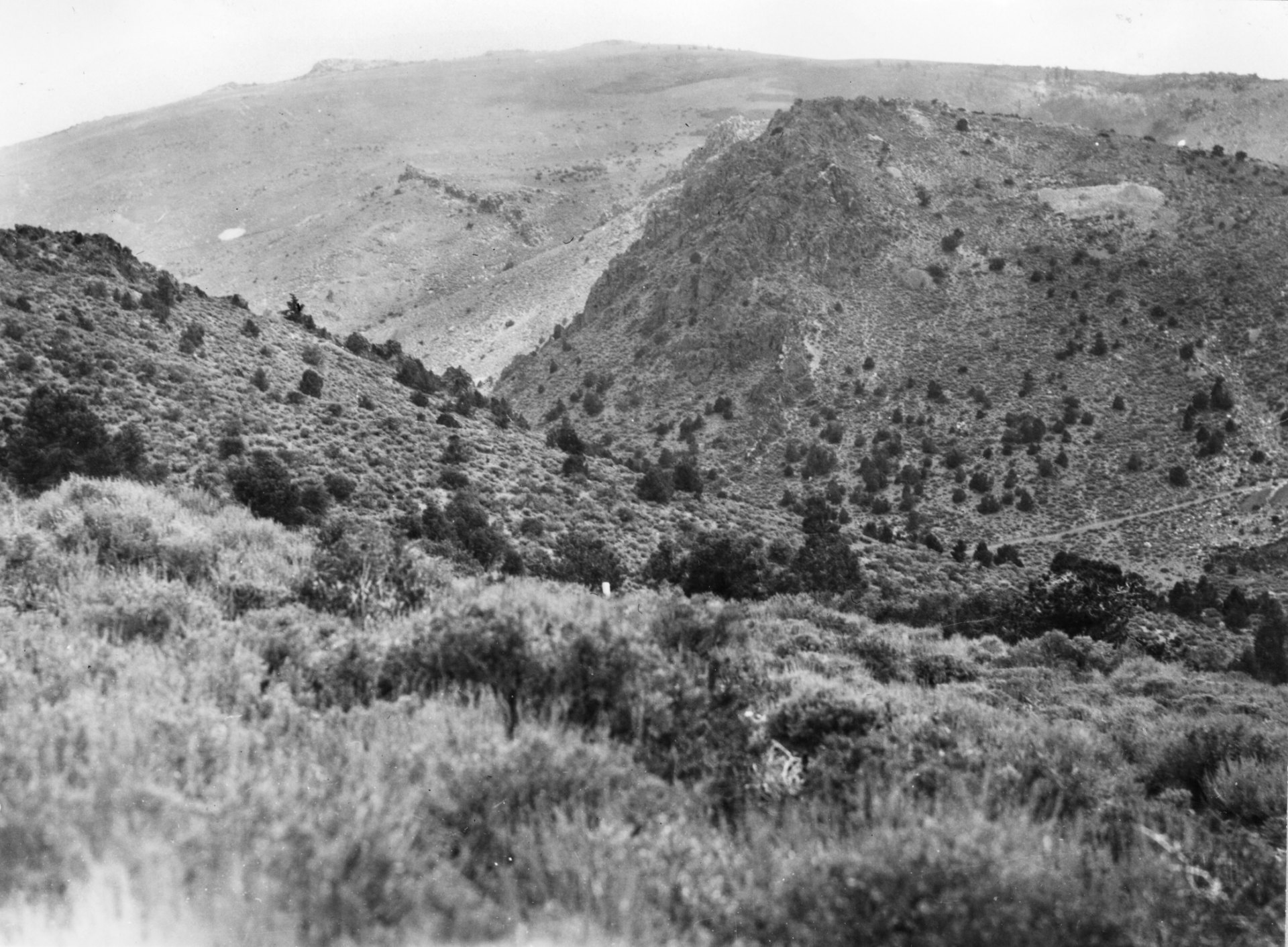
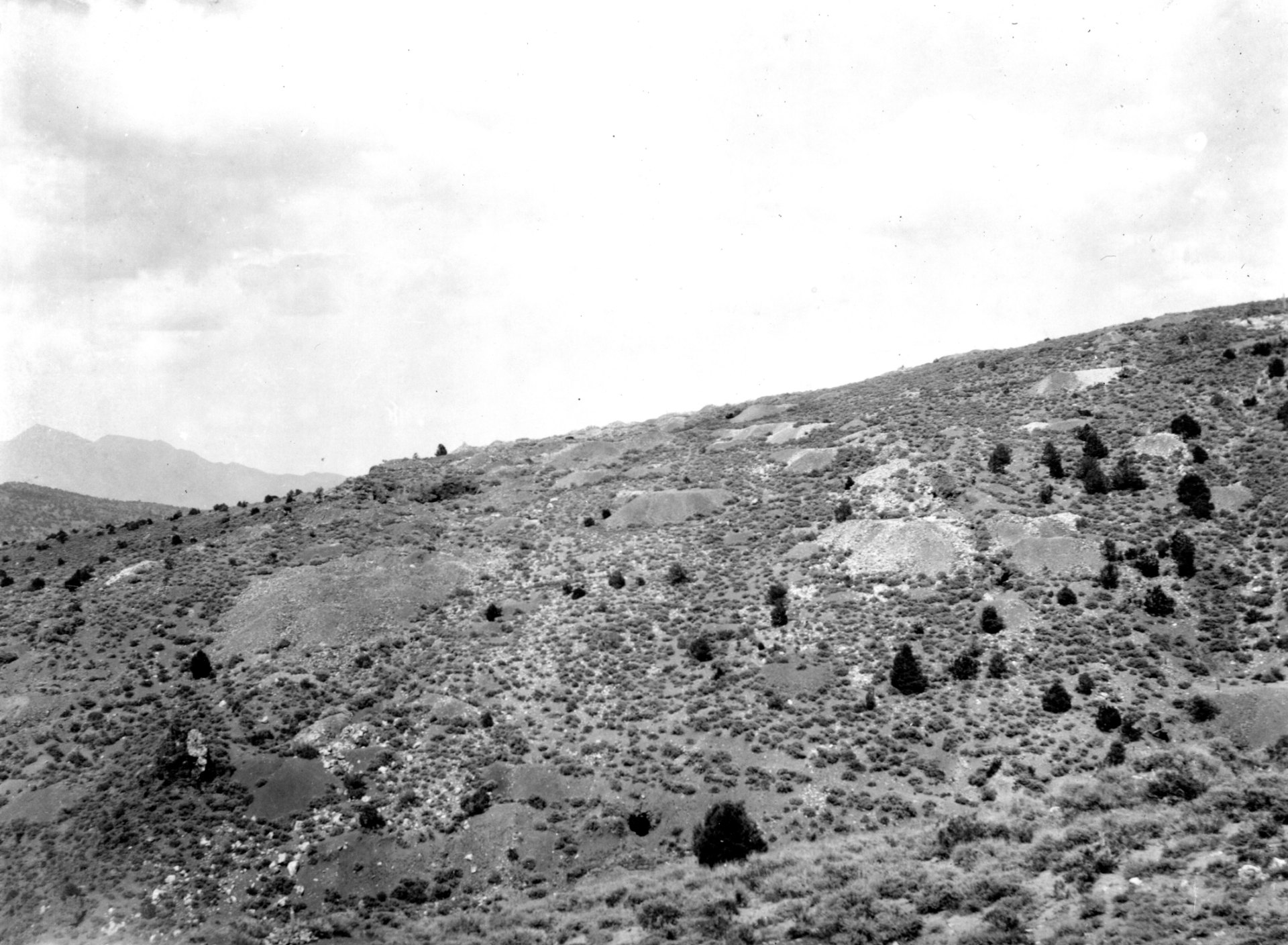
The mills and mines. Concrete foundations of the Mangum mill, old shafts, and mine dumps on Last Chance Hill and Silver Hill.
What is gone. The courthouse, the brick business blocks, the hotels and nearly every house.
Timeline
Historic sites nearby
Further reading
Sources
National Park Service — Aurora National Register nomination; U.S. Federal Permitting Council — Polaris Exploration Project completes federal permitting
Forgotten Nevada — Aurora; Nevada Expeditions — Aurora and Mangum; Western Mining History — Aurora; Mindat — Aurora Mine Area
Mineral County Museum — The Daly Gang; Twain’s Geography — Aurora, Nevada; Mark Twain Project — Roughing It, chapter 40; Fort Wiki — Camp Aurora; Nevadagram — Aurora
Travel Nevada — Aurora Ghost Town; California State Parks — Bodie: How to Get Here; Atlas Obscura — Aurora; HMdb — Aurora marker; Mineral County Independent-News — 2014 cemetery ceremony and 2016 interpretive sign; Wikipedia — Aurora, Nevada and Daly Gang
Photos: James M. Hill, U.S. Geological Survey, 1912, public domain, via the USGS Denver Library collection on ScienceBase: Last Chance Hill shaft house, south end of Silver Hill and Last Chance Hill mine dumps