Little Valley, Utah: The Industrial Boomtown Built to Cross a Lake

Most ghost towns are the wreckage of a gamble — a silver strike that petered out, a railroad that chose a different route, a mine that flooded. Little Valley is something rarer. It was never a gamble at all. It was engineered into existence for a single job, staffed like a small city while the job lasted, and then deliberately dismantled the moment the work was done. For three years in the late 1950s roughly thirteen hundred people lived and worked on this remote shoulder of the Great Salt Lake. By the end of 1959 the population was zero, and almost every building had been loaded onto a railcar and hauled away.
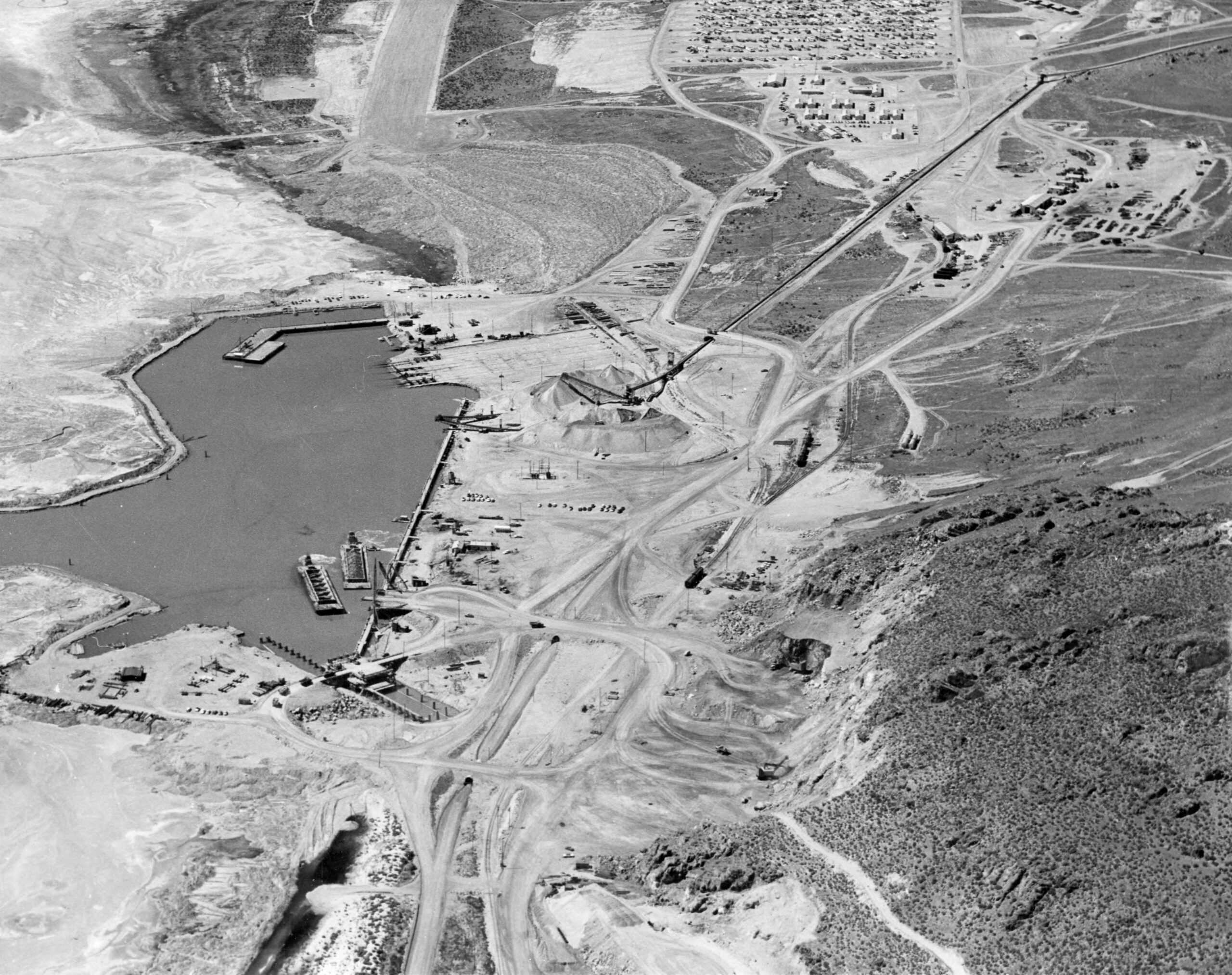
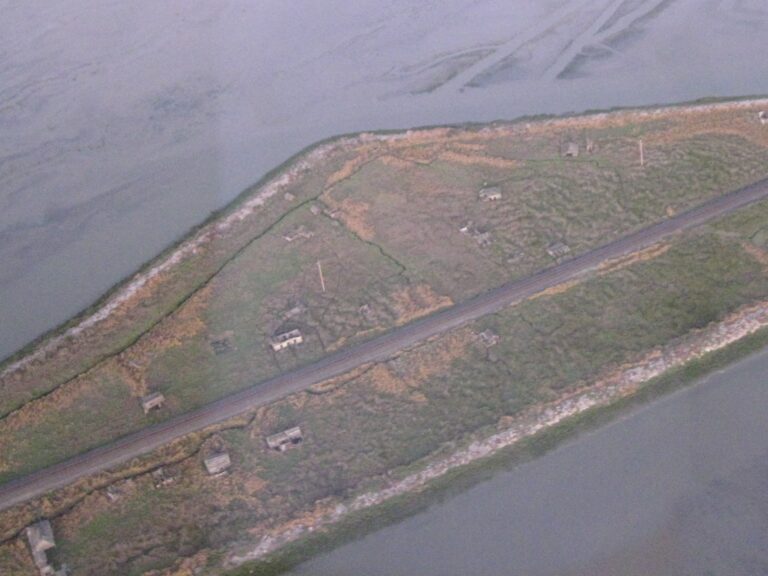
What remains is a ghost town of concrete slabs, quarry scars, and rotting harbor pilings on the south-central shore of the Promontory Peninsula in Box Elder County. There is no main street, no saloon, no schoolhouse frozen in time. Instead there is the outline of a man-made harbor dredged out of the lakebed, terraced cuts where crews blew millions of tons of rock off the hillsides, and the rusted debris of one of the most ambitious civil-engineering projects the West has ever seen.
A Quarry Before It Was a Town
The story begins with a shortcut. When the transcontinental railroad was completed in 1869, trains crossed northern Utah by climbing the steep grades around Promontory Summit. Those grades were slow and costly, and by the turn of the century the Southern Pacific wanted a straighter, flatter line. Its answer was the Lucin Cutoff: a route that ran directly across the Great Salt Lake on a twelve-mile wooden pile trestle, shaving 43.5 miles off the crossing. Railroads reshaped the whole Interior West this way, sometimes building up towns like Piedmont, Wyoming and just as often stranding them. Between 1902 and 1904, during construction of that original trestle, the enclave later called Little Valley saw its first light industrial use as a staging area and quarry.
The trestle worked, but wood does not last forever in a saltwater lake. By the mid-1950s the aging pilings were imposing severe speed limits on every train that crossed, and the Southern Pacific decided to replace the trestle with something permanent: a solid rock-and-gravel causeway running parallel to the old wooden line. The contract went to the Morrison-Knudsen Company of Boise, Idaho — and Morrison-Knudsen needed a base of operations with an enormous supply of hard rock close to deep water. Little Valley, sitting beside thick deposits of durable quartzite, was the obvious choice.
Dredging a Harbor Out of the Lakebed
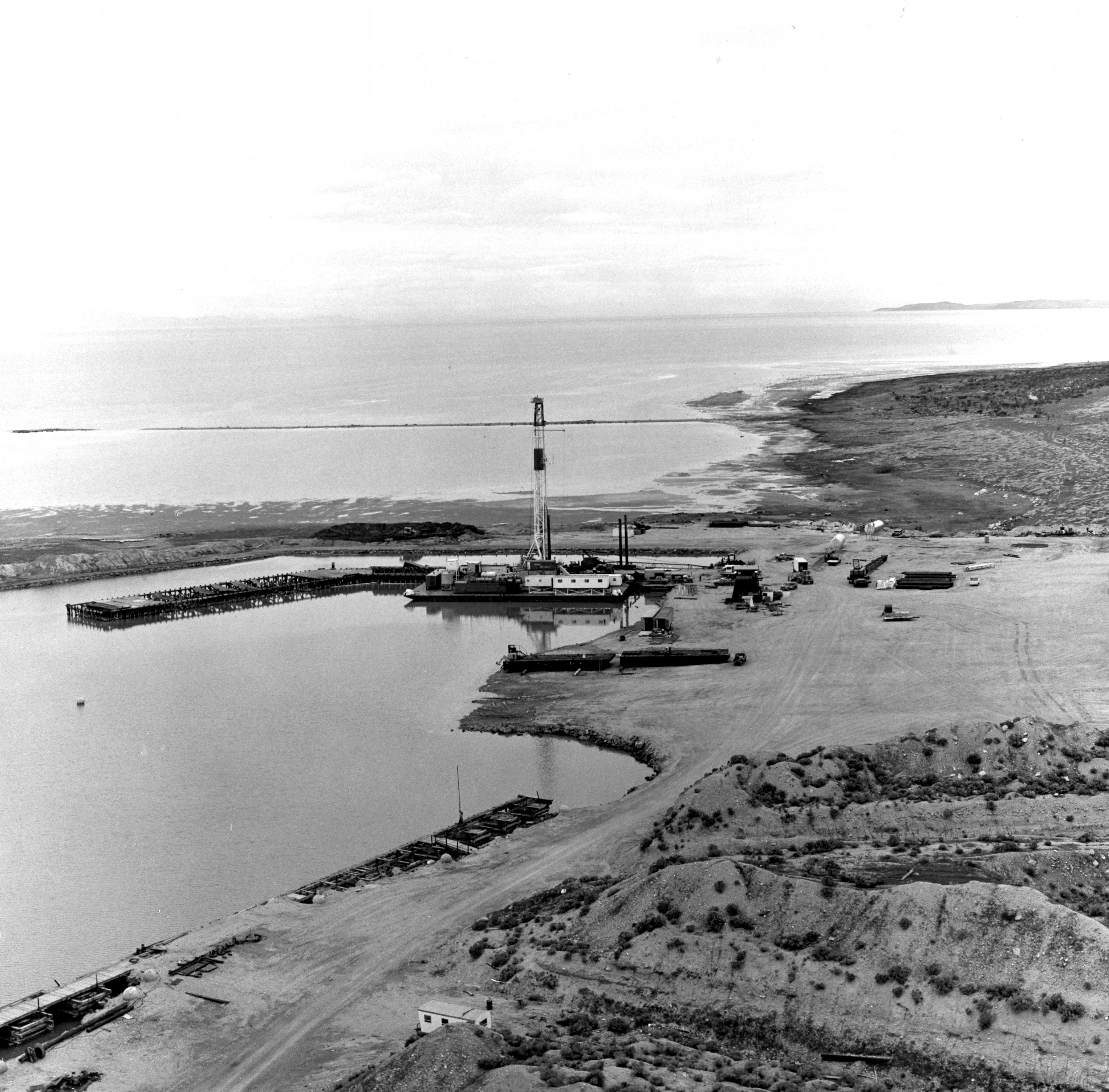
To move tens of millions of cubic yards of rock across open water, Morrison-Knudsen first had to build a port where none existed. Crews dredged a harbor straight out of the dense clay floor of the lake, 400 feet wide and 1,500 feet long. It was a shrewd piece of engineering: because the Great Salt Lake has no real tides and carries little silt, the excavated basin held its depth on its own, without the constant dredging that plagues ordinary harbors.
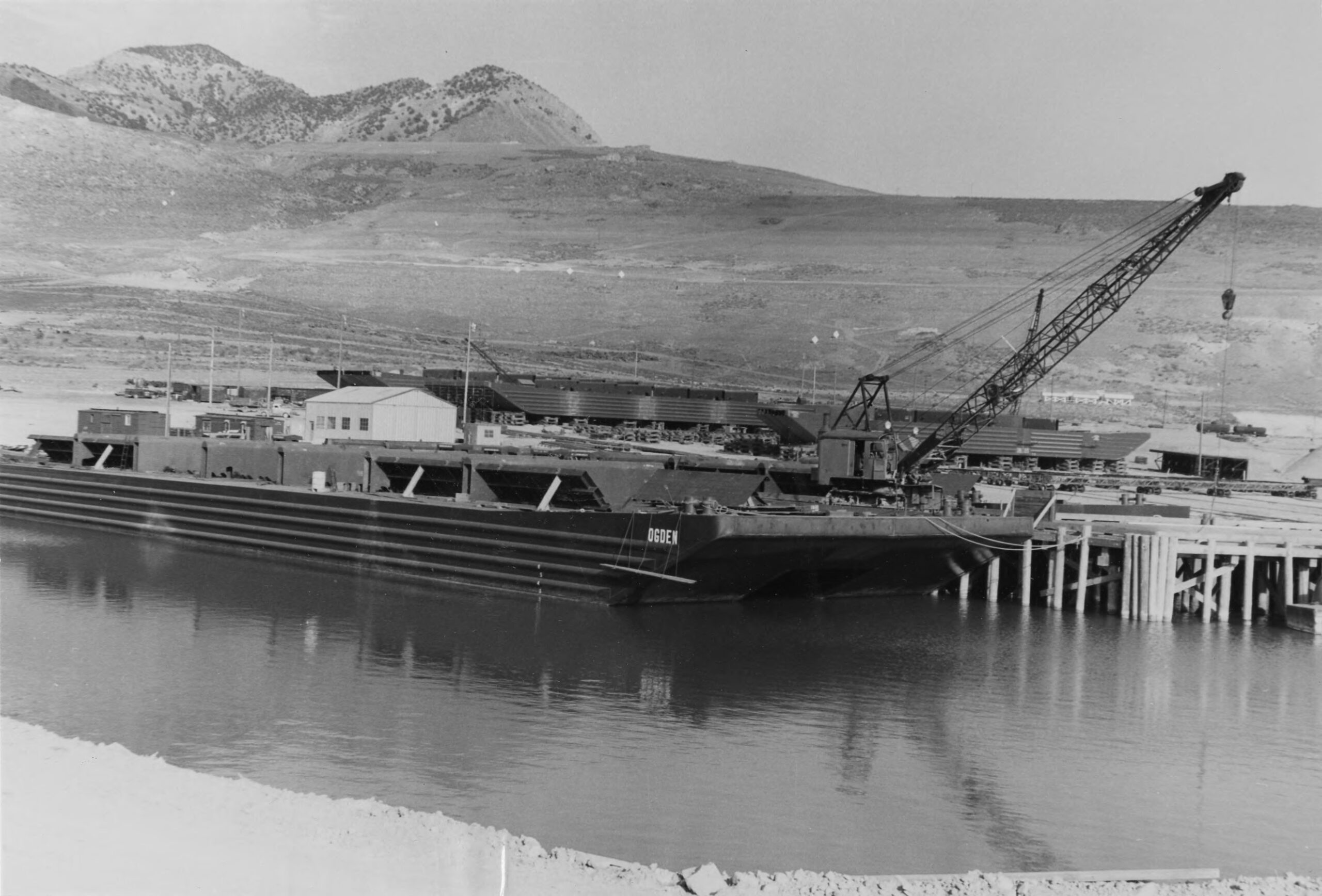
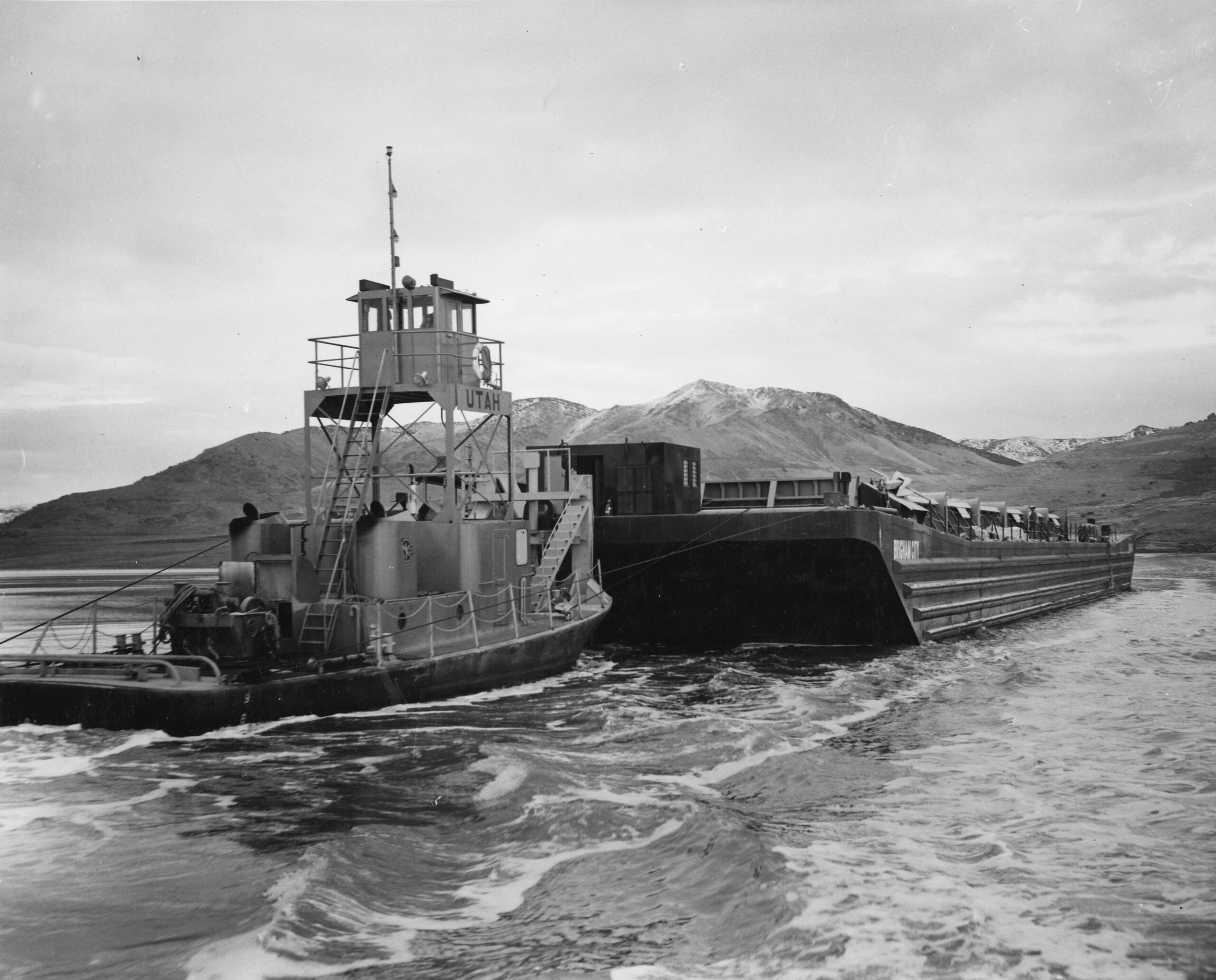
Into that harbor went a purpose-built fleet: tugboats, dredges, workboats, and six specially fabricated barges assembled on site. Each barge was 200 feet long and designed to dump its load through the bottom, carrying 2,000 cubic yards of rock per trip out to the causeway line. A sternwheel tug named the Promontory was among the vessels that pushed and hauled this traffic back and forth across the wine-colored water of the lake’s northern arm.
A City Running Around the Clock
Between 1956 and 1959, Little Valley became a self-contained industrial city built for one purpose and operated without pause. The causeway work ran on a continuous 24-hour schedule, and everything about the settlement was designed to keep that schedule moving. At its peak the community held about 1,300 workers and family members.
Morrison-Knudsen built modern prefabricated houses and barracks, administrative offices, safety stations, heavy-equipment repair shops, and fabrication yards. A high-voltage electrical grid lit the quarries so blasting and loading could continue through the night under searchlights. Fresh water — a commodity the salt lake could not provide — was hauled in by rail, as much as 1,680 tons a day, drawn from wells on the distant mainland. A dedicated heavy-rail spur tied the camp directly to the Southern Pacific mainline at Saline, so rock and supplies could move without interruption.
Finished, Then Erased
The end was written into the beginning. Little Valley was a single-purpose company town, and its survival depended entirely on the construction contract. In July 1959 Morrison-Knudsen placed the last of more than 60 million cubic yards of earth and rock fill, and the solid causeway opened to mainline trains. The job was done, and so was the town.
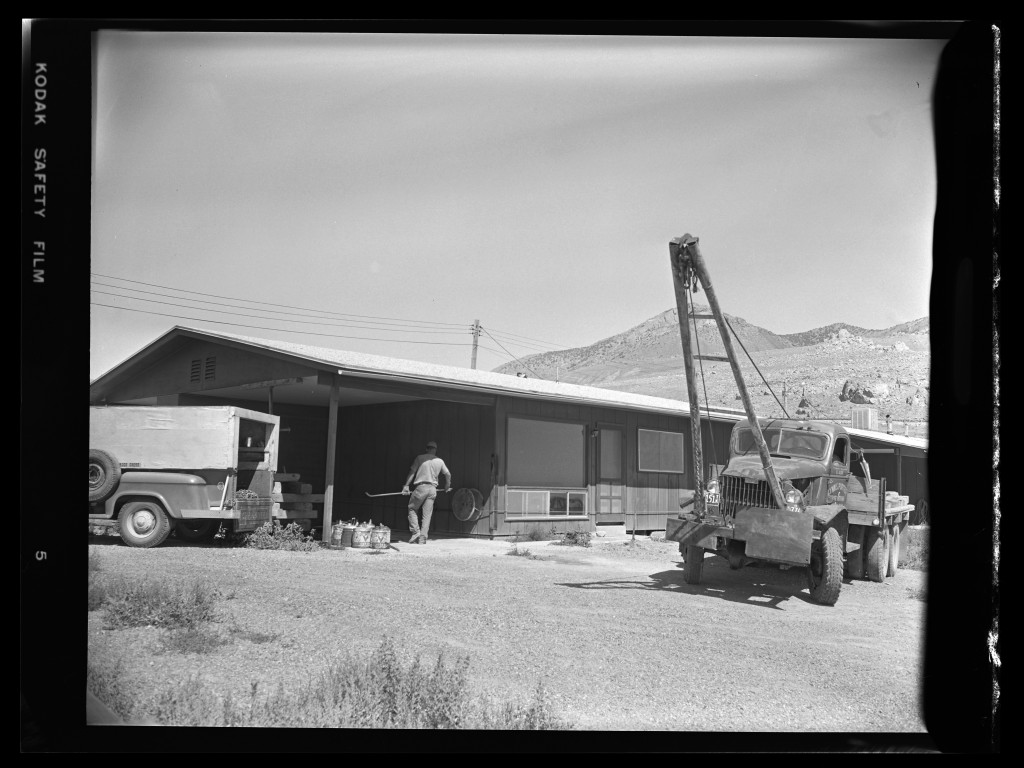
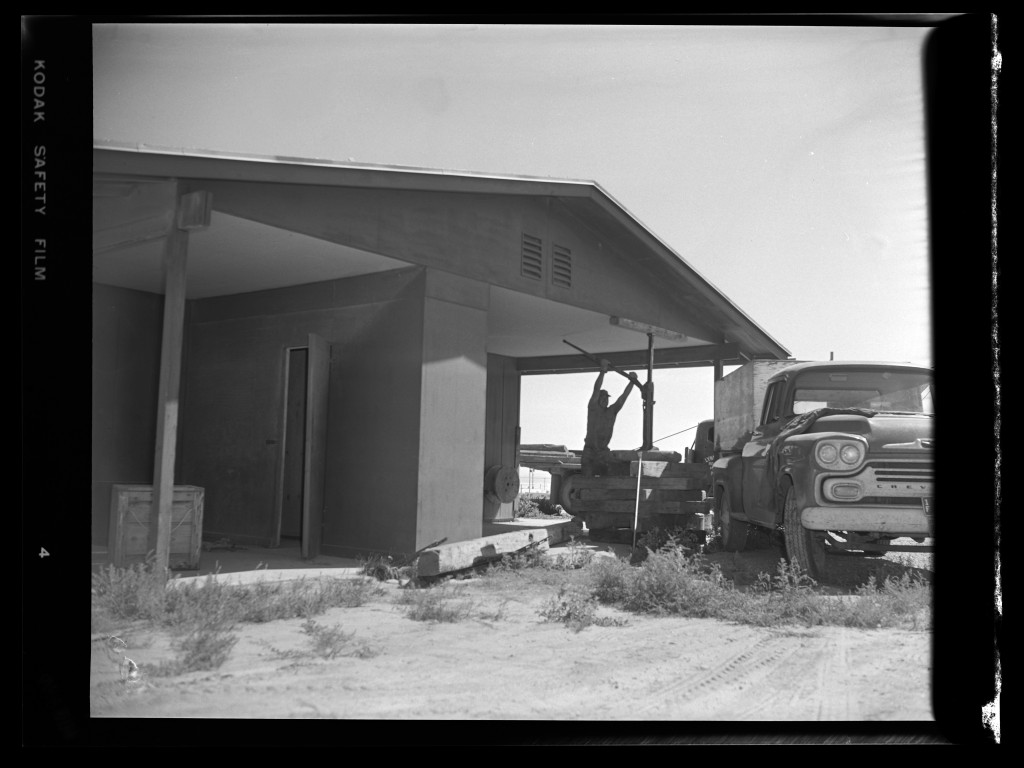
Demobilization was fast and thorough. Housing, machinery, and offices were sold, dismantled, or hoisted onto railcars and shipped off to Morrison-Knudsen’s next project somewhere else in the West. By late 1959 the population had dropped to nothing. Where thirteen hundred people had recently worked in three shifts, there was suddenly only wind, salt, and the empty harbor.
Ghost Ships and Sunken Gold
Little Valley’s abandoned harbor, with its half-submerged vessels, was tailor-made to breed legend. Over the years stories drifted around of “sunken gold barges” and mysterious “ghost ships” lost somewhere in the depths of the Great Salt Lake near the site.
Record-Breaking Blasts
The quarrying at Little Valley was violent on a historic scale. To break loose enough rock for the barges, crews drilled long “coyote” tunnels deep into the hillsides and packed them with explosives. Two of the individual blasts detonated here shattered 4.0 million and 5.8 million tons of quartzite, figures that ranked among the largest non-nuclear explosions ever set off for industrial purposes. The terraced cuts those blasts carved into the hills above the townsite are still the most dramatic feature of the landscape.
Working at 124 Degrees
The people who lived here endured conditions that read like a survival account. Summer temperatures climbed as high as 124°F, and the heat was magnified by sunlight bouncing off the white salt crusts and the mirror surface of the lake. Because the work never stopped, crews labored through the night under banks of searchlights. Fresh water arrived by the trainload, and shade and relief were whatever a person could manufacture. It was, by any measure, one of the harshest company-town environments in the twentieth-century West.
Where Spiral Jetty Almost Happened
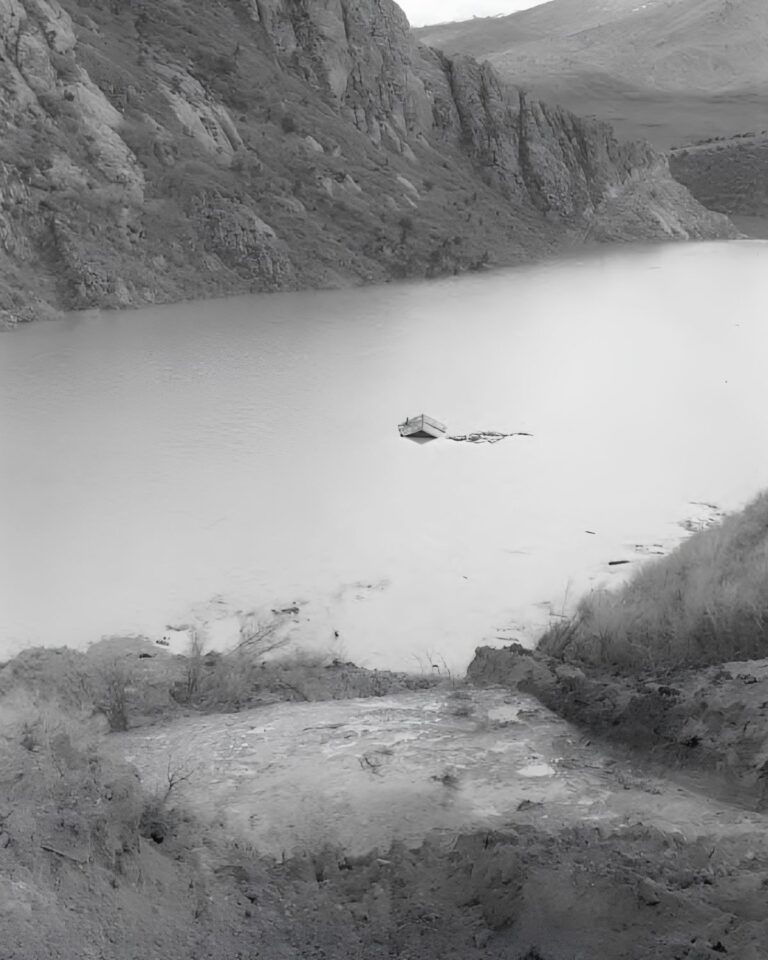
Little Valley’s strangest claim on history came a decade after it emptied out. In early 1970 the Land Art pioneer Robert Smithson was searching the Great Salt Lake for a site to build a monumental earthwork. He was drawn to the lake’s northern arm because its extreme salinity and the micro-organisms living in it — Dunaliella salina and Halobacterium — stained the water a vivid, wine-dark red. A local contact brought him to Little Valley harbor to look at a sunken barge and the abandoned industrial ruins, exactly the kind of decayed, elemental setting his work embraced.
By Smithson’s own account the site was heavily posted with “Keep Out” signs, and two local ranchers confronted him and ordered him off the land. Forced away from Little Valley, he continued west along the northern shore to Rozel Point, and there, in April 1970, he built Spiral Jetty — now among the most famous works of American art. The coiling jetty that draws pilgrims to the lake today exists, in part, because Little Valley turned its most celebrated visitor away.
What Survives
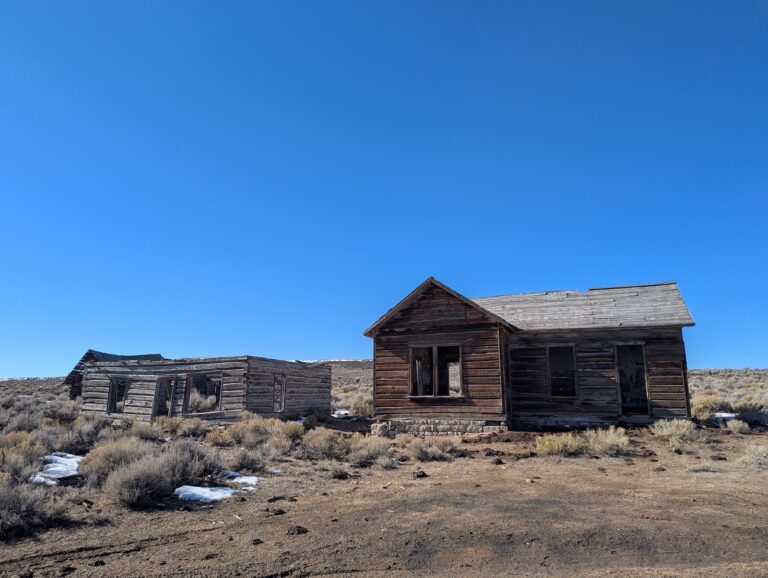
Little Valley holds no intact buildings. It is a purely structural ghost town, legible only through its earthworks and industrial bones. Concrete footings, slab bases, and step structures mark where the repair shops, offices, and mess halls once stood. The dredged harbor basin is still sharply defined along the shoreline, and weathered timber pilings, ruined mooring dolphins, and rock breakwater arms reach out into the hypersaline water.
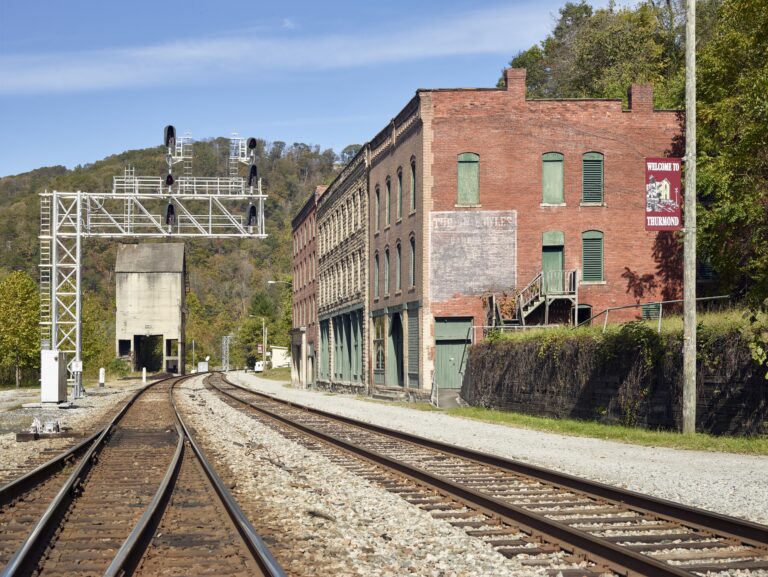
Above the townsite, the terraced quarry cuts remain the signature of the place — raw benches gouged into the quartzite hills. Across the surrounding sagebrush flats lie scattered engine fragments, lengths of abandoned iron pipe, dry cisterns, and rusted cable hardware, the ordinary hardware of a vanished industrial operation slowly returning to the desert. Elsewhere in Utah the railroad left ghosts of a very different kind, like Thistle, a rail town erased almost overnight by a landslide.
Timeline
Planning a Visit
Getting There
Nearby Ghost Towns & Historic Sites
The remote reaches of Box Elder County are thick with the remains of the transcontinental railroad era. Several of Little Valley’s neighbors tell the larger story of how the rails crossed — and eventually bypassed — this corner of Utah.
Sources: Lynn D. Farrar, “Southern Pacific and the Great Salt Lake” (Western Railroader) · UtahRails.net · Raymond & Fike, Rails East to Promontory (BLM) · Holt/Smithson Foundation · Utah Division of Forestry, Fire and State Lands. All historic photographs courtesy of the Utah State Historical Society.
This is so interesting! I lived in Little Valley Utah when I went to kindergarden, 1st grade, and 2nd grade! I never knew the history until AI directed me to this site! With the short memories I had in those 3 years, I wish there was more of an outline of where the trailer park, store (restaurant), doctors, school, playground, etc was. My mother worked at the restaurant. If there is a website with the people living there, I would love to have the url if possible. I would love to hear some names that lived there. What I can remember were: Hamilton, Tolman, Zollinger, White, Wells, Evans, …..