Animas Forks, Colorado: A Silver Camp at the Top of the World
Animas Forks, Colorado: A Silver Camp at the Top of the World
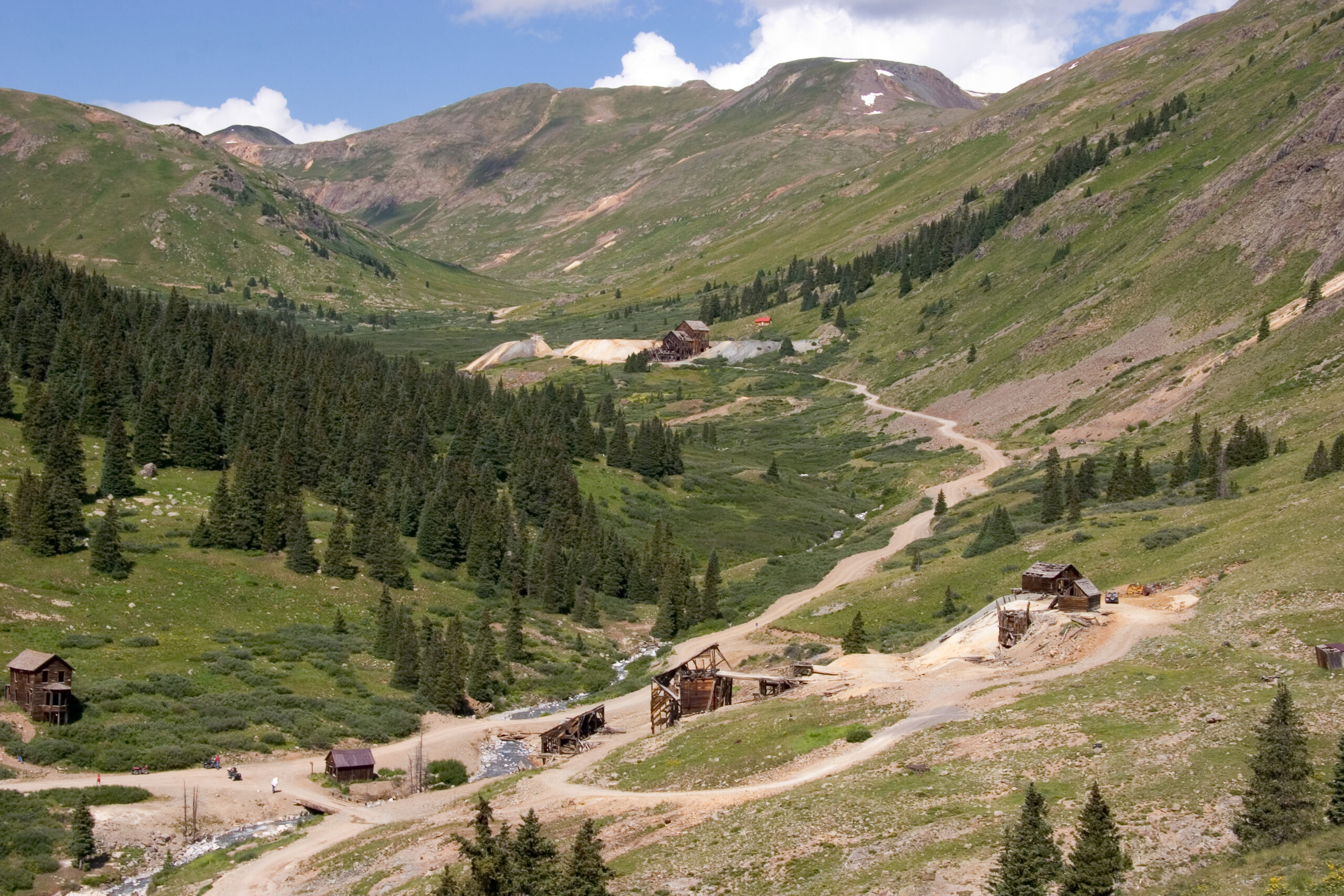
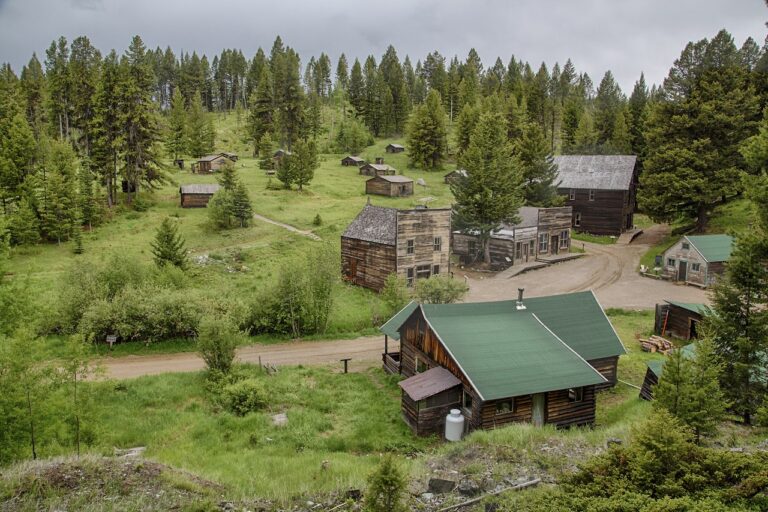
At more than eleven thousand feet in Colorado’s San Juan Mountains, above the last of the trees, a cluster of frame buildings stands against slopes that hold snow for much of the year. This is Animas Forks, one of the highest towns ever built in the United States and, briefly, a bustling silver camp with its own newspaper, hotel, and railroad. It is also a case study in just how hard the mountains fought back.
The town’s story is one of stubborn optimism against a landscape that never really cooperated. Fortunes were sunk into tunnels, tramways, a steel-framed mill, and a rail line pushed up an impossible grade — and one by one the altitude, the weather, and the ore itself defeated them. Yet enough of Animas Forks survived to become one of Colorado’s best-loved ghost towns.
A Town Above the Trees
Prospectors reached the confluence of the Animas River’s upper forks in the early 1870s, drawn by silver and gold in the surrounding basins, and a camp took shape here around 1873. Within a few years it had grown into a real town: by the early 1880s several hundred people lived at Animas Forks through the short summers, and a hardy remnant wintered over.
Everything about life here was shaped by elevation. Sitting above timberline meant brutal winters, thin air, and a growing season measured in weeks. Supplies came up by wagon and later by rail from Silverton, and the town emptied out each autumn as most residents retreated to lower ground. That anyone lived here at all was a testament to how rich the surrounding ore was believed to be.
The Bonanza Tunnel and the First Bust
The early economy leaned heavily on one ambitious project. Beginning in 1877, Franklin Josiah Pratt drove what was known as the Bonanza or Mineral Point Tunnel, meant to bore some six thousand feet through the mountain to strike the rich veins believed to lie beneath the neighboring Mineral Point district. It was the kind of capital-hungry gamble that defined high-country mining.
The gamble did not pay. When the underground yields fell short of what investors had been promised, the money dried up and work on the tunnel stopped in 1884. The effect on the town was immediate and telling: the last blacksmith left that same year, the main butcher shop closed in 1885, and the newspaper folded in the fall of 1886. A town this remote could not absorb the loss of its main employer.
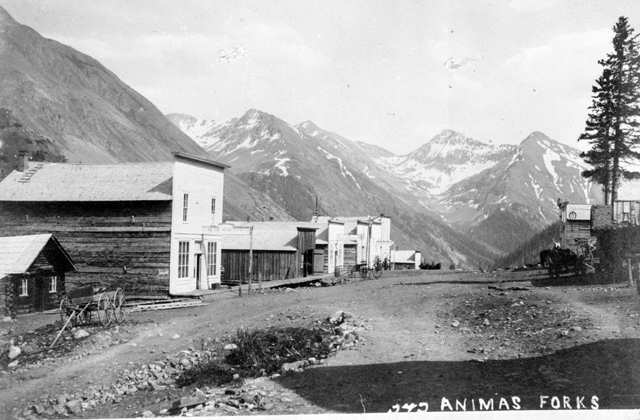
A reopening of the nearby Sunnyside Extension mine in 1889 bought the town some time, but two larger blows were coming. On October 22, 1891, a fire that started in the kitchen of the Kalamazoo House hotel was whipped by alpine winds through the business district, destroying fourteen of the town’s roughly thirty buildings and causing more than twenty thousand dollars in damage. The post office closed within the month, and many of the surviving merchants gave up and moved to Silverton. Two years later the national Silver Panic of 1893 — set off by the repeal of the Sherman Silver Purchase Act — hammered silver mining across the region and left Animas Forks nearly dormant.
Every solution the town reached for — a longer tunnel, a bigger mill, a higher railroad — only raised the stakes against the mountain.
The Gold Prince Revival
Animas Forks got one last, spectacular reprieve at the turn of the century. In 1903 the Gold Prince Mines Company bought up the Sunnyside Extension properties and set out to build a thoroughly modern ore-processing plant. To feed it, the railroad promoter Otto Mears extended his Silverton Northern up the tight grade of the canyon, reaching Animas Forks in 1904 — an audacious piece of engineering for such altitude.
The Gold Prince Mill, finished in 1905, was the centerpiece. Framed in structural steel to survive both fire and the crushing weight of alpine snow, the hundred-stamp mill could process around five hundred tons of ore a day, making it one of the largest such facilities in Colorado. Ore reached it directly from the Gold Prince Mine by way of an aerial tramway more than two miles long, its buckets swinging across the basins.
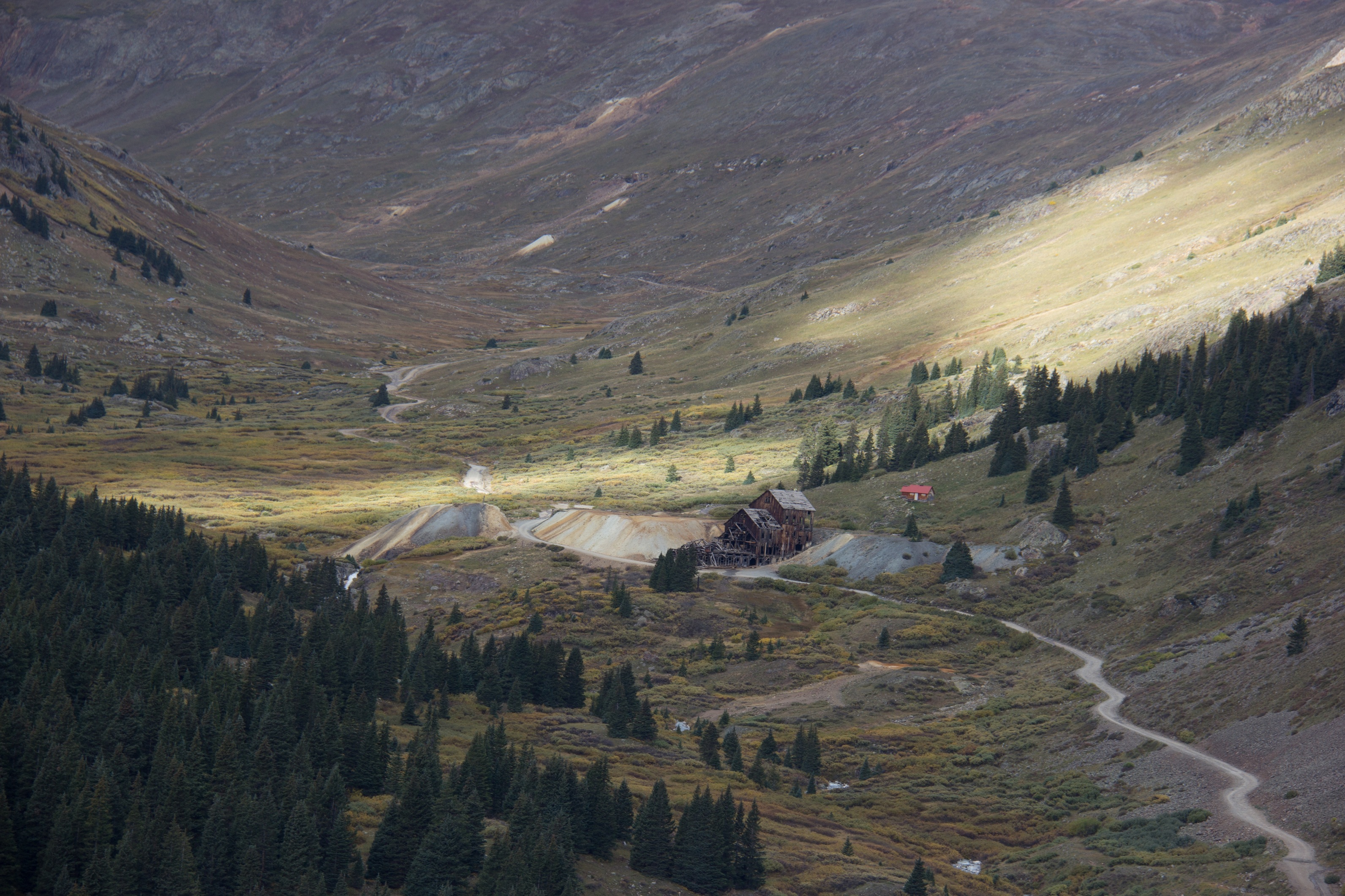
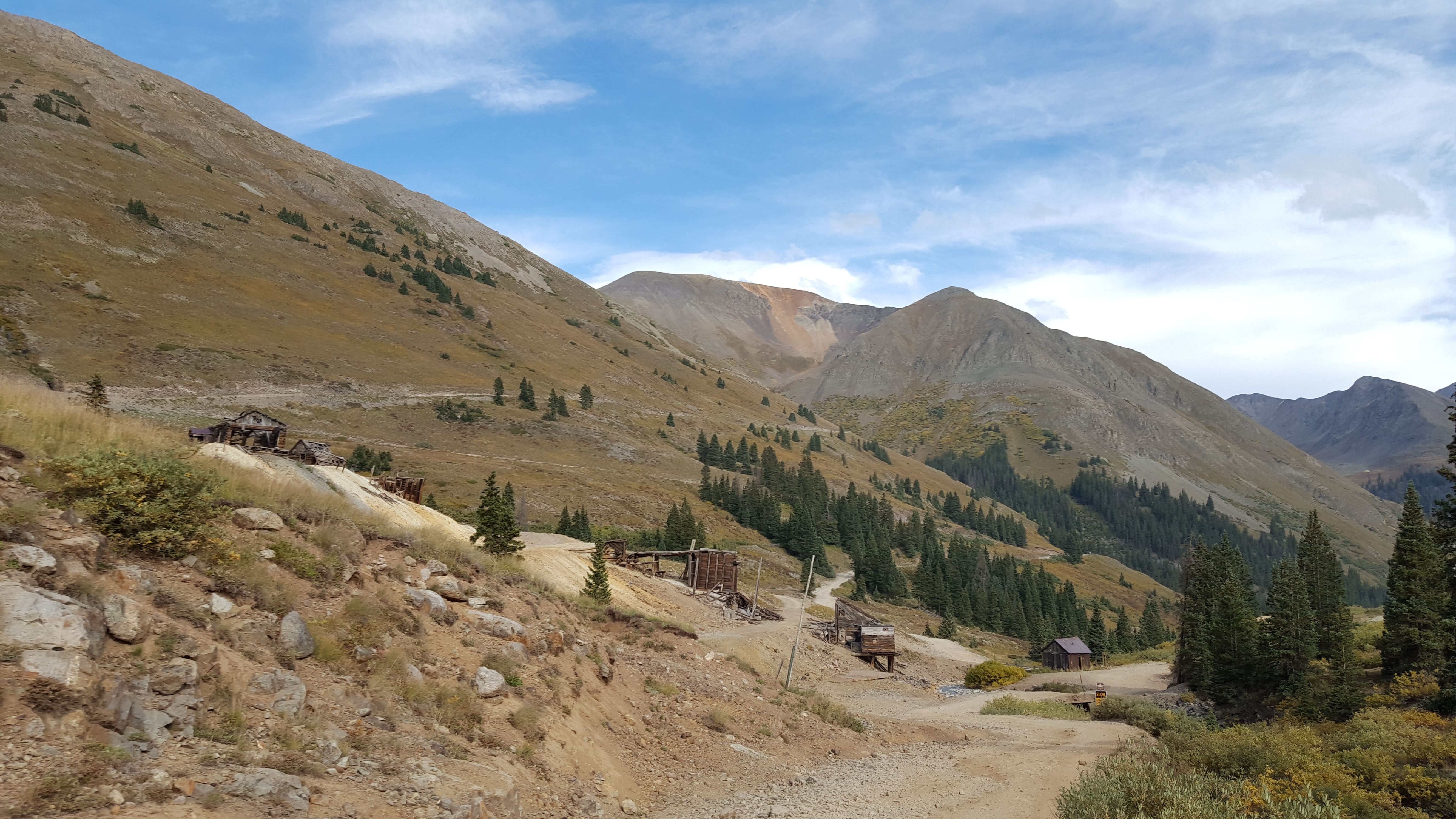
For all that investment, the numbers never worked. Declining ore grades and the sheer cost of operating through a high-country winter doomed the enterprise, and the Gold Prince Mill closed for good in 1910 — only five years after it opened. Rail service above Eureka ended in 1916, and in 1917 crews dismantled the mill’s steel frame and machinery and hauled them down the valley to build the Sunnyside Mill at Eureka. A second major fire had already swept the residential quarter in 1913. With its mill gone and its railroad abandoned, Animas Forks lost its last permanent residents and stood empty by the 1920s.
The 23-Day Blizzard of 1884
The single most famous episode in the town’s history is a storm. In 1884 a winter system stalled over the upper Animas watershed and snowed, by local accounts, for twenty-three straight days. When it finally broke, drifts stood some twenty-five feet deep across the townsite — deep enough to bury single-story cabins entirely and to reach the eaves of the two-story buildings.
Cut off from the supply road to Silverton, the residents did what mountain people do: they adapted. They dug a network of tunnels through the snowpack to move between houses, the stores, and the saloon, and when they needed water they simply slid open their upper-story windows and scooped snow to melt on the stove. Despite the drama, the town came through it — no one is recorded as having died within Animas Forks itself during the storm, a fact usually credited to communal stockpiling and plain stubbornness.
The Duncan House and a Diamond That Never Came
The building most visitors photograph is the two-story Victorian frame house known as the Duncan House, or simply the Bay Window House. William Duncan — a miner, mail carrier, and land speculator — built it in 1879, and it was strikingly refined for a camp at this altitude: finished clapboard siding, a narrow central staircase, three upstairs bedrooms, and a cantilevered two-story bay window angled south to catch the sun and the long view down the valley.
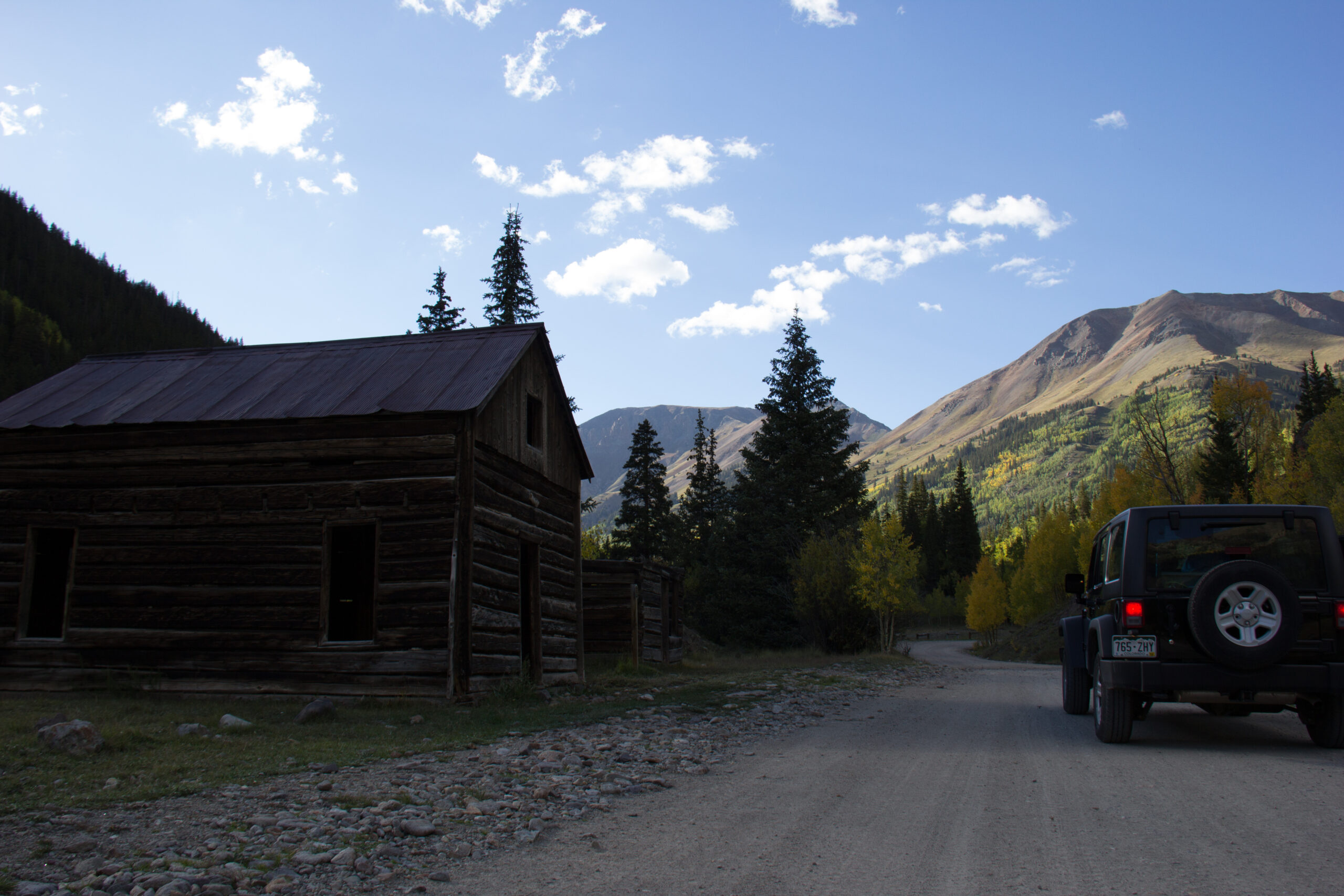
A durable Colorado legend holds that the mining magnate Thomas Walsh — who struck it rich at the Camp Bird Mine near Ouray — bought this house for his daughter, the socialite Evalyn Walsh McLean, and that she lived or wrote here after acquiring the famous Hope Diamond. It is a wonderful story. It is also not true.
The Highest Newspaper in America
For four improbable years, Animas Forks published its own weekly paper. On June 17, 1882, George N. Raymond issued the first number of the Animas Forks Pioneer, boosting local mining claims and chronicling civic life from a small frame building in the commercial core. At more than eleven thousand feet, it holds the distinction of having been the highest-altitude newspaper plant in United States history.
Its circulation was modest — something on the order of a hundred-odd paid subscribers and a few hundred regional readers — and it lasted only as long as the speculative money did, closing in October 1886. The paper has an odd afterlife, too: residents pasted old issues, along with papers from Denver and Silverton, onto their walls as insulation against the cold. Preservationists later peeled back decorative wallpaper in surviving cabins to find layers of century-old newsprint underneath.
The Gustavson House and Its Indoor Privy
Another survivor speaks to the sheer practicality demanded by the climate. Swedish immigrants Charles and Alma Gustavson built their house in 1906, during the Gold Prince years; Charles worked as a miner and blacksmith at the mine while Alma raised their children on site. The home is locally famous for one clever feature — an “indoor outhouse.” Rather than force the family to wade through deep snow at forty below, the Gustavsons built an enclosed wooden passage connecting the living quarters directly to an outdoor privy vault. In the early 2000s their descendants worked with the county historical society to fund and document a full restoration of the house.
Ruin, Rescue, and the National Register
Abandonment left Animas Forks at the mercy of the elements and of people. Decades of heavy snow, avalanche, and freeze-thaw did their damage, and so did visitors who carried off square-cut nails, boards, and window sashes until several buildings were near collapse. By the late twentieth century the townsite was in real danger of disappearing.
In 1996 the Bureau of Land Management and the San Juan County Historical Society launched a joint preservation effort, backed by state grants, private donations, and volunteers from AmeriCorps and the Ghost Town Club of Colorado. Crews straightened sagging roofs, reshored stone foundations, added internal timber supports, and sealed the buildings against the weather. On March 21, 2011, the Animas Forks Historic District was added to the National Register of Historic Places. Nine main historic buildings still stand today, among scattered foundations, ruins, and old mine tailings.
Timeline
Getting There
Animas Forks sits along the Alpine Loop Scenic Byway, roughly twelve miles northeast of Silverton on San Juan County Road 2. The first stretch to Eureka is graded gravel that ordinary cars can manage in summer; past Eureka the road turns rocky and is best driven with good ground clearance. Only attempt the passes beyond town in a proper 4WD. The setting — a treeless bowl ringed by peaks — is as much the attraction as the buildings.