Terlingua, Texas: Quicksilver, Company Rule, and a Ghost Town That Refused to Die
Terlingua, Texas: Quicksilver, Company Rule, and a Ghost Town That Refused to Die
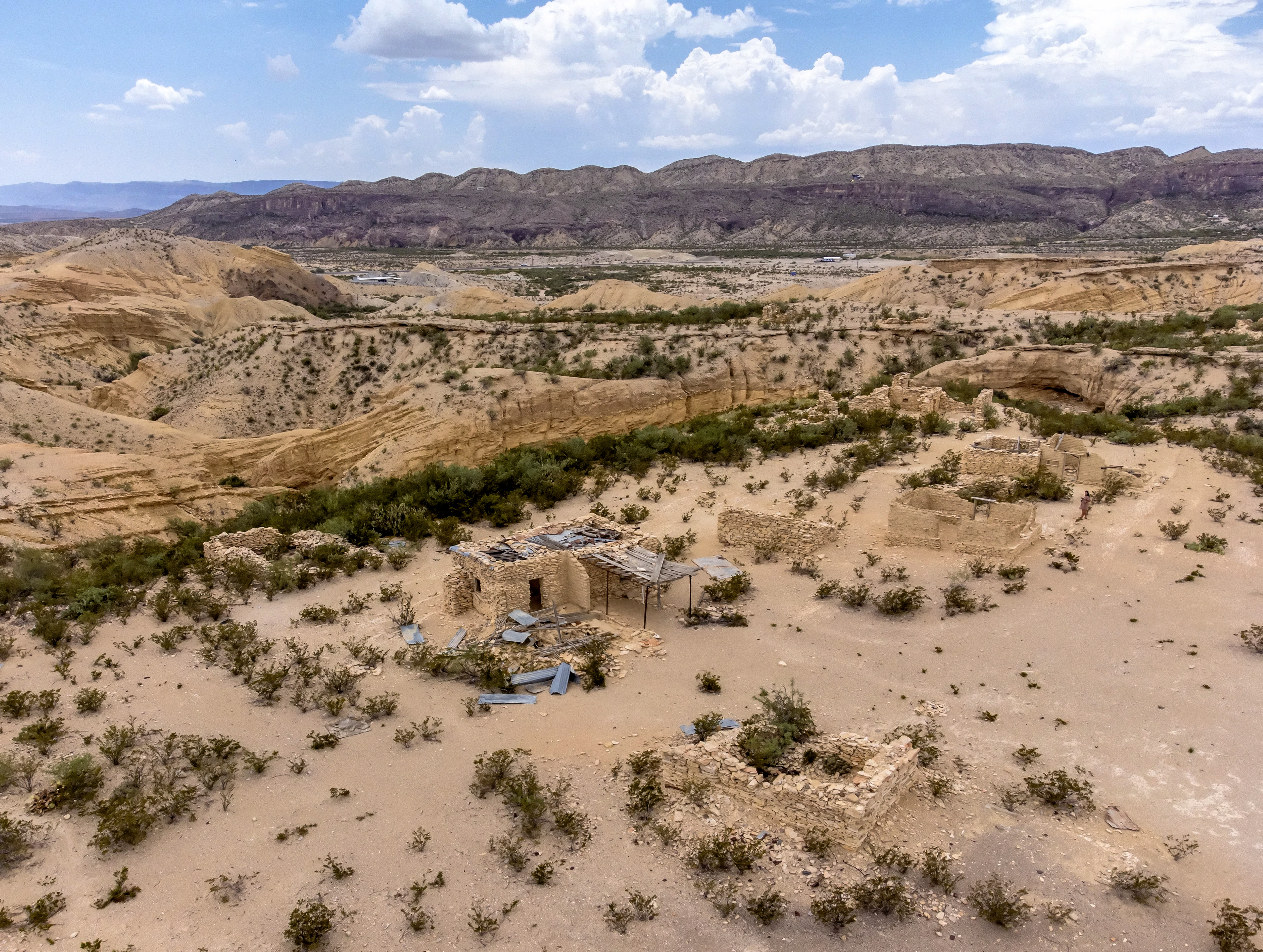
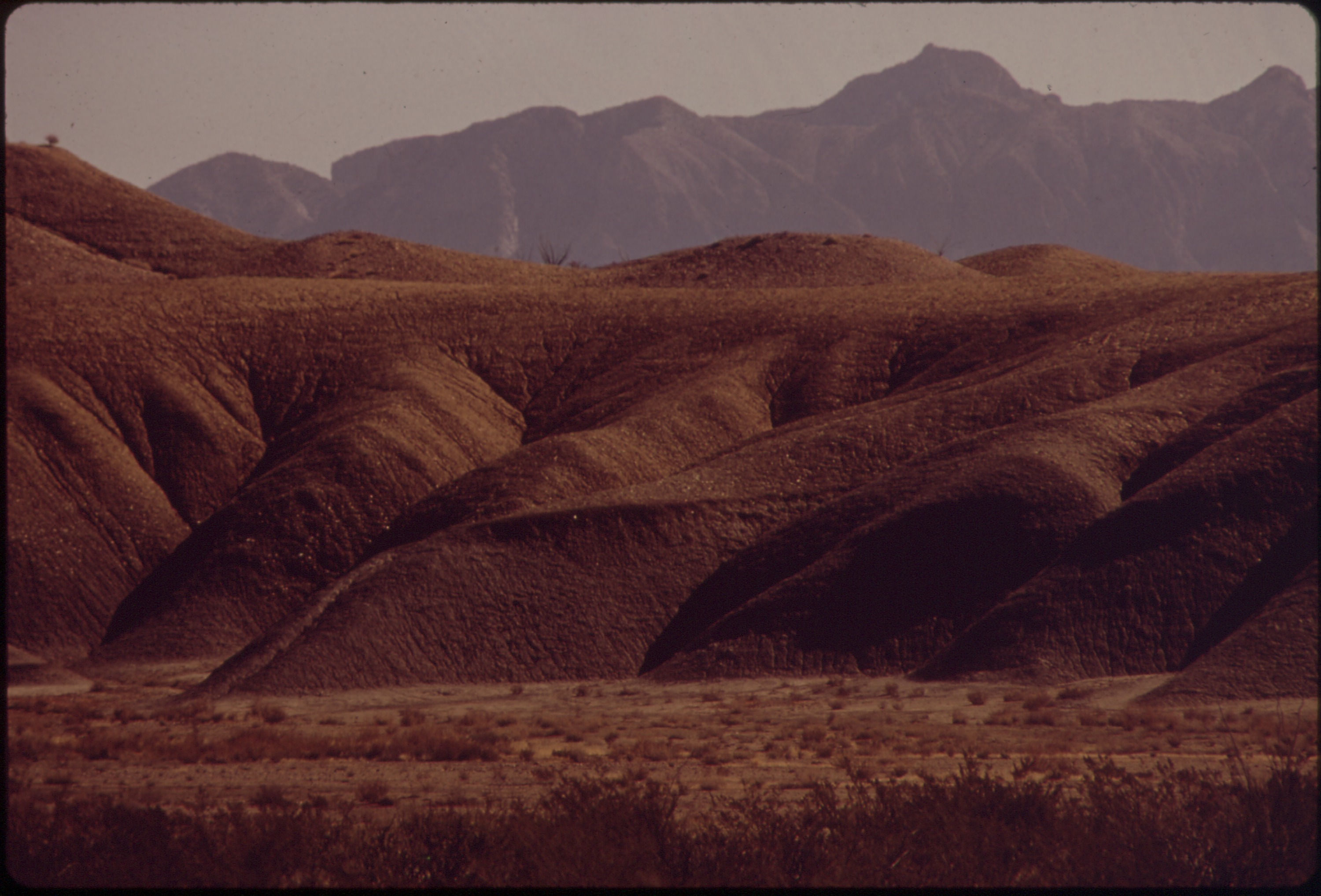
In the far corner of West Texas, wedged between Big Bend National Park and Big Bend Ranch State Park, sits a cluster of roofless stone walls and open mine shafts that once produced two-fifths of all the mercury in the United States. Terlingua was a quicksilver town, built on a bright red ore and run for decades as the private domain of a Chicago industrialist who rarely set foot in it.
What makes Terlingua unusual is not that it died — hundreds of mining camps did — but that it came back. Where most ghost towns simply crumble, Terlingua was rediscovered by river guides, artists, and desert wanderers who moved into the ruins and never left. It is a genuine ghost town with a functioning bar, a trading post, and a cemetery that still takes new arrivals.
Three Towns, One Name
The name Terlingua is usually traced to the Spanish tres lenguas, or “three tongues” — whether for the languages spoken along this stretch of borderland or for the three forks of Terlingua Creek. Fittingly, the name has attached itself to three different settlements over time: an older Mexican farming village down along the creek, an early mining camp at the Marfa and Mariposa workings, and finally the company town that grew up around the Chisos Mining Company shaft. It is that last Terlingua whose bones survive today.
Long before any of them, the cinnabar itself was known. The ore — mercuric sulfide, a startling brick-red mineral — had been gathered by Indigenous people of the region for use as pigment in rock art and body paint. The same red rock that decorated ceremony would, centuries later, draw prospectors, capital, and a great deal of trouble.
Cinnabar and the First Camps
Anglo-American prospectors began working the Chihuahuan Desert in earnest in the early 1880s, tracing cinnabar along the fault lines that cut through the Big Bend country. The isolation was brutal — the nearest railheads were days away by wagon at Alpine and Marathon — and early attempts to extract the mineral struggled against heat, distance, and a chronic shortage of water.
The first commercial recovery of quicksilver is generally credited to around 1888. By the turn of the century several outfits were competing across the district, among them the Marfa and Mariposa Mining Company, and a post office called Terlingua opened in 1899 at that camp. A federal survey party that passed through in 1902 described a sprawling, impermanent settlement of tents, tin, brush, and adobe housing a few hundred laborers, most of them Mexican.
Howard Perry and the Chisos Mining Company
Terlingua as a real town owes its existence to Howard E. Perry, an industrialist who had acquired a few sections of Brewster County land in the 1880s — by one account taking the deed as collateral on a debt he was owed. When Perry realized that neighboring operations were unknowingly digging into ore on his land, thanks to old survey errors, he hired lawyers, secured his rights, and in 1903 incorporated the Chisos Mining Company.
When the Marfa and Mariposa mine played out and closed in 1910, the Terlingua post office was moved ten miles east to Perry’s Chisos works. That relocation fixed the permanent townsite — the Terlingua that stands today grew up around the Chisos shaft.
Perry ran a Texas desert town from Chicago and Portland, Maine, treating a thousand miles of distance as a management style.
Perry governed from a distance, relying on on-site superintendents — most famously his long-serving manager Robert Cartledge — to enforce his will. The crude baking retorts of the early years gave way to a Scott furnace in 1908 and a rotary furnace in 1915, and when miners hit an exceptionally rich vein of cinnabar in 1914, the timing could not have been better for Perry’s balance sheet.
The War Boom and 40 Percent of a Nation’s Mercury
The 1914 strike coincided with the outbreak of the First World War, and mercury was suddenly a strategic material: it went into the fulminate detonator caps that set off military ammunition. Demand and prices climbed together. At the wartime peak around 1916, a single ten-day wagon shipment of quicksilver hauled out to the railroads could be worth more than fifty thousand dollars.
By the 1920s the Terlingua district was supplying roughly forty percent of all the quicksilver produced in the United States. The Chisos Mining Company owned essentially everything in town — the store, the hotel, the water system, the school, the medical officer, the ice plant, even the theater and the confectionery. Terlingua was a company town in the fullest sense: you lived, worked, shopped, and were buried under one corporate roof.
A Town Divided by the Company
That control extended to how the town was laid out. Terlingua was rigidly segregated. Anglo staff occupied the improved housing on the higher western ground, while Mexican workers and their families lived on the eastern side in stacked-stone and adobe dwellings. At its height in the 1920s the population ran somewhere between one and two thousand people, the great majority of them Mexican laborers earning border-labor wages that Perry guarded closely.
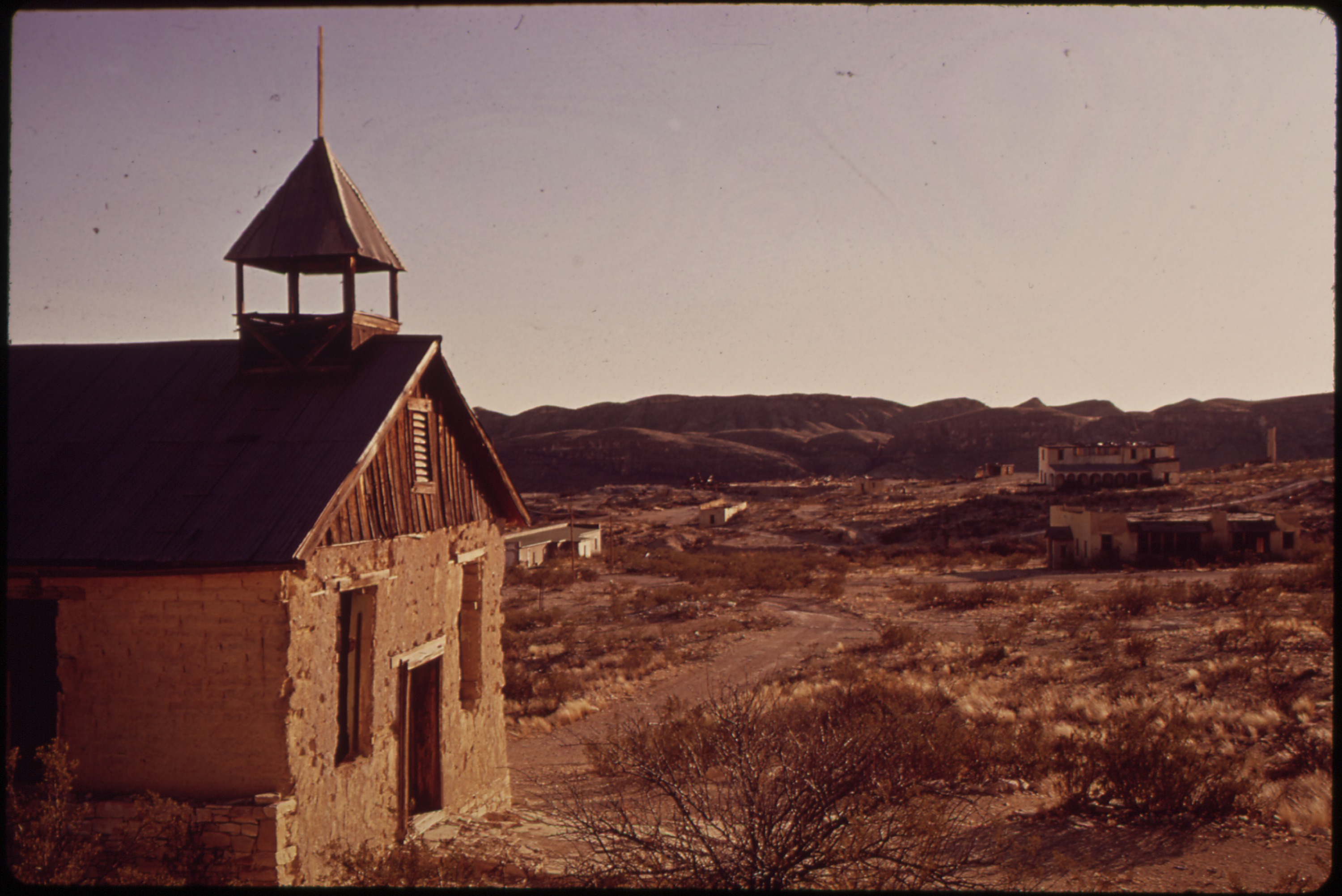
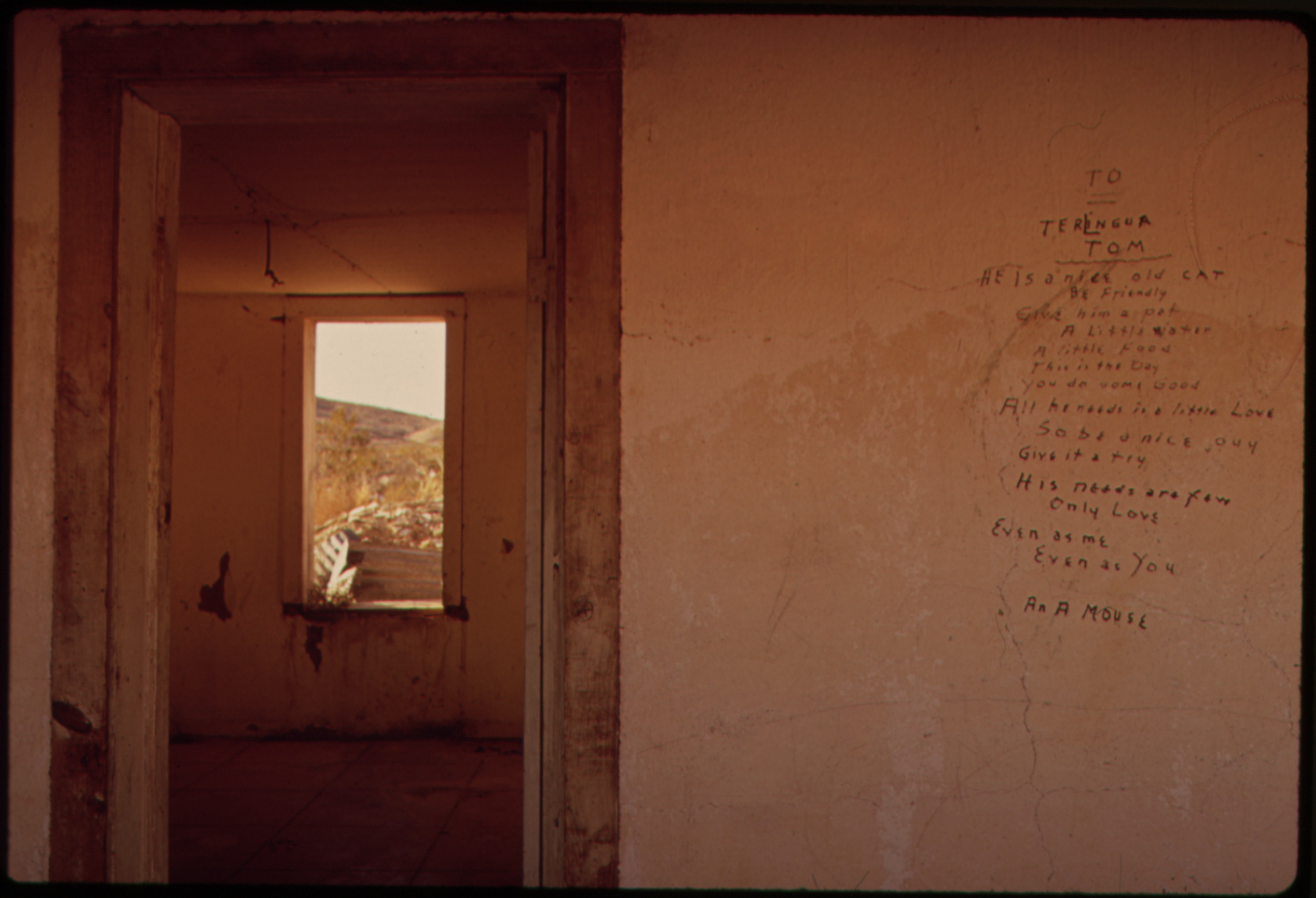
The company provided real amenities — the Perry School opened in 1930, the Chisos Theatre in 1936 — but they existed within a system built to keep wages low and workers dependent. Surviving letters between Perry and Cartledge lay out that philosophy plainly, and they are a useful corrective to the romantic haze that later settled over the ruins.
Depletion, Bankruptcy, and Flood
Every quicksilver town eventually meets the same wall, and Terlingua was no exception. Through the 1930s the richest cinnabar veins ran thin, forcing the company to chase deeper, lower-grade ore at rising cost. A brief burst of wartime demand in the early 1940s was not enough to save the enterprise, and on October 1, 1942, the Chisos Mining Company filed for bankruptcy.
The assets passed in 1943 to a successor operation that tried to keep the mines going. But in 1946 the deep shafts broke into underground water, flooding the workings, and with post-war mercury prices collapsing there was no reason to pump them out. Operations ended for good that year. Machinery was dismantled and sold for scrap, the workforce scattered, and Terlingua was left to the desert. By the mid-1990s only about twenty-five people still lived among the ruins.
The Ghost Town That Came Back
Then something unusual happened. Beginning in the late 1960s and 1970s, the wider Big Bend region became a magnet for outdoor recreation, especially whitewater rafting on the Rio Grande. River guides, artists, retirees, and assorted desert eccentrics drifted in and began fixing up the ruins to live in. A dying ghost town quietly turned into a functioning, if famously offbeat, community.
By the 2000 census a few hundred people were living in and around Terlingua again, supported by a scatter of small businesses. Several of the great survivors of the company era were restored or repurposed: the old company store became the Terlingua Trading Company, and the open-air Chisos Theatre was reborn as the Starlight Theatre, a restaurant and saloon where the ghost-town front porch is now one of the best-known gathering spots in West Texas.
The Perry Mansion and the Cemetery
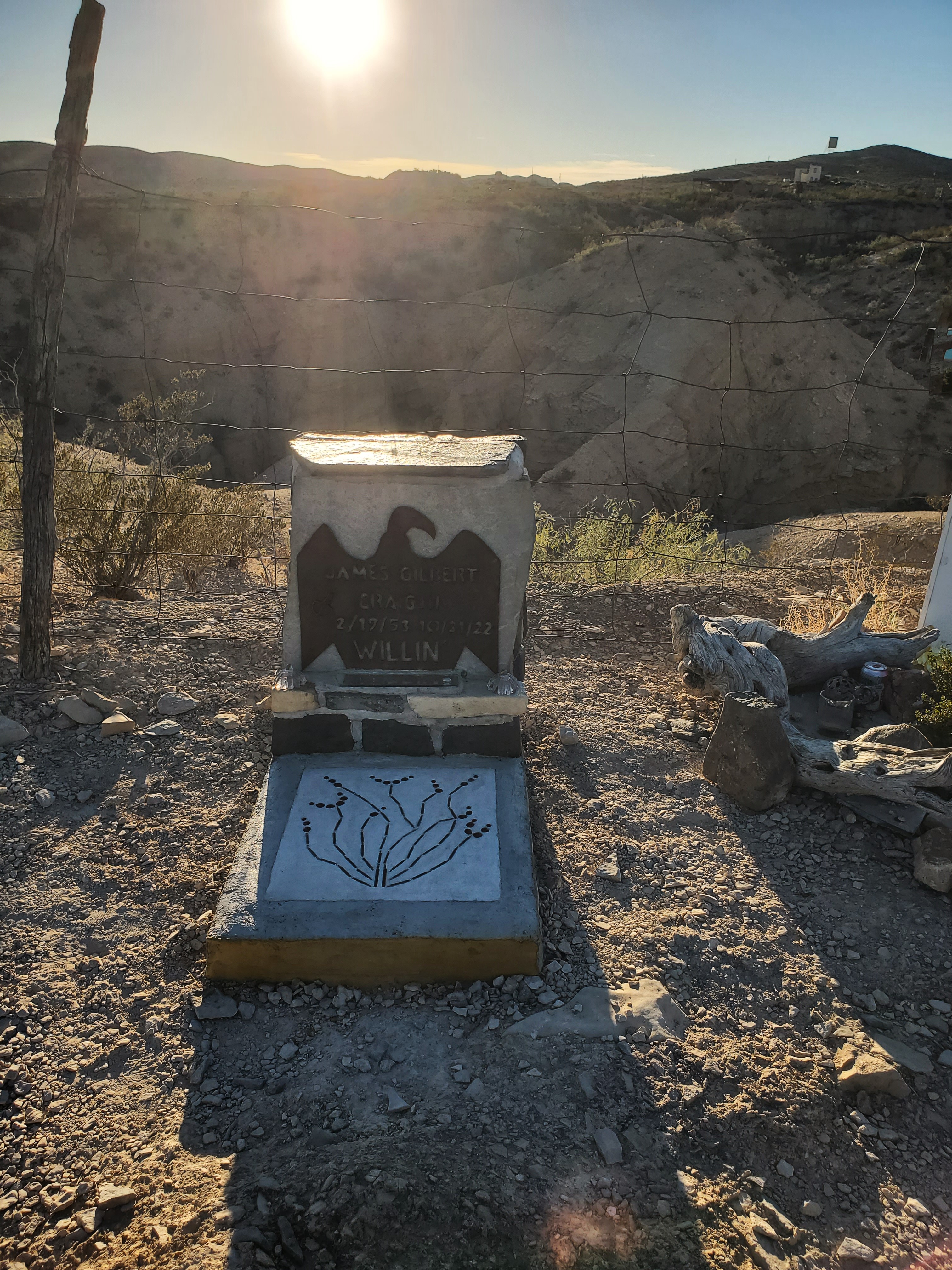
Two structures anchor the site’s memory. Above the ruins stands the Perry Mansion, a two-story stone house Perry built between roughly 1906 and 1911, complete with arches, a cellar, and Moorish flourishes, from which the absentee owner’s superintendents could look out over the entire operation; it has since been restored. Below it lies the Terlingua cemetery, a field of raised stone mounds, wooden crosses, and handmade markers that is still an active burial ground and among the most photographed places in the region.
Chili, a Goat Mayor, and a Desert Submarine
Terlingua’s second life has produced its own folklore. In 1967 a group of chili promoters staged a competitive cook-off in the ghost town as a publicity stunt, and the event stuck: today the Championship Chili Cook-Off, held each November, draws thousands of “chiliheads” who turn the quiet desert into a sprawling encampment. The town has been billed, with characteristic swagger, as a chili capital of the world.
The eccentricity runs deeper than chili. In 1973 the musician Jerry Jeff Walker recorded a live album in the area that carried the town’s name into country-music lore. On the Day of the Dead, residents keep an all-night candlelight vigil among the graves of the old miners. And local political humor once elected a beer-drinking goat named Clay Henry as a symbolic mayor — his taxidermied form is still on display at the trading post. Out past the edge of town, an art installation features a mock submarine surfacing from the desert floor.
Sorting Legend from Record
A place this atmospheric attracts stories, and the most durable one concerns Perry’s New England wife, Grace. As the legend goes, she was finally persuaded to visit in 1918, endured a single night in the hilltop mansion, announced that she had seen enough, and fled back to Maine forever. It is a good story about the harshness of the Big Bend frontier — but it functions as folklore, not documented fact.
The unembellished history is dramatic enough. A red pigment ore pulled a Chicago industrialist into the desert; his company supplied nearly half a nation’s mercury through a world war; and when the ore and the water finally turned against him, the whole enterprise sank — only for a new kind of community to grow back out of the wreckage a generation later.
Timeline
Getting There
Terlingua sits in southwestern Brewster County along Texas Highway 170, the Big Bend River Road, between Study Butte to the east and Lajitas to the west. Coming from the north, most visitors drive US-118 south from Alpine or Marathon for roughly 80 miles to the junction at Study Butte, then head a few miles west on TX-170 to Ivey Road. From the west, the approach runs east along TX-170 through Lajitas. It is one of the more accessible ghost towns in this archive — the challenge is the distance and the desert, not the road.