National, Utah: The Brick-and-Concrete Coal Camp in Gordon Creek Canyon
UtahCoal MiningMixed land · Winter closure·~9 min read
Quick facts
Coal first claimedAbout 1908, by a prospector named Williamson
National Coal CompanyIncorporated January 2, 1920
Rail connectionNational Coal Railway; first coal moved November 1925
Coal shipments beganAugust 1927
Mine closed, receivershipJuly 23, 1938; foreclosure December 1938
ReopenedNovember 1940 under Carl Nyman
Sold to Hudson Coal Co.1949
AbandonedAbout 1950
Peak populationAbout 250, around 1944–45
Deaths reportedSeven miners
LocationAbout 39.69°N, 111.05°W, North Fork of Gordon Creek Canyon
State / CountyUtah / Carbon County
⚠ Mixed public and private land · Wildlife area closed to vehicles in winter · Mine openings are dangerous
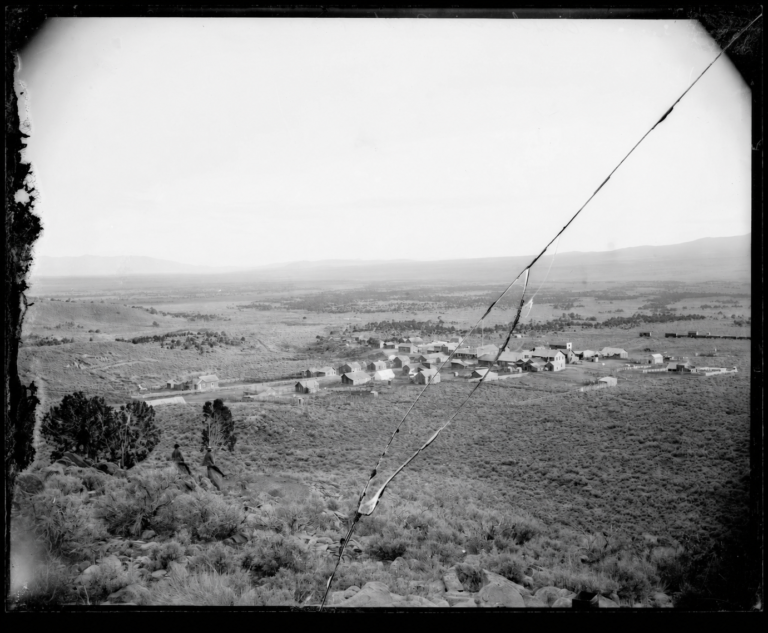
National was the third of the three small coal camps squeezed into the upper reaches of Gordon Creek Canyon, a few miles west of Helper. Its neighbors were Consumers, less than a mile up the North Fork, and Sweet, just off a side canyon. Unlike its frame-built neighbors, National was built largely of red brick and concrete block, and by most accounts it kept the most masonry above ground when the camp died. At its busiest, around the end of World War II, it held perhaps 250 people.

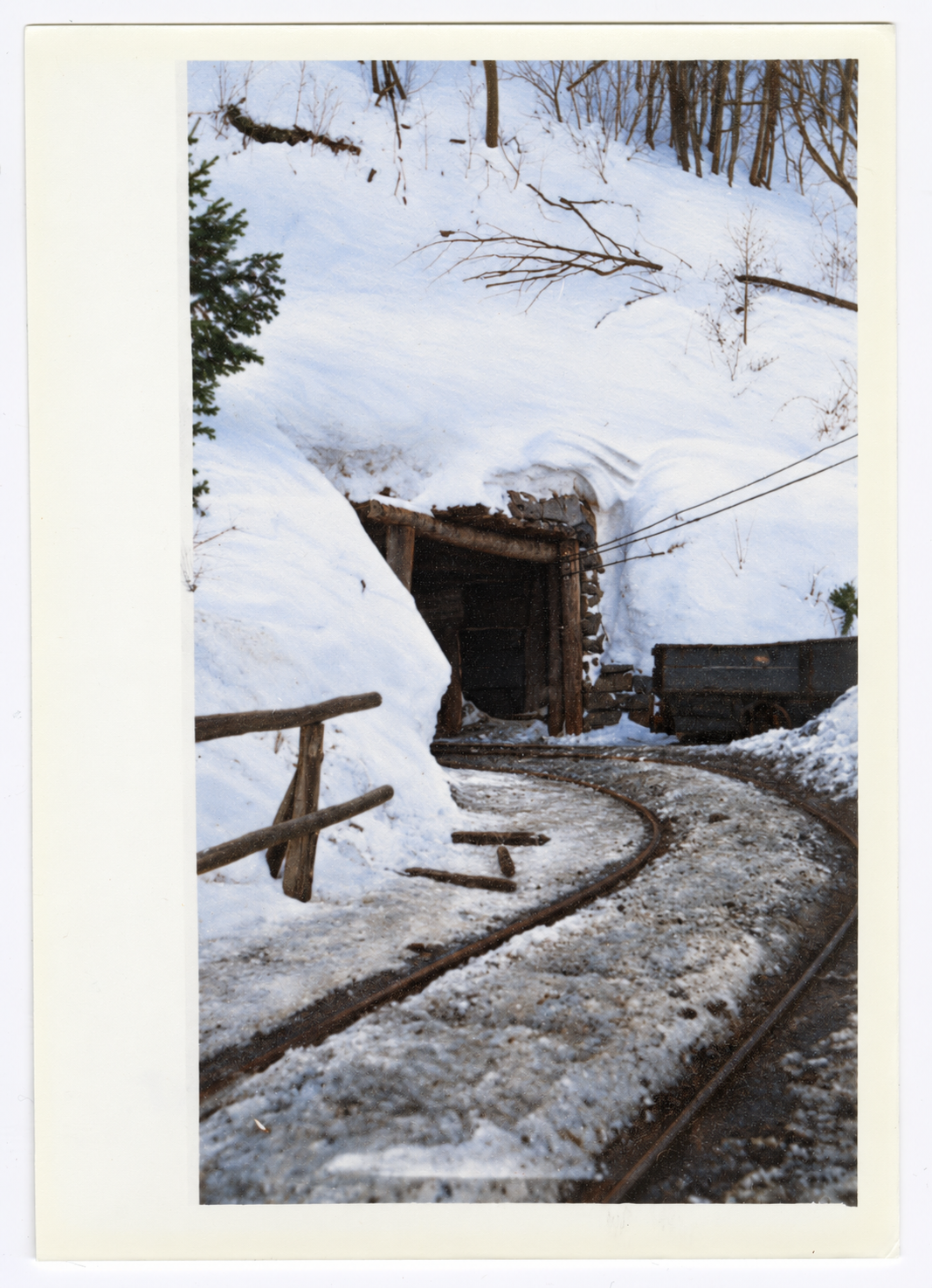
A coal mine entrance in Gordon Creek Canyon in winter, with rails curving past it and a mine car at right. The camp and date are not recorded. Colorized with AI; the colors are an interpretation.Original photo: Utah State Historical Society
Williamson’s claim and the Sweet brothers
Coal was found in Gordon Creek in 1907 and 1908. The tract that would hold National was staked by an independent prospector named Williamson, who had too little money and too much mountain: the nearest railroad was about nine miles of desert away by horse-drawn wagon, and the claims sat idle for more than a decade. The federal Mineral Leasing Act of 1920 opened public coal land to competitive leasing, and operators moved in. George A. Storrs organized the Gordon Creek Coal Company, and the coal operator Frederick A. “Fred” Sweet and his brother William H. Sweet gathered leases in the North Fork and a neighboring canyon.
The National Coal Company was incorporated on January 2, 1920, to take over an earlier National Fuel Company’s assets and to finance a railroad. In August 1921 it teamed with Storrs’s Gordon Creek company to begin grading what became the National Coal Railway.
The National Coal Railway
Money and rock slowed the road for four years. Utah’s Public Service Commission approved it on March 12, 1925, and Utah Railway crews began laying standard-gauge track on July 6, 1925, working west from a new junction at Wildcat siding. The first trains ran September 18, and the line hauled its first revenue coal on November 9, 1925. The Utah Railway leased it from January 1926 and owned all its stock by March 1926, calling it the National Branch. The line crossed the canyon on a high double-track bridge to reach the mine mouths on both sides.
A brick camp
The mine itself began shipping in August 1927. The company built an electric plant, shaker screens, a timber-and-steel tipple and electrified underground haulage. Fred Sweet ran it as president until illness forced him to resign on January 17, 1935; C. D. Craddock took over.
The town was built to last longer than most. Offices, officials’ houses and multi-family apartments were put up in red brick and cast concrete block. Indoor plumbing was reserved for supervisors and the apartment blocks; most miners lived in company cottages or boarding houses with outdoor privies and shared standpipes. The camp’s people came from many places: Anglo-American miners, Slovenes, Croats, Italians, Greeks and a few Japanese workers. Immigrant families are said to have built outdoor domed ovens behind their houses to bake bread, and to have kept vegetable plots along the washes.
On the post office, school and hospital: One source says National had the canyon’s post office, and that the three camps shared a consolidated school; another says National had no post office of its own and that families used a clinic and school at Spring Glen. I could not settle this from a document I could read, so I have described National as part of a shared three-camp system without naming who had which building. Treat the question as open.
Receivership and a second life
The Depression, cheap oil and gas, and heavy debt wore the company down. It stopped all underground production on July 23, 1938, and the Reconstruction Finance Corporation took the property in foreclosure that December. In March 1940 the tipple was taken down and the underground machinery, wiring and yard track sold for salvage. One source adds that a quantity of National’s structural steel was sold for scrap export, including to Japan, at about $20 a ton just before wartime trade bans; I treat that as reported rather than proved.
In May and June 1940 Carl Nyman, a Price businessman, bought the coal rights from the RFC. He built a smaller loading plant, and the Utah Railway laid a new 540-foot spur with room for nine cars, finished on November 9, 1940. Shipments resumed on November 12. The mine ran through World War II. In 1949 Nyman’s holdings went to the Hudson Coal Company, a Sweet-family company that already owned the nearby Sweet mine and, by then, the old Blue Blaze property at Consumers.
Postwar demand dropped as railroads switched to diesel and homes to natural gas. Hudson cut back, and by about 1950 the town was empty. Crews stripped the machinery over the next few years, and in July 1954 the Utah Railway dissolved the National Coal Railway and took up its rails and ties.
On “Canadian American Coal Company”: Some regional accounts put a company of this name in the ownership of National. I found no charter, inspector’s report or geological survey that records it in Carbon County, Utah. The name seems to come from a mix-up with the Canadian-American Coal and Coke Company of Frank, Alberta, and a Carbon County in Montana. Ownership ran from National Coal Company to the RFC to Nyman to Hudson.
Three camps, one canyon
Consumers, National and Sweet sat within less than two miles of each other, and the canyon was too narrow for each to have a full town. The companies shared what they could. Consumers had the hospital and the amusement hall; a consolidated school served all three. Each camp kept its own store and water supply. Dr. J. Eldon Dorman, who arrived in January 1937, treated all three camps under the usual company medical plan paid for by payroll deductions, and described the work in his memoir, Confessions of a Coal Camp Doctor.
The Gordon Creek camps fielded baseball teams that played rival company clubs from Standardville, Castle Gate, Sunnyside and Kenilworth.
The 1933 strike
In August 1933 miners of the radical National Miners Union struck at Spring Canyon, and the Utah State Historical Society records that NMU miners at Consumers, National and Sweet soon followed. They wanted union recognition, an end to forced buying at company stores, independent checkweighmen and the end of scrip. One source describes mass pickets at the mouth of Gordon Creek Canyon, a force of deputies under Sheriff S. Marion Bliss, evictions of striking families and a tent colony near Spring Glen and Helper. The strike ended with the more conservative United Mine Workers recognized across the county.
On the details: The Gordon Creek strike is documented in outline, and I did not find a primary source for the day-by-day events at National itself. The best-documented violence of the strike was the September 11, 1933 march on Price. Details such as the picket lines and evictions come from a single source and should be checked against Allan Kent Powell’s and Helen Papanikolas’s work.
Seven deaths
Mining the Castlegate and Hiawatha seams meant gas, coal dust, bad roof and the pillar failures called bumps. According to research, the mine inspector’s figures count seven deaths at National, against nine at Consumers and 17 at Sweet. Flash floods and mudslides periodically damaged roads, trestles and buildings. The railway left four retired boxcar bodies at National in 1928 as section sheds.
What is left
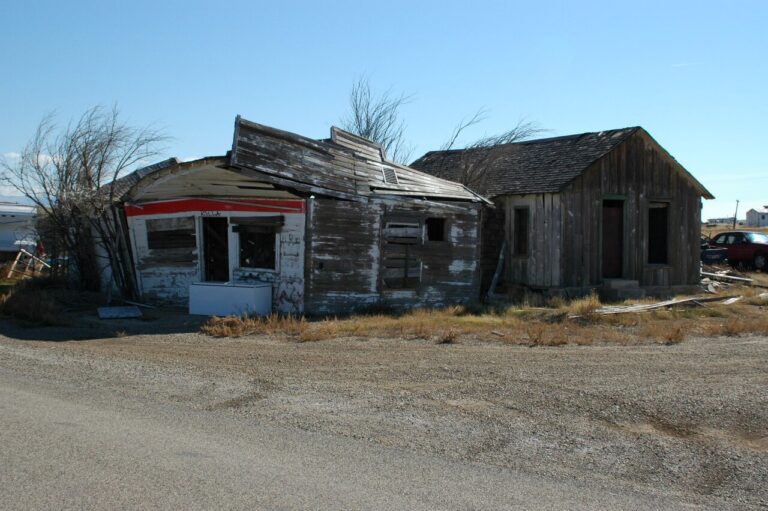
Most accounts agree that National preserves the most masonry of the three camps. Reported remains include roofless shells and partial walls of red brick and concrete block on the central bench, sandstone foundations, heavy concrete footings from the tipple and loadout, cellar pits and the line of the railroad grade with its culverts and bridge abutments. The mine openings were sealed and backfilled under state reclamation programs, and Sweet and Consumers were largely recontoured by later mining.
On what survives: Research reveals contradictions. One account describes brick walls, concrete anchors and a clear railroad grade; the other says almost nothing remains but foundations, cellar depressions and low footings, and that National is largely undisturbed. Accounts of neighboring Consumers differ in the same way, from largely recontoured to foundations still standing. The condition of all three sites has probably changed, so use this as a guide to what to look for and not a promise.
Timeline
1907–1908
Coal is found in Gordon Creek; Williamson stakes the National tract.
January 2, 1920
The National Coal Company is incorporated.
August 1921
Grading begins on the National Coal Railway.
March 12, 1925
The Public Service Commission approves the railroad.
November 9, 1925
The branch hauls its first revenue coal.
1926
The Utah Railway leases and then buys the line.
August 1927
Coal shipments from the National mine begin.
1928
Four boxcar bodies are placed at National as section sheds.
August 1933
NMU miners at the Gordon Creek camps join the strike.
January 17, 1935
Fred Sweet resigns; C. D. Craddock takes over.
July 23, 1938
The mine stops production.
December 1938
The Reconstruction Finance Corporation takes the property in foreclosure.
March 1940
The tipple and equipment are dismantled and sold.
November 1940
A new spur is finished; shipments resume under Carl Nyman.
1944–1945
The camp reaches its peak population of about 250.
1949
Hudson Coal Company buys the National holdings.
About 1950
The town is abandoned.
July 1954
The Utah Railway dissolves the National Coal Railway and removes the track.
Visit guide — National, Utah
Can you visit?You can reach the area on a public county road. Much of the canyon is a state wildlife management area, with BLM and state trust land around it and private holdings near old tipple sites and reclaimed portals. Stay on open roads and respect posted property and fences.
Getting thereFrom US-6/191 about two miles south of Helper (near Spring Glen), turn west onto Consumers Road (Carbon County Road 290). Reports give about nine miles west to the canyon, past the ruins of Coal City, then two to three miles along the canyon floor to the fork where the North Fork and Bryner Canyon divide. National lies along the canyon floor there; Consumers is a short distance farther up the North Fork. Distances vary, so use a current map.
CoordinatesAbout 39.69°N, 111.05°W, from a coordinate listing; not a survey.
Road conditionsPaved at first, then county gravel, then a narrow dirt-and-rock track in the canyon. Ordinary cars can manage dry summer weather; high clearance is advised, and one traveler’s account calls for true four-wheel drive beyond the canyon mouth. Wet clay becomes impassable mud, and washes flood.
Seasonal closureThe Gordon Creek Wildlife Management Area is closed to motor vehicles in winter, with gates typically locked from December 1 (sometimes January 1) until mid to late April. Check with the Division of Wildlife Resources.
Land statusState wildlife area, BLM, state trust land and private parcels. Carry a current land-ownership map.
FacilitiesNone. No drinking water, little shade and unreliable cell service. Helper and Price have services.
Best seasonLate spring through mid-autumn, in dry weather.
Serious hazards: Do not enter any mine opening or prospect hole. Brick and sandstone walls are weak after decades of freezing and thawing, and cellar pits hide under sagebrush. Flash floods can fill the canyon from distant storms, so leave the wash if clouds build. Rattlesnakes shelter among the ruins in warm months, and the canyon has black bears and cougars.
Respect the ground: Historic structures and artifacts on public and state land are protected by federal and state law. Leave bricks, rails and tools where they are, and do not climb on walls.
Approximate location of National in Gordon Creek Canyon, Carbon County. The exact site is not marked.
Historic sites nearby
Consumers, UT
Under a mile up the North Fork, also on this site
Underground conveyors · Lange’s 1936 photographs
Sweet, UT
About half a mile, up Bryner Canyon
Tent camp, then tile-roof houses · Reclaimed
Coal City, UT
~3 miles east
Independent “open town” · Store ruins and cellar pits
Standardville, UT
~9 miles north
Spring Canyon model camp · Concrete foundations
Castle Gate, UT
~14 miles northeast, also on this site
1924 mine disaster · Butch Cassidy payroll robbery
Kenilworth, UT
~16 miles northeast
Independent Coal & Coke camp · Partly inhabited
Further reading
Books, studies and records about National and Gordon Creek
A History of Carbon County
Ronald G. Watt · Utah Centennial County History Series, 1997 — The fullest county history.
The Next Time We Strike: Labor in Utah’s Coal Fields, 1900–1933
Allan Kent Powell, 1992 — The standard study of the 1933 strike.
Unionism, Communism, and the Great Depression: The Carbon County Coal Strike of 1933
Helen Z. Papanikolas · Utah Historical Quarterly, 1973 — Evictions, tent camps and ethnic divisions.
Centennial Echoes from Carbon County
1948 — Arthur E. Gibson’s account of the Gordon Creek coal district.
Confessions of a Coal Camp Doctor and Other Stories
J. Eldon Dorman, 1995 — A physician’s memoir of the Gordon Creek camps.
The Wasatch Plateau Coal Field, Utah
Edmund M. Spieker · USGS Bulletin 819, 1931 — Geology of the coal beds in the North Fork.
NationalUtahGhost TownUtah Ghost TownsCarbon CountyGordon CreekNational Coal CompanyCoal MiningCompany Town