Ballarat, California: The Panamint Gold Camp That Refused to Die
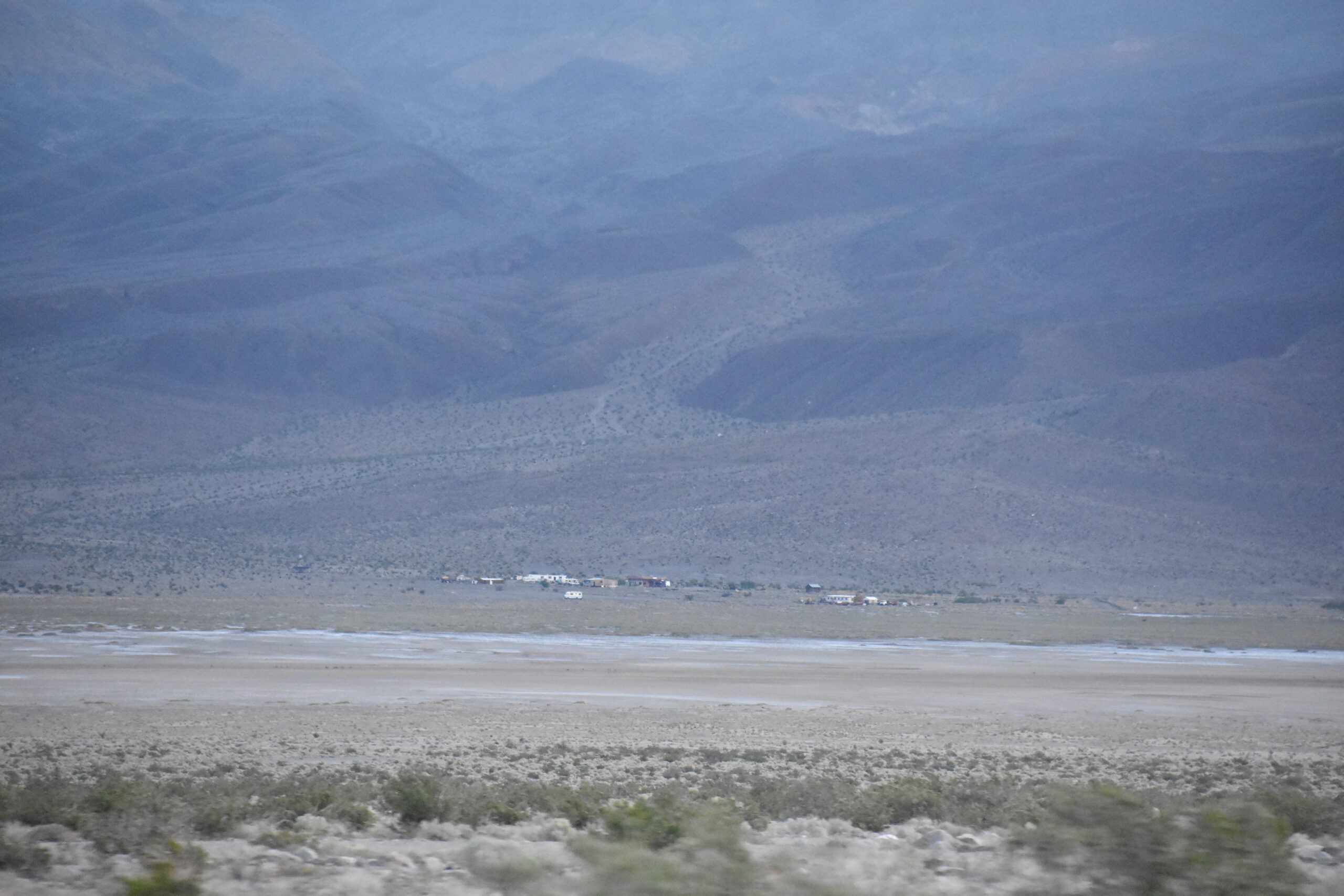
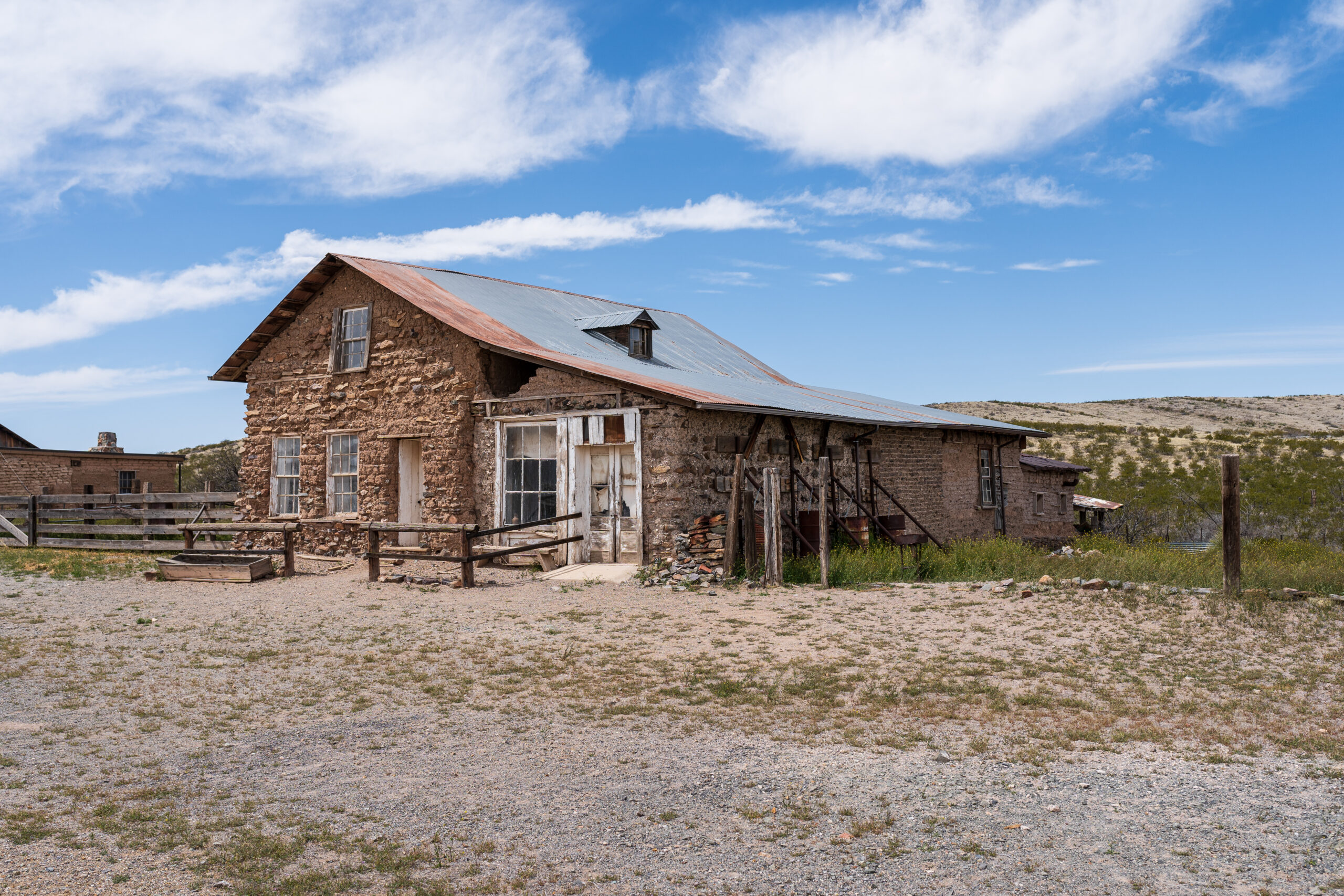
Ballarat lies on the parched floor of the Panamint Valley in Inyo County, California, a scatter of melting adobe walls and rusting metal at the western foot of the Panamint Range. Like Keeler over on the edge of Owens Lake, it belongs to the scatter of Inyo County camps left behind when the region’s mines and railroads fell silent. At barely 1,079 feet of elevation, in a basin where summer heat routinely climbs past 115°F, it is the kind of place that seems designed to erase whatever people try to build on it. Yet Ballarat has stubbornly refused to disappear. Long after its gold ran out, it survived as a refuge for solitary prospectors, a backdrop for outlaws and filmmakers, and a small, cussed outpost of desert life that still keeps a population of one or two. It is one of several hard-luck mining camps that pockmark this corner of California, along with the silver diggings at Cerro Gordo in the same county.
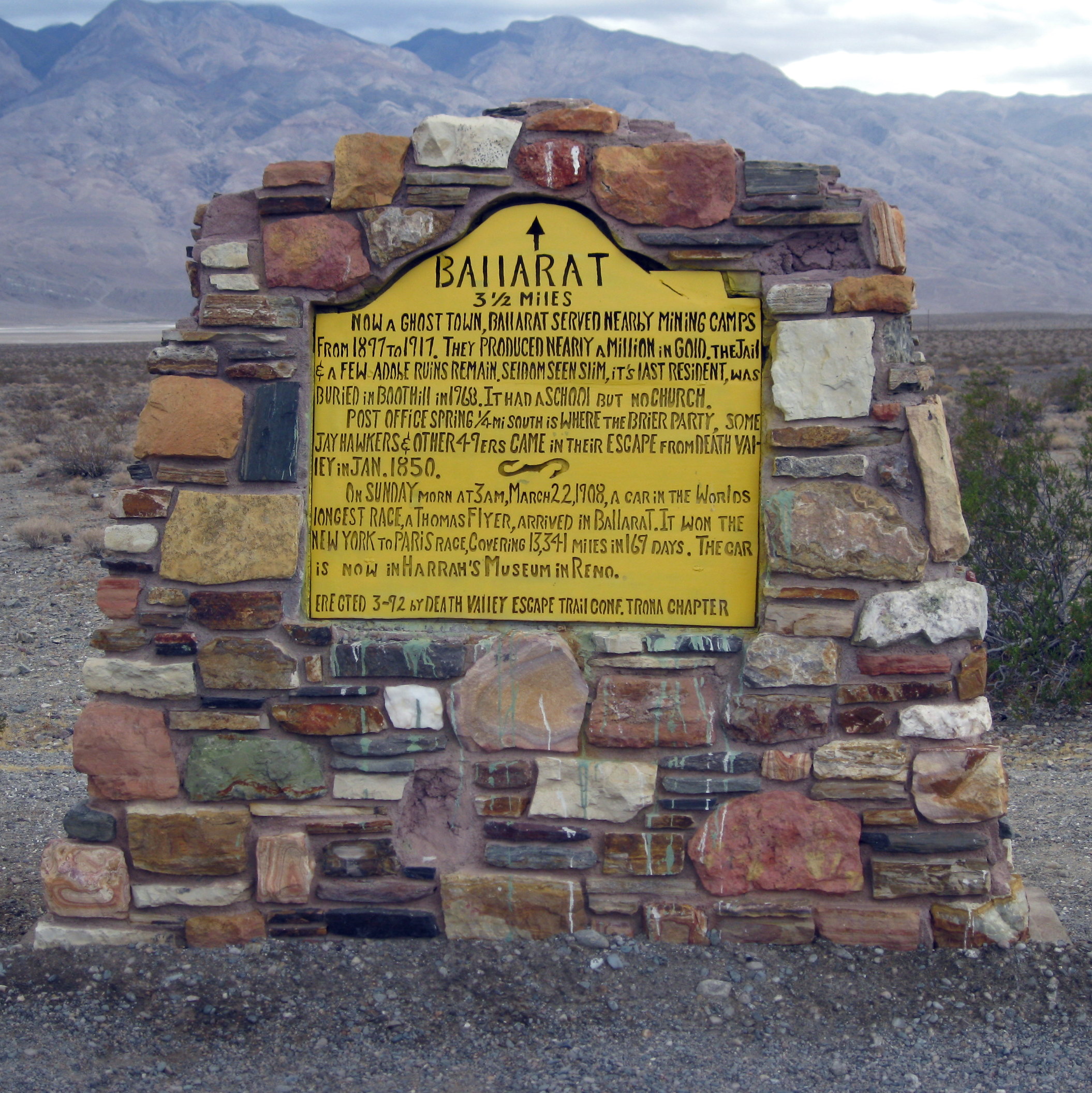
The town owes its existence to water and gold, in that order. A quarter mile south of the townsite, Post Office Springs offered a dependable trickle in an otherwise waterless valley. Shoshone people knew the spring long before any prospector did, and it watered the desperate members of the 1849 Jayhawker and Brier parties as they staggered out of Death Valley in the winter of 1850. When gold-bearing quartz was rediscovered in the canyons of the Panamint Range in the mid-1890s, that reliable water made the valley floor the logical place to build a supply town.
A Supply Town Named for an Australian Goldfield
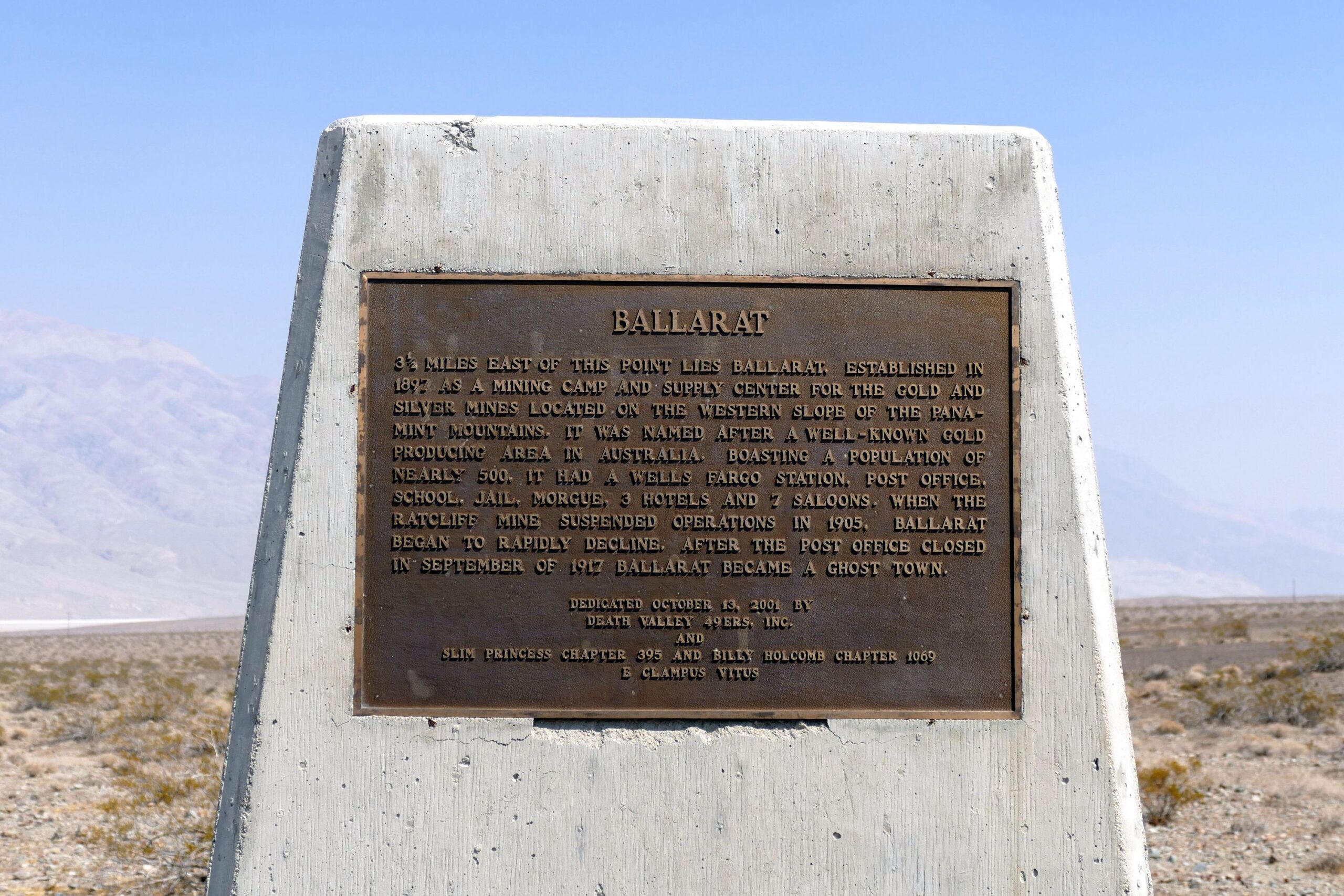
Ballarat was laid out in 1896 and 1897 as a central hub serving the mining camps scattered through Pleasant, Surprise, and Jail canyons above it. Rather than cling to any single mine, it positioned itself as the place where miners came down to buy supplies, ship ore, collect mail, and spend their pay. The name came from George Riggins, an Australian immigrant and mining promoter who borrowed it from Ballarat in Victoria, the famous gold-rush city of his home country—a small act of nostalgia that stuck.
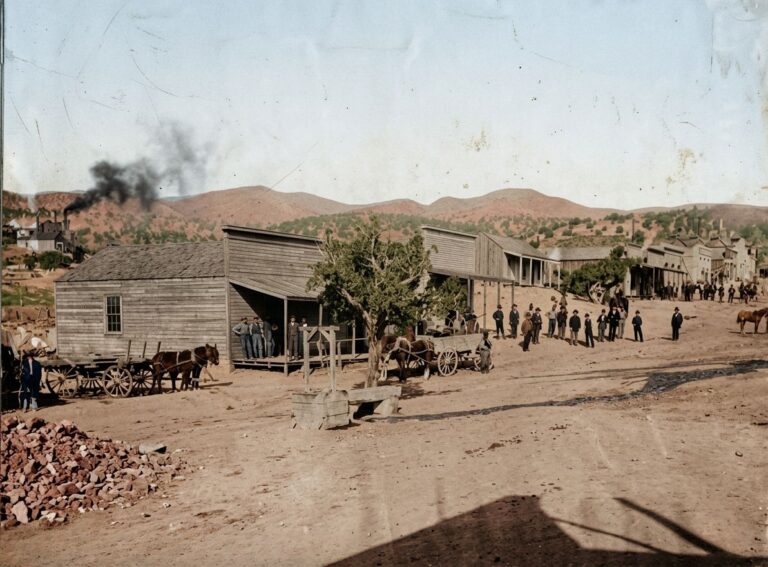
Because timber was scarce and the climate brutal, most of the town was built from sun-dried adobe brick made from local clay, a material that held up well against heat but poorly against the valley’s rare, violent flash floods. At its height between roughly 1897 and 1905, Ballarat supported somewhere between 400 and 500 permanent and transient residents and a full complement of frontier commerce: seven saloons, three hotels, a Wells Fargo express office, a schoolhouse, a jail with an adjoining morgue, a blacksmith, general stores, and a post office established in 1897. One detail turns up in nearly every account of the place—for all its saloons, Ballarat never built a church.
The Ratcliff Mine and the District’s Brief Wealth
The engine driving all of this was the Ratcliff Mine (sometimes spelled Radcliffe) in Pleasant Canyon, just east of town. Between 1898 and 1903 the Ratcliff worked more than 15,000 tons of high-grade gold ore, and together the claims of the wider Panamint Mining District generated on the order of a million dollars in gold during the boom—a substantial sum for the era. For a few years the arrangement worked exactly as intended: the mines produced, the mills processed, and Ballarat took its cut as the place where the money was spent.
The trouble with a town built to serve a single rich mine is that its fortunes are chained to that mine’s ore body. When the Ratcliff’s grades fell and its underground workings ran into complicated faulting, the whole structure beneath Ballarat began to give way.
Decline and Desert Reclamation
Ballarat’s collapse was as fast as its rise. The critical blow came in 1905, when the Ratcliff Mine suspended operations after hitting lower-grade ore and difficult ground, and the smaller claims around it exhausted the gold that had been easy to reach. The timing could hardly have been worse for the town’s survival, because just then a series of enormous new strikes—the Bullfrog District, Goldfield, Rhyolite, and Greenwater among them—opened between 1904 and 1906 and pulled prospectors, laborers, and equipment out of the Panamint Valley almost overnight.
With its customers gone, Ballarat faded from a district capital into a quiet supply post kept alive by a handful of independent miners. The post office closed for good in September 1917, and by 1920 the town was effectively abandoned. Its wooden buildings were pulled apart for fuel and lumber, and the adobe walls, no longer roofed or maintained, began the slow slump back into the ground that unprotected adobe always makes once the weather gets at it.
Seldom Seen Slim and the Age of the Desert Rats
Abandonment did not mean emptiness. For half a century after the boom, Ballarat was home to solitary prospectors—”desert rats” in the local phrase—who lived off the land and the played-out claims. The most famous of them was Charles Ferge, universally known as Seldom Seen Slim. Slim drifted into the valley around the time of Ballarat’s decline and stayed on as the town’s sole continuous resident from about 1918 until his death in 1968.
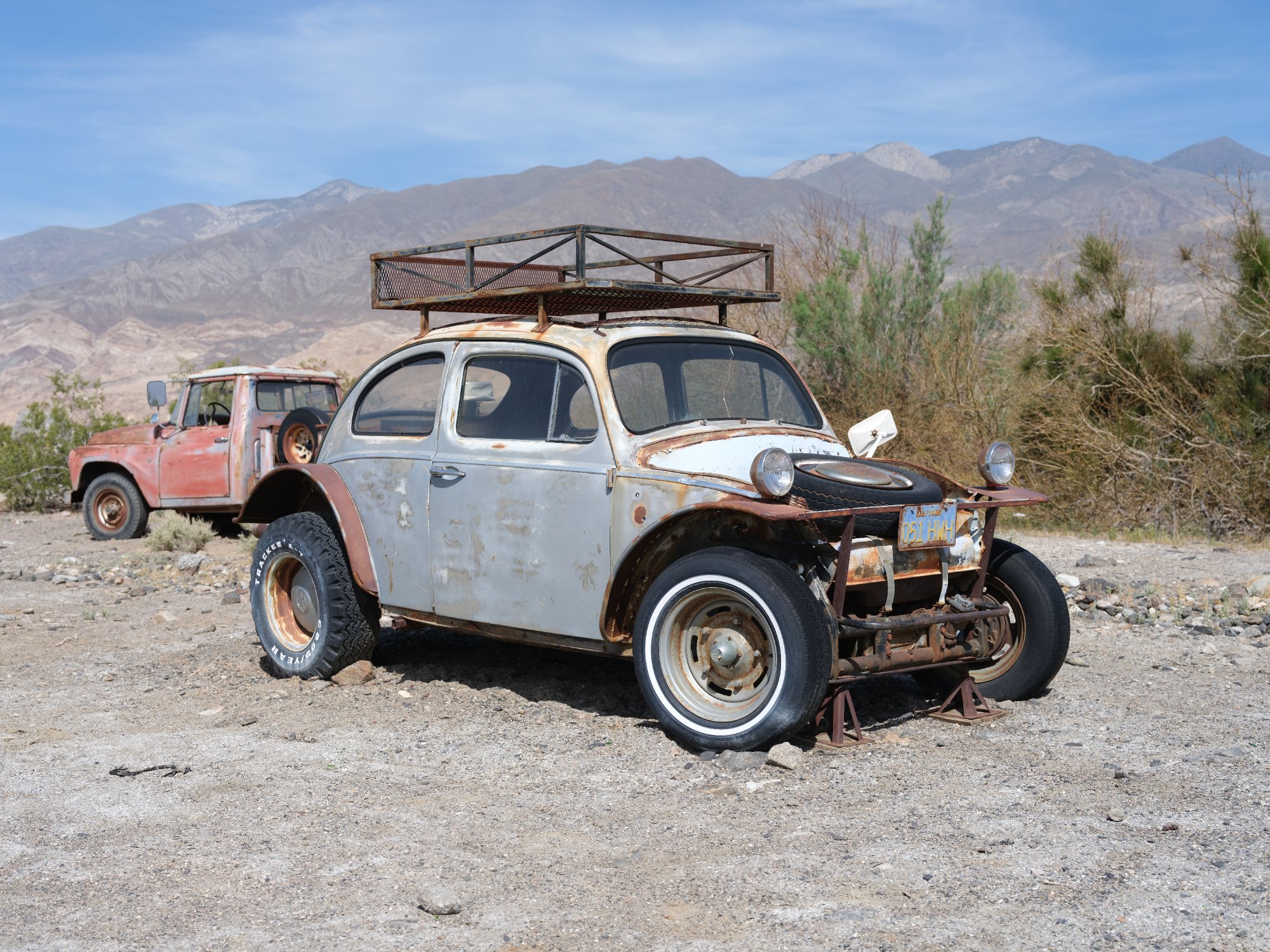
Slim became a genuine figure of Death Valley folklore, admired for his dry humor, his self-sufficiency, and a personal hygiene philosophy he cheerfully advertised: he claimed to have gone decades without a proper bath, making do by sloshing water over himself outdoors. As the last habitable adobe finally failed, he simply moved his quarters into an abandoned Volkswagen bus and a small trailer. He died of cancer at the hospital in nearby Trona in 1968 and was buried in Ballarat’s Boot Hill cemetery as its 28th and final recorded resident. His epitaph reads: “Just bury me where the digging’s easy.” A 1950 photograph of Slim and his cabin survives in the UC Davis Library’s archives, viewable in their digital collections.
The Manson Family and a Much-Mythologized Truck
Ballarat’s strangest brush with history came in 1968 and 1969, when Charles Manson and his followers holed up at Myers Ranch and Barker Ranch in South Park Canyon, roughly fifteen miles south of town. Ballarat was the nearest place to resupply, so Family members turned up there regularly, and some left graffiti on the surviving adobe. In October 1969 a law-enforcement raid at Barker Ranch ended with Manson’s arrest.
The most photographed artifact in Ballarat today is a rusting 1941 Dodge Power Wagon, often pointed out to visitors as the “Tex Watson truck” and tied by local notes and photographs in the trading post to the Manson group.
The Ballarat Bandit
In 2003 and 2004 the empty country around Ballarat became the stage for one of the odder manhunts in recent Western history. George Robert Johnston, a Canadian drywall worker from Prince Edward Island, suffered a severe mental-health crisis after a 1997 arrest and his wife’s illness, crossed into the United States, and vanished into the Panamint wilderness. Operating from hidden camps, he burglarized remote cabins and campsites for food, clothing, tools, and firearms, earning the nickname the “Ballarat Bandit.”
Because his hideouts lay near the sensitive China Lake Naval Air Weapons Station, authorities at first feared he might be a trained operative rather than a lone fugitive. The response was enormous—SWAT teams, Black Hawk helicopters, K-9 units, and bloodhounds—yet Johnston evaded them for eleven months and an estimated 1,500 miles of desert travel, on one occasion reportedly covering sixty miles overnight across snow. Cornered near Ballarat in July 2004, he took his own life. Booked as John Doe #39-04, he was not identified for another eighteen months, when Canadian fingerprint records finally gave the Ballarat Bandit a name.
Auto Races, Easy Rider, and an Easter Gone Wrong
For a town so remote, Ballarat has an unusual number of cameo roles in the wider culture. In the small hours of March 22, 1908, the American Thomas Flyer rolled through Ballarat at three in the morning during the New York–to–Paris automobile race, a 13,000-mile contest the car would go on to win. In 1969, director Dennis Hopper used the town as a location for Easy Rider; the scene near the ruined jail, in which Peter Fonda’s character throws away his wristwatch before riding on, is one of the film’s quiet counterculture touchstones.
Two years later, over Easter weekend in April 1971, roughly 2,000 members of the counterculture gathered at Ballarat for a festival. It ended as a public-health cautionary tale when nearly 200 attendees came down with hepatitis A traced to a contaminated water source—a reminder that in this valley, water has always been both the reason to gather and the thing most likely to go wrong.
What Remains Today
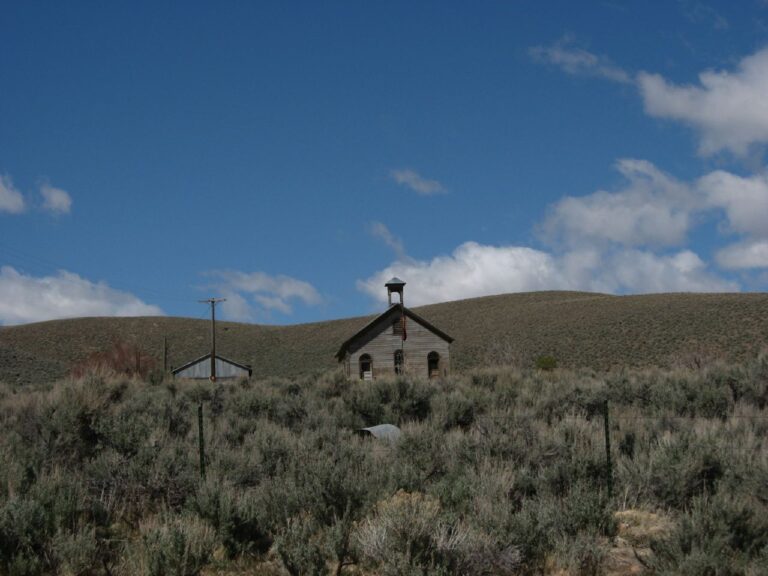
Modern Ballarat is a handful of deteriorating historic ruins mixed with a few later structures. The most legible survivors are the thick adobe walls of the old jail and its adjoining morgue. North of the entrance road, the stone foundations and corner posts of prospector Frank “Shorty” Harris’s cabin remain, along with another preserved miner’s shack. On the edge of town lies Boot Hill, its 28 recorded graves marked by wooden posts and stone mounds, Seldom Seen Slim’s among them.
The center of modern life is a cinder-block general store built in the 1960s by promoter Neil Cummins during a failed attempt to reinvent Ballarat as a desert trailer resort. Around the site sit rusting mining equipment, old vehicle bodies, and the famous Dodge Power Wagon. The town remains privately owned. In 2004 George Novak and his son Rock “Rocky” Novak moved in, and after his father’s death Rocky served as caretaker and sole full-time resident for over fifteen years, opening the store on weekends for tourists, off-roaders, and military personnel. Around 2020 he relocated to Trona and locals took over the store, leaving the permanent population at one or two. Visitors who want a more polished, restored version of the same desert-mining story often pair a Ballarat trip with the far more developed Calico to the south.
Timeline
Getting There
Nearby Ghost Towns
Ballarat sat at the center of a whole constellation of Panamint and Death Valley mining camps. Several within about fifty miles are worth seeking out, though most take far more effort to reach than Ballarat itself.
Sources: Lingenfelter, Death Valley and the Amargosa: A Land of Illusion (1986); Paher, Death Valley Ghost Towns (1973, rev. 1981); Vredenburgh, Shumway & Hartill, Desert Fever (1981); Belden, Ballarat, Death Valley ’49ers Keepsake No. 6 (1963); Greene, Historic Resource Study: A History of Mining in Death Valley National Monument, National Park Service (1981); National Park Service and Bureau of Land Management public records; UC Davis Library, Archives and Special Collections (Henchey Photographs).
Photos: hero and Panamint Valley view by Qwert üpoiuz (CC BY-SA 4.0); townsite ruins by Maxence (CC BY 2.0); historical markers by Nikolay Maksimovich (CC BY 3.0); desert relic by Daniel Lu / User:dllu (CC BY-SA 4.0); all via Wikimedia Commons. Historic photograph of Seldom Seen Slim (1950) by Paul L. Henchey, UC Davis Library (In Copyright – linked, not reproduced).