Berlin, Nevada
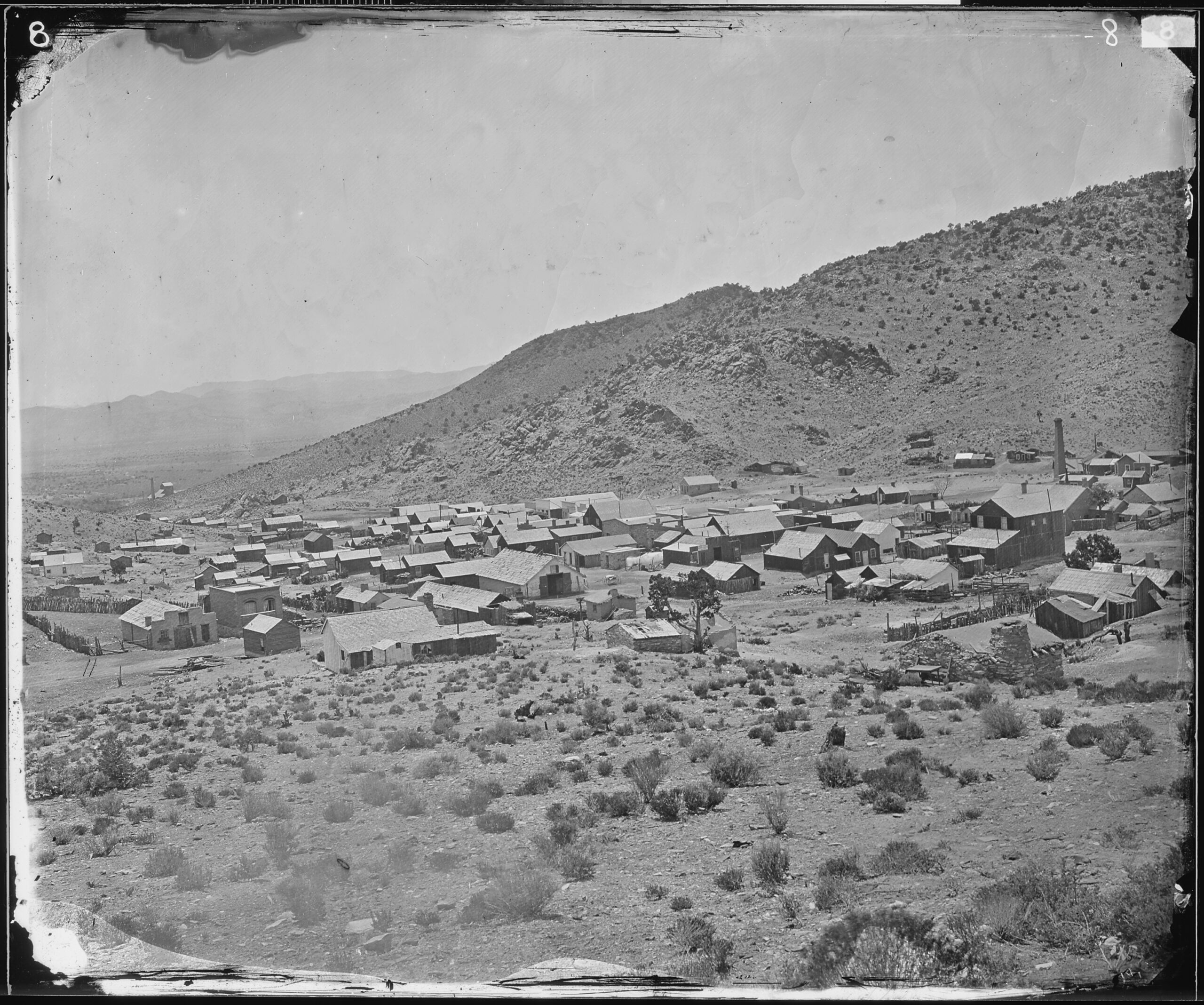
Berlin is really two ghost towns sharing one canyon. The first is a company-owned silver-and-gold camp that boomed for barely a decade and was left to the weather when the mine closed around 1911 — never burned, never scavenged to the ground, never redeveloped. The second lies in the same Shoshone Range: a bonebed of giant Triassic sea reptiles, fifty feet long, that died here more than two hundred million years before any prospector arrived. Nevada protects both in a single park, and preserves the town in a deliberate condition it calls arrested decay — stabilized, but never restored into a tidy, invented boomtown.
This is the documented history of Berlin and its fossils, and the legends worth separating from the record — because this camp has collected a surprising number, and in one lucky case a mining engineer wrote his skepticism down while the mine was still alive.
Silver in the Shoshone Range
Berlin was a late chapter in the much older Union Mining District. Prospectors found silver in Union Canyon in May 1863 and organized the district the next year; it eventually took in Union, Ione, Grantsville, and Berlin. The first recorded assay from Berlin Canyon dates to 1869, but the deposit didn’t produce a lasting settlement for decades — the Shoshone Range was remote, freight was expensive, and the ores were metallurgically awkward. An early effort by the Cincinnati Mining Company (1887–1889) hauled ore over the hills to a distant mill and folded.
The dormant ground gained new life in 1895 when Nevada state senator Thomas J. Bell restaked the claims. Recognizing that the low- to medium-grade silver and gold could pay only through systematic underground work and on-site milling, Bell and his partners established the Berlin Mine in 1896, and a townsite was platted in 1897 — the conventional birth date of the town.
The Nevada Company and the Phelps Stokes company town
Unlike the informal camps that sprang up around a strike, Berlin was organized as a corporate company town. In 1897 the New York financier and philanthropist Anson Phelps Stokes formed The Nevada Company to consolidate mining, milling, and rail properties across central Nevada, and in 1898 it bought the Berlin Mine and surrounding claims. The Stokes family ran it from the top: Anson’s son James Graham Phelps Stokes as president, with a young attorney named Tasker L. Oddie — a future governor and U.S. senator — as corporate secretary. Soon after incorporation, Oddie discovered that the company’s general manager in Austin had embezzled more than $110,000, a scandal that pushed Stokes to concentrate capital and management on the Berlin property.
Because the company owned the surface patents, it dictated both the layout and the camp’s social rules. The Nevada Company surveyed the townsite in a U-shaped plan along the western slope at 6,676 feet, built bunkhouses, family residences, an assay office, a machine shop, and managerial quarters — and, to keep labor discipline, banned alcohol, gambling, and prostitution on company land. The result was predictable: four saloons, a few madams, and a small red-light district set up just outside the company’s surveyed boundary. One piece of camp lore even has the firm moving payroll and bullion 60 miles to and from the Austin railhead in a specially built spherical “Cannonball Safe,” sealed with its dial removed so it couldn’t be opened in transit.
The Berlin Mine and the 30-stamp mill
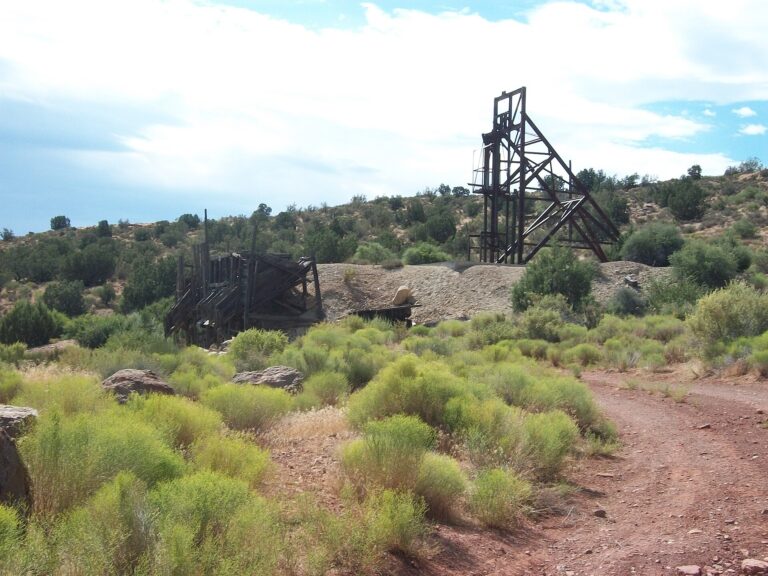
Berlin was never a bonanza. The contemporary engineer Ellsworth Daggett described it as a hard quartz vein carrying small percentages of sulfides with gold and silver — a vein repeatedly cut and offset by faults, which he judged extraordinary enough to make development “unusually troublesome and expensive.” That geology is the key to Berlin’s whole story: ore existed, but finding the faulted segments took costly work that often led into barren rock. The inclined shaft eventually reached eight levels, linked by roughly three miles of underground workings and the horizontal Diana haulage tunnel driven straight into the mountainside.
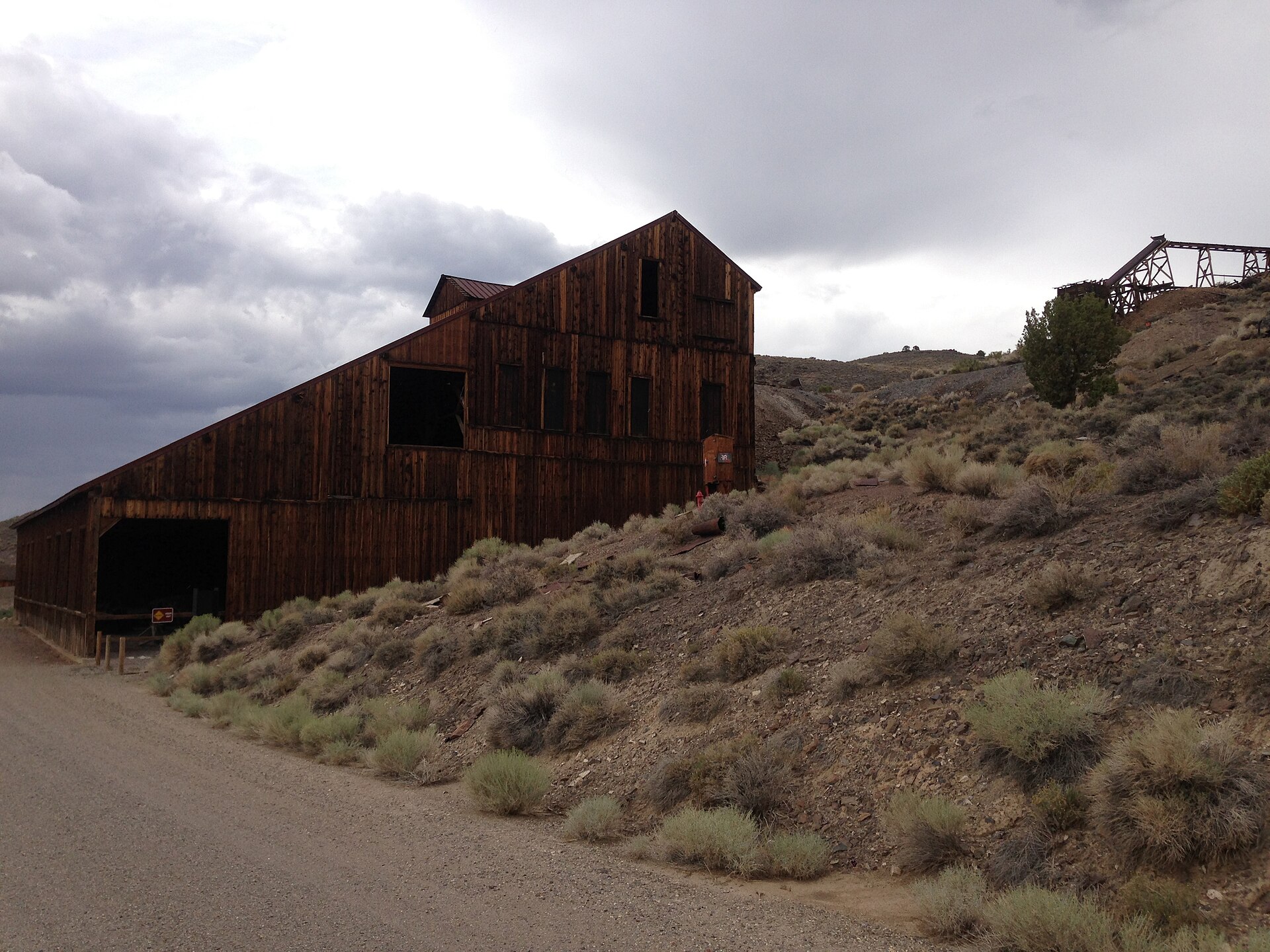
Ore was processed through a 30-stamp mill stepped into the slope below the main portal. Heavy iron stamps crushed the rock to a pulp; the slurry washed over mercury-coated amalgamation plates that caught the free gold and silver; and Frue vanners concentrated the remaining sulfides for shipment to smelters. A contemporary report by engineer A. M. Smith records the mill treating roughly 35,000 tons of ore averaging about $14 a ton, with amalgamation alone recovering around 75 percent of the value. Nevada State Parks estimates the mine ultimately yielded about $849,000 — a respectable but modest figure, best understood in historic dollars when gold was about $20 an ounce.
Strike, faults, and a fast decline, 1907–1914
Between about 1900 and 1905 Berlin reached its zenith — a camp of some 250 to 300 people (counting nearby Union) with miners, mill hands, timber cutters, charcoal makers, an assay officer, a resident physician, shopkeepers, a post office, a school, and a stage station. The prosperity was brief. In 1907, miners walked out in a wage strike, seeking pay closer to the booming gold camps at Tonopah and Goldfield; the company, citing the thin margins on Berlin’s low-grade ore, chose to shut underground operations rather than negotiate. The principal mill stopped around 1908, the mine closed, and by 1911 the town was largely abandoned.
Even 1911 wasn’t quite the end of all activity. From 1911 into 1914, A. M. Smith reworked the old mill tailings with a small cyanide-leaching plant, treating some 21,000 tons for a modest profit — a quiet metallurgical coda after the town itself had emptied. The post office finally closed in 1918.
The giant ichthyosaurs — Berlin’s second life
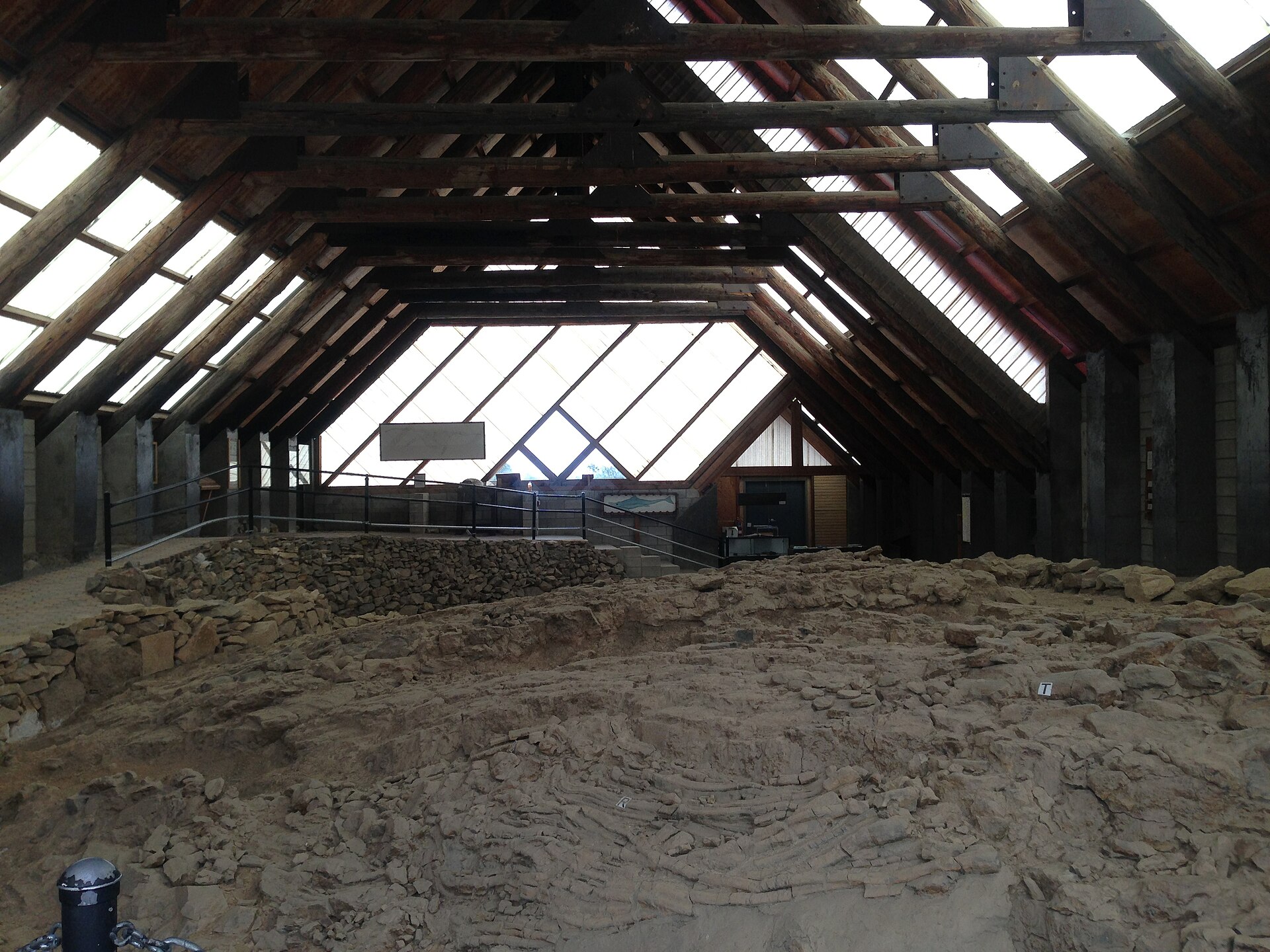
Berlin’s afterlife began with fossils rather than minerals. Giant ichthyosaur bones had long been noticed weathering out of limestone in West Union Canyon; in 1928 the Stanford geologist Siemon W. Muller recognized their significance. In 1952 the Fallon researcher Margaret Wheat relocated the beds and brought them to Charles L. Camp of the University of California Museum of Paleontology, who excavated the site with Samuel P. Welles from 1954 into the 1960s. Within days of seeing it, Camp made a consequential call: the skeletons were important enough to leave in situ rather than haul to a museum.
Camp’s crews documented remains of at least 37 giant ichthyosaurs across about ten quarries spanning a mile of canyon. He named the animal Shonisaurus popularis — the genus for the Shoshone Range — a streamlined marine predator reaching roughly 15 meters (about 50 feet). These are among the largest known Triassic marine reptiles, and in 1977 Nevada made Shonisaurus popularis its state fossil. The rock is Late Triassic; interpretive signs variously cite about 215 and 225 million years, so “roughly 215–225 million years ago” is the safe phrasing.
Why so many giants died in one place puzzled scientists for decades — mass stranding, toxic tides, and anoxic basins were all proposed. A 2022 study in Current Biology (Kelley and colleagues), using 3D laser scanning and geochemistry, argued that the fossils were laid down in deep ocean water across multiple limestone layers separated by hundreds of thousands of years, alongside embryonic and newborn skeletal elements and overwhelmingly mature females — evidence that the site was a prehistoric calving ground, a safe haven that generations of ichthyosaurs returned to, much as baleen whales do today. It’s the leading current explanation, though researchers note the full story isn’t closed.
Arrested decay: what survives, and how Berlin was saved
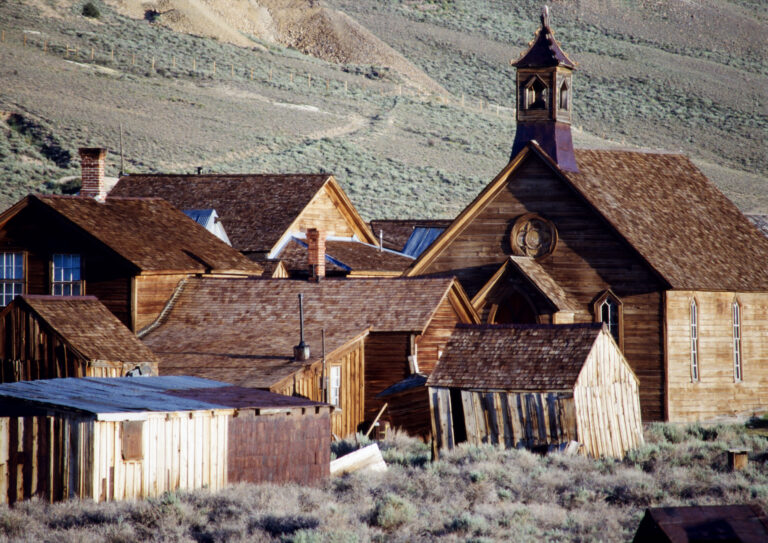
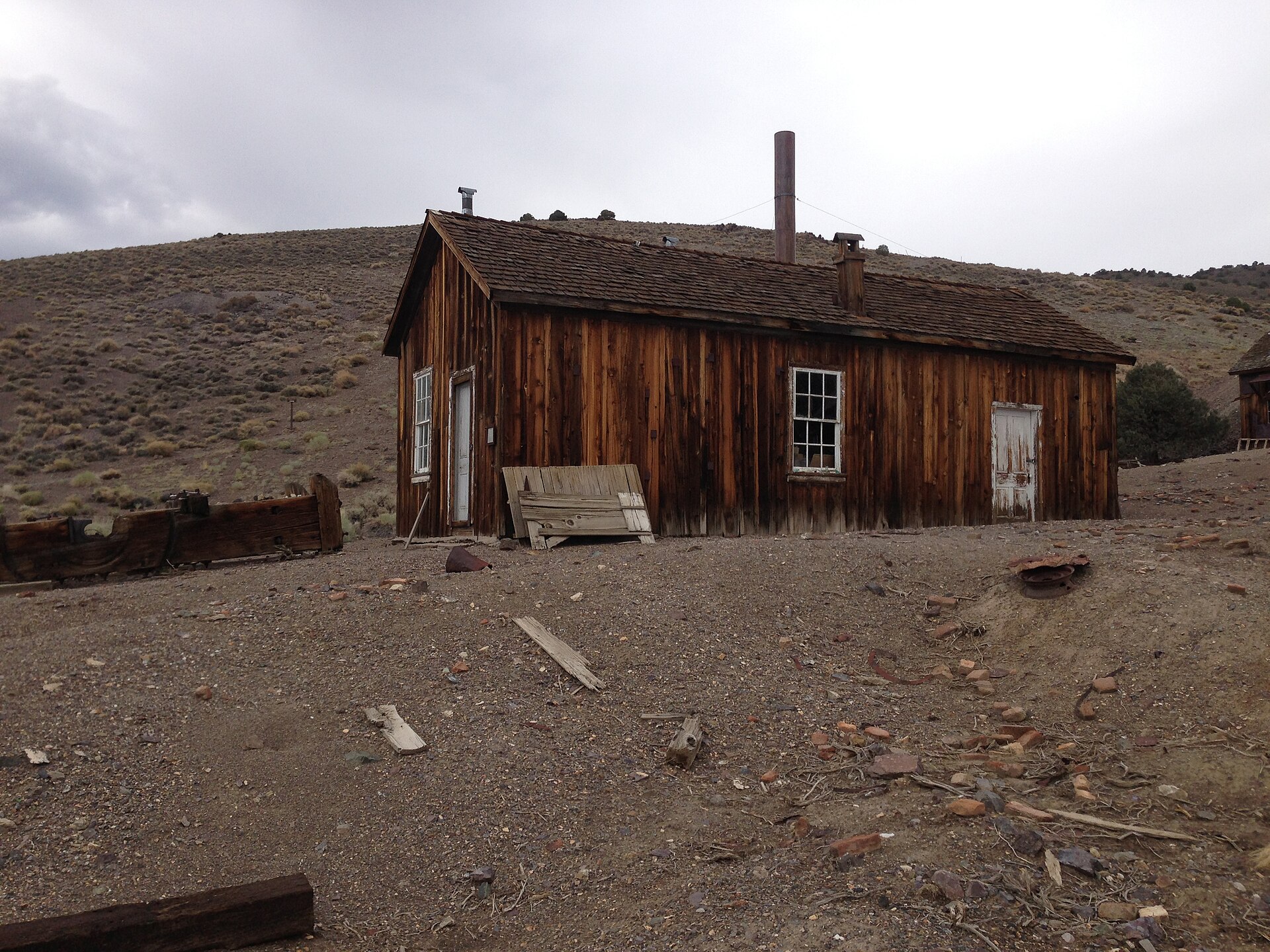
Berlin’s remarkable completeness is a byproduct of its ownership. Because The Nevada Company held fee-simple title and kept caretakers on site through the 1920s and ’30s, the camp was spared the scavenging, burning, and moving that erased so many Western towns — though iron and copper were stripped from the mill for scrap drives in World War II. The wooden fabric survived in arrested decay. The town preserves one of the most complete original collections of turn-of-the-century mining structures in the Great Basin: the 30-stamp mill; the two-story mine superintendent’s residence (now the park headquarters and ranger station); the assay office with its original cabinetry, balance scales, and furnace vents; the blacksmith and machine shop; wood-frame miner cabins and bunkhouses; and, on a bench facing Ione Valley, the Berlin Cemetery with its hand-carved wooden markers.
Protection came in stages. Nevada established the Ichthyosaur Paleontological State Monument in 1957 and completed the enclosed A-frame Fossil Shelter over Quarry 2 in 1966. In 1967 The Nature Conservancy secured an option on the Berlin townsite to keep it from being lost; Nevada acquired it around 1970 and combined the mining camp with the fossil beds as Berlin-Ichthyosaur State Park. The Berlin Historic District was listed on the National Register on November 5, 1971, the fossil locality became a National Natural Landmark in 1973, and much of the park’s human texture comes from Firmin Bruner, who arrived as a boy in 1904, wrote a memoir of camp life, and guided visitors into the 1990s — his recollections fill more than 80 interpretive signs across Berlin and Union.
Timeline
Visiting Berlin & the Fossil House today
Berlin-Ichthyosaur State Park sits in a remote corner of northwestern Nye County and is open year-round, around the clock — but it’s genuinely isolated, so arrive fueled, watered, and supplied. The townsite is explored on a self-guided trail past the interpretive signs; the fossil quarry is seen on a ranger-led Fossil House tour (or through exterior viewing windows when tours aren’t running).
Nearby ghost towns & mining camps
For more Nevada ghost towns on the archive, see Tonopah, Goldfield, and Virginia City.
Further reading
Sources:
Nevada State Parks, “History of Berlin-Ichthyosaur State Park” & park visitor page — parks.nv.gov.
National Park Service / NPGallery, Berlin Historic District, National Register nomination (listed Nov. 5, 1971; NRIS 71000490) — npgallery.nps.gov.
A. M. Smith, Berlin Mine property report (1913); Ellsworth Daggett on the Berlin faulting (1907/08); Victor E. Kral, Mineral Resources of Nye County (NBMG Bulletin 50, 1951) — Nevada Bureau of Mines & Geology, nbmg.unr.edu.
UC Museum of Paleontology, “UCMP and the ichthyosaur quarry at Berlin-Ichthyosaur State Park” — ucmp.berkeley.edu; Kelley et al., “Grouping behavior in a Triassic marine apex predator,” Current Biology (2022).
“Berlin Historic District” and “Berlin-Ichthyosaur State Park,” Wikipedia; Shawn Hall, Preserving the Glory Days (1999); Firmin Bruner, Some Remembered – Some Forgot (1974).
Photo credits: Hero (30-stamp mill), townsite building, and the Fossil House / Shonisaurus bonebed: Famartin — CC BY-SA 4.0, via Wikimedia Commons.