Belmont, Nevada: The Silver Capital That Timber Left Behind
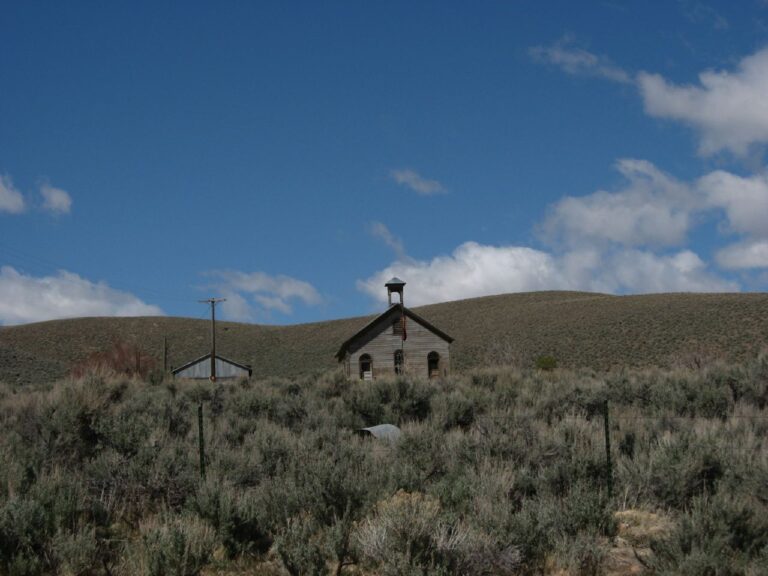
High in the Toquima Range of central Nevada, at an elevation of 7,400 feet, sits one of the American West’s most rewarding ghost towns. Belmont is not a scatter of collapsed cabins but a substantial stone-and-brick townscape — a former county seat whose Italianate courthouse still commands the head of Main Street. That it survived at all is the result of two things: the durability of its masonry, and a peculiar desert economy in which the most valuable thing a departing family could take was not the walls of their house but the roof.
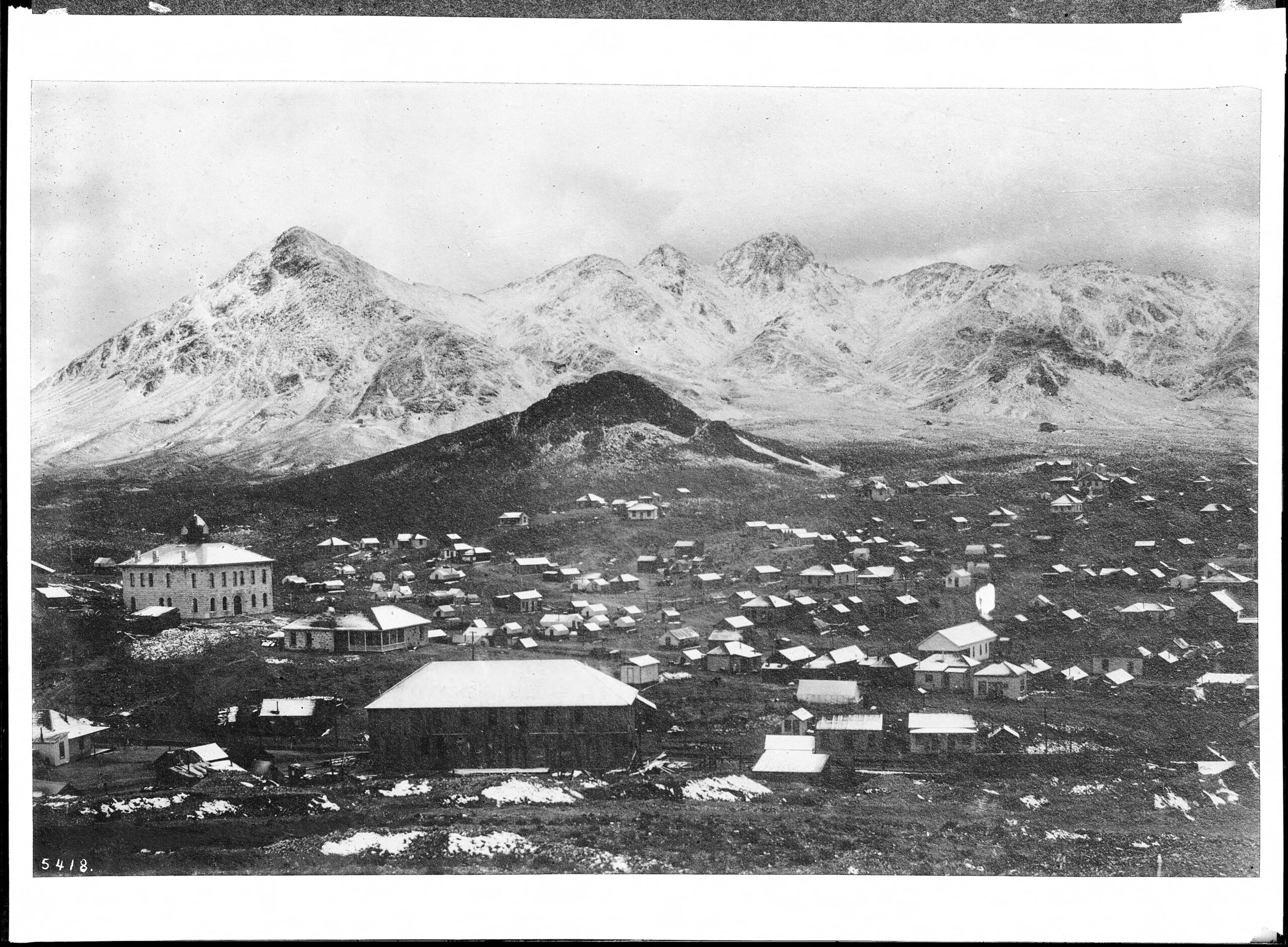
Belmont’s story compresses the entire arc of Great Basin mining into three decades. It rose from an Indigenous gathering place to a silver capital, won and then lost the machinery of county government, and finally surrendered its people and its political power to a richer strike over the mountains. What it left behind is unusually legible: you can still read the shape of a Victorian mining town in its standing walls.
Before the Rush
Long before prospectors arrived, the basin around Belmont’s year-round mountain spring was a seasonal gathering ground for the Shoshone, who came for communal rabbit drives, foraging, and ceremony. That older use of the land ended abruptly in October 1865, when high-grade silver ore was found in the surrounding hills. Accounts hold that an unnamed Native American finder first brought the mineral to the attention of prospectors — and with that, the first formal claims were filed before the year was out.
A Camp Built to Last
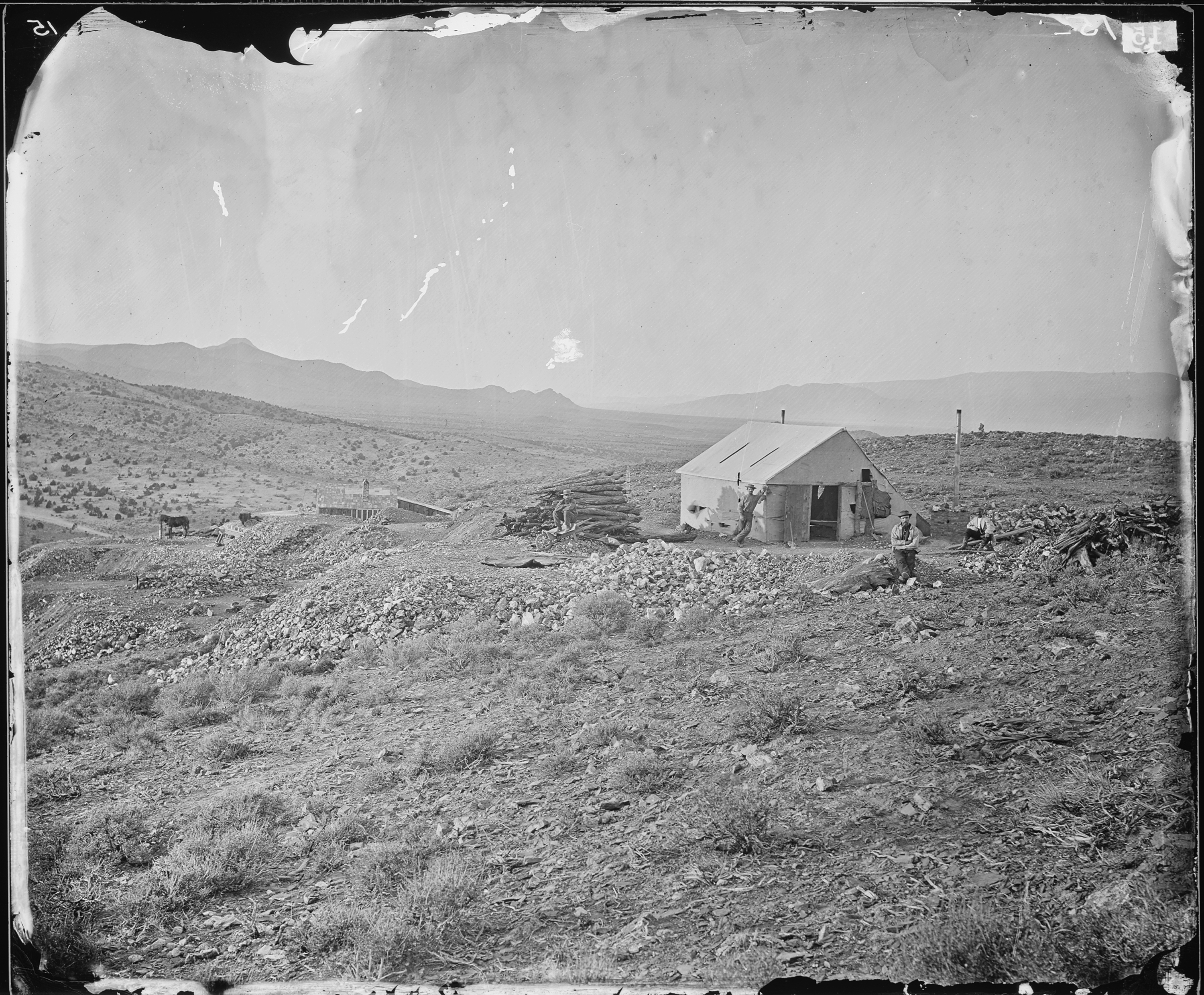
What set Belmont apart from the West’s countless canvas camps was its immediate investment in permanence. Antonio Borquez is remembered as the first permanent settler in 1865; he was soon joined by pioneers such as A. Hillman, C.L. Straight, D.E. Buel, and Dr. William Geller. Rather than throwing up tents and clapboard, these early residents built with what the mountains offered: local timber, fieldstone, and red brick kilned from clay beds four miles west of town. Substantial storefronts and homes rose along the central valley corridor almost from the start.
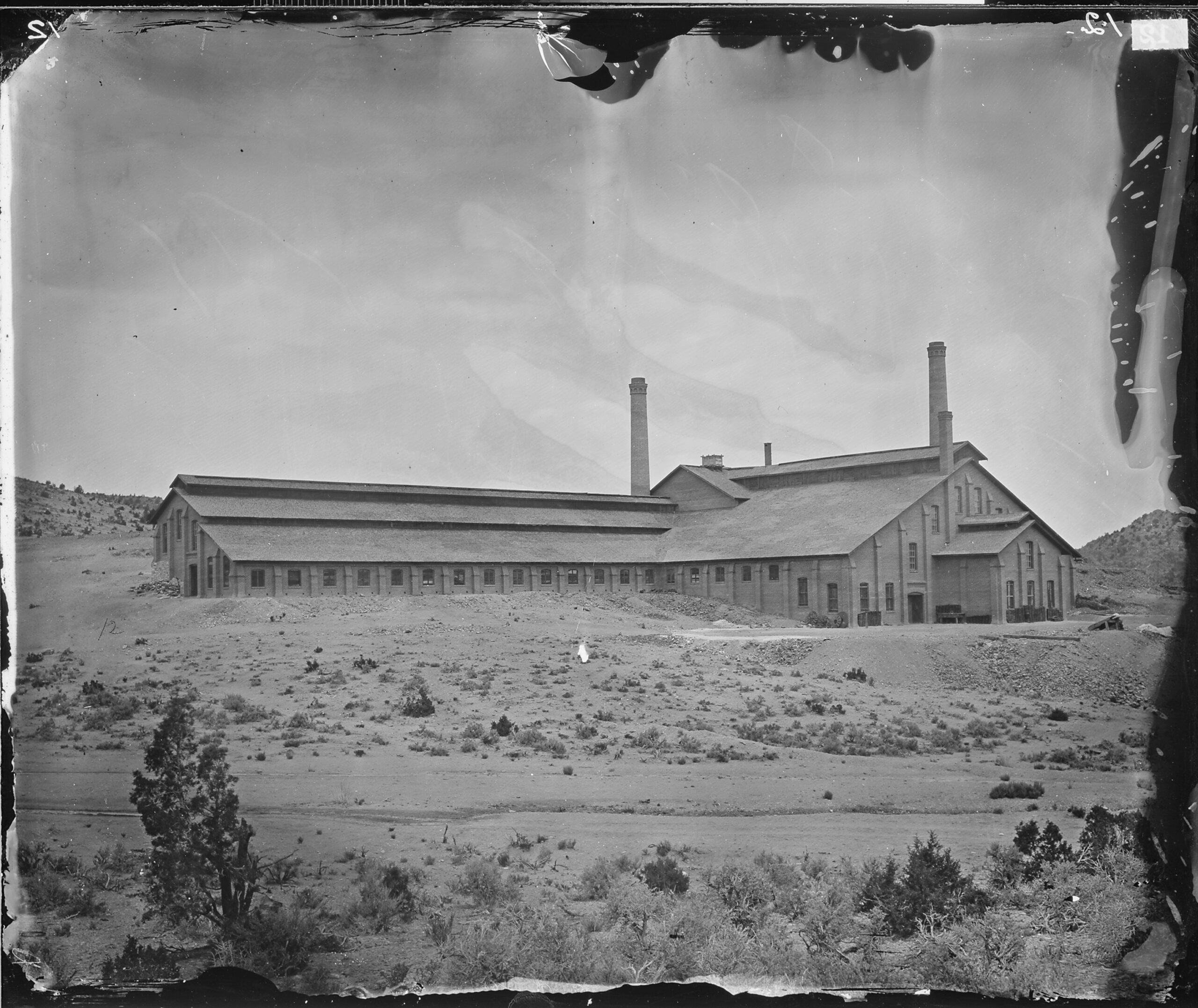
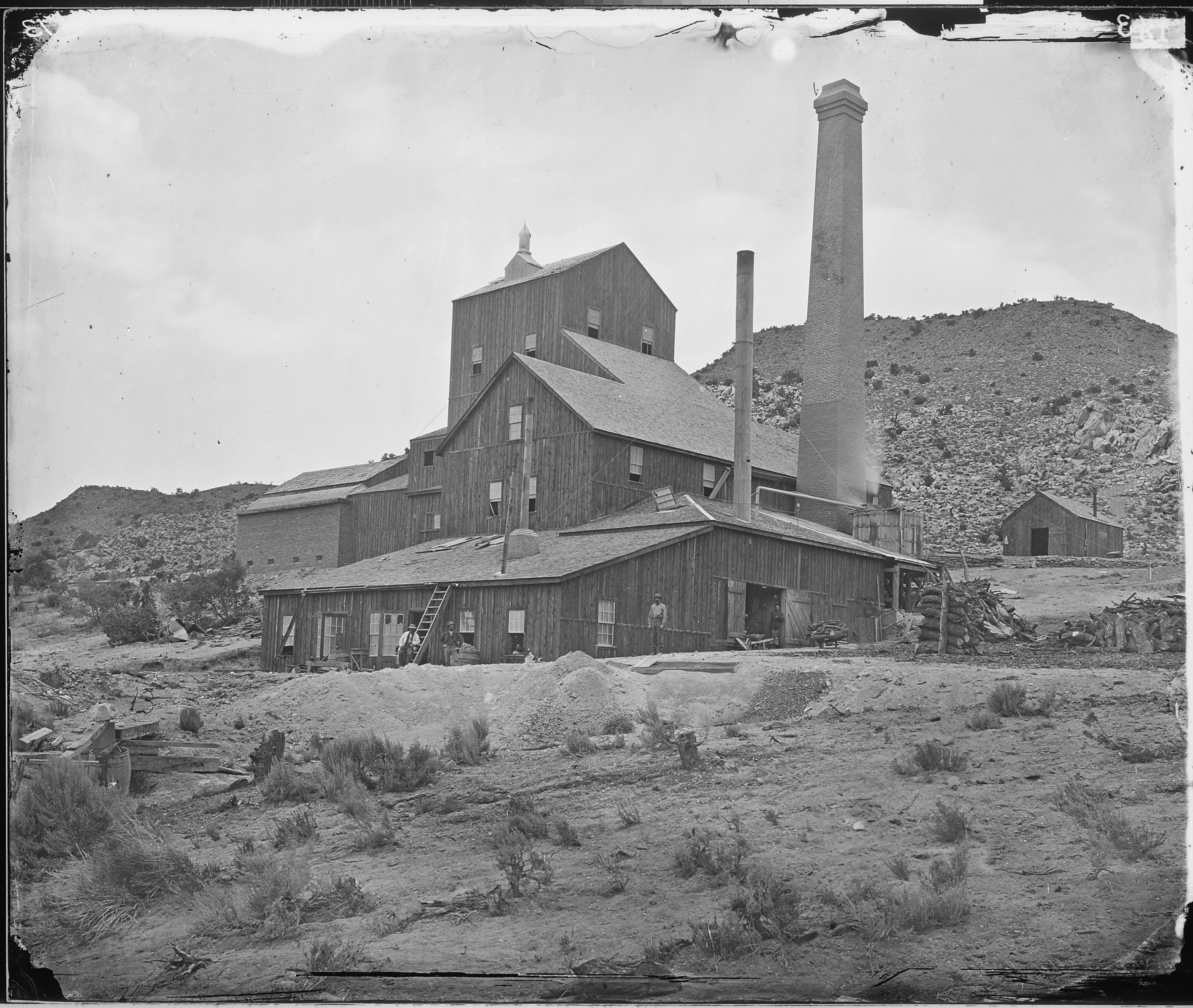
The district — formally the Philadelphia Mining District — proved geologically generous, yielding not only silver but copper, lead, and antimony. Milling capacity grew fast to handle the ore: a ten-stamp mill in 1866, a twenty-stamp plant in 1867, and a massive forty-stamp reduction works by 1868. The heavy industry clustered in East Belmont, over the eastern ridge, deliberately kept apart from the mercantile heart of town.
County Seat and Civic Peak
Belmont’s mineral wealth quickly translated into political power. In 1867 state authorities named it the seat of Nye County, stripping that title from the fading camp of Ione. (Ione, the county’s original seat from 1864, sits about forty miles northwest and survives today only as scattered ruins.) With county government came officials, lawyers, judges, and tax revenue, and Belmont became the administrative hub of central Nevada.
At its height in the late 1860s and 1870s, Main Street bustled with four general stores, five restaurants, a pair of saloons, an assay office, a bank, a livery, a telegraph office, a school, churches, and two competing newspapers — the most prominent being the Belmont Courier. There was a Cosmopolitan Music Hall that booked touring performers from across the country, along with a Chinatown, a red-light district, and even a horse racetrack. For a remote desert camp, it was remarkably complete.
The Courthouse
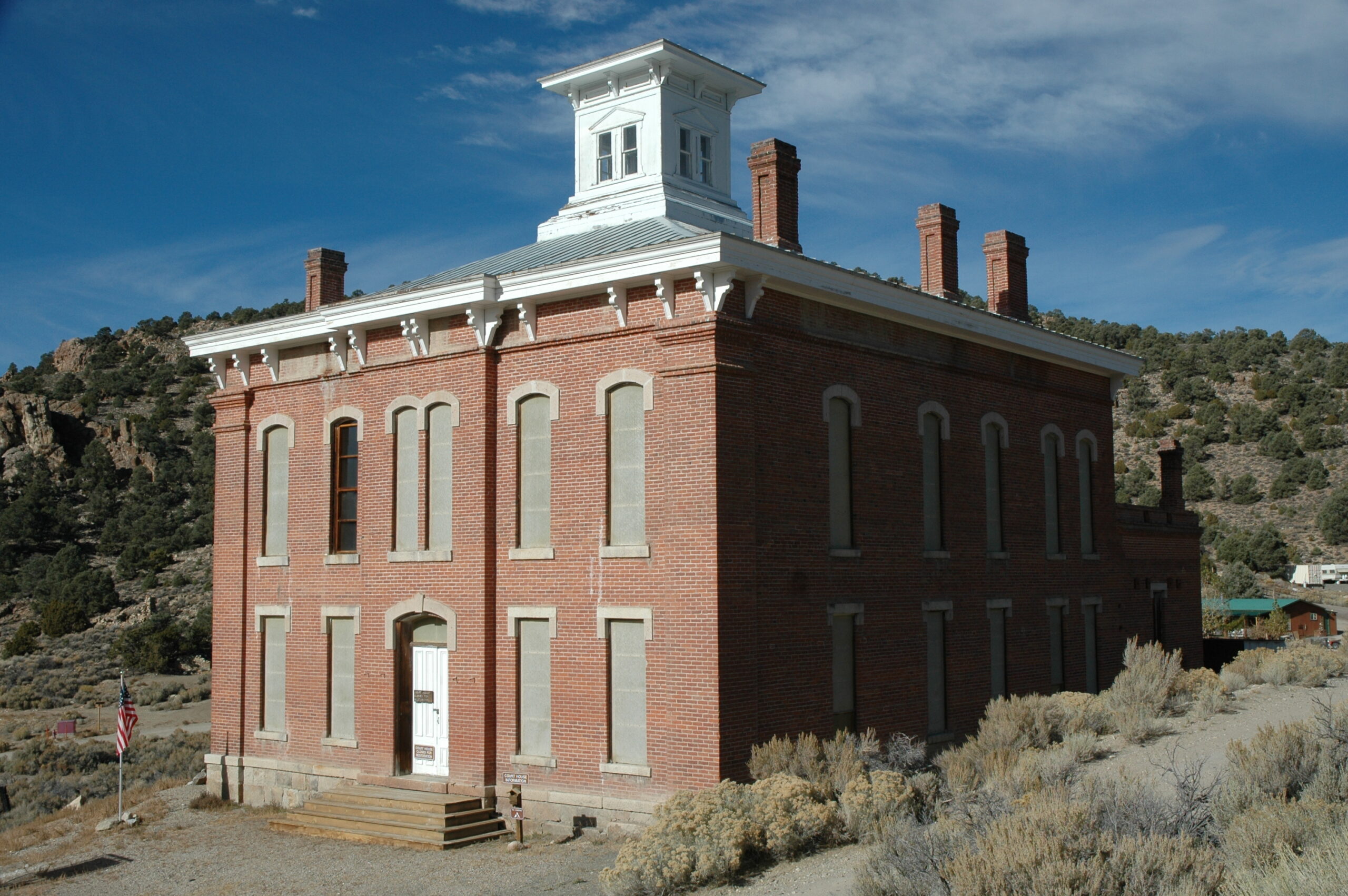
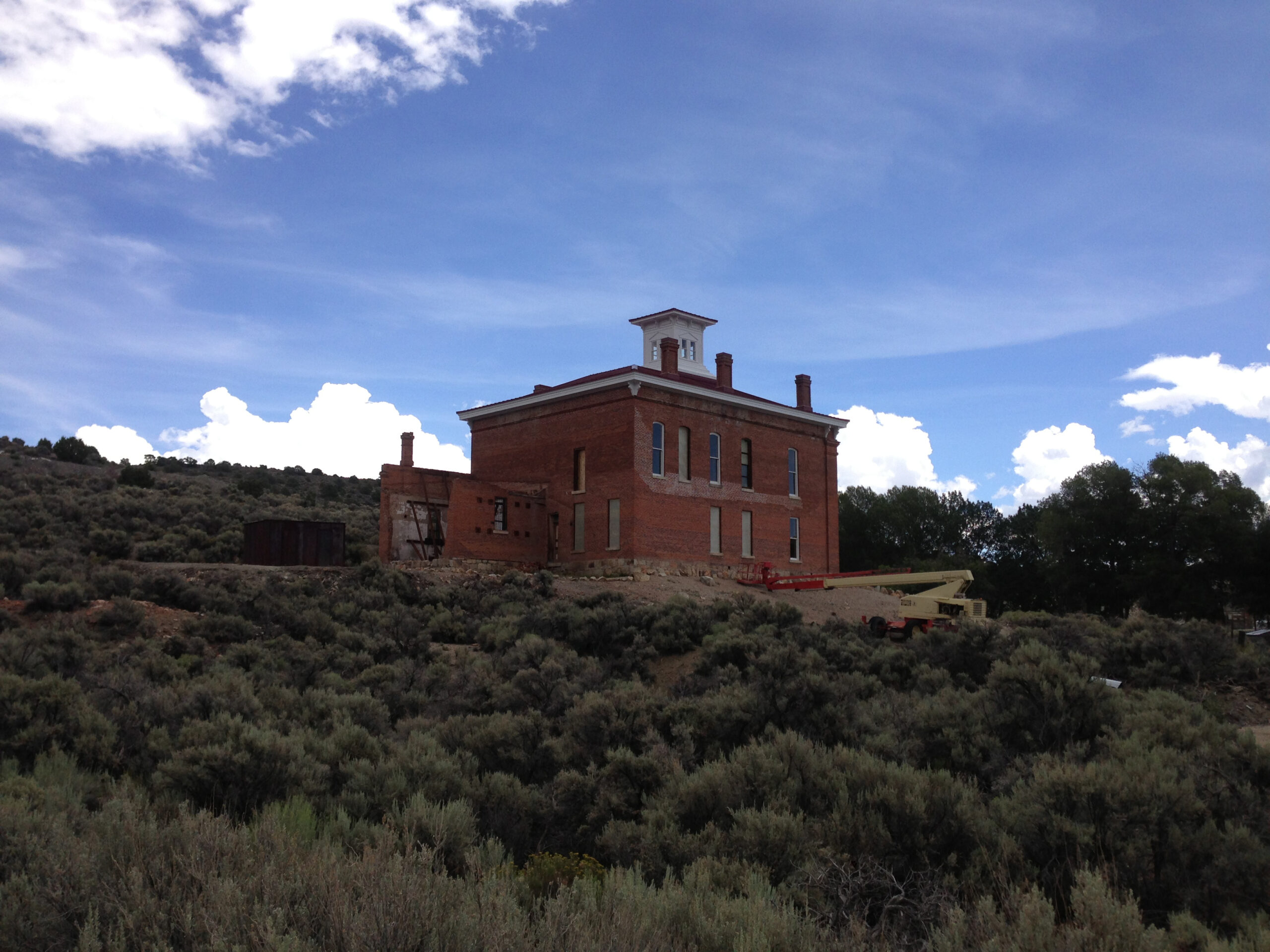
Whatever its true size, the district generated real wealth — somewhere between $4 million and $15 million in bullion over its main working life from 1865 to the mid-1890s. That money paid for the town’s crowning structure. Commissioned in 1875, designed by Carson City architect J.K. Winchell, and finished in 1876 at a cost of $22,000, the two-story red-brick Italianate courthouse housed grand judicial chambers, county offices, and integrated steel jail cells.
Deep Ore and Diminishing Returns
Belmont’s decline was written into its geology. The Toquima silver was spectacularly rich near the surface but shallow. By the mid-1880s the easily worked oxidized ores were largely gone, and as shafts drove deeper the miners hit lower-grade primary ore that demanded costly, complex reduction. Combined with swings in the national silver market, the economics soured. By 1887 the major reduction plants had shut down, and the workforce began to drain away.
Stripping the Roofs
What happened next gives Belmont its distinctive look today. In the arid Great Basin, milled lumber was scarce and expensive — often the single costliest component of any building. So when families left for the next strike, they did something that seems startling now: they dismantled and carried off the structural timber. Roof trusses, floorboards, and joists were pulled from homes and businesses and hauled away to build shelter at the next camp.
This practice — sometimes called “roof stripping” — left brick and stone walls standing open to the sky. Wood-frame buildings collapsed quickly once exposed, but the heavy masonry shells and stone foundations endured. The result is a town of roofless walls: an unusually complete skeleton of a Victorian mining community, preserved precisely because its most portable wealth was stripped away.
The Fall to Tonopah
The final blow came from the south. In 1900, Jim Butler — who had served as Nye County district attorney while living in Belmont — struck silver at Tonopah, roughly forty-five miles away. Belmont’s remaining residents packed up for the new bonanza. By 1900 fewer than a hundred registered voters were left in town. In 1905, after the last case was heard in its courthouse, the legislature formally moved the Nye County seat to Tonopah. The Belmont post office, open continuously since 1867, closed in May 1911 (with a brief revival from 1915 to 1922 before shutting for good). The county capital had, in effect, migrated over the mountains.
Lynchings and Lawmen
Belmont wore its reputation as a rough silver camp honestly. The best-documented episode came in the spring of 1874. On May 16 a barroom fight ended with local miner William Dolan (reported in some papers as Bill Doran) shot dead by H.H. Sutherland. Sutherland was jailed, but public anger boiled over, and on June 3 a vigilante mob stormed the jail, dragged him out, and lynched him. Another incident saw the double hanging of Jack Walker and Charlie McIntyre after a fatal saloon gunfight. Such extrajudicial violence was common enough that early chroniclers — Thompson and West, in their 1881 History of Nevada — are thought to have quietly omitted some of the hangings, eager to project an image of law and order to eastern investors.
The camp drew notable figures, too. Tasker Oddie practiced as a mining attorney here before becoming Nevada’s governor and a U.S. senator; Jim Butler served as district attorney before his Tonopah strike; and the legendary frontiersman and gunman Jack Longstreet frequented Belmont’s saloons. In its heyday Belmont belonged to the same silver world as the Comstock camps like Virginia City — a network of boomtowns rising and falling across the Nevada desert.
The Manson Legend
No story clings to Belmont more stubbornly than its supposed brush with Charles Manson. The physical artifact is real: a carving on a first-floor door frame of the courthouse reading “Charlie Manson + family 1969,” complete with a peace symbol. Local oral history credits Rose Walter — the town’s fierce unofficial guardian, who lived in Belmont until her death in 1987 at ninety-three — with confronting a group of young drifters camping in the abandoned courthouse in mid-1969 and sending them on toward Death Valley. Months later, after the Tate–LaBianca murders filled the papers, she is said to have recognized them.
Saved by Stone
Because so much of Belmont was built in brick and stone, an unusual amount survives. The townsite is now a historic district on the National Register (listed June 13, 1972) and is marked as Nevada Historical Marker No. 138. The centerpiece courthouse very nearly did not make it: by the early 1970s, after decades of vandalism, weather, and seismic strain, it faced collapse. In 1974 Nye County handed the building to the Nevada Division of State Parks, which invested more than half a million dollars in seismic retrofitting, brick repointing, and roof stabilization. In 2012, amid state budget cuts, the courthouse returned to county ownership, and today it is cared for through a partnership between Nye County and the non-profit Friends of the Belmont Courthouse, who continue interior restoration and are rebuilding the exterior jail cells.
Other survivors line Main Street and East Belmont: the stone Cosmopolitan Saloon and music hall; the weathered wood-frame Ernst House, built in the 1870s for surveyor George Ernst; the towering stone walls and brick chimneys of the Combination and Monitor mills; and Philadelphia House, once the Combination Mine’s office, now under active volunteer restoration. On the town’s edge, the Belmont Cemetery holds the headstones of miners and families whose lives here were often short.
Getting There
Belmont lies in central Nye County, roughly forty-five miles northeast of Tonopah. From Tonopah, take U.S. 6 east about five miles, turn north onto State Route 376 for around thirteen miles, then turn onto State Route 82, which runs directly into town and becomes Main Street. The route is almost entirely paved, with only a short well-graded gravel stretch near the end — passable by an ordinary passenger car in normal weather. Because there are no services in Belmont, treat Tonopah as your last stop for fuel, water, and supplies.
Ghost Towns Nearby
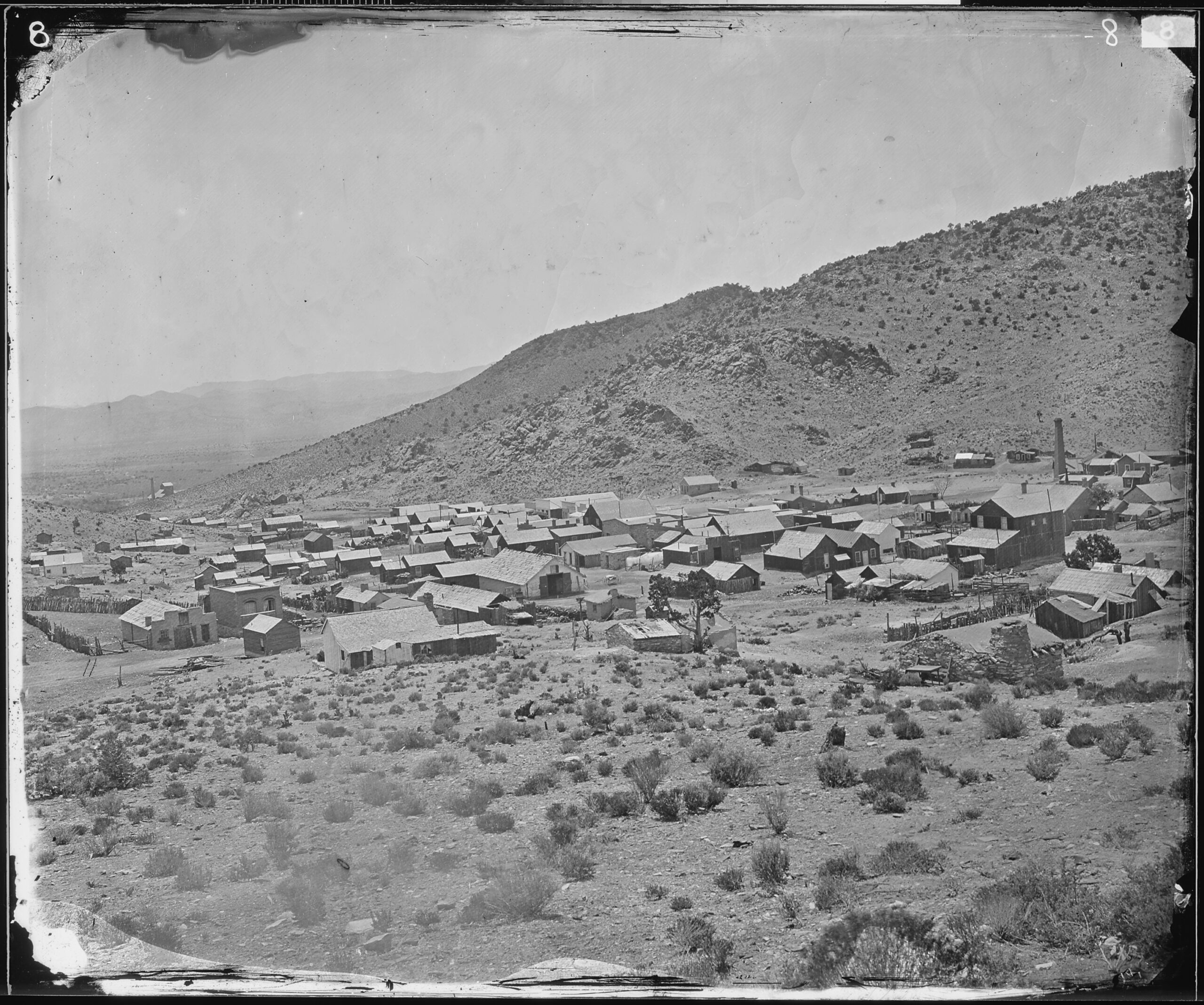
Photo credits: 1871 town view, Combination Mill, Canfield’s Mill, and Arizona Mine shaft — Timothy H. O’Sullivan / National Archives (public domain); courthouse (color), Vivaverdi (CC BY 3.0); courthouse from west, Famartin (CC BY-SA 4.0). Sourced via Wikimedia Commons.