Shakespeare, New Mexico: The Silver Camp That Reinvented Itself Twice

Most ghost towns die once. Shakespeare, tucked into the creosote flats of New Mexico’s Bootheel a couple of miles below Lordsburg, managed to die and revive itself several times over before it finally settled into the quiet it keeps today. It began as a spring in a dry arroyo, became an army mail relay, briefly wore the name of a Union general, exploded into a silver boomtown of roughly three thousand people, collapsed under one of the most notorious mining swindles in American history, and then rose a second time under a new name borrowed from an English playwright.
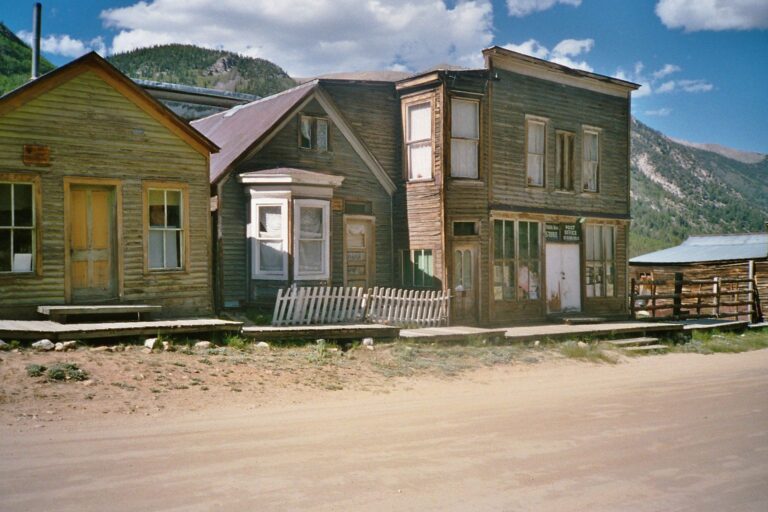
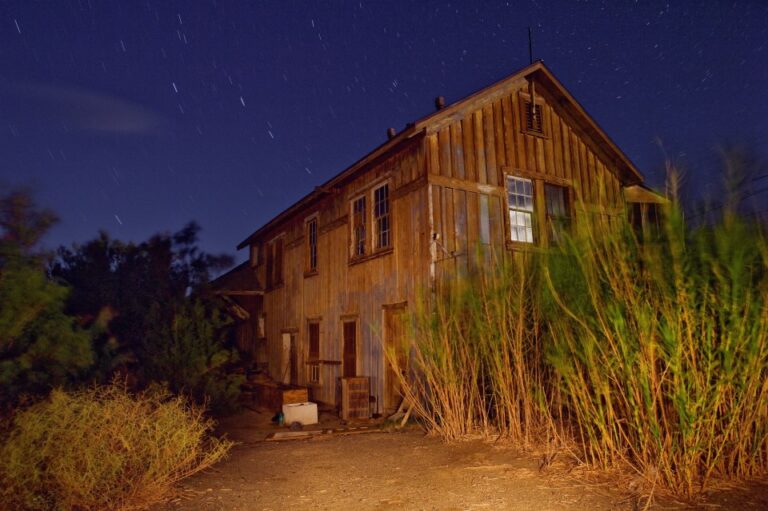
What survives is unusually honest. There are no gift shops, no paved paths, no costumed performers wandering a reconstructed set. A single family bought the townsite in the 1930s and spent the better part of a century keeping the adobe walls standing without turning the place into a theme park. The result is one of the most authentic Territorial-era streetscapes left in the Southwest — and a stubborn reminder that the frontier was built as much on speculation and rumor as on ore.
A Spring in the Desert
Everything at Shakespeare started with water. In a landscape where reliable springs are rare and precious, a small seep in an arroyo west of the eventual town site drew people long before any American mapmaker took notice. Grinding stones scattered across the surrounding ground show that Indigenous travelers used the spring for generations, working seeds and grain on the same flats where adobe walls would later rise.
The United States Army was the first to formalize the site. Around the mid-1850s, soldiers established a relay station at the spring to serve the military mail route running between Fort Thorn on the Rio Grande and Fort Buchanan in what is now Arizona. Locals called the place Mexican Springs. It was never much to look at, but it sat in exactly the right spot: a dependable water source on a punishing stretch of desert road, which in the pre-railroad Southwest was worth more than gold.
Stagecoaches and the Civil War
Between 1858 and 1861 the spring became a waystation on the great overland mail lines threading the southern route to California. The San Antonio and San Diego Mail Line passed through, and the Butterfield Overland stages followed, with a squat adobe station built on higher ground to shelter coaches and swap out teams. For a few years the little station lived the ordinary, dusty life of a frontier stop — travelers watering horses, drivers trading news, the occasional worried glance toward the horizon.
The Civil War upended that routine. As federal troops were pulled east, the isolated station lost its protection and became exposed to Apache raids that made travel through the region genuinely dangerous. Even so, the war brought traffic of its own. In 1862 a Confederate detachment under Captain Sherod Hunter passed through on its way to Tucson. After the Confederate reversal at Picacho Pass, Union troops of General James Henry Carleton’s California Column moved into the Southwest, enlarged the station, and threw up a rough fortification that old-timers remembered as the “old stone fort.” When the war ended in 1865, stage service resumed under the firm of Kerens and Mitchell, who installed a station keeper named John Evensen. For a brief spell the settlement carried yet another name, Grant, honoring the victorious Union general.
Silver, and the Birth of Ralston City
In 1870 prospectors working the ridges near Grant turned up outcrops of rich silver ore, and the sleepy stage stop’s fate changed overnight. Lacking the capital to develop the claims themselves, the discoverers went looking for money and found it in one of the most powerful financiers on the West Coast: William Chapman Ralston, co-founder and president of the Bank of California. Ralston organized the New Mexico Mining Company, and the camp that grew up around the diggings took his name — Ralston City.
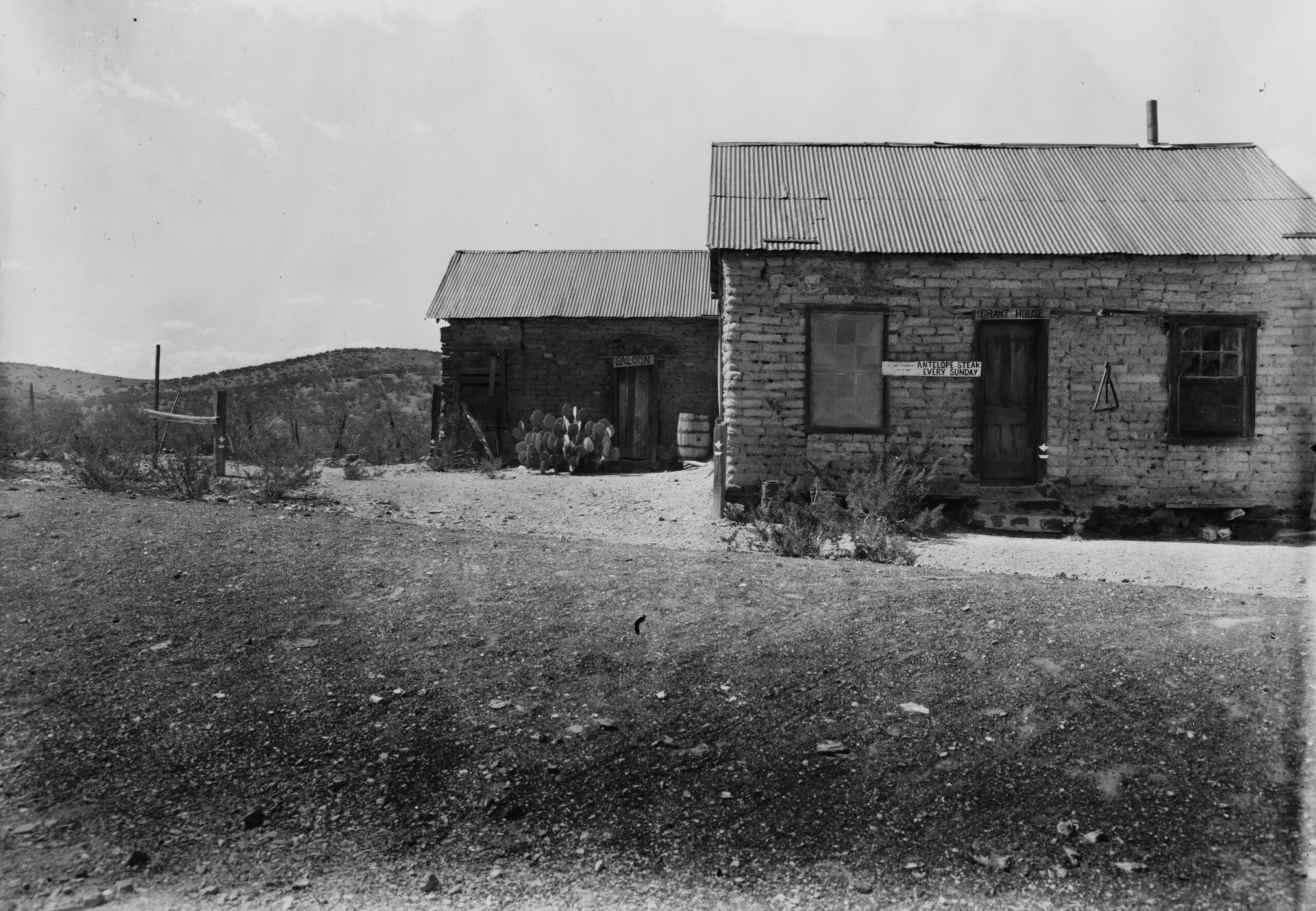
San Francisco and San Diego newspapers promoted the strike relentlessly, and miners poured in. At its peak in the early 1870s the camp held perhaps three thousand people living in a jumble of tents, adobe saloons, and improvised shelters. By some counts sixteen saloons operated at once. What the town conspicuously lacked was everything that usually signals a settled community: no church, no school, no courthouse, no sheriff. To keep independent prospectors from staking claims on the company’s silver veins, the mining company simply kept armed guards on the payroll. Order, such as it was, came from a gun rather than a gavel.
The boom was hollow, and it did not last. The surface silver played out within a couple of years, the same brutal arithmetic that emptied camps like Cerro Gordo in California, and as ore values fell, the men behind Ralston City grew desperate to prop up land prices and lure fresh investment. What they engineered next became a national scandal.
The Great Diamond Hoax
In 1872 speculators tied to the district “salted” a nearby height called Lee’s Peak, scattering uncut diamonds across the ground to manufacture the appearance of a fabulous gemstone field. The scheme fit neatly into a larger diamond fraud unfolding that same year, a swindle sensational enough to draw in serious investors before a government geologist exposed it. When the hoax broke nationally, confidence in the whole district evaporated. Miners who feared prosecution or ruin cleared out, and the collapse of silver’s monetary role under the Coinage Act of 1873 finished the job. Ralston City emptied to a near-ghost within months.
Colonel Boyle and the Second Boom
By 1879 the abandoned camp had a name too tainted to sell anything. That year Colonel William G. Boyle, working with General John Boyle, bought up most of the district’s land and claims and set out to bury the memory of the swindles. His solution was a rebranding as thorough as any modern marketing campaign: he renamed the town Shakespeare, christened its main street Avon Avenue after the playwright’s home river, and hung the name Stratford on the principal hotel. The Elizabethan theme was pure invention, but it worked as a clean break from Ralston’s ruined reputation.
Boyle raised capital from St. Louis investors and formed the Shakespeare Gold and Silver Mining and Milling Company, touching off a second, steadier boom. This time families came, and the town took on a more permanent shape than the tent-and-saloon chaos of the Ralston years — though even now it never bothered to build a church, a school, or a formal town government.
Bypassed by the Railroad
Shakespeare’s second decline was not the work of a single catastrophe but of geography and economics grinding together. In 1880–1881 the Southern Pacific Railroad laid its line about three miles to the north, and rather than routing through Shakespeare it created an entirely new hub at Lordsburg. In the railroad age, a town three miles off the tracks was a town with a countdown running. Merchants and families began dismantling their own homes and shops and hauling the materials north to be closer to the depot.
The final blow came with the Silver Panic of 1893, when collapsing silver prices and a national depression shut the remaining mines for good. Departing residents stripped the buildings of roofs, doors, and anything worth carrying, leaving bare adobe walls to face the desert weather. There was a brief afterlife: in 1907 a copper mine opened about a mile south, and workers rented the surviving adobe structures until that operation wound down around 1929. After that, the town was essentially finished as a place where anyone lived.
The Family That Saved It
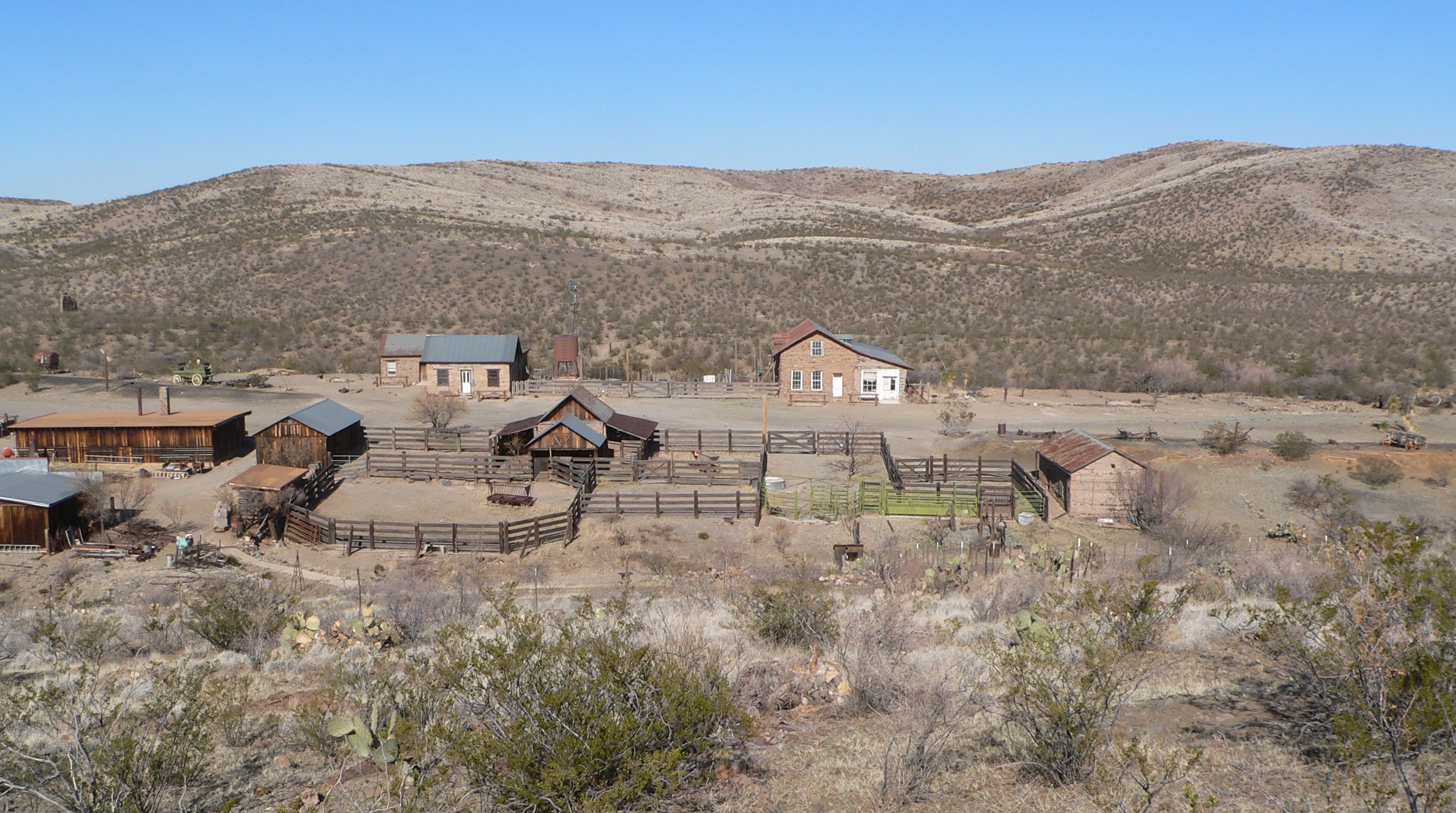
In 1935 Frank and Rita Hill bought the townsite and the land around it to run cattle. They could have let the ruins melt back into the ground, as countless other adobe camps did. Instead Rita Hill, working with a former resident named Emma Marble Muir, began recording the town’s history and shoring up its crumbling architecture. Their stewardship is the single reason so much of Shakespeare still stands. In 1970 the site was recognized as a National Historic Site, and in 1973 it was formally listed on the National Register of Historic Places.
After Frank Hill died in 1970 and Rita in 1985, their daughter Janaloo Hill and her husband Manny Hough carried the preservation work forward, living on the ranch and guiding visitors through the buildings. Following Hough’s death in 2018, the privately held Shakespeare Foundation has continued to maintain the district as an uncommercialized monument — a working relationship between a cattle ranch and a piece of frontier memory. Where towns like Chloride, Arizona survived by leaning into tourism, Shakespeare chose the opposite path and kept the crowds at a distance.
Adobe, Yucca, and the Old Stone Fort
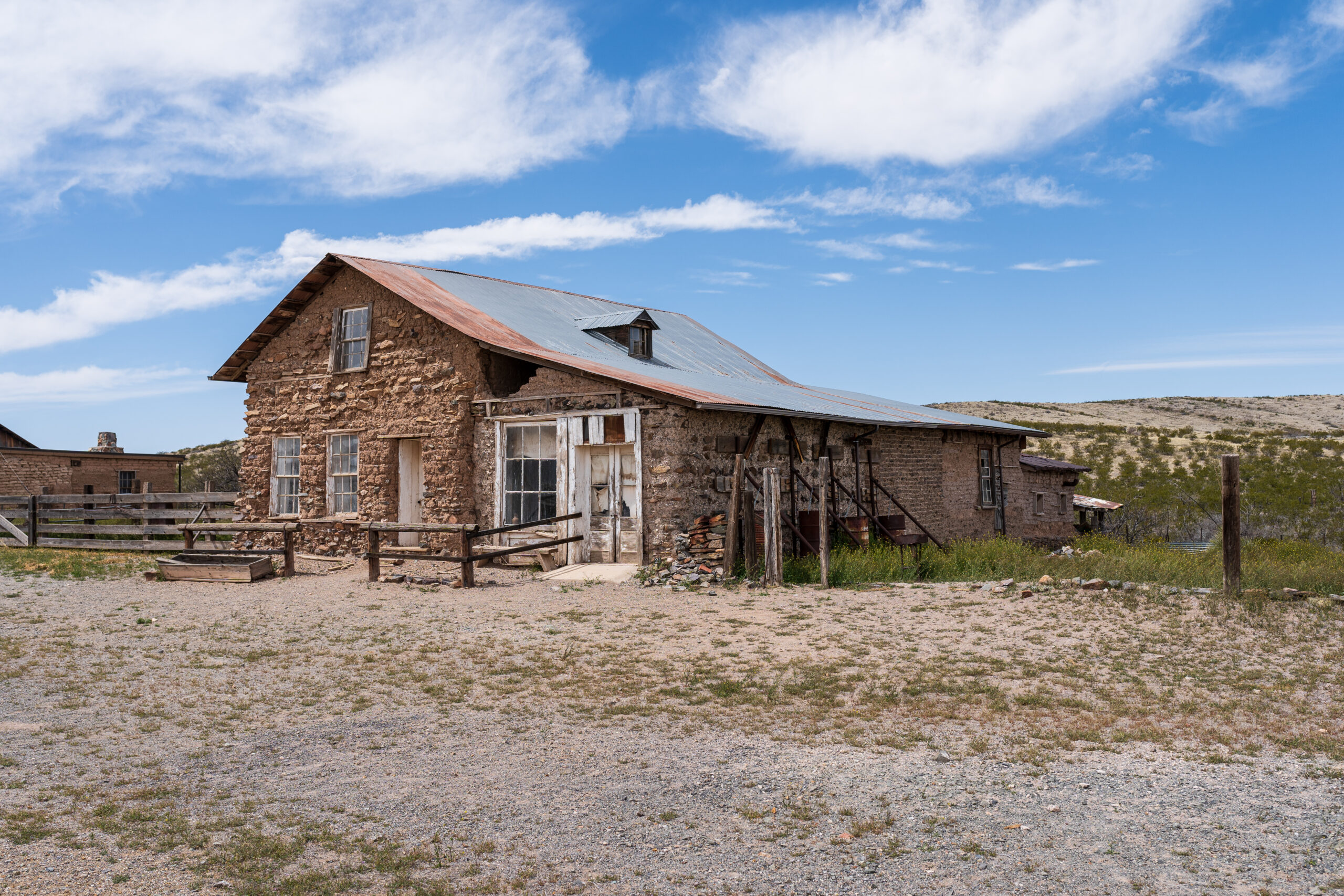
Architecturally, Shakespeare reads as a late-nineteenth-century Southwestern village. There are faint touches of Territorial and Greek Revival detailing around a few doors and windows, but the dominant idiom is plain Mexican-village adobe. Two features stand out to preservationists. The walls of some structures were built by the puddled-adobe method — mud laid up in wet courses rather than formed into sun-dried bricks — a technique unusual for the American Territorial period. And the old mail station carries ceiling latias fashioned from yucca stalks, an Indigenous building solution that is close to unique among surviving Southwestern historic structures.
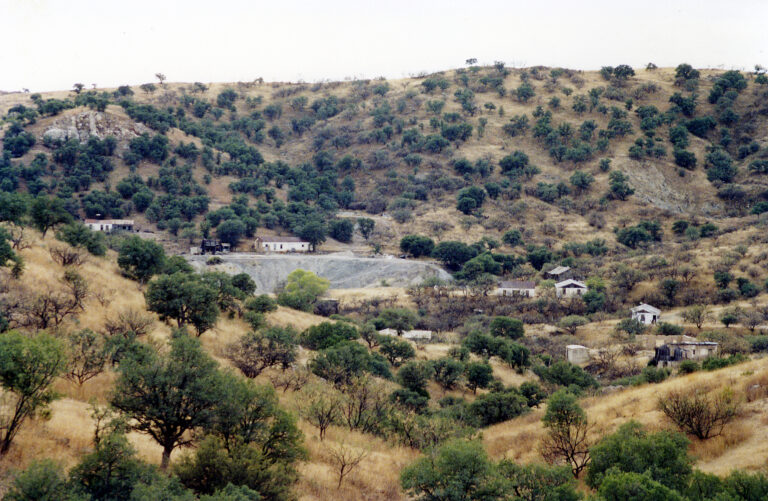
Along the old street a visitor can still see the mail station, the Stratford Hotel with its preserved kitchen, the Grant House that served as dining hall and saloon, a general merchandise store, and an assay office where ore samples were once weighed and tested. One later building, a mine office relocated from the Santa Rita copper pit to save it from demolition, spent years as Janaloo Hill’s dance studio. Beyond the standing walls, dozens of foundation outlines trace a planned grid across the brush — the ghost of the street plan Ralston City laid out at its peak.
Outlaws and the Grant House Hanging
A town with no jail and no lawman naturally attracts people who prefer it that way. Shakespeare’s isolation made it a regular stop for cattle rustlers and gunmen drifting through the Bootheel, and its best-documented episode is a grim one. In late 1881 a local vigilance committee seized two men — William “Russian Bill” Tattenbaum, an educated drifter who claimed Russian aristocratic blood, and Sandy King, a rustler tied to the Clanton faction. Bill had stolen a horse; King had made himself a persistent menace.
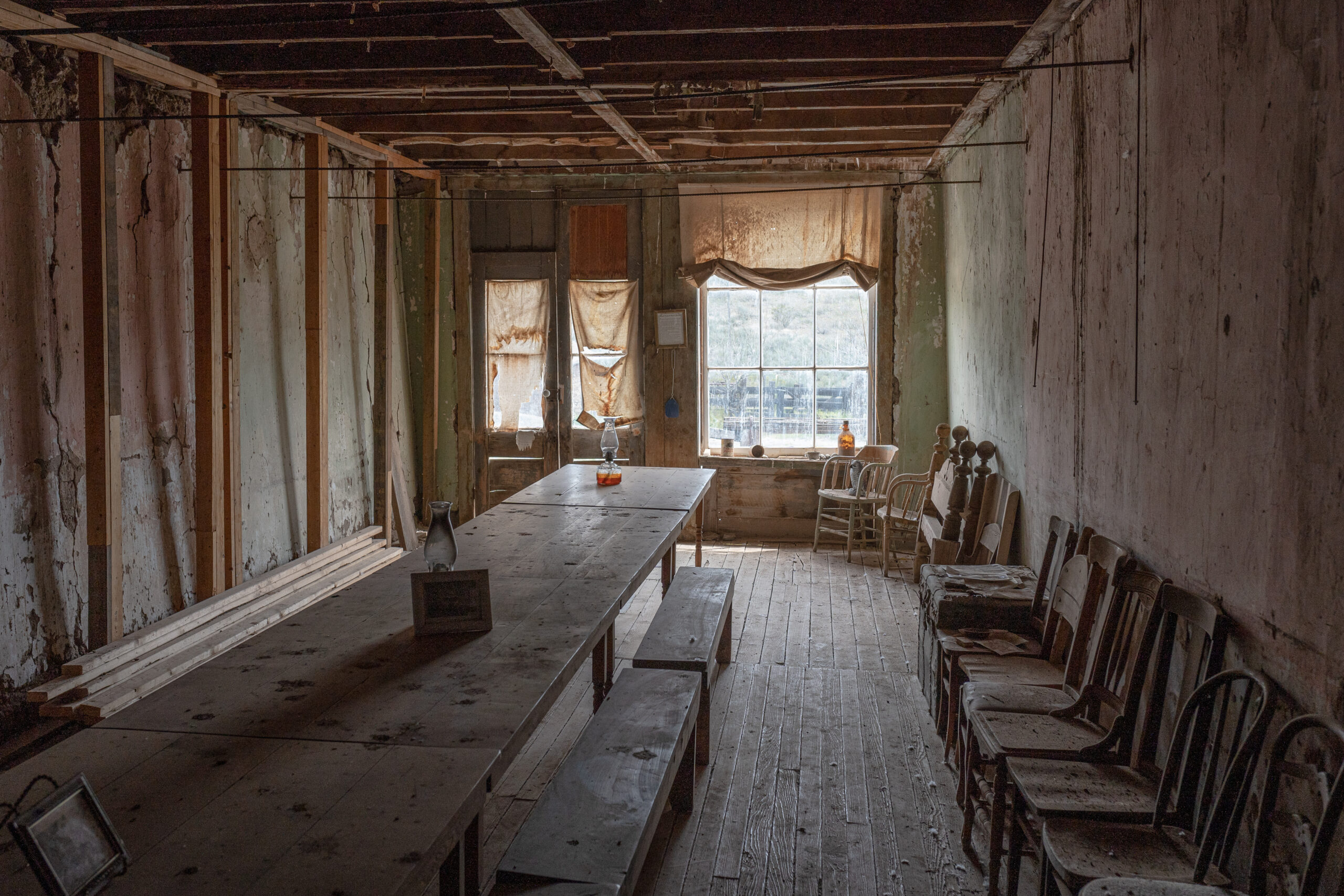
With no court and no jail, the committee held a summary trial inside the Grant House and sentenced both to hang. Because the treeless flats offered nothing to hang them from, the vigilantes threw ropes over the heavy ceiling beams of the dining room. The committee’s verdict was later summarized with frontier economy: Russian Bill had stolen a horse, and Sandy King was simply too much of a nuisance to keep around. Local tradition adds that when the morning stage rolled in, the driver refused to eat breakfast until the bodies were cut down and buried. The hanging earned a strange literary afterlife: Vladimir Nabokov gave Shakespeare a passing mention in Lolita, noting the town where “bad man Russian Bill” had been colorfully hanged.
A Cast of Frontier Characters
Beyond the hanging, the saloons along Avon Avenue drew a remarkable roster of Western names. Historical accounts place the outlaws John Ringo, Curly Bill Brocius, members of the Clanton family, and Jim Hughes in Shakespeare during the 1870s and 1880s. The Stratford Hotel, for its part, lodged a more respectable class of guest: Territorial Governor Lew Wallace, who wrote Ben-Hur; the orator and lawyer Robert G. Ingersoll; and Governor Edmund G. Ross. A young George W. P. Hunt, later Arizona’s first state governor, is said to have waited tables there. Local tradition even records a fatal gunfight inside the hotel that started over an argument about an egg — the kind of story that is impossible to verify and too good to leave out. In a place with no formal law, an unwritten rule kept the peace as well as anything: if you killed a man, you had to dig his grave.
Timeline
Planning a Visit
Getting There
Nearby Ghost Towns
Shakespeare sits in the Bootheel country of far southwestern New Mexico, a corner of the state where mining camps and railroad stops rose and fell within a few decades of one another. None of the closest neighbors below has its own guide yet, but they sketch the regional pattern of ore and rail that shaped the whole district.
Sources: Legends of America, “Shakespeare, New Mexico” · New Mexico Tourism Department · National Park Service / National Register of Historic Places documentation · ShakespeareGhostTown.com (Shakespeare Foundation) · Sherman & Sherman, Ghost Towns and Mining Camps of New Mexico. Photo credits: hero and hotel interior by Matthew Kowal (CC BY-SA 4.0); townsite view by “Ammodramus” (CC0); historic images by Perry E. Borchers and (attributed) John Taylor (public domain).