Silver City, Idaho: The Boomtown That Fought Its Wars Underground
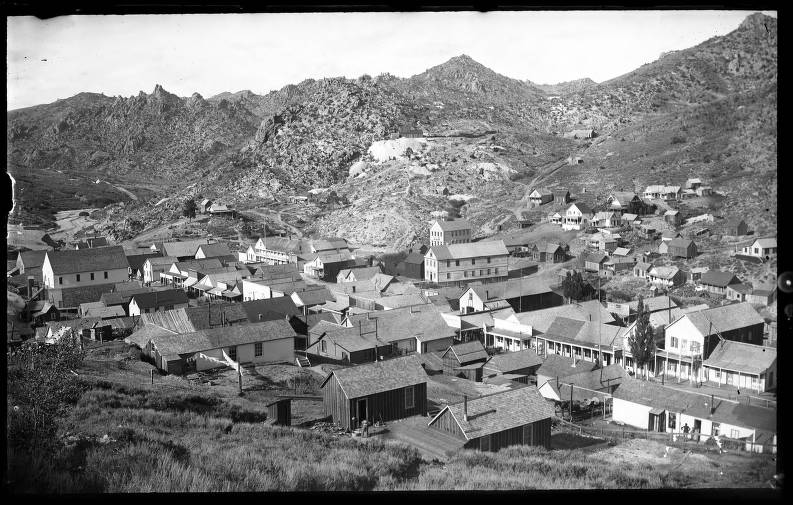
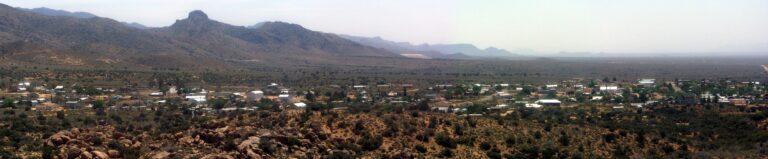
Silver City sits at nearly 6,200 feet in the Owyhee Mountains of southwestern Idaho, a mining boomtown so remote that its roads still close for the winter every year and reopen every spring. In its 1880s heyday it was one of the richest camps in the West, with assays on War Eagle Mountain returning higher values than the early Comstock Lode. It was also the site of two of Idaho’s strangest and most violent mining conflicts — corporate wars fought with rifles, cannons, and tunnels dug specifically to outflank the other side underground.
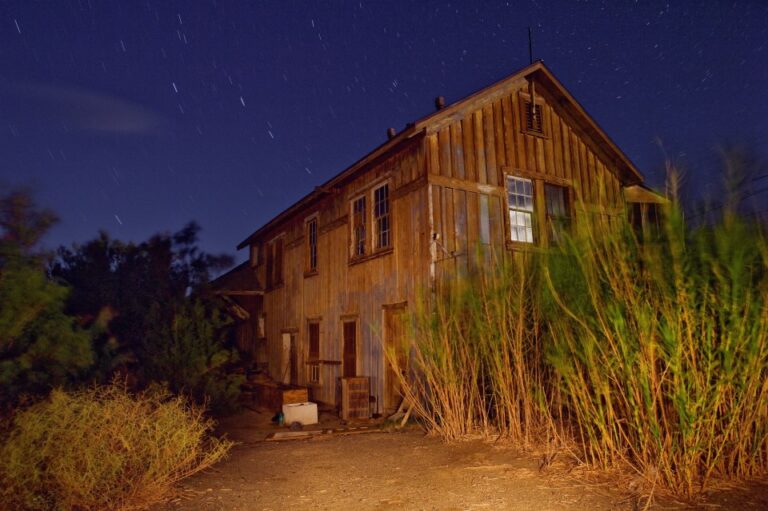
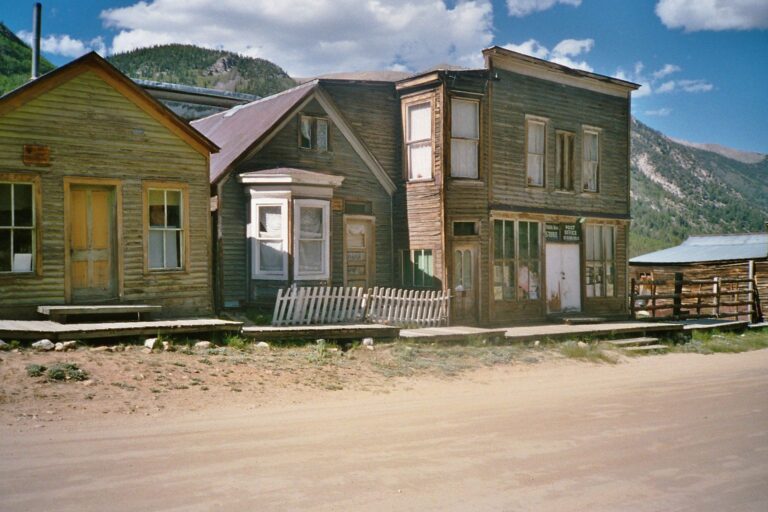
Today it is a genuine ghost town: no gas station, no municipal water, no year-round residents, and roughly 70 to 75 original 19th-century buildings still standing, most of them owned by the same mining families who built them five generations ago.
The Blue Bucket, Jordan Creek, and a Rush That Found Something Better
In May 1863, a 29-man prospecting party led by Michael Jordan set out into the Owyhee Mountains chasing rumors of the legendary "Blue Bucket" placer gold deposit, a half-mythical strike supposedly found decades earlier by lost emigrants. The party never found the Blue Bucket. What it found instead was rich gold placer gravel along a stream the men named Jordan Creek in their leader’s honor. Word spread fast to played-out camps in California, Oregon, and northern Idaho, and prospectors poured in to stake tent camps with names like Discovery Bar, Happy Camp, Boonville, and Ruby City.
The placer gravels near the surface didn’t last. By late 1864 miners working higher up the canyon had traced the gold to its source: hard-rock quartz veins laced with gold and silver on nearby War Eagle Mountain. Early assays were almost unbelievable, returning as much as $2,800 in gold and $7,000 in silver per ton of ore — richer than the first recorded values out of Nevada’s famous Comstock Lode. A new townsite platted a mile up-canyon from Ruby City, with better winter shelter and closer access to the quartz mines, quickly overtook its neighbor. The Idaho Territorial Legislature had already created the 7,639-square-mile Owyhee County on December 31, 1863, and in 1866 the county seat moved from Ruby City to the upstart camp: Silver City.
Idaho’s First Wired City
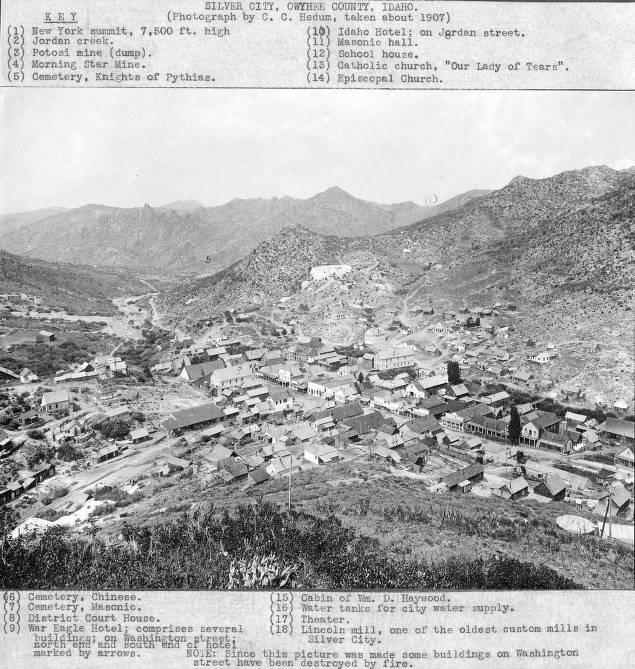
By the 1880s Silver City supported roughly 2,500 permanent residents and a mining workforce nearing 5,000 across the district, with around 300 houses and more than 75 businesses — six general stores, eight saloons, two hotels (the Idaho Hotel and the War Eagle Hotel), two lumber yards, a brewery, a bottling plant, and a brothel. For a mountain town with no railroad, it moved remarkably fast on new technology. The Owyhee Avalanche, founded August 19, 1865, was Idaho Territory’s first daily newspaper. Silver City got Idaho’s first telegraph line on August 31, 1875, and was among the first towns in the territory to wire up electric lighting and telephone service.
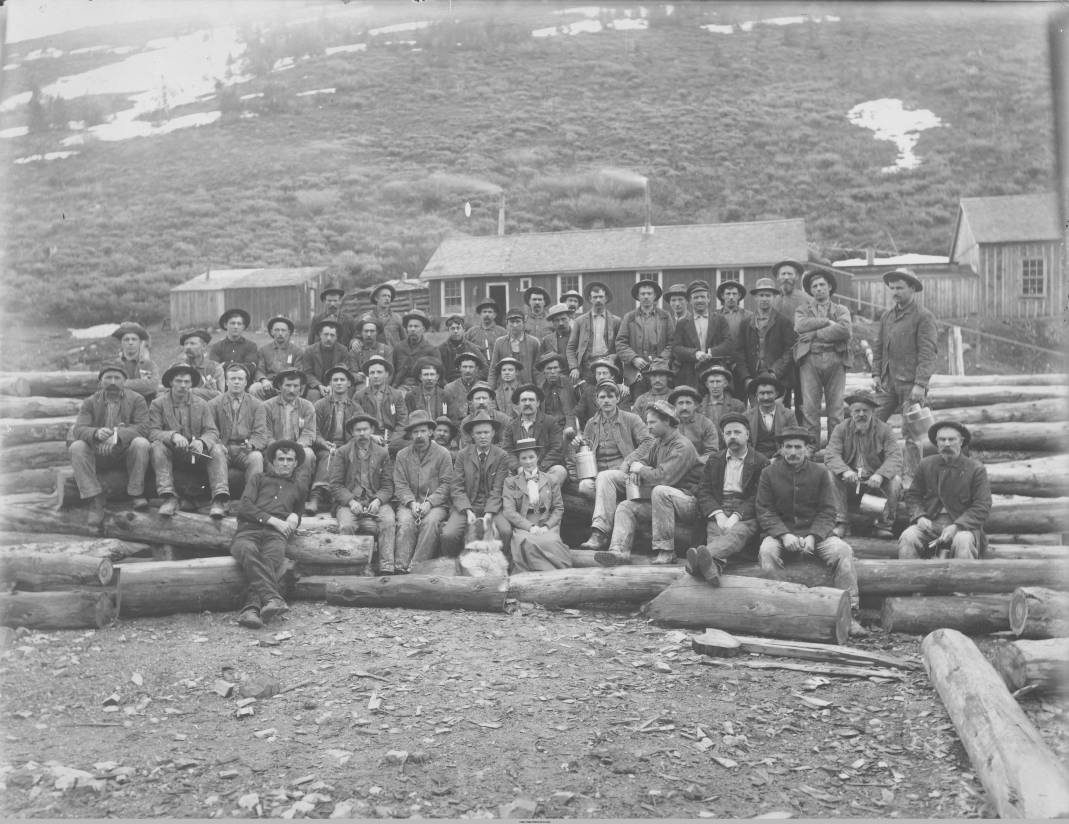
The workforce was far more diverse than popular Western imagery usually suggests. European-American miners worked alongside significant numbers of Chinese, African American, Basque, and Hispanic residents. Chinese immigrants, largely excluded from staking primary lode claims, ran laundries and barbershops or worked secondary placer tailings; Basque and Hispanic teamsters drove the freight wagons and pack-mule trains that kept the isolated camp supplied from staging points down in the Snake River Valley.
The Poorman Mine War
The wealth packed into War Eagle Mountain came with a problem: 19th-century mining law had no reliable way to define who owned a vein once it dipped underground, and rival companies frequently found themselves tunneling toward the same ore from different directions. In 1865, prospector D.C. Bryan struck a rich silver outcrop and filed it as the Poorman Mine. The neighboring Hays and Ray claim immediately argued the vein was simply an extension of ground they had located first, and moved to get a court injunction. Bryan’s crew didn’t wait to find out how that would go — in six days of round-the-clock work, they tore more than $500,000 worth of ore, some of it assaying as high as 80 percent gold and silver content, out of the disputed ground.
To hold the site while lawyers argued, Poorman miners built a fortified log stronghold nicknamed "Fort Baker," complete with rifle ports. Armed men from both companies clashed on September 24, 1865. The dispute was eventually settled by a corporate compromise rather than a court verdict, but the mine’s ore had already made international news.
The Owyhee War of 1868
An even larger conflict broke out in the spring of 1868 between the Golden Chariot and Ida Elmore mining companies, whose claims met along a disputed boundary deep inside War Eagle Mountain. On March 25, 1868, armed Golden Chariot miners crossed an agreed neutral buffer zone and attacked Ida Elmore workers underground, touching off a gunfight in the tunnels that left two men dead. Both companies then did something almost unthinkable for a mine dispute: they hired private armies, eventually fielding more than 100 armed men between them. The local sheriff couldn’t control the standoff and settled for ordering every saloon in town closed to keep the violence off the streets.
Idaho’s territorial governor, D.W. Ballard, had to intervene directly, issuing a cease-and-desist proclamation and sending Deputy U.S. Marshal Sam Kelly north with 95 federal troops and an artillery piece to occupy the town. Federal troops enforced a truce between April 4 and April 8, 1868, long enough for lawyers to draw up an actual settlement. The peace didn’t fully hold on a personal level: a later saloon argument between faction leaders Marion Moore and Samuel Lockhart ended in a fatal shootout in front of the Idaho Hotel.
Screaming Alice and the Ghosts of the Idaho Hotel
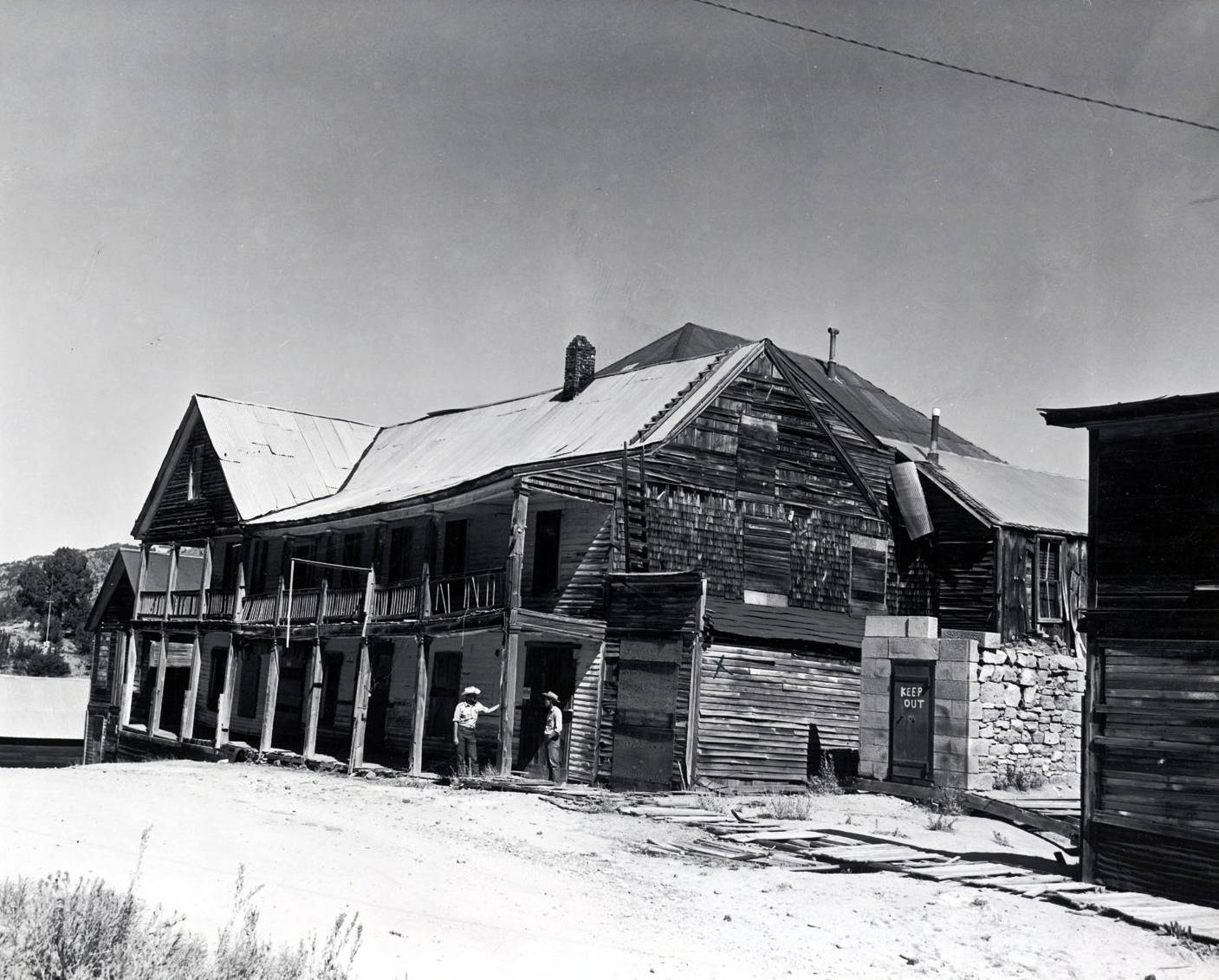
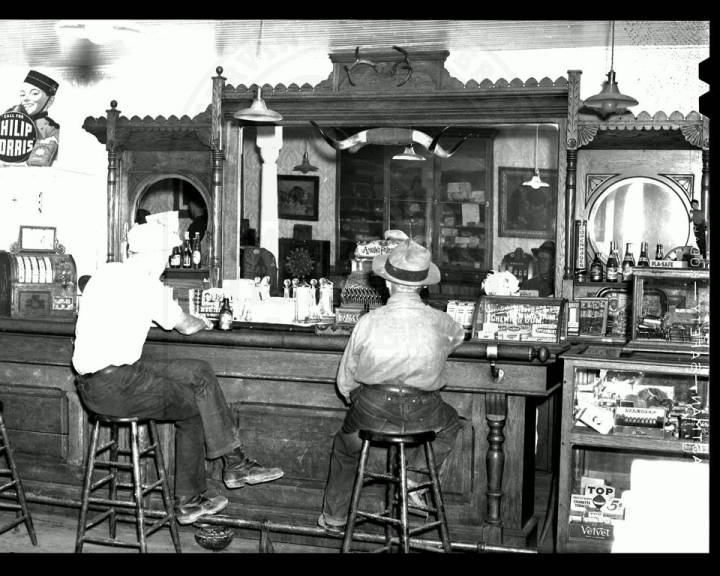
The Idaho Hotel is the emotional centerpiece of Silver City today, and also the source of most of its ghost stories. The building started life in Ruby City in 1863 and was moved, piece by piece, to Silver City in 1866, where it has operated as a seasonal lodging house on and off ever since. Local legend holds that the hotel is home to several resident spirits: "Screaming Alice," a woman in a white dress; a "Gentleman in Tails" in formal Victorian dress; and children supposedly heard playing marbles in the upstairs hallways. Story and tradition point to Room 27 and the adjoining south saloon, where a former owner is said to have died by suicide while terminally ill.
The frontier’s rougher side shows up in less ghostly ways too: local anecdotes about the historic cemetery above Slaughter House Gulch recall at least one man whose death there was, by local tradition, arranged by his own wife — a dark joke about frontier marriage as much as a ghost story.
The Long Decline
Silver City’s fortunes were tied directly to the mines above it, and as the richest veins of War Eagle Mountain played out in the early twentieth century, the town began a slow retreat. Large-scale mining effectively ceased around 1912, and with it went the steady flow of payroll that had supported hotels, saloons, and shopkeepers for half a century. Families drifted away year by year, chasing work in other camps or in the growing towns of the Snake River plain.
The town lost its last major civic anchor in 1934, when Owyhee County’s seat was formally relocated to Murphy, a small rail-served community closer to the county’s population center. World War II delivered a further blow: the War Production Board’s Limitation Order L-208, issued in 1942, halted non-essential gold mining nationwide to redirect labor and materials toward the war effort, and Silver City’s remaining operations were swept up in the shutdown. The post office, which had served the district since the 1860s, closed for good in 1943.
For decades afterward, Silver City was kept from complete abandonment by a mere handful of year-round residents. The best known of them, Willie Hawes, lived in the town from 1876 until his death in 1968, becoming something of a living link between the boomtown era and the ghost town it slowly became. His nearly century-long presence is often cited by local historians as the reason so many of Silver City’s structures survived intact rather than being scavenged or demolished.
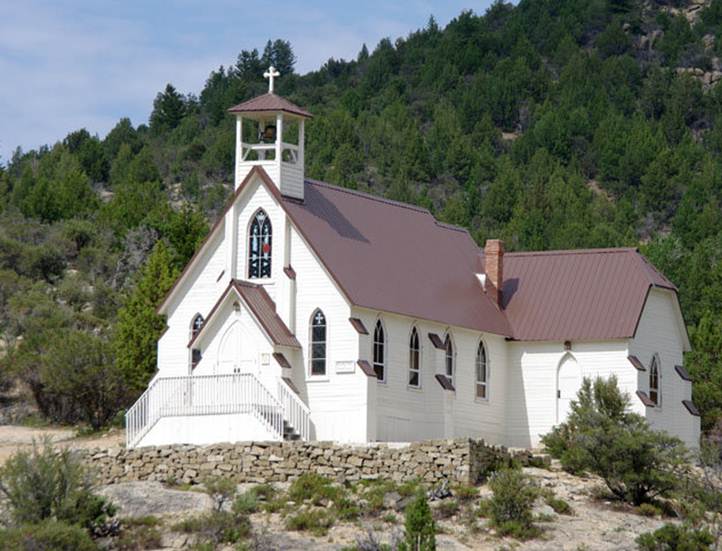
Silver City’s historic district was added to the National Register of Historic Places in 1972, formally recognizing the remarkable survival of dozens of nineteenth-century buildings along its original streets. Today the town sits on land managed by the federal Bureau of Land Management, though many of the historic structures — including the Idaho Hotel, the Catholic church pictured above, and several private cabins — remain privately owned. That patchwork of public land and private property is part of why Silver City feels less like a roped-off museum and more like a town that simply emptied out and was left standing.
Silver City Timeline
Planning a Visit
Getting There
Nearby Ghost Towns
Silver City sits at the center of the wider Owyhee mining district, and several other camps within about 50 miles share its history and, in some cases, its buildings’ fate.
Sources: Hart & Nelson, Owyhee Outpost (1995); Wells, Gold Camps and Silver Cities, Idaho Bureau of Mines and Geology Bulletin 22 (1964, rev. 1983); Adams, Historic Silver City (1960); Christian, Idaho’s Silver City (M.A. thesis, 1952); Derig, A History of Silver City, Idaho (M.A. thesis, 1951); York, Descriptive and Commercial Directory of Owyhee County (1898); Jones, DeLamar (2006); U.S. Bureau of Land Management public land records; National Register of Historic Places nomination documentation.