Jerome Ghost Town, Arizona: The Billion-Dollar Copper Camp That Slid Downhill
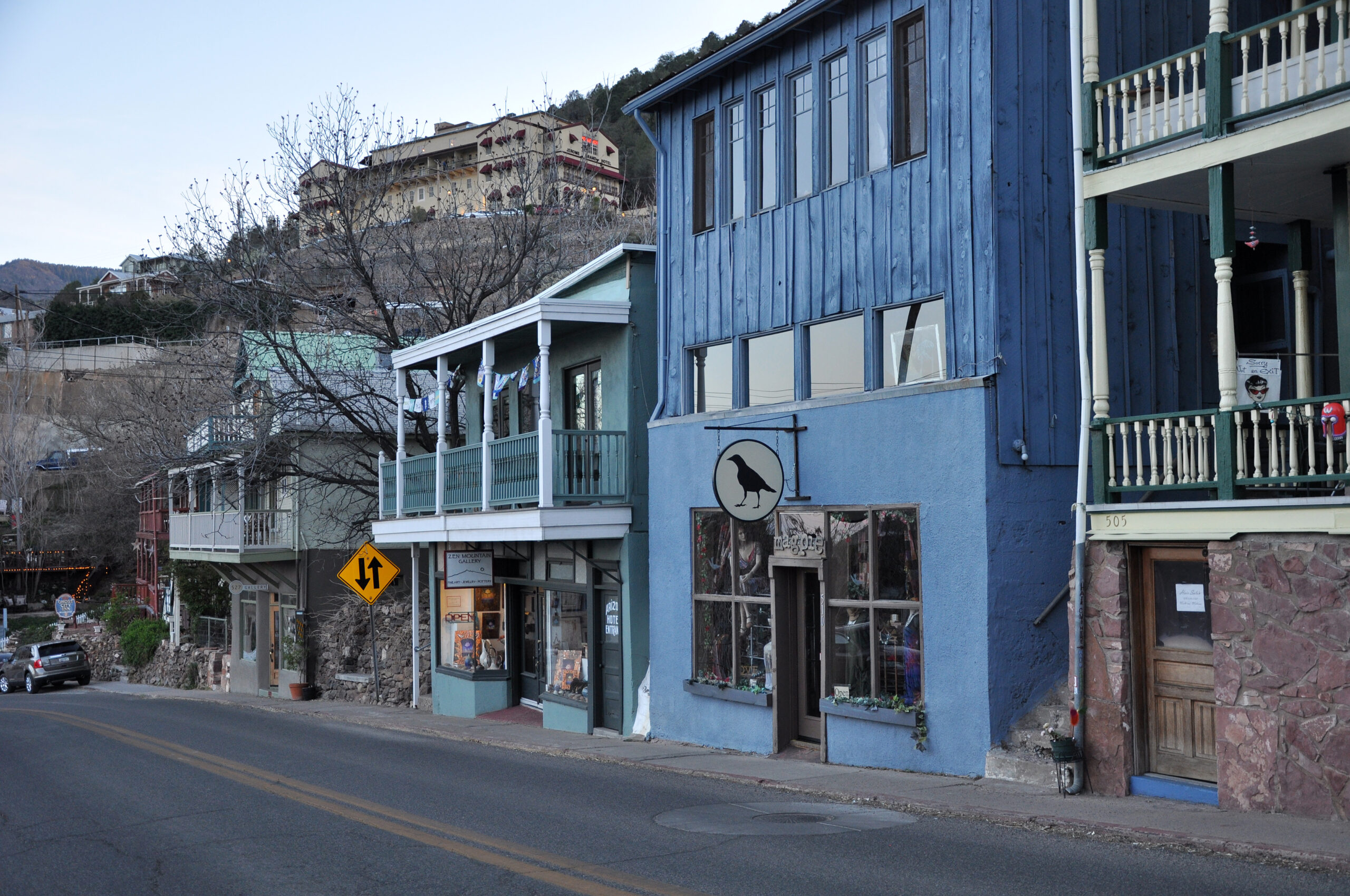
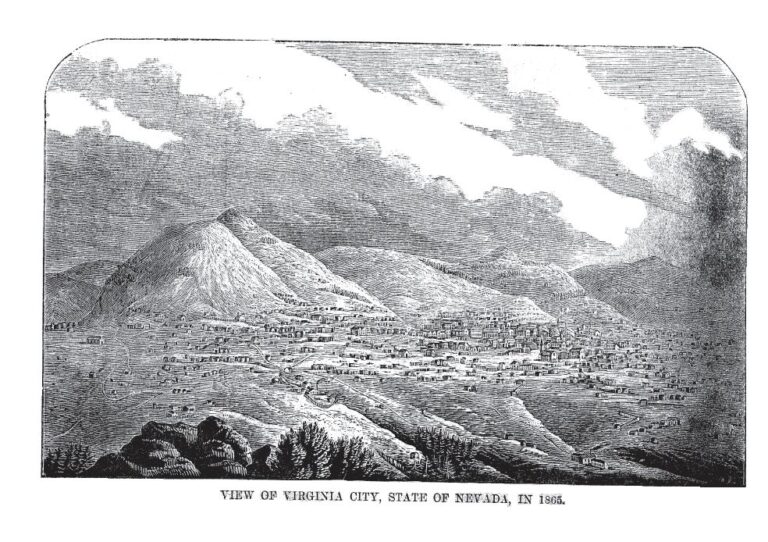
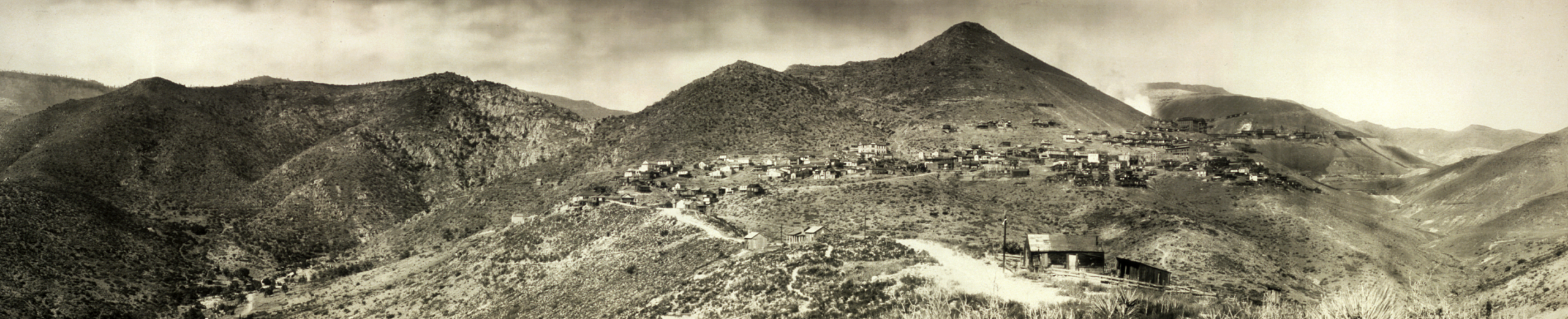
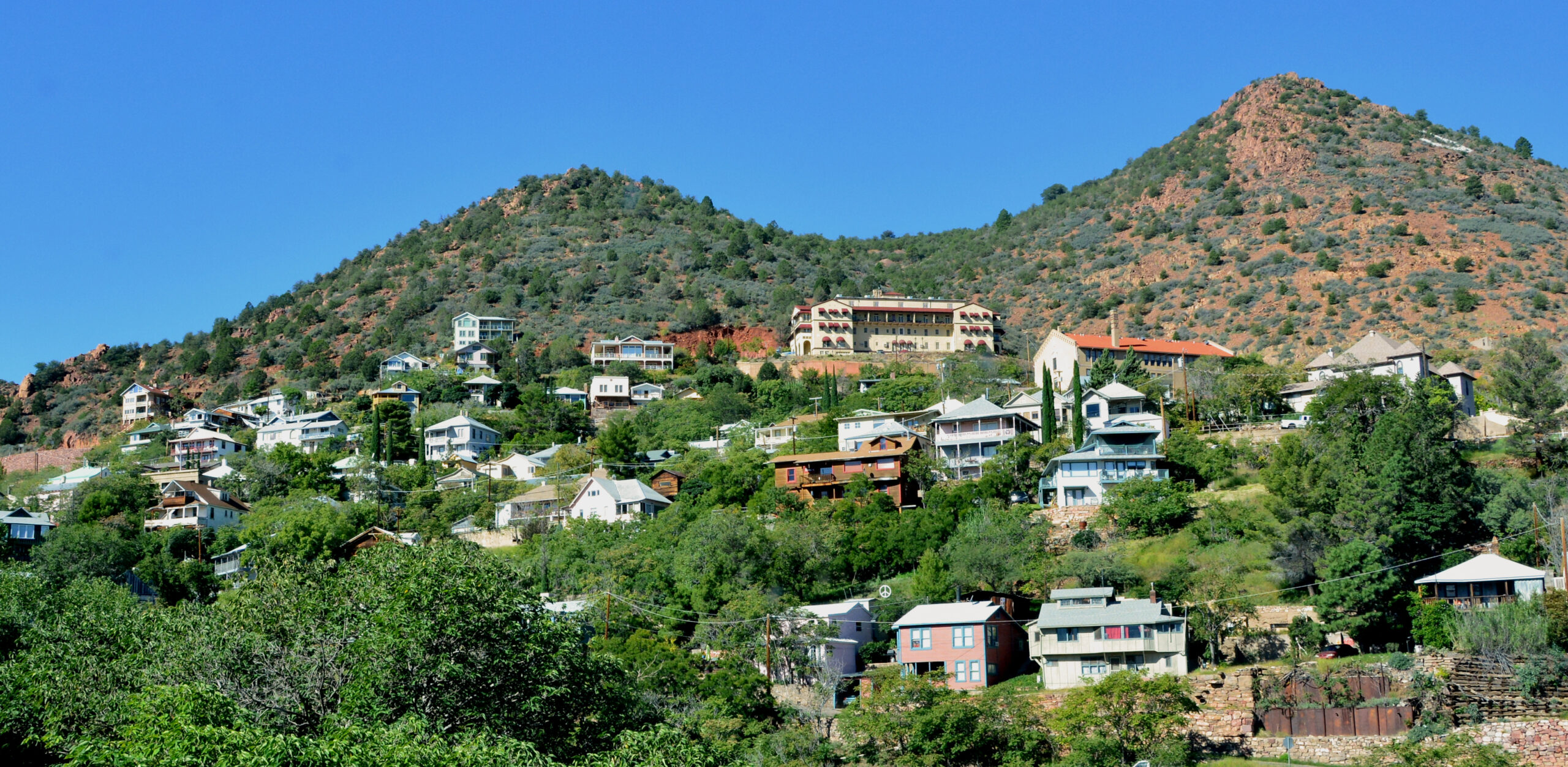
Jerome doesn’t sit in a valley the way most western mining towns do. It clings to the side of a mountain — Cleopatra Hill in the Black Hills of central Arizona — at a 30-degree slope, 5,200 feet above sea level, perched directly on top of the ore body it was built to extract. The town was a marvel of Edwardian engineering and a victim of its own ambition: the deeper the mines bored, the more unstable the mountain became, until entire sections of Jerome began sliding slowly downhill. The most famous casualty was the jailhouse, which migrated 225 feet from its original position before anyone managed to stop it.
At its peak in the 1920s, Jerome was home to roughly 15,000 people — making it the third-largest city in the Arizona Territory — and the mines had produced over a billion dollars in copper. New York newspapers had already given it a different kind of distinction: “the Wickedest Town in the West.” The saloons, brothels, and opium dens that earned the title were, by some accounts, a deliberate tool of industrial control, keeping a workforce of miners too indebted and exhausted to organize.
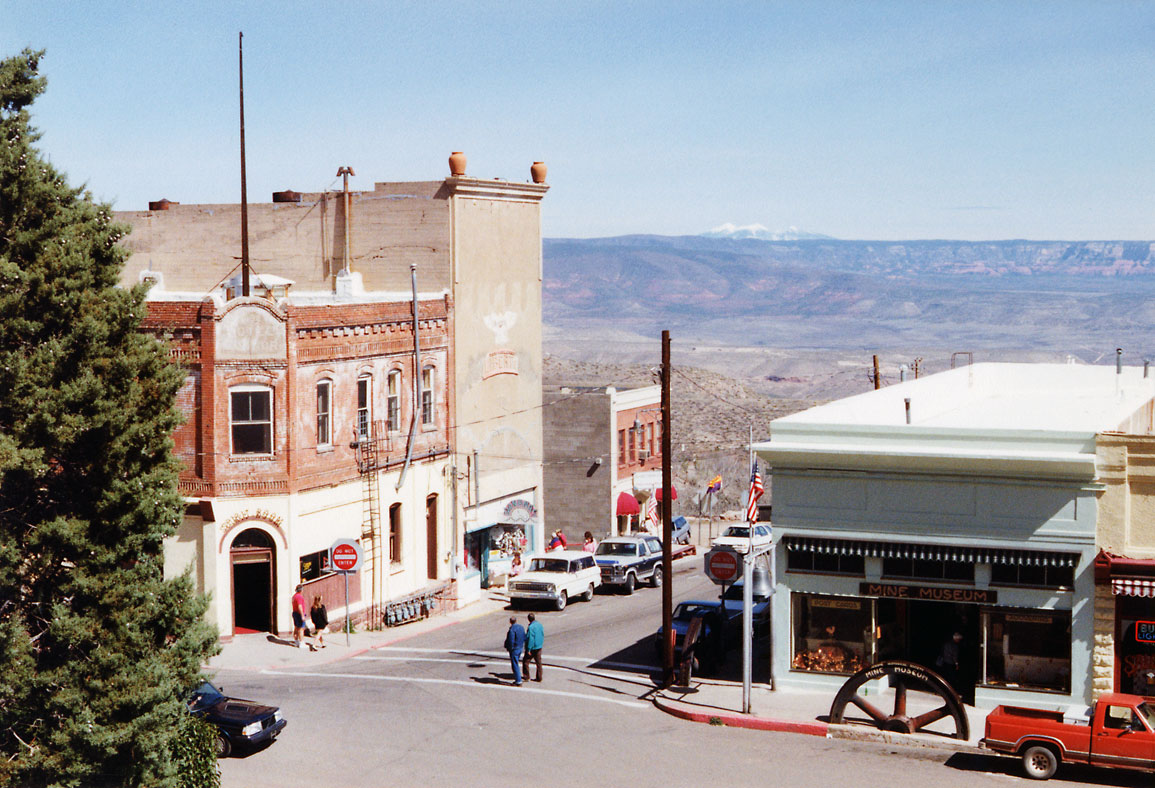
By 1953 the last major mine had closed, and Jerome’s population had fallen below 100. For a decade it was a genuine ghost town. Then artists arrived, drawn by the same isolation and dramatic landscape that had made Jerome difficult to mine. Today it’s a National Historic Landmark with a living population of around 450 — galleries, restaurants, and ghost tours occupying the same brick buildings where miners once spent their wages and union organizers were loaded onto cattle cars at gunpoint.
“Jerome is not a reconstruction. It is a place that survived its own collapse — three times over — and came back stranger and more interesting each time.”
Indigenous and colonial foundations
The mining history of Cleopatra Hill begins long before the copper boom. Archaeological records show the Hohokam people farming the Verde Valley between 700 and 1125 CE, followed by the Sinagua people of the Tuzigoot pueblo. Both groups extracted copper minerals from the hill’s vivid surface outcrops — the brilliant green malachite and blue azurite used for pigments, jewelry, and ceremonial purposes.
Spanish explorers documented existing indigenous excavations when they arrived in the region in the late 16th century. In 1583, Antonio de Espejo’s expedition noted the rich ore bodies. A follow-up expedition in 1599 led by Marcos Farfán de los Godos located a native mine shaft approximately three “estados” deep — the height of a man — and recorded brown, black, blue, and green ores. Despite recognizing the mineral potential, Spain established no permanent operations. The technical requirements for deep-vein copper mining and the lack of transport infrastructure made the site unworkable within the colonial economy.
The industrial era begins (1875–1899)
Anglo-American prospectors filed the first formal mining claims at Cleopatra Hill in 1875. These were consolidated into the United Verde Copper Company, organized in part by Frederick Tritle, later the Governor of the Arizona Territory. The town’s naming was itself a financial transaction: developer William Murray sought capital from his uncle, Eugene Murray Jerome, a prominent New York financier. Eugene was reluctant to invest in the remote Arizona territory, but his wife raised $200,000 in development capital. When the first postmaster, Frederick F. Thomas, officially named the camp in 1882, he called it Jerome — honoring the financier whose money had made it possible.
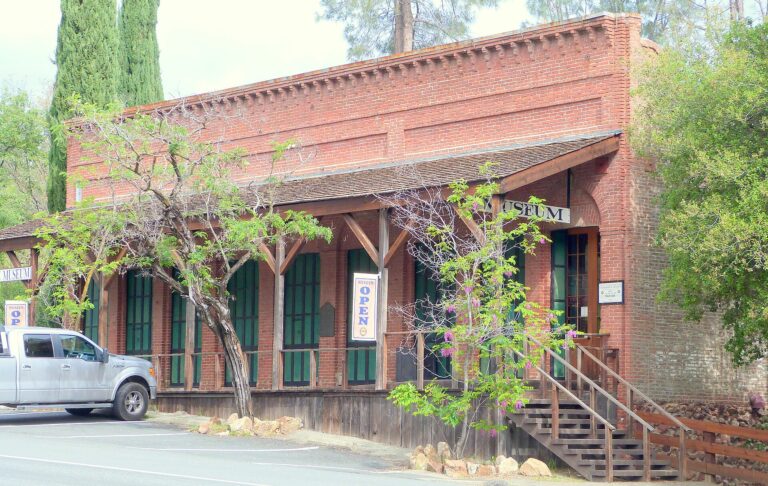
Early Jerome was a brutal place to operate. Supplies and ore moved by wagon over rugged mountain passes. Without a consistent water supply, large-scale smelting was impossible. Hastily built frame structures burned regularly — at least five major fires devastated the settlement before the end of the century. Incorporation finally came in 1899, forced by the desperate need for a centralized water supply and organized firefighting. The new town council adopted a building code pushing toward brick and stone construction, giving Jerome the architectural bones that still define it today.
The boom era: the Billion Dollar Copper Camp (1900–1929)
Jerome’s transformation into a genuine industrial city was driven by the global demand for copper — fueled by telephone networks, electric lighting, and the enormous material requirements of World War I. Two enterprises dominated the boom: the United Verde Copper Company, owned by William Andrews Clark (one of the wealthiest men in America), and the United Verde Extension (UVX), developed by James S. “Rawhide” Douglas after he discovered a massive high-grade ore body in 1914. The same wartime hunger for copper was making fortunes across the West and into Alaska, where the remote mill town of Kennecott hit its own peak in 1916.
Under Clark’s ownership, the United Verde became one of the most profitable mines in history, earning Jerome its “Billion Dollar Copper Camp” nickname. By the 1920s the town had reached its demographic peak of approximately 15,000 residents, making it the third-largest city in the territory. The mountain below was being hollowed out by 88 to 100 miles of mine shafts.
A vertical city, socially stratified
Jerome’s population was a complex ethnic layering shaped by industrial labor needs. Early skilled positions — engineering, mine management — were dominated by European immigrants, particularly Slavic, Irish, and Cornish miners who brought technical expertise from established mining districts. Over time the demographic shifted: by the 1930s, Hispanic workers made up approximately 60 percent of the population. A significant Chinese community operated laundries and restaurants in the commercial district despite facing systemic discrimination. At its peak, the town was estimated to be 75 to 80 percent male.
That demographic imbalance helps explain Jerome’s other reputation. By 1903 a New York newspaper had given the town its lasting title — the “Wickedest City in the West” — based on its 30-plus saloons, dozen brothels, and opium dens. Historical analysis suggests this environment may have been less accidental than it appears. Work in the mines was brutal, with deaths reported regularly. Mine owners — including Clark — reportedly granted workers credit at the red-light district and opium dens, keeping the labor force in cycles of debt that made organized resistance difficult.
The 1917 deportation
The most dramatic political event in Jerome’s history came on the morning of July 10, 1917. As copper prices reached wartime highs, miners began demanding a share of the profits, improved safety conditions, and an end to racially discriminatory wage scales. The labor movement was fragmented between the radical Industrial Workers of the World (IWW), the more conservative Mine Mill and Smelter Workers (MMSW), and the Liga Protectora Latina representing approximately 500 Mexican miners.
When the IWW local went on strike on July 5, the mine superintendent’s response was swift and extralegal. At dawn on July 10, mine supervisors joined by some 250 local businessmen and rival MMSW members began rounding up suspected IWW members. More than 100 men were detained and held in the county jail. That same day, 67 to 75 men were loaded onto a cattle car and shipped west to Needles, California, with orders never to return.
The action was a “test run” for the much larger Bisbee Deportation that would occur two days later — a near-identical operation in which nearly 1,200 striking miners were expelled from a town 200 miles south. A federal investigation declared both actions “wholly illegal.” No individual or company was ever convicted.
A mountain coming apart: geological instability and the Sliding Jail
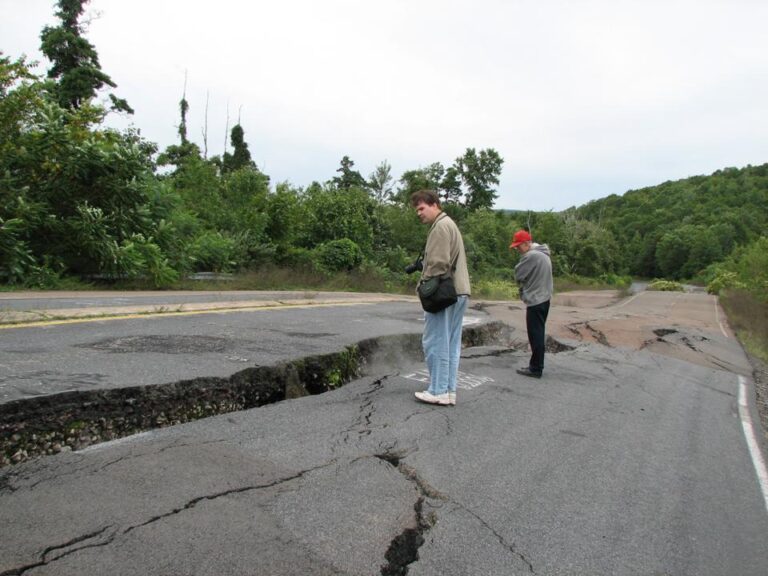
Jerome’s vertical orientation made it not just dramatic but physically precarious. By the mid-20th century, the town was underlain by 88 to 100 miles of mine shafts. Massive explosive charges — sometimes 50,000 to over 200,000 pounds — repeatedly shook the mountain’s foundations. The smelters compounded the damage: sulfur-rich fumes killed all vegetation for miles, stripping the slopes bare and triggering catastrophic erosion and runoff. The combination of subterranean voids and surface instability caused entire sections of Jerome to begin sliding slowly downhill through the first half of the 20th century.
The most famous casualty was the Jerome Jail. Originally built around 1905 as part of a larger wood-and-tin structure, the concrete cell block was situated near the center of town. After extensive underground blasting in the 1930s destabilized the ground beneath it, the concrete block tore free and began a gradual descent down Cleopatra Hill. Over several years it traveled approximately 225 feet from its original position, eventually coming to rest in the middle of Hull Avenue and forcing the town to reroute the road around it. The jail was eventually stabilized and remains one of Jerome’s most visited — and most improbable — landmarks.
Decline, closure, and the decision to preserve (1930–1953)
Jerome’s decline converged two catastrophes: the Depression-era collapse of copper prices in the 1930s and the physical exhaustion of the ore bodies themselves. World War II brought a brief reprieve as copper demand surged, but the high-grade ores that had made Jerome famous were playing out. By the late 1940s, the cost of extracting ore from shafts now reaching 1,900 feet exceeded what the copper was worth on the open market.
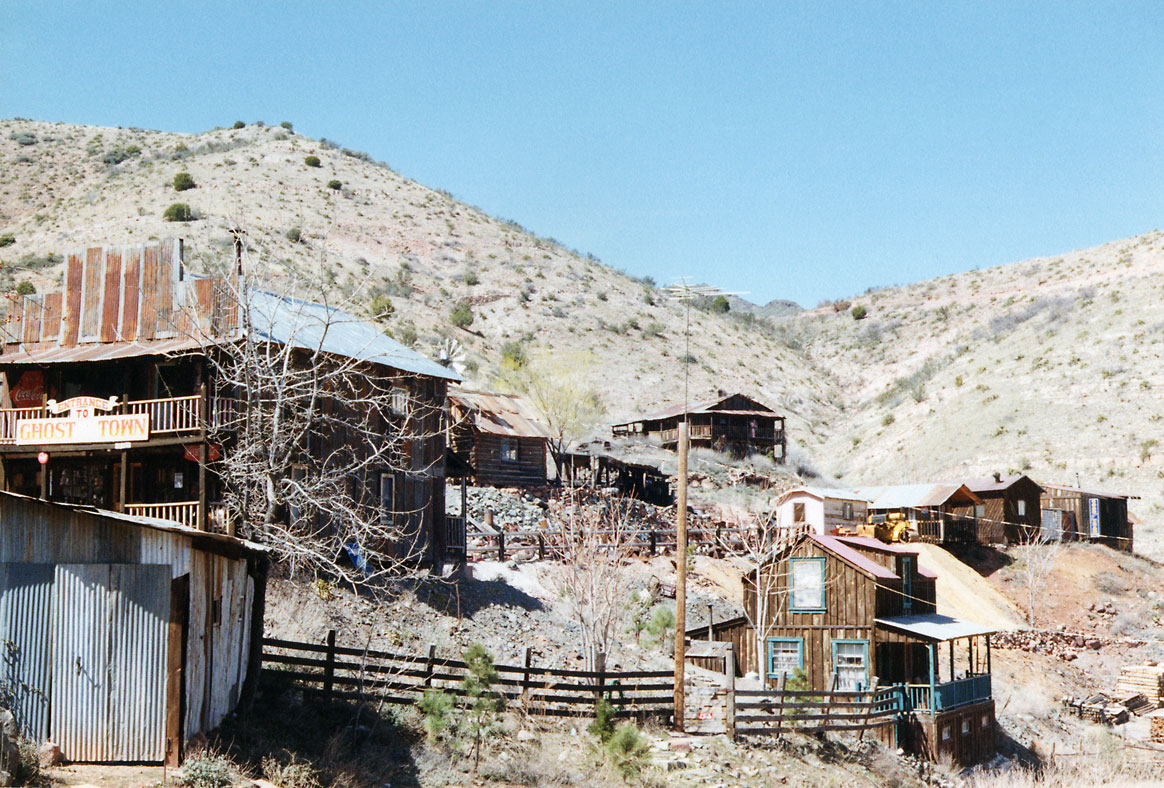
In 1953, the United Verde mine closed permanently. The population — already dwindled from its 1920s peak — fell below 100. Buildings were abandoned; others demolished for their materials. A heavy snowfall in 1967 brought down entire blocks of unmaintained structures. For nearly a decade Jerome existed in the truest sense of a ghost town.
The turning point came immediately: also in 1953, the few remaining residents formed the Jerome Historical Society and negotiated with the Phelps Dodge Corporation to halt further demolitions in the main business district. That single agreement froze Jerome in its state of arrested decay and laid the groundwork for everything that followed.
The Jerome Grand Hotel and the haunting tradition
No building in Jerome generates more lore than the Jerome Grand Hotel, which began its life as the United Verde Hospital. Completed in 1927, it was a model of medical efficiency for its era — reinforced concrete construction that survived Jerome’s landslides while frame buildings collapsed around it. The hospital closed in 1950 and sat abandoned for over 40 years before being converted to a hotel in the 1990s.
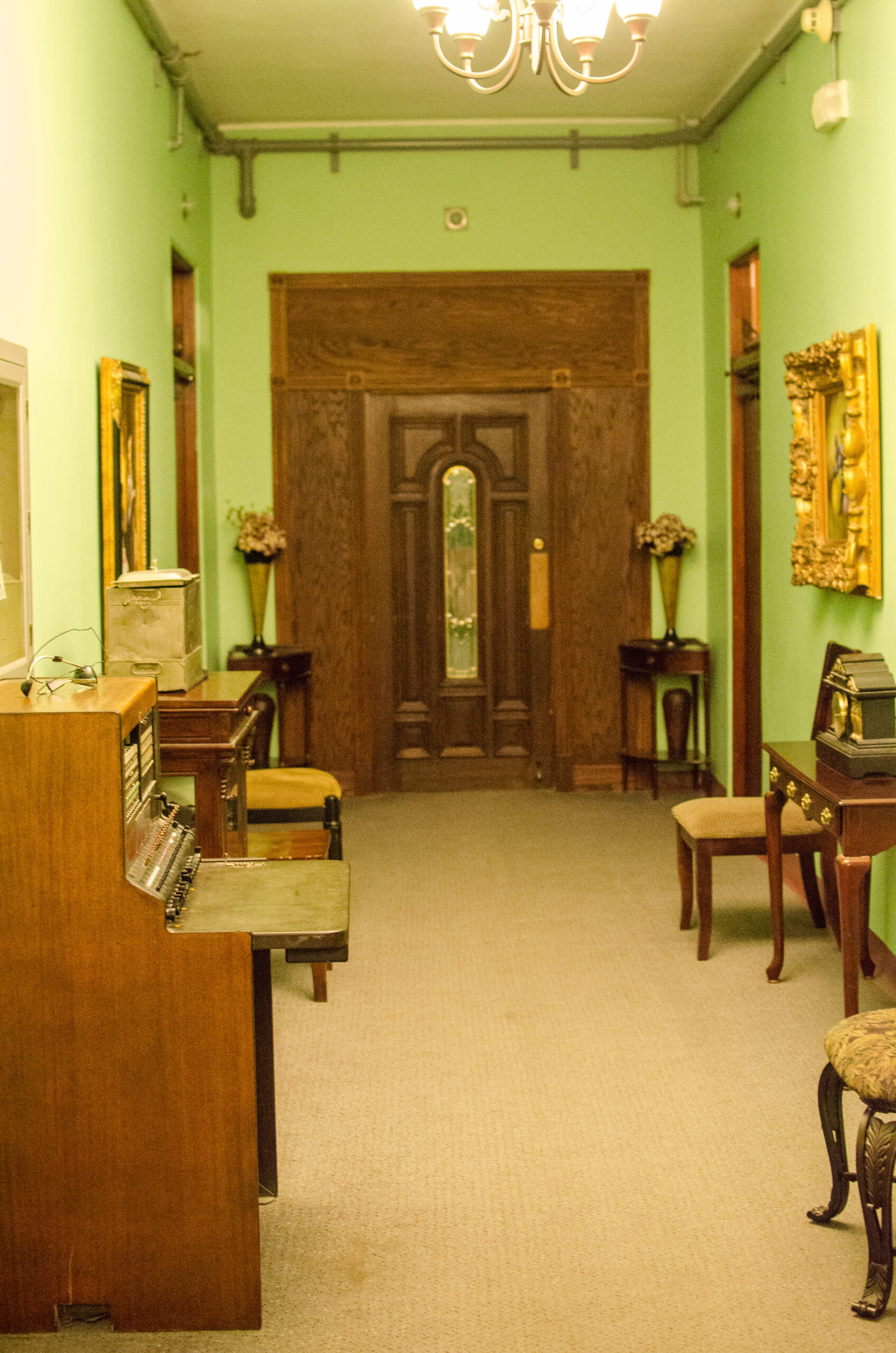
The hospital’s history of treating injured and dying miners has made it fertile ground for ghost lore. The most documented story involves Claude Harvey, a hospital maintenance worker who died in an elevator shaft in 1935 — a verifiable historical event that ghost hunters cite as the source of mechanical sounds reported in the building. Other recurring figures in local lore include a phantom nurse on the balcony, a child on the third floor, and an old miner alleged to turn on lights. Room 32 has developed a specific reputation in paranormal circles.
A grimmer chapter of documented history underlies many of Jerome’s generalized “haunted” claims: the Spanish Flu outbreak of 1918–1919 was so virulent in the crowded, high-altitude mining camp that it reportedly killed more than a third of the population. The hospital and morgue were overwhelmed; bodies were stacked in hallways, and mass burials in sometimes unmarked graves followed.
Timeline
Ghost towns nearby
Further reading
Sources
Jerome State Historic Park — Official Arizona State Parks site (hours, fees, facilities)
Town of Jerome — “Jerome: Then and Now” — Official town history overview
KJZZ / Arizona Public Radio — Jerome as National Historic Landmark District
Jerome Historical Society — About the Society — founding, preservation mandate, history
Atlas Obscura — Jerome’s Sliding Jail
Wikipedia — Sliding Jail article
Cline Library, Northern Arizona University — Jerome Deportation and the Role of Mexican Miners (PDF)
Wikipedia — Bisbee Deportation — Jerome section
World of Arizona — Jerome: The Wicked Billion-Dollar Hill
Legends of America — Ghosts of Jerome, Arizona
University of Arizona Repository — The History of Jerome, Arizona, 1952 (PDF)
More ghost towns in Arizona: Oatman