Oatman Ghost Town, Arizona: Gold, Route 66, and Wild Burros
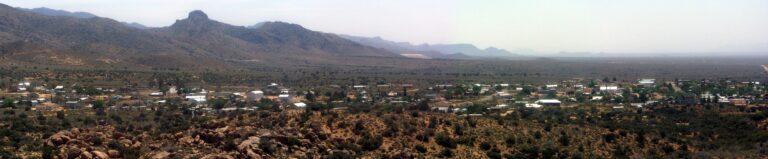
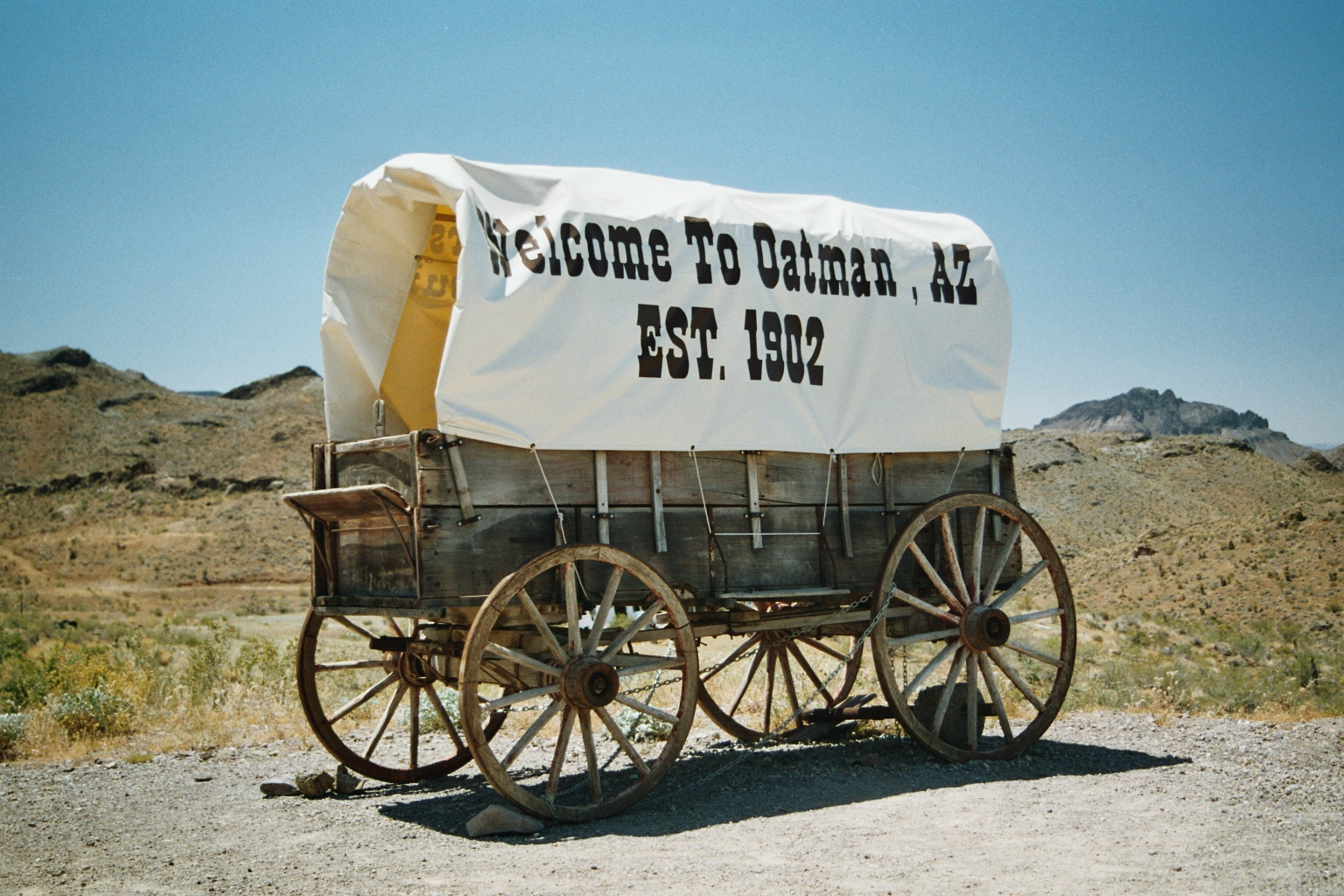
Oatman, Arizona is a quintessential case study of the boom-and-bust cycle that defined the American West. Located in the rugged Black Mountains of Mohave County at an elevation of approximately 2,710 feet, the town transitioned from a marginal prospecting camp into a global epicenter of gold production before settling into its contemporary identity as a “living ghost town.”
Though its industrial boom ended in the early-to-mid 20th century due to resource exhaustion, fires, and highway bypasses, Oatman survived by pivoting to heritage tourism. Today, it remains open to the public year-round with no admission fee, drawing visitors to its historic architecture and famous feral burros.
“Oatman had all the characters of any gold-rush boomtown, with electric lights, hotels, even an opera house…”
Ethnohistorical foundations: the legacy of Olive Oatman
The naming of Oatman is inextricably linked to the 1851 massacre of the Roys Oatman family, a tragedy that became a cornerstone of frontier lore. Fourteen-year-old Olive Oatman was taken captive and eventually adopted by the Mohave people, bearing a hallmark of her assimilation: a traditional Mohave chin tattoo. Her subsequent biography became a national bestseller, cementing her story as a symbol of frontier survival.
While the name was first applied to the Olla Oatman Mine in 1900, the initial community that formed around these claims was known as Vivian. By 1909, the U.S. Postal Service formally adopted the name Oatman for the burgeoning camp.
The boom years: a city built on gold
The definitive turning point in Oatman’s history occurred in 1915 when a massive ore body was discovered at the United Eastern mine. This revelation suggested hidden treasures lay beneath seemingly barren mountain slopes and sparked one of the last major gold rushes in the American West.
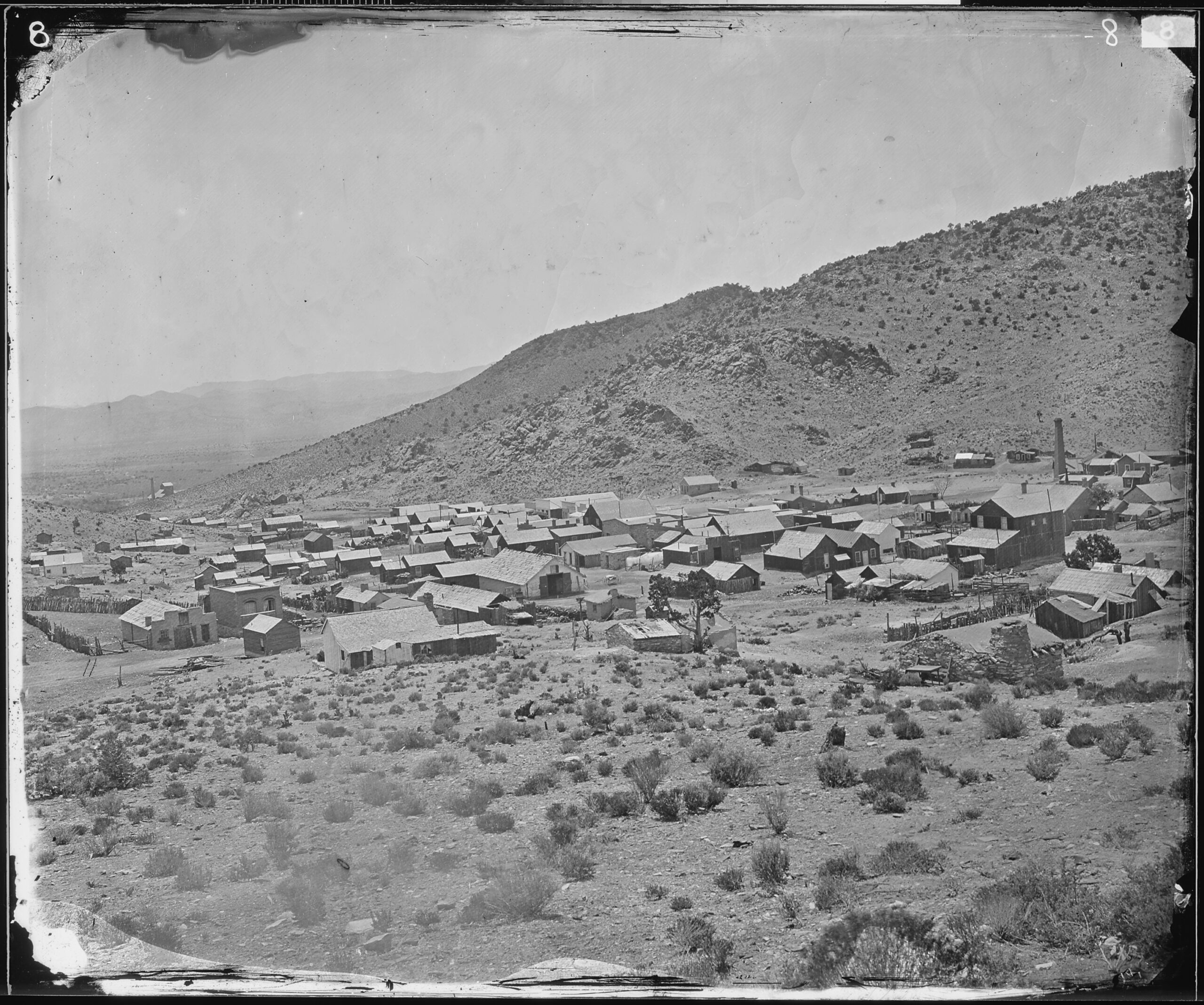
At its height, Oatman thrived economically. The United Eastern and Tom Reed mines were the largest producers, with the district credited with yielding approximately 2 million ounces of gold—worth roughly $40 to $50 million at the time. The town featured sophisticated infrastructure, including banks, a weekly newspaper, substantial schools, and even a Chamber of Commerce.
Mechanisms of decline: fire and federal policy
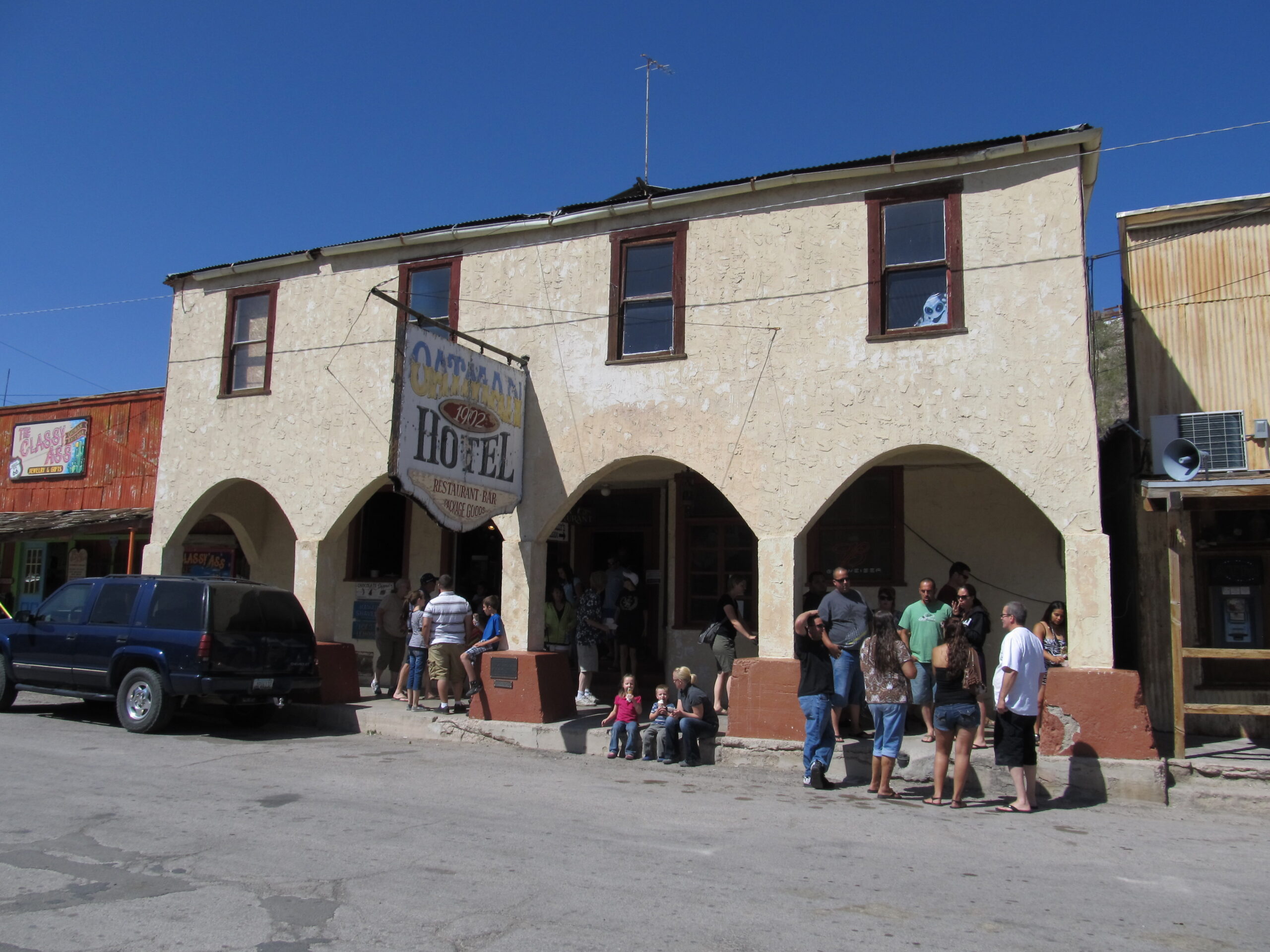
Oatman’s decline was a series of contractions. In 1921, a devastating fire destroyed many wooden buildings, though the adobe Oatman Hotel was spared. By 1924, the United Eastern Mine—the town’s largest employer—exhausted its known ore bodies and permanently shut down operations.
The definitive end of gold mining came during World War II. On October 8, 1942, the War Production Board issued Order L-208, classifying gold mining as a nonessential industry and mandating immediate closure. After the war, rising labor costs and a fixed gold price of $35 per ounce made deep-vein mining in the Black Mountains economically unviable.
The final blow to the town’s secondary economy occurred in 1952-1953, when the Route 66 alignment was changed, bypassing the treacherous mountain pass through Oatman. By the mid-1960s, the population had dropped to approximately 50 individuals.
Folklore, celebrity, and paranormal myths
Oatman’s status as a historic relic has allowed for the proliferation of various legends. One of the most persistent is the claim that Hollywood stars Clark Gable and Carole Lombard spent their honeymoon at the Oatman Hotel in 1939. Historical analysis identifies this as folklore; the couple drove directly back to Los Angeles after their elopement to avoid the press.
The Oatman Hotel is also rumored to be haunted by spirits and a ghost known as “Oatie,” an Irish miner whose body was allegedly discovered in the hotel. While these stories lack contemporary proof, they contribute significantly to the “ghost town” branding that drives tourism.
Oatman today: the modern visitor experience
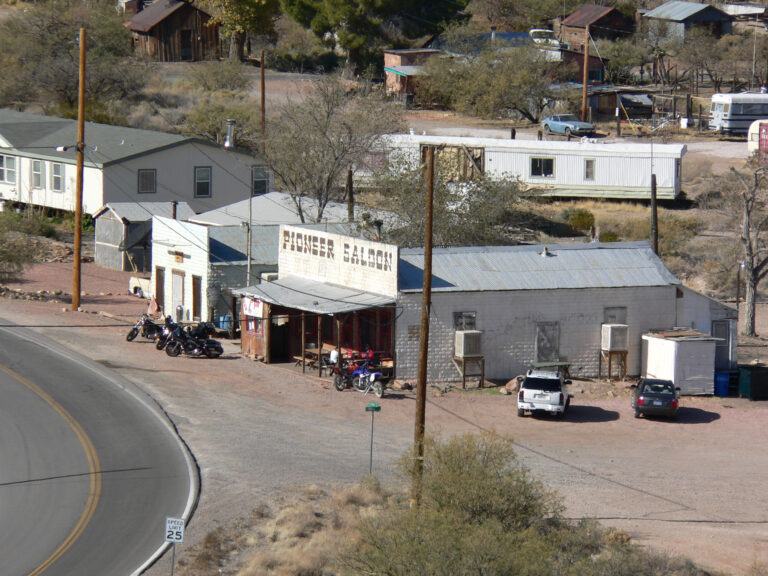
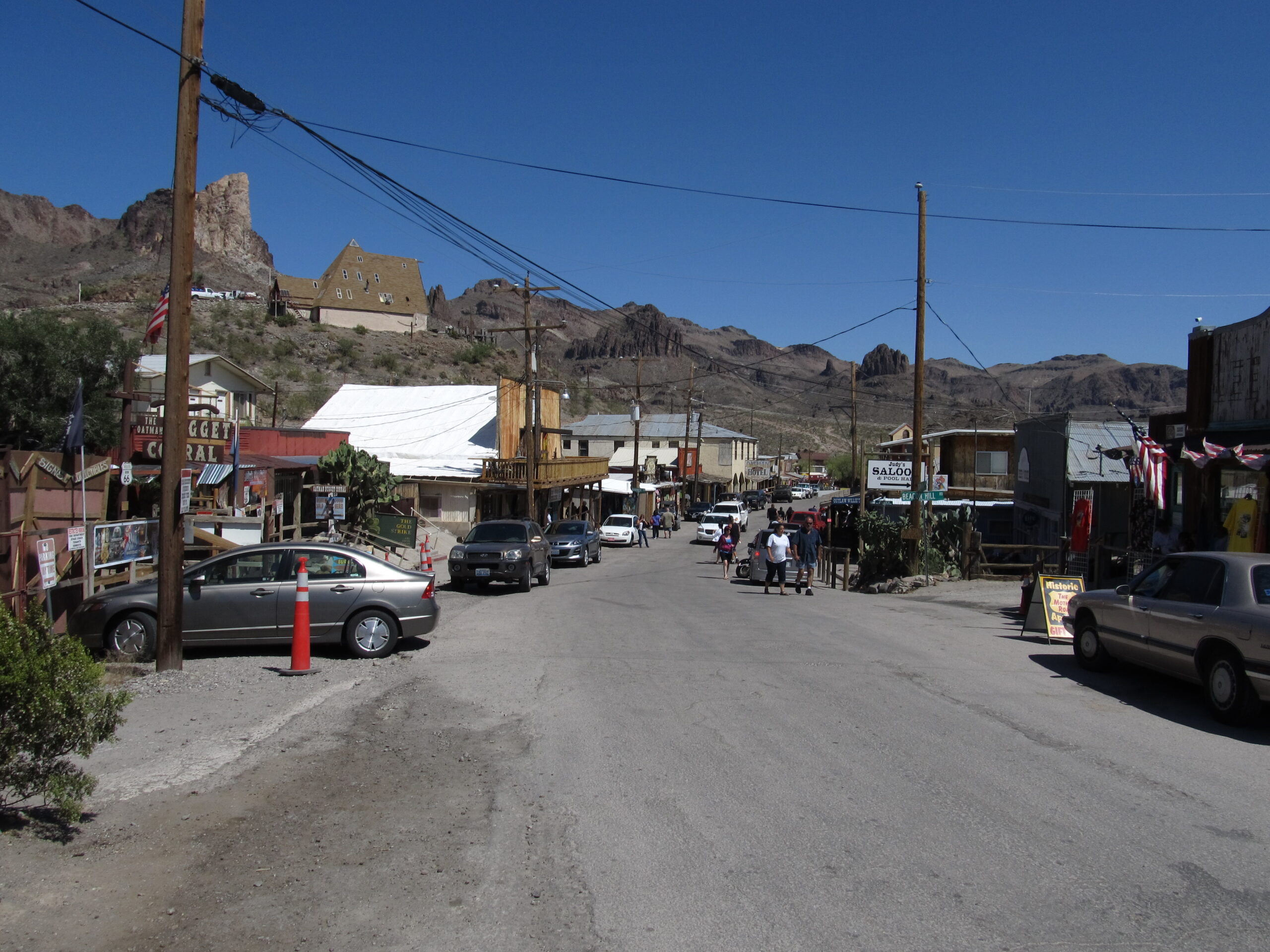
Today, Oatman is a “living ghost town” with a small year-round population. Much of downtown survives in its 1920s appearance, with Historic Main Street consisting of original Western-front buildings and wooden sidewalks repurposed into gift shops and galleries. Visitors can still see the historic Oatman Hotel and the original 1936 jail.
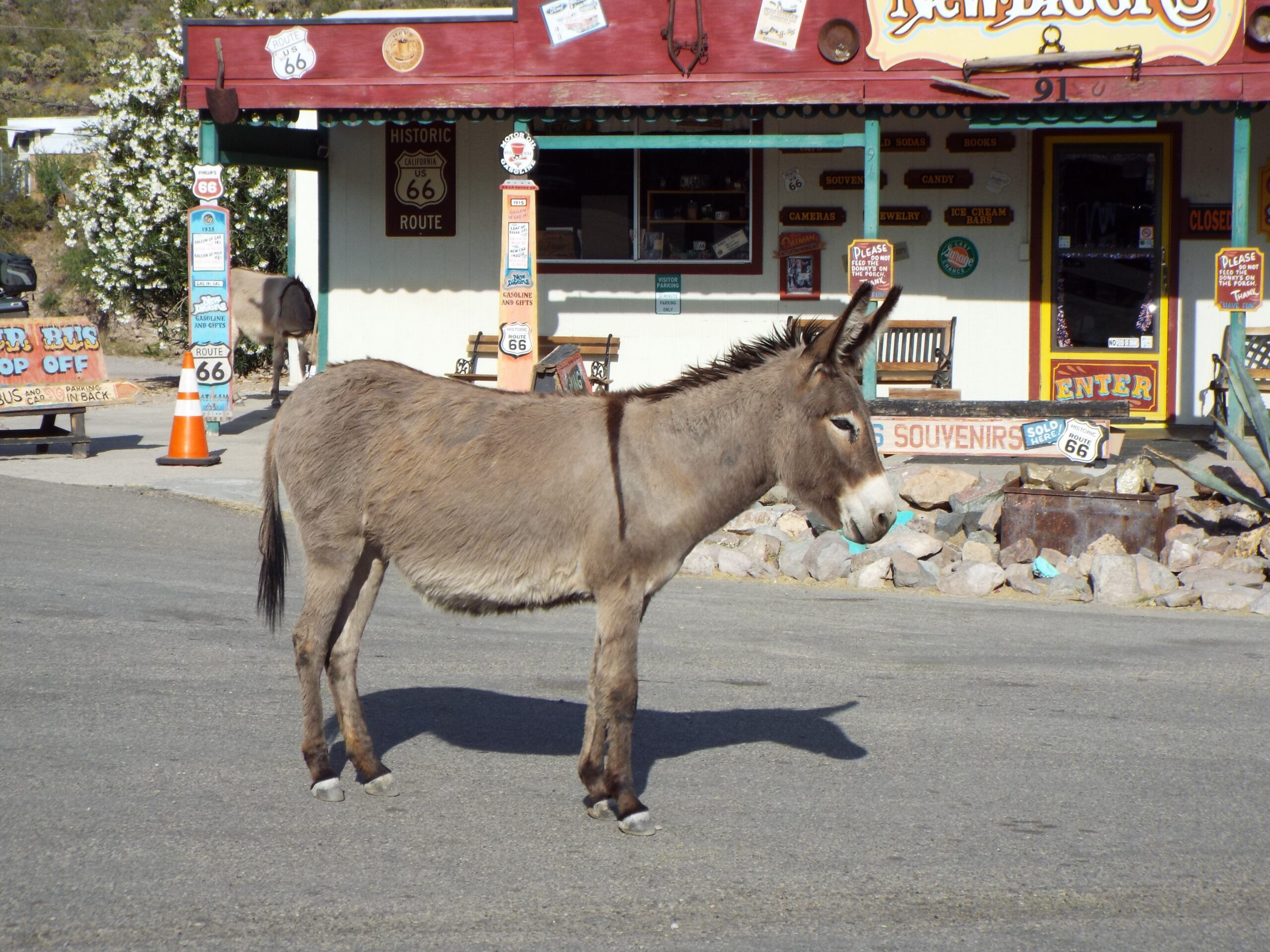
The town’s most iconic survivors are the feral burros. Descendants of miners’ pack animals, they arrive in town daily at 7:00 a.m. and depart at dusk. Visitors are also drawn to reenacted gunfights by groups like the “Oatman Outlaws,” which typically occur daily in the middle of Main Street at noon and 2:00 pm.
Ghost towns nearby
Further reading
Sources
Colorado River Historical Society — The Village of Oatman
National Park Service — Arizona: Durlin Hotel
Oatman Chamber of Commerce — Visitor Information
Visit Arizona — Oatman State Tourism Overview
More ghost towns in Arizona: Jerome