Capitol City, Colorado: George Lee’s Silver Dream on the Alpine Loop
ColoradoGold & Silver MiningCabin and ruins · Dirt road access·~10 min read
Quick facts
What it isSilver mining and smelting town at the forks of Henson Creek, in the Galena Mining District
FoundedCamp of Galena City in 1876; renamed Capitol City in 1877
Peak populationOver 300 by one count; estimates run as high as 800 (about 1879 to 1881)
Post officeMay 18, 1877 to October 30, 1920
ElevationAbout 9,700 feet
Coordinates38.0072° N, 107.4667° W
DistanceAbout 9 to 9.5 miles west of Lake City on County Road 20
LandMix of BLM public land and private summer homes
CountyHinsdale County
StateColorado
⚠ Dirt road, most cars in summer · 4WD and high clearance west of town · Closed by snow in winter · No services · Private homes and land
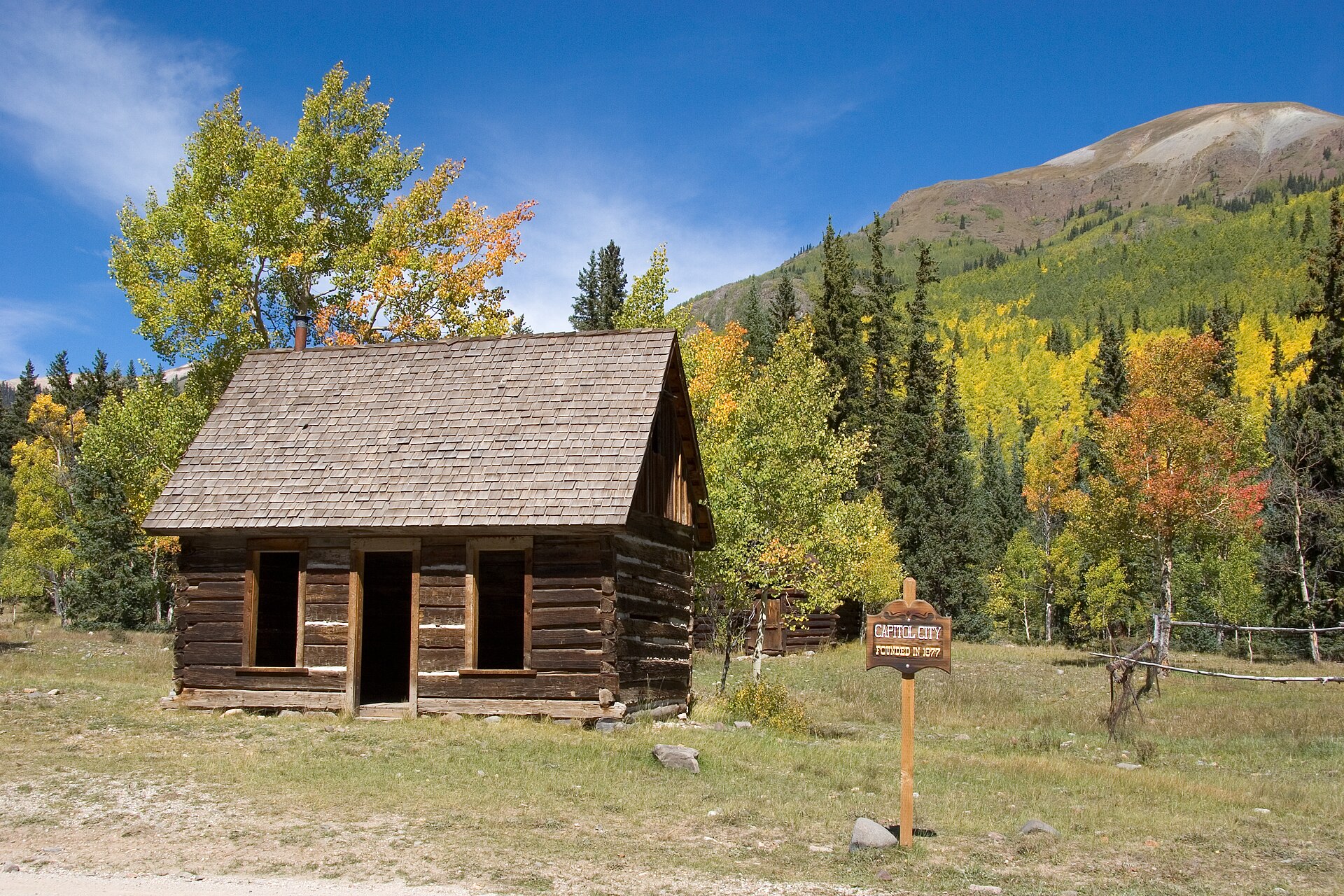
The old post office cabin at Capitol City in September 2005. Photo: KimonBerlin, CC BY-SA 2.0, via Wikimedia Commons.
Capitol City is a silver-era ghost town about 9 miles up Henson Creek from Lake City, on the Alpine Loop in the San Juan Mountains. Miners camped at the forks of the creek in 1876, and in 1877 a promoter named George S. Lee arrived, renamed the camp Capitol City and set out to make it an industrial town, with smelters, a sawmill, a brick kiln and a brick mansion that hosted the governor. Legend says Lee hoped to make it the state capital, but no record backs that up. His business failed in 1882, more than a decade before the silver crash, and the post office closed in 1920. Today a restored log post office, a smelter stack, old charcoal kilns and private summer cabins stand in the meadow, at the end of a dirt road that most cars can drive in summer.
Prospectors on Henson Creek
Silver brought the first miners up Henson Creek. On August 27, 1871, Henry Henson and his partners located the claims that became the Ute and Ulay mines, about four miles west of where Lake City would stand. The Ute treaty of 1873 opened the San Juan Mountains to settlement, and by 1874 and 1875 prospectors were working the whole drainage. Lake City grew at the mouth of the creek, and the upper valley was organized as the Galena Mining District.
The first town plan at the forks of Henson Creek came from Denver. In 1875 a promoter named George B. Greene laid out a townsite he meant to call Silver Glen and started a smelter above it, but the smelter was never finished. A Pueblo newspaper story from 1880 said he left owing local miners and investors about $14,000. By the fall of 1876 the miners on the site had a camp of their own, called Galena City.
George Lee’s Capitol City
The camp changed in May 1877, when George S. Lee arrived. Lee had been a sailor, a gold miner in California, a mine superintendent in Colorado’s Central City district and a manufacturer in the East, and he called himself a mining engineer and metallurgist. He set out to build a real industrial town, and the camp took the name Capitol City. Its post office opened on May 18, 1877.
Lee’s company laid out a townsite of about 200 acres, far bigger than the narrow valley needed, and a board of trustees was running the town by August 1878. He built a smelter at the lower end of town, a sawmill and a brick kiln that made 240,000 bricks in 1880 at $10 a thousand. More smelting works went up on Greene’s old site at the upper end.
On the name and the incorporation: Nobody recorded who chose the name. The National Register nomination for Lee’s lime kiln says Lee “supposedly” suggested it, after a nearby peak whose summit looked like a capitol dome. Accounts also differ on when the town incorporated, with 1877 and 1879 both in print; the same nomination says the incorporation was formally nullified in August 1974.
Wagons and mule trains tied the town to Lake City, about nine miles down a steep canyon. Henson Creek cuts deep, narrow gorges through hard volcanic rock below Capitol City, and every ton of ore and every crate of supplies moved by wagon. When the Denver & Rio Grande finally reached the district in 1889, its tracks ended at Lake City and never climbed the creek.
The Governor’s Mansion
Lee’s showpiece was his own house. Finished in 1879, the two-story brick home was one of the finest houses in the San Juans, and locals called it the Governor’s Mansion. Frank Fossett’s 1880 guidebook described it as the most elegantly furnished house in southern Colorado. Governor Frederick W. Pitkin stayed there as Lee’s guest in 1879, and the house was also advertised as a hotel, the Mountain House. Out back stood a brick privy, remembered as the only one for miles around.
The house did not last. It was stripped after the Lees left, and nothing of it remains today. According to one account the last walls were torn down in the 1960s.
The Rose Lime Kiln
In April and May of 1881, Lee had a mason named Samuel Tarkington build a tall brick lime kiln about 2.5 miles up Henson Creek from town, at the foot of 13,577-foot Gravel Mountain. The kiln is about 44 feet high and was named for Rose, the Lees’ only daughter. Limestone from a nearby claim was burned in it to make lime for mortar and plaster, and lime from the kiln sold for $1 a bushel. The kiln was listed on the National Register of Historic Places in 1993 and is the best-preserved piece of Lee’s empire, as far as the record shows.
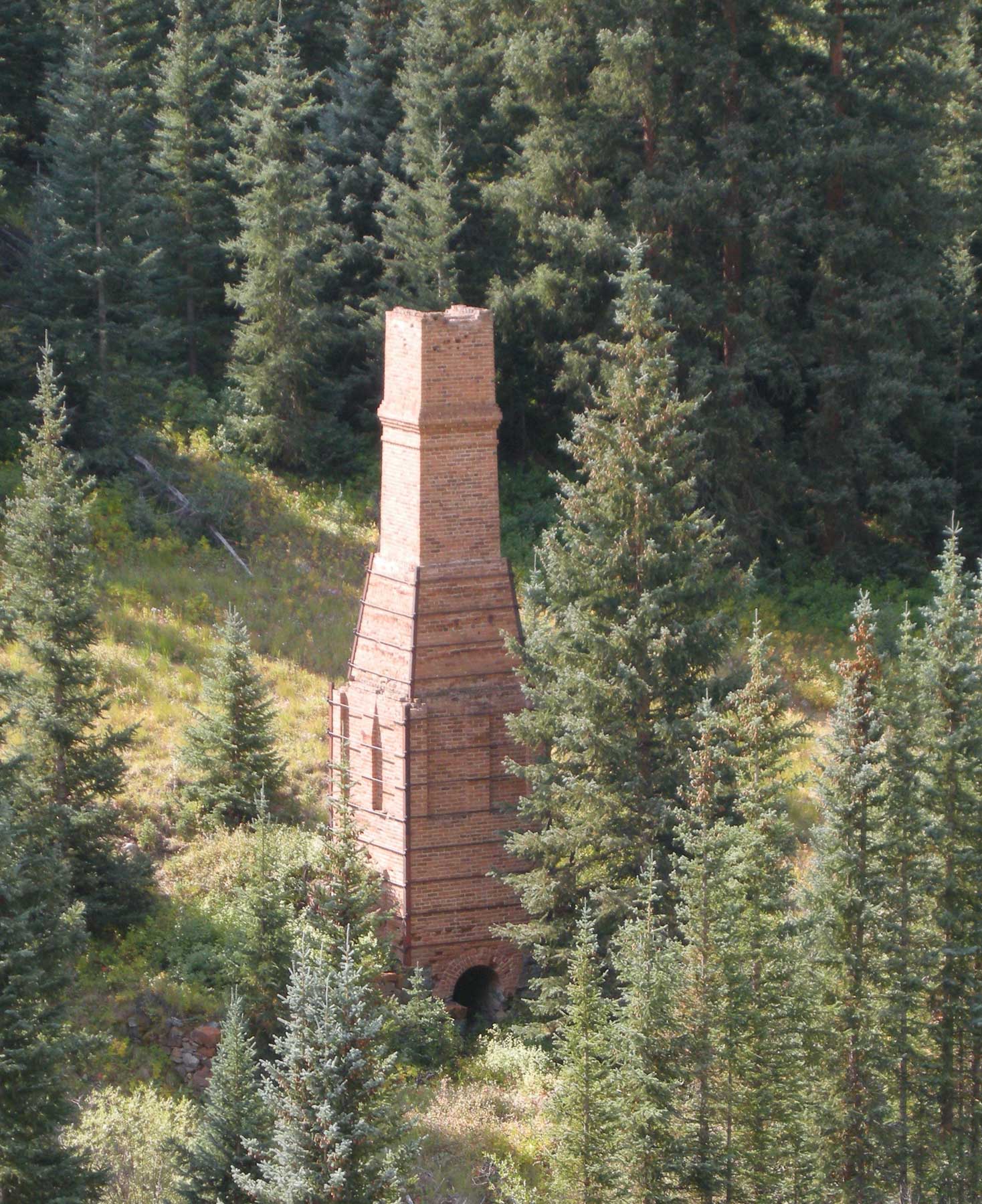
The Rose Lime Kiln, built in 1881, seen from above in September 2009.Photo: Plazak, CC BY-SA 3.0, via Wikimedia Commons
On the kiln today: One online account says an avalanche destroyed the kiln in the spring of 2019, but it cites no report of the event, and a historical-marker database has photos taken in July 2021 captioned as showing the kiln beside its roadside sign. Check its condition before you count on seeing it. It sits on a private mill site, and the National Register nomination says it can be seen from County Road 20 above it but not reached from the road.
The bust came early
Capitol City’s boom was short. The ores in the hills were often low grade, the creek ran too low in dry seasons and froze in winter, so the smelters lost their water power, and freight down the canyon was expensive. Lee’s smelters ran only now and then. In March 1882 the Lee Smelter was sold at a sheriff’s sale, and that August George and Mary Jane Lee sold what they had left in Hinsdale County and moved to Denver.
That was more than a decade before the Silver Panic of 1893, which is often given as the reason the town died. The crash did finish off what was left of silver mining on Henson Creek. Some mining went on around the Capitol City, Czar, Silver Chord, Yellow Medicine, Red Rover, Vermont and Excelsior mines, and a small concentrating plant was built near town around 1901, but by the turn of the century fewer than 100 people lived here. The post office held on until October 30, 1920.
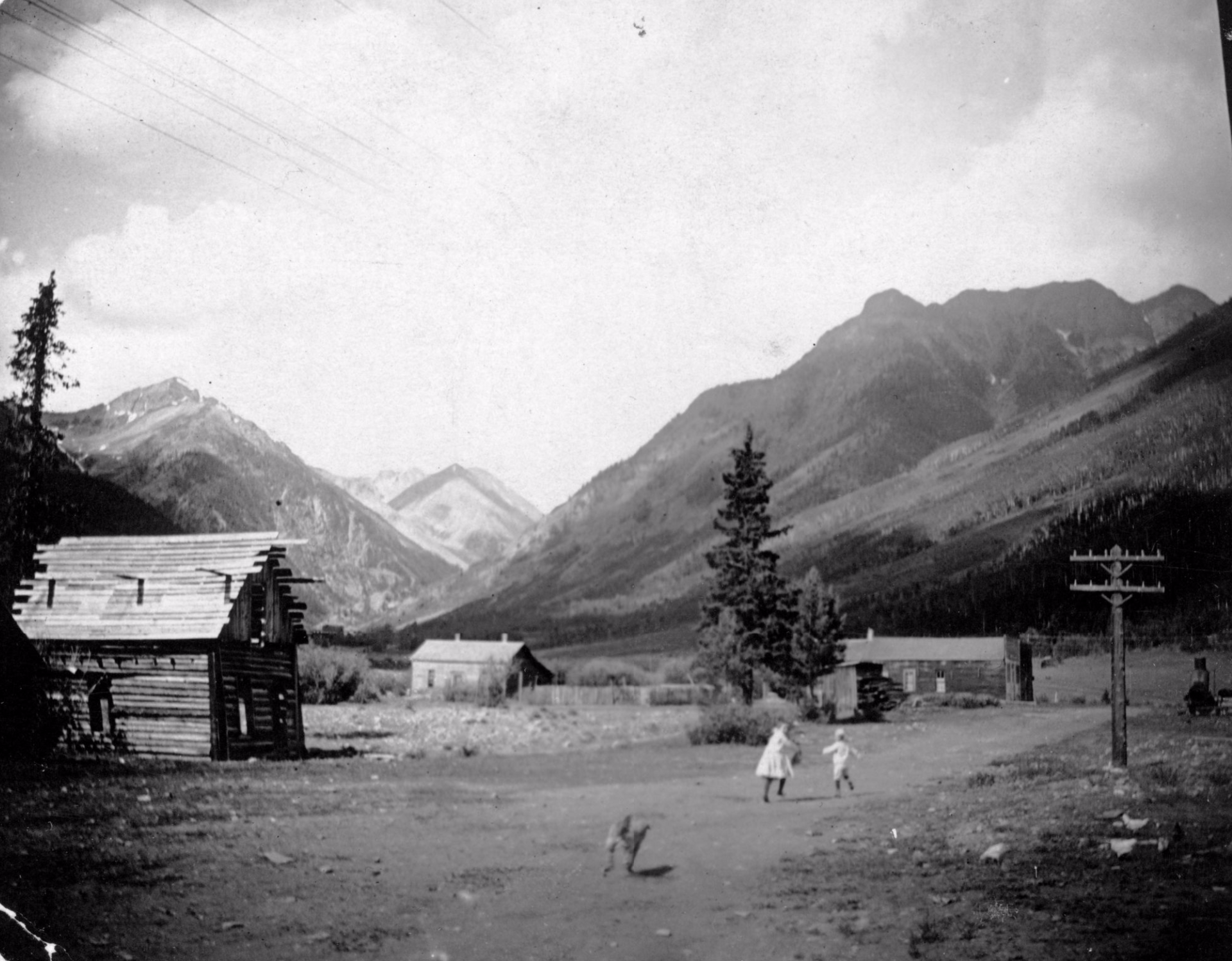
Children and a dog in the street at Capitol City, sometime between 1880 and 1900.Photo: unknown photographer, Denver Public Library, public domain, via Wikimedia Commons
On the population: Sources disagree. The National Register nomination for the lime kiln says the town peaked at a little over 300 people. Other histories give 400, and some give as many as 800. No census counted the town on its own, so treat all of these as estimates.
Lee’s own luck never came back. After Denver he tried mining in New Mexico and other ventures and later lived in Hawthorne, New Jersey, where he patented inventions. He died in January 1905 after slipping on an icy railway platform during a business trip to New York. According to the National Register nomination, his estate was appraised at $98.90.
Legends of Capitol City
The state capital. The best-known story says Lee named the town Capitol City because he expected the state capital to move here from Denver, with himself as governor, and that the mansion was built to be the governor’s home. It is a good story, but the National Register nomination calls it a popular legend that no written record supports. Denver was already the capital, and no bill or campaign to move it here has been found.
A dollar a brick. Another story says Lee paid $1 a brick to haul the mansion’s bricks over the mountains from Pueblo. Lee had his own brick kiln in town, which made 240,000 bricks in 1880 at $10 a thousand, so the story is almost certainly wrong. The only dollar figure in the record is the price of a bushel of lime from his kiln.
On the mansion stories: Some retellings add a ballroom, a theater with an orchestra pit, stained glass windows and a cost of more than $7,000. The cost comes from an 1880 newspaper account; the other details don’t appear in the records and are best taken as embellishment.
What remains
Capitol City today is a quiet meadow of aspen and willow with a handful of private summer homes. Very little of Lee’s town survives. What you can see:
The post office. A small log cabin beside County Road 20, stabilized by the BLM and often called the last original building in town, with a smaller log building behind it. A BLM sign titled “Lee’s Legacy” stands nearby, just west of the County Road 24 junction.
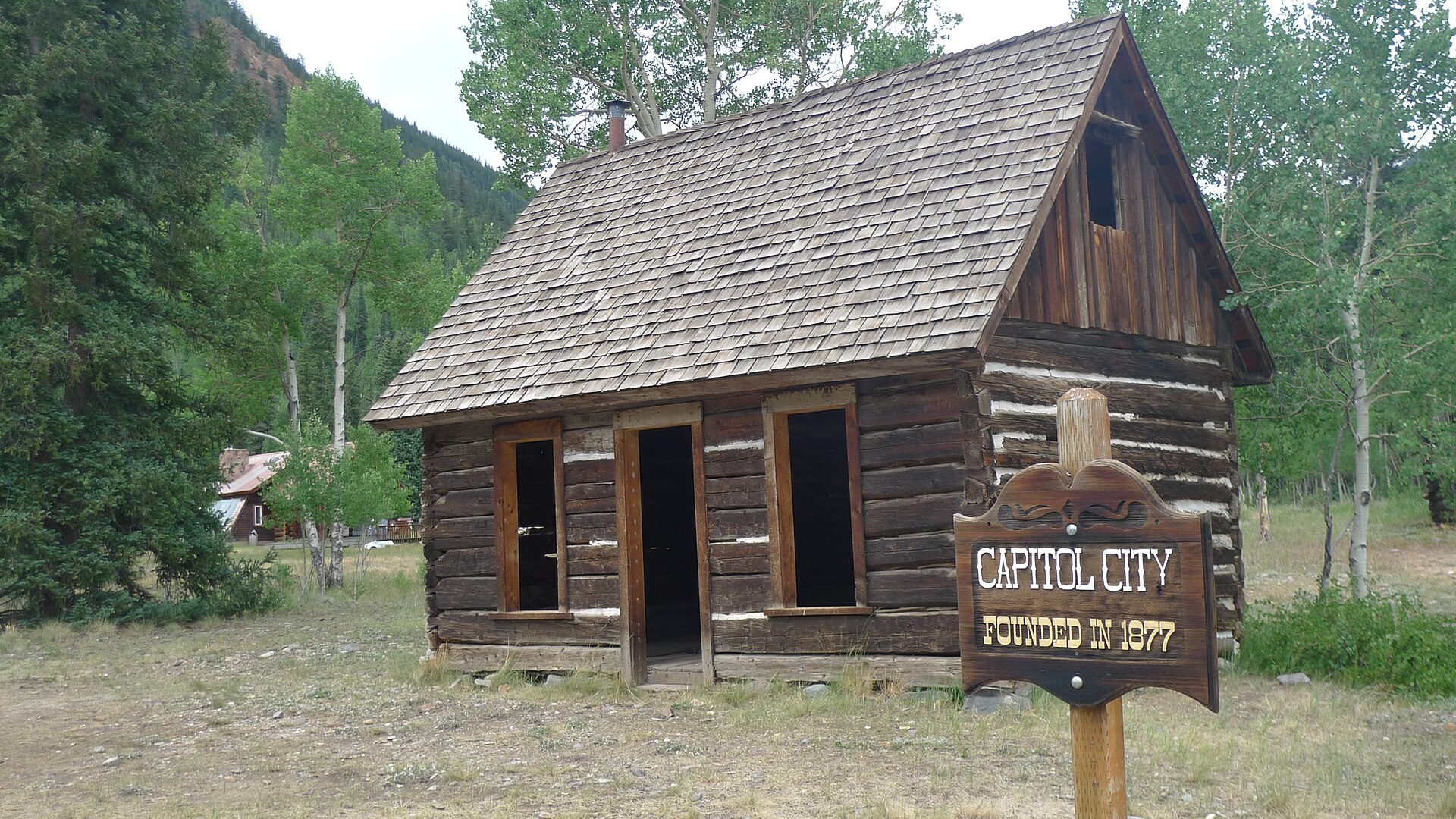
The post office cabin and town sign in July 2010.Photo: Robert Thigpen, CC BY-SA 2.0, via Wikimedia Commons
The smelter stack. The brick stack of a smelter still stands near the lower end of town, by most accounts the remains of the Lee Smelter.
The charcoal kilns. Two beehive-shaped brick charcoal kilns, built in 1877, are the last charcoal kilns in Hinsdale County and were listed on the National Register in 1999.
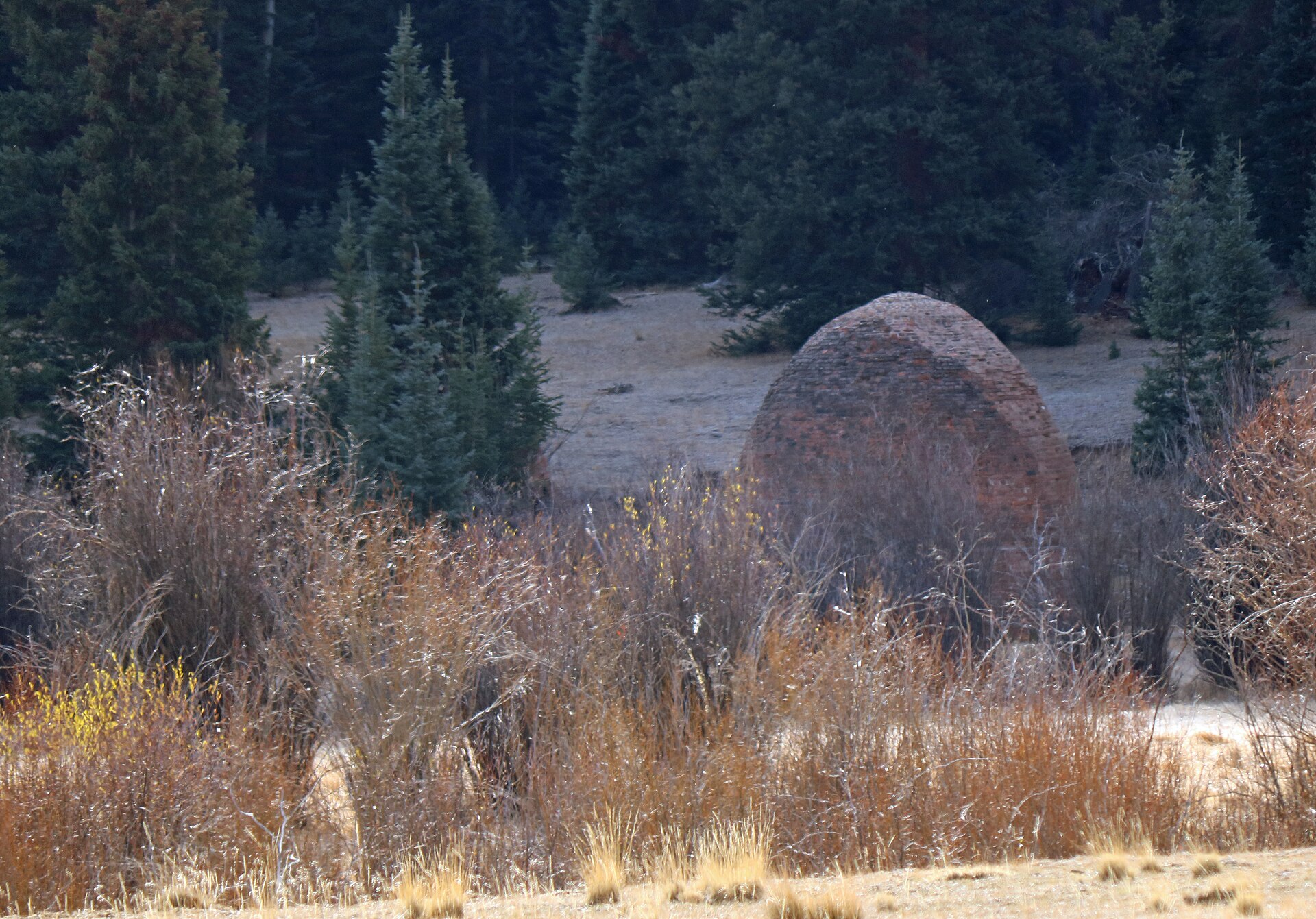
A brick charcoal kiln at Capitol City, October 2018.Photo: Jeffrey Beall, CC BY 4.0, via Wikimedia Commons
The Rose Lime Kiln. About 2.5 miles up the creek, below County Road 20, on a private mill site.
What is gone. The mansion, the hotels, the stores and the smelter buildings. Scattered foundations and rubble mark where some of them stood.
On the kilns and the stack: Some guides speak of “Lee’s brick ovens”. The charcoal kilns date from 1877, the year Lee arrived, and no source we found ties them to him, so treat them as a separate piece of the town’s history.
Timeline
1871
Henry Henson and partners locate the Ute and Ulay claims below the future town on August 27.
1875
Denver promoter George B. Greene plans a townsite called Silver Glen and starts a smelter he never finishes.
1876
Miners settle the camp of Galena City at the forks of Henson Creek.
1877
George S. Lee arrives in May; the Capitol City post office opens May 18; the charcoal kilns are built.
1878
A board of trustees runs the 200-acre townsite.
1879
Lee’s brick mansion is finished; Governor Frederick Pitkin stays as his guest.
1880
Lee’s kiln makes 240,000 bricks.
1881
The Rose Lime Kiln is built up Henson Creek.
1882
The Lee Smelter is sold at a sheriff’s sale in March; the Lees leave for Denver in August.
1889
The Denver & Rio Grande reaches Lake City, but no farther up the creek.
1893
The Silver Panic hits the district’s silver mines.
1905
George Lee dies after a fall during a business trip to New York.
1920
The post office closes on October 30.
1960s
The last walls of the mansion are reportedly torn down.
1974
The town’s incorporation is formally nullified in August.
1993, 1999
The Rose Lime Kiln and then the charcoal kilns are listed on the National Register.
Visit guide — Capitol City
Can you visit?Yes. The post office cabin and the BLM sign are right beside County Road 20. Much of the old townsite is private, with summer homes, so look from the road and pullouts.
Getting thereFrom Lake City, take Hinsdale County Road 20 (Henson Creek Road, the Engineer Pass road) west up the canyon. You pass the Ute-Ulay mine and mill about 4 miles out and reach Capitol City, at the County Road 24 junction, after about 9 to 9.5 miles.
Coordinates38.0072, -107.4667
Road conditionsCounty Road 20 is a rough, narrow dirt road. Most cars with some clearance can reach Capitol City in dry summer weather if driven slowly. West of town it becomes the 4WD part of the Alpine Loop, and Engineer Pass, about 9 miles farther, needs high clearance and 4WD.
SeasonRoughly late May or June through October. The high passes can hold snow into July, and snow closes the roads in winter. Check with the Hinsdale County Sheriff (970-944-2291) or the BLM before you go.
What to seeThe post office cabin, the smelter stack, the charcoal kilns and the Lee’s Legacy sign. Farther west on County Road 20 are Whitmore Falls, the Rose Lime Kiln viewpoint and Rose’s Cabin.
ServicesNone. There is no fuel anywhere on the Alpine Loop, and cell service fades soon after Lake City. Fill up and download maps in town.
Land statusA mix of BLM public land and private property, with national forest to the north along County Road 24. BLM Gunnison Field Office: 970-642-4940.
Nearby trailsCounty Road 24, North Henson Creek Road, starts at Capitol City and leads to the Matterhorn Creek trailhead for Wetterhorn, Matterhorn and Uncompahgre peaks.
Mountain hazards: Capitol City sits near 9,700 feet, and summer afternoons bring lightning, hail and sometimes snow. On the narrow canyon road, uphill traffic has the right of way; use pullouts. Old mine openings dot the hills. Stay out of them and out of the ruins.
Respect the ground: Do not dig, metal detect or collect anything; bricks, glass and old metal are protected artifacts. Stay off private land and out of the summer homes. BLM rules on the Alpine Loop ban camping, smoking and campfires within 150 feet of historic buildings, and vehicles must stay on designated routes.
Approximate location of Capitol City, about 9 miles west of Lake City in Hinsdale County.
Historic sites nearby
Animas Forks, CO
~8 miles straight line; about 13 by 4WD road over Engineer Pass, also on this site
High silver camp on the far side of the Alpine Loop
Lake City, CO
~9 miles east by road
Living mining town · county seat · historic district
Ute-Ulay Mine and Mill
~5 miles east by road
The district’s first silver discovery, 1871 · mill buildings
Rose’s Cabin
~5 miles west by road
Old stage stop and inn on the Engineer Pass road
Whitecross and Burrows Park, CO
~4.5 miles south, straight line
Camps on the Cinnamon Pass side of the loop
Sherman, CO
~7.5 miles south, straight line
Lake Fork mining camp on County Road 30
Mineral Point, CO
~8 miles southwest, straight line
High camp just south of Engineer Pass
Carson, CO
~11 miles south, straight line
Cabins near the Continental Divide · private
Ironton, CO
~13 miles west, straight line, also on this site
Red Mountain mining town south of Ouray
Further reading
Books and records about Capitol City
Lake City Reflections
Grant E. Houston · B & B Printers, Gunnison, 1976
Tiny Hinsdale of the Silvery San Juan
Carolyn and Clarence Wright · Big Mountain Press, 1964
Geology and Ore Deposits Near Lake City, Colorado
J. D. Irving and Howland Bancroft · U.S. Geological Survey Bulletin 478, 1911
Rose Lime Kiln, National Register of Historic Places Registration Form
Grant E. Houston and Thomas S. Curry · 1992
Stampede to Timberline: The Ghost Towns and Mining Camps of Colorado
Muriel Sibell Wolle · Boulder, 1949; revised edition, Sage Books, 1974
Guide to the Colorado Ghost Towns and Mining Camps
Perry Eberhart · Sage Books, Denver, 1959
Capitol CityColorado Ghost TownsGhost TownHinsdale CountyLake CityAlpine LoopSan Juan MountainsSilver Mining
Sources
National Park Service — Rose Lime Kiln National Register nomination and Hinsdale County Metal Mining nomination; History Colorado — Capitol City Charcoal Kilns
Bureau of Land Management — Alpine Loop and Alpine Loop brochure; U.S. Geological Survey — Bulletin 478
HMdb — Lee’s Legacy marker and Rose Lime Kiln marker; Town of Lake City — Mining districts
Western Mining History — Capitol City; Legends of America — Capitol City; Uncover Colorado — Capitol City; Wikipedia — Capitol City, Colorado and Rose Lime Kiln
Photos: KimonBerlin, post office cabin in fall, and Robert Thigpen, cabin and town sign, CC BY-SA 2.0; Plazak, Rose Lime Kiln, CC BY-SA 3.0; Jeffrey Beall, charcoal kiln, CC BY 4.0; unknown photographer, Denver Public Library, Capitol City street, public domain; via Wikimedia Commons