Stateline, Utah: A Gold Camp on the Nevada Line
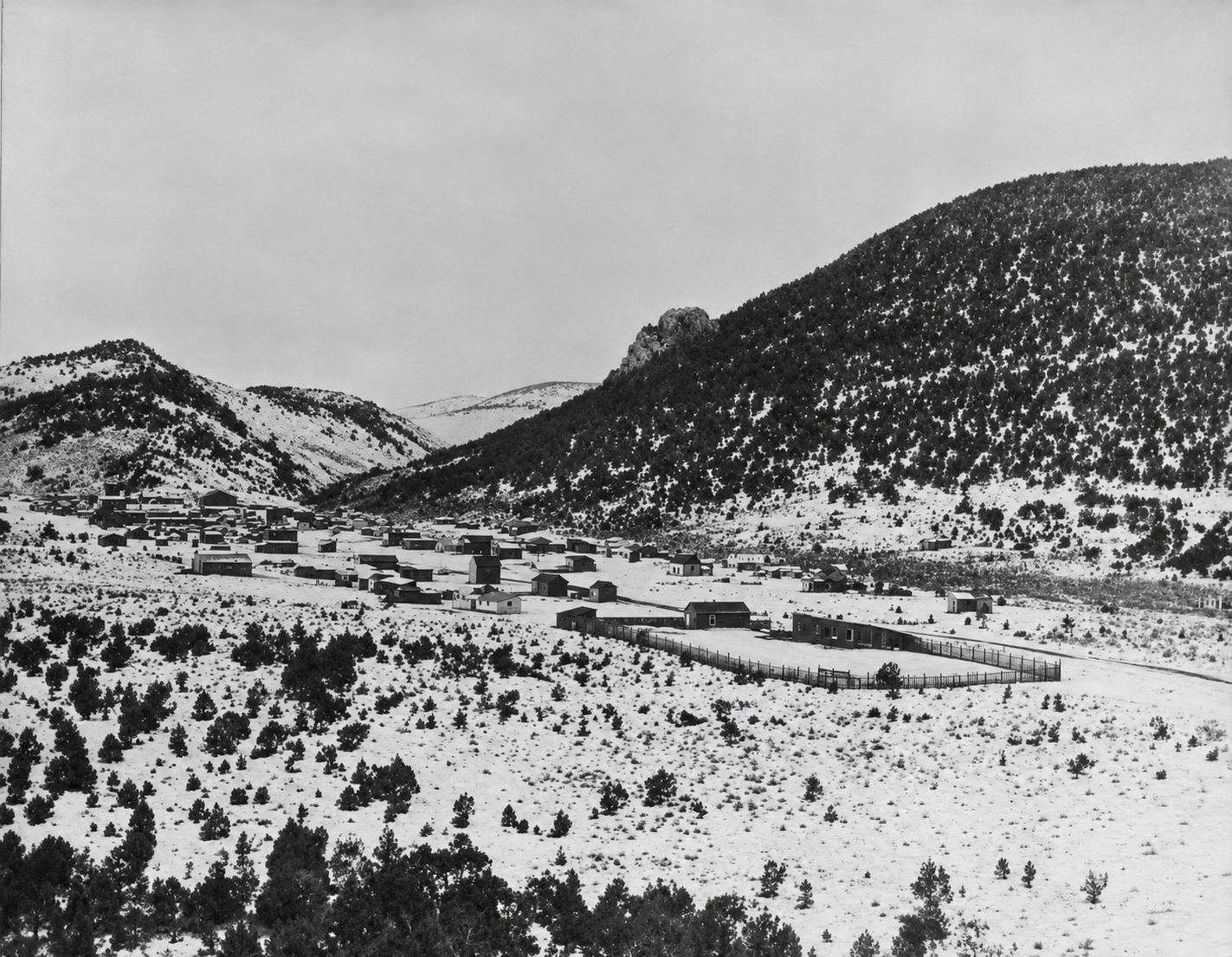
Stateline sits in a canyon at the far western edge of Iron County, Utah, a short distance from the Nevada border. For about a decade after 1896 it was a real mining town, with stores, saloons, a school, a doctor, a hotel, mills and a newspaper that liked a fight. Then the rich surface ore ran out and the managers fell out with each other, and the camp emptied. By 1918 only about 18 people were left. Today the ruins are low stone walls, mine dumps, rusted machinery and a cemetery that people still look after.
Gold in the canyon
Prospectors turned up gold and silver outcrops in Stateline Canyon in the early to mid-1890s, and small-scale work began in 1894. The real rush came in 1896, when rich, shallow, oxidized veins were struck at the Ophir mine. The Stateline Mining District was organized that year, and word of the strike spread quickly through mining journals and Utah newspapers. According to one account, a townsite called Line City was laid out in July 1896, with empty lots selling for $100 each. By late September more than 180 men were working in the mines and 17 houses stood, with dozens more going up. The post office was authorized the same year.
The district lies in volcanic country. The veins run through welded tuff, rhyolite and andesite, and the gold and silver occur finely mixed in quartz, calcite and a mineral called adularia, or bound up in telluride minerals. Near the surface, weathering had enriched the ore, which made the early mining very profitable. Deeper down, the ore changed to harder-to-process sulfides with much lower values, and that change helped end the boom.
The camp at its height
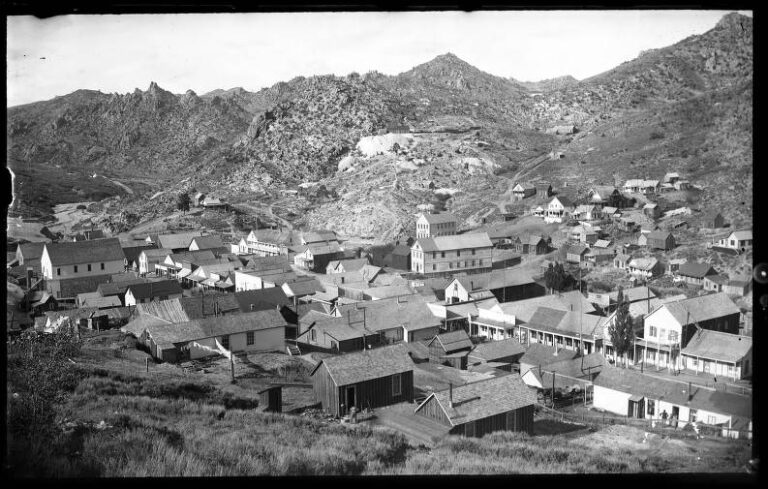
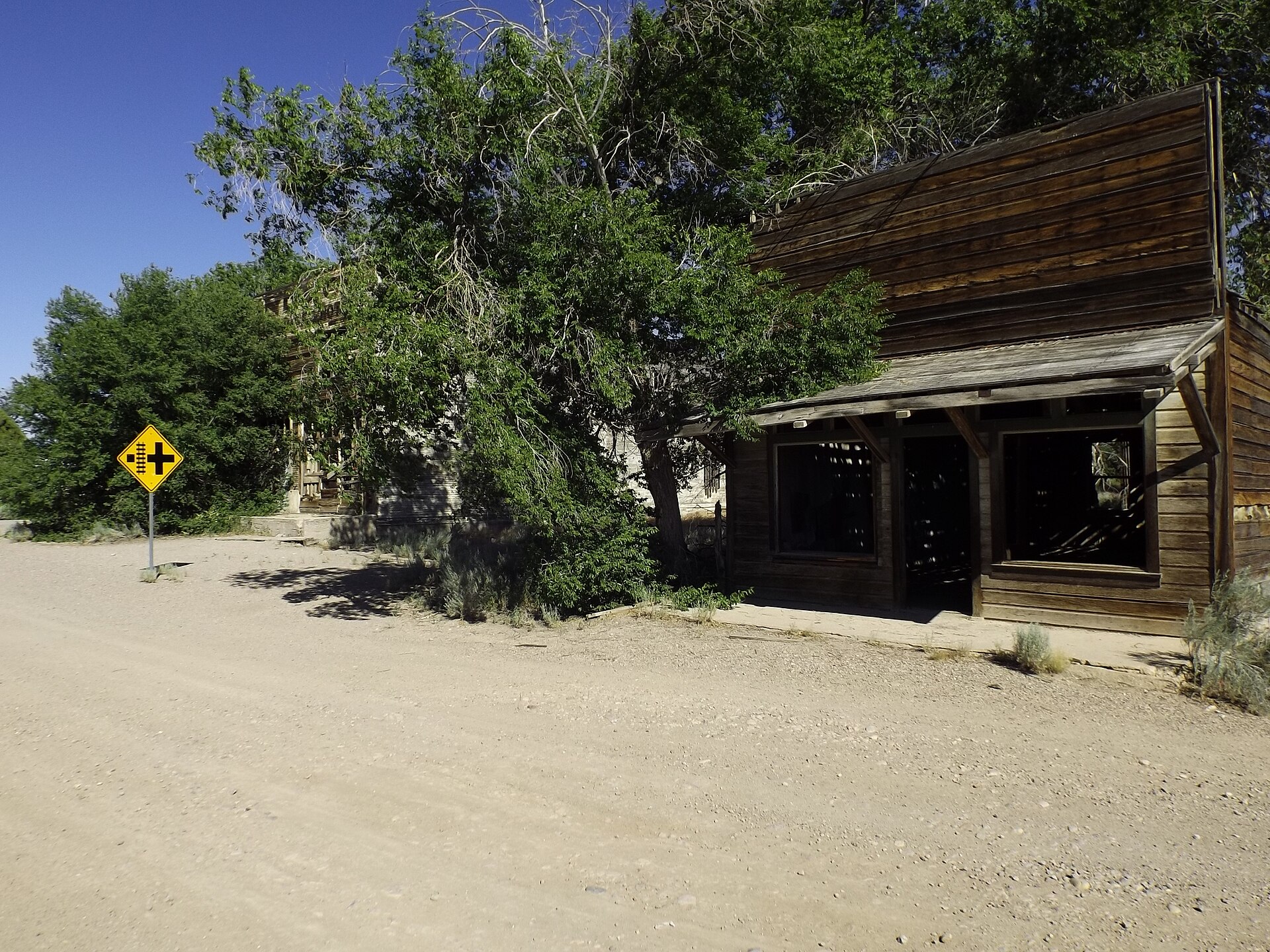
The census of 1900 counted 118 people, enough families with children to justify a schoolhouse. Around 1903 the population is estimated at 200 to 300. The camp stretched about a mile along the canyon and by then had moved from tents to false-front wooden stores and neatly laid stone cabins. Accounts list two or three general stores, two saloons, a blacksmith, a shoemaker, a restaurant, a doctor and a hotel.
The Stateline Oracle was edited by H. Stevenson, who had a reputation for combative editorials. He traded public jabs with the editor of the Iron County Record in Cedar City and defended the moral standing of the mining camp against the more settled Mormon farming towns to the east. Social life was lively. One account describes a Thanksgiving masquerade ball in 1903 that drew people from the neighboring camp of Fay, Nevada, with music and dancing late into the night.
Mines, mills and the long haul from Modena
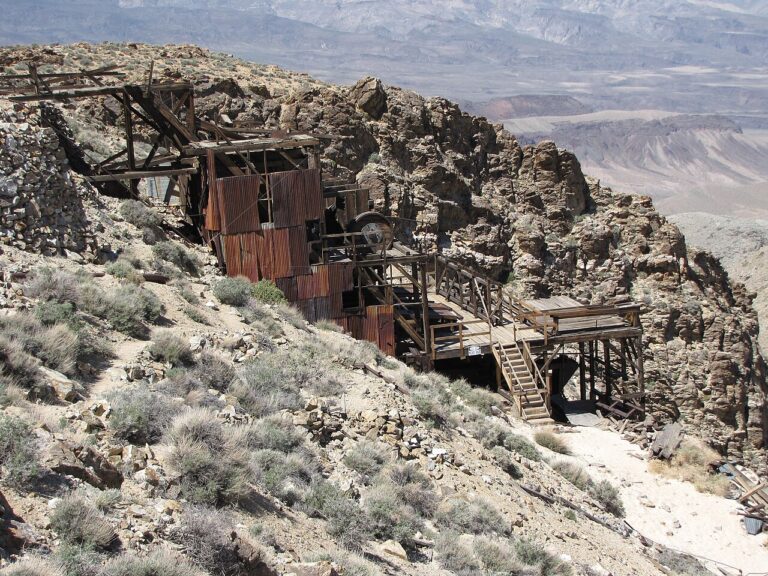
Three mines carried the camp. The Johnny, at about 7,200 feet, was the best of them and a steady dividend payer. The Ophir (spelled Ofer on later maps) started the rush. The Creole, in the northeast part of the district, was said to be so rich that in 1899 its owners panned the waste dump for gold. Other veins, including the Big 14, were worked too.
Much of the gold was too fine, or too tied up in telluride minerals, for simple gravity separation. Investors built a 10-stamp mill with a cyanide plant at the Johnny. A stamp mill used heavy iron stamps driven by a camshaft to pound the ore to powder, and the cyanide solution then dissolved the gold out of it. A photograph of the camp from about 1900 to 1905 records three mills, the Big 14, the Johnnie and the Ophir, with a stagecoach corral in the foreground. An 1898 newspaper report mentions a mill called the Popkees running Creole ore.
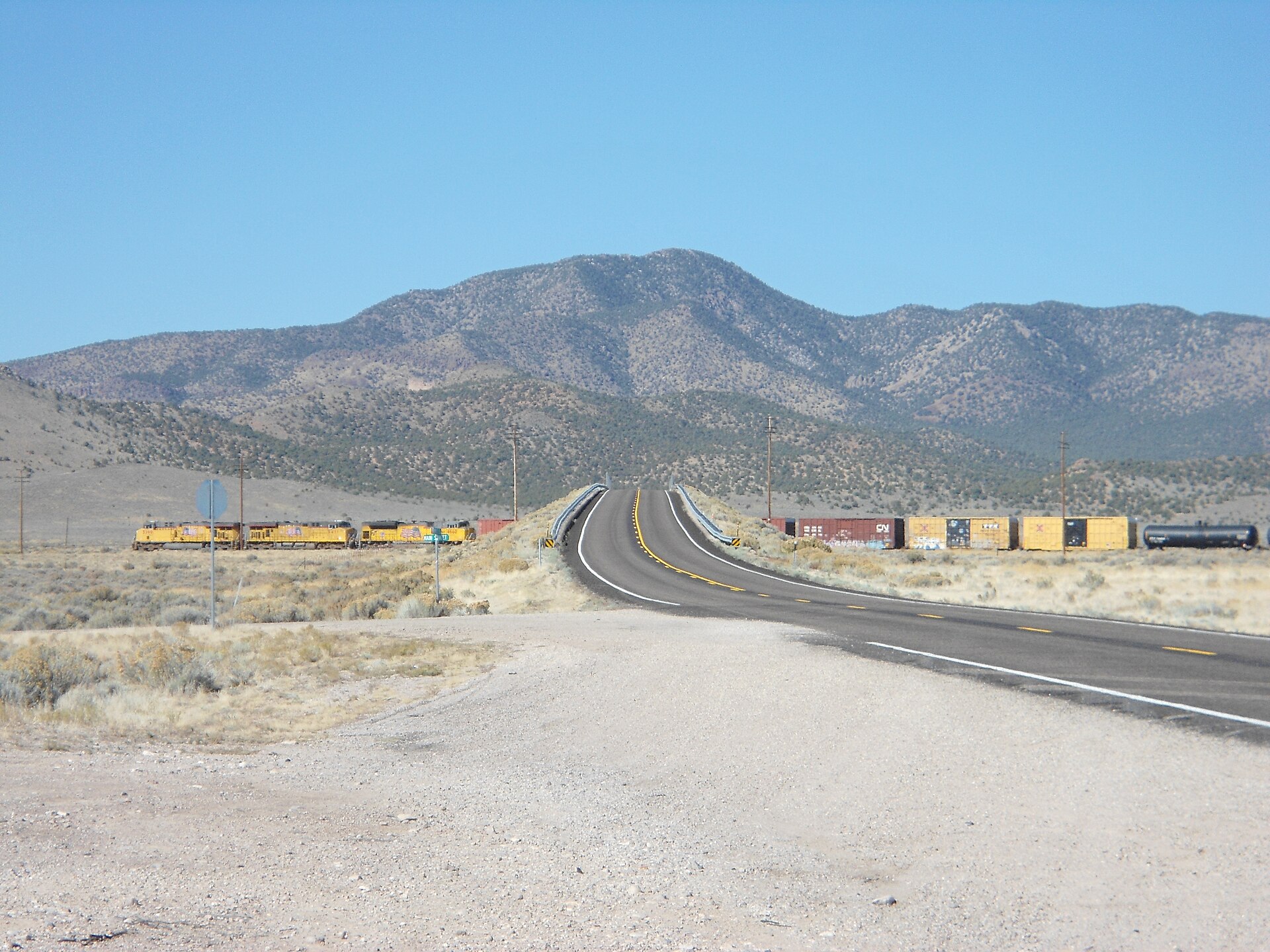
Everything had to come in by wagon. The nearest railroad was the Union Pacific at Modena, roughly 15 miles south, and teams of horses and mules hauled boilers, stamps and cyanide vats up the washouts of Modena Canyon. Water was just as hard to find. Mills use a great deal of it, springs were scarce, and whoever held the springs held the town. That led to claim jumping and lawsuits, and it forced mills to stop when creeks ran dry.
Why it failed
By 1905 the easily milled oxidized ore was largely gone. As the mines followed the veins deeper they met sulfide ore that cost more to treat and paid less per ton. Management made things worse. In March 1908 the Salt Lake Mining Review reported that both the Ophir and Johnny mills were idle. It blamed “bad management or lack of harmony” and said the Johnny mine was not exhausted but tied up by internal disputes.
Without payrolls, the town drained away. The 1910 census found 35 people in the whole Stateline precinct, and by 1918 about 18 were left, scraping along on small leases and lesser claims. Iron County tax ledgers filled up with delinquent names. In May 1924 the county clerk told the State Board of Health that no one was living at Stateline at that time.
After the boom
The post office kept serving a handful of ranchers until 1938. In June 1936, with gold prices up, 65 miners and stockmen asked Iron County to grade the rutted road to Modena. Nothing like the old boom came of it. In the 21st century an exploration company has mapped and drilled the district’s veins, describing it as a gold and silver vein district of more than 40 square kilometers, on BLM land where drilling permits are straightforward. The last industrial activity at the townsite came in 1984, when a small modern mill on the hill above the old camp, trying to recover gold from old tailings with cyanide vats, was shut down by the Environmental Protection Agency over how it handled cyanide solutions. The surrounding country went back to open-range cattle grazing.
Rustlers on the line
The canyons around Stateline were good cover for cattle thieves. According to local tradition, rustlers drove stolen Utah stock west through the canyon to feed the mining camps of Nevada, where officials had little interest in stopping them. The best-known story is of Nate Hansen, an alleged cattle thief and stagecoach robber, who is said to have been caught by a posse of Utah cattlemen and a deputy marshal as he drove forty or fifty stolen cattle up the canyon. In the telling, he was shot dead a few hundred yards from the Nevada line.
Fire on the canyon
In July 2020 the Big Summit Fire, started by lightning in Lincoln County, Nevada, spread east across the line and forced evacuations in Iron County. Recent visitor accounts say the fire burned through the Stateline townsite and that you can still see where it passed, and the stone walls survived. Afterward, the Bureau of Land Management reseeded burned slopes in the area and fenced streams to protect new growth.
Timeline
Historic sites nearby
Further reading
Sources
Forgotten Nevada — Stateline, Utah
Utah Division of Archives and Records Service — Series 23969, Stateline Mining District records
Ghosttowns.com — Stateline
Star 98 — Visit a burned-out ghost town on the Utah-Nevada line
KSL — Big Summit Fire updates
Utah Watershed Restoration Initiative — Big Summit Fire restoration
KA Gold — Stateline project
Utah Centennial County History Series — Iron County (1998)
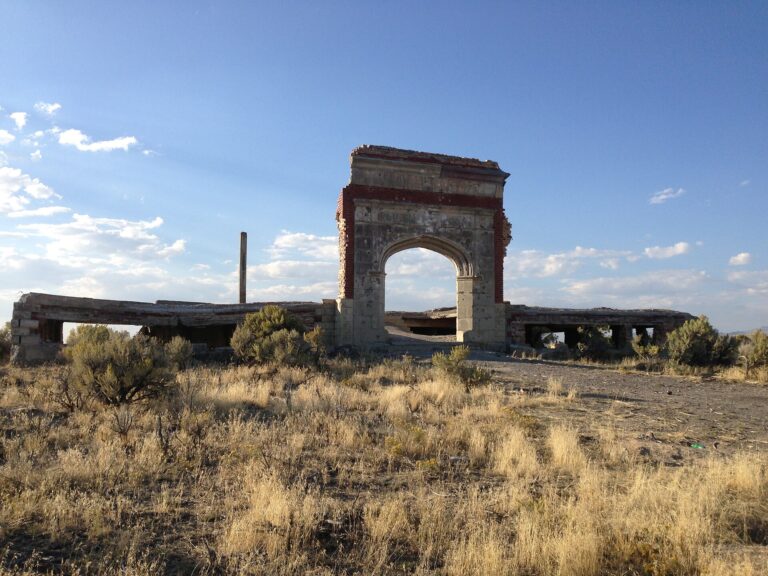
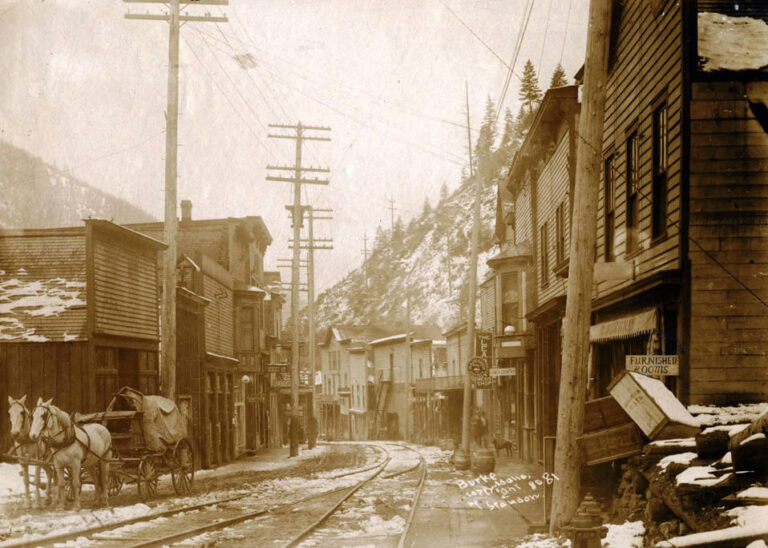
Historic photograph of Stateline, about 1900–1905: Utah State Historical Society. Photos of Modena: The Utahraptor, CC BY-SA 4.0; Hänsel und Gretel, CC BY-SA 3.0. Both via Wikimedia Commons.